Mental math improvement Worksheets for Ages 5-8
8 filtered results
-
From - To
Boost your child's numerical skills with our Mental Math Improvement Worksheets tailored for ages 5-8! Our engaging and interactive worksheets are designed to develop essential arithmetic abilities, encouraging young learners to solve problems quickly and confidently. Through a variety of fun exercises, students will master addition, subtraction, multiplication, and division while building a solid foundation in mental math. Perfect for enhancing classroom learning or extra practice at home, these worksheets make math exciting and accessible. Equip your child for academic success with our expertly crafted mental math materials, fostering a love for numbers and boosting their confidence.
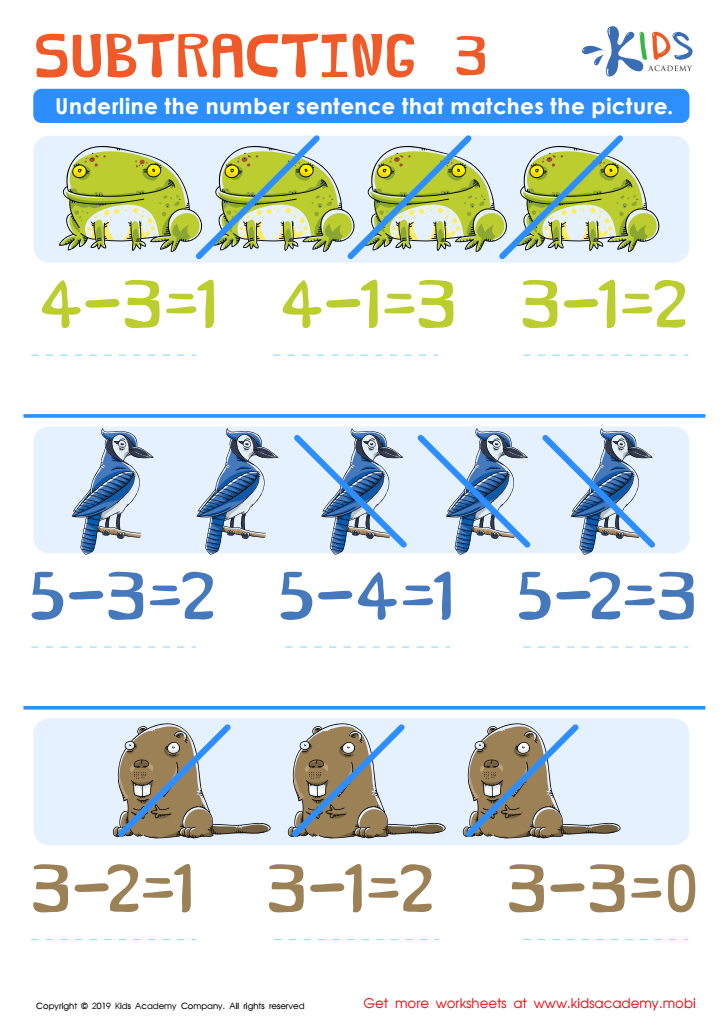
Subtracting 3 Worksheet
 Assign to My Students
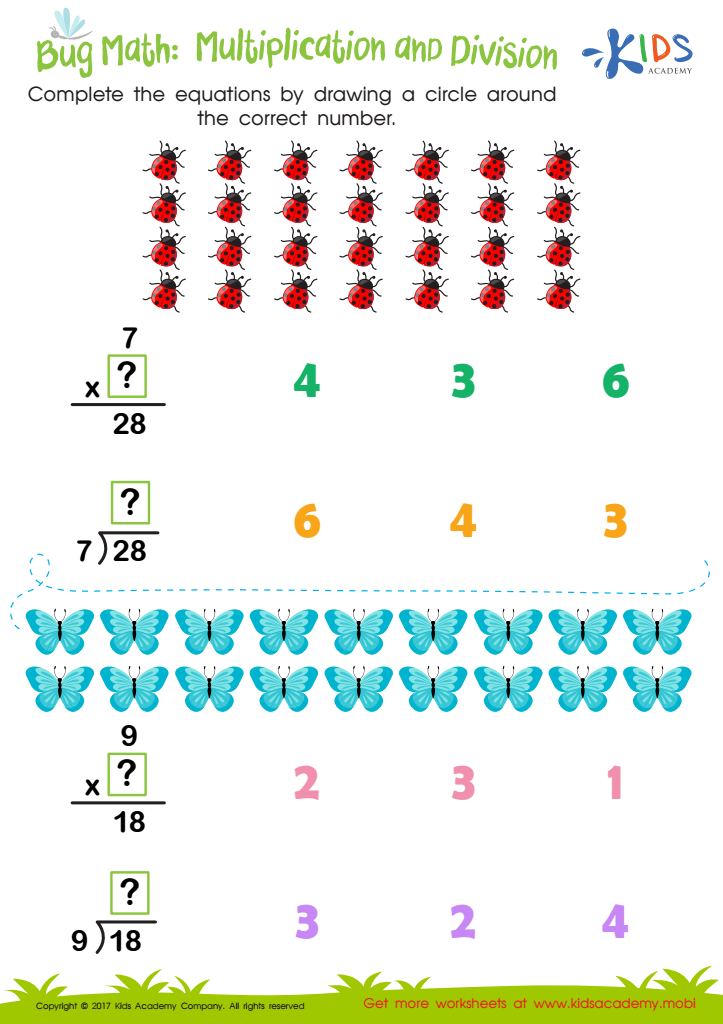
Multiplication and Division Worksheet
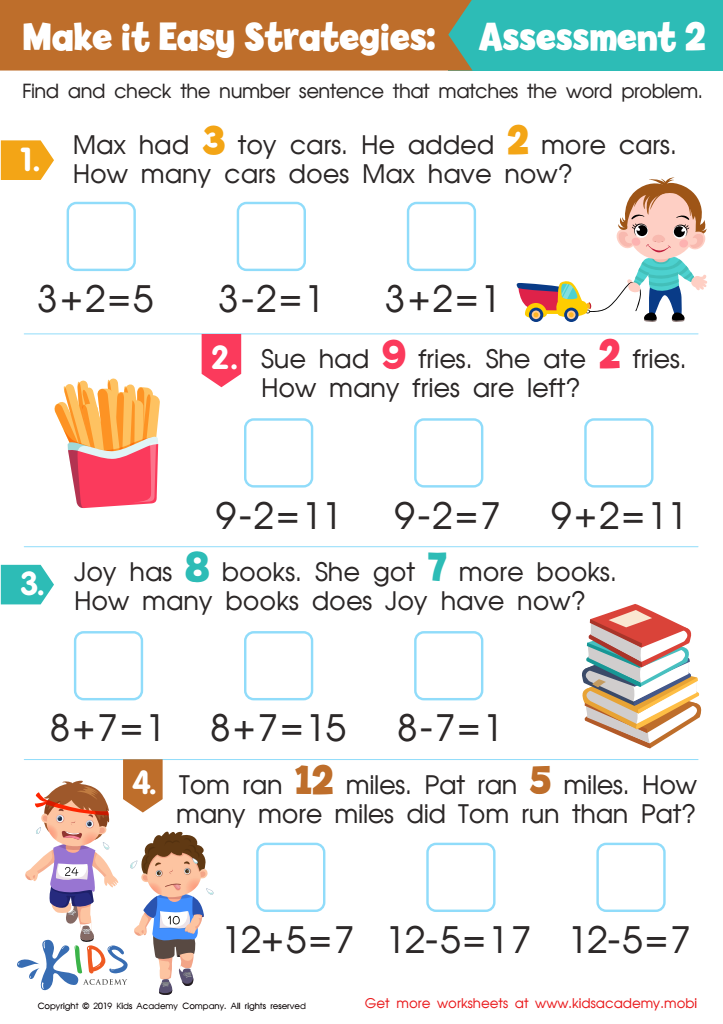
Make it Easy Strategies: Assessment 2 Worksheet
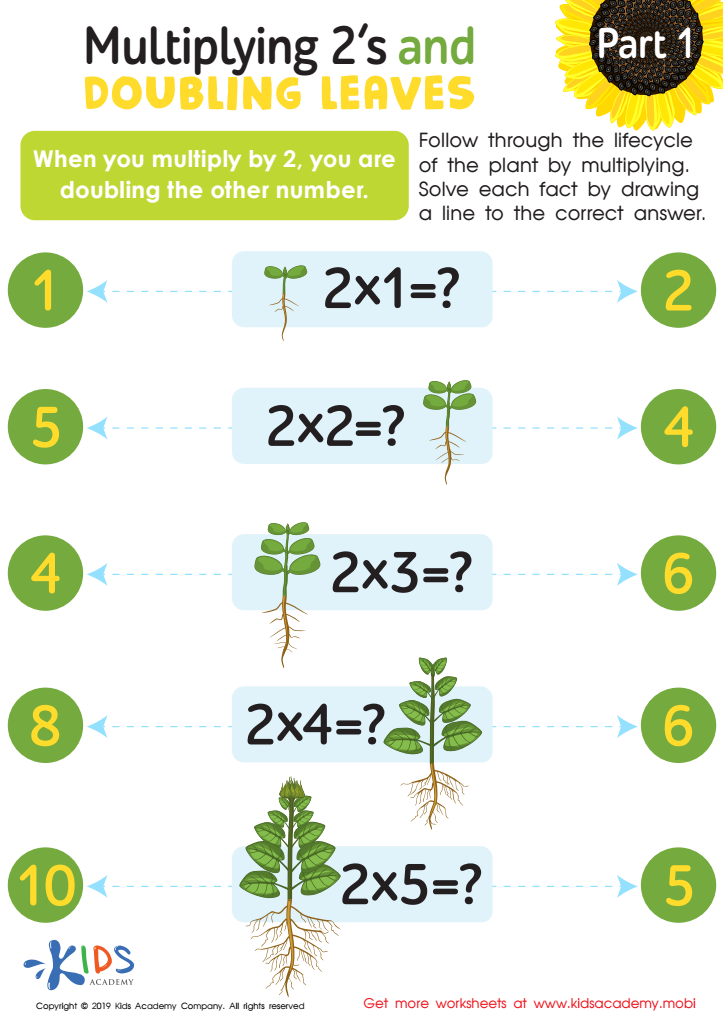
Multiplying 2’s and Doubling Leaves Part 1 Worksheet
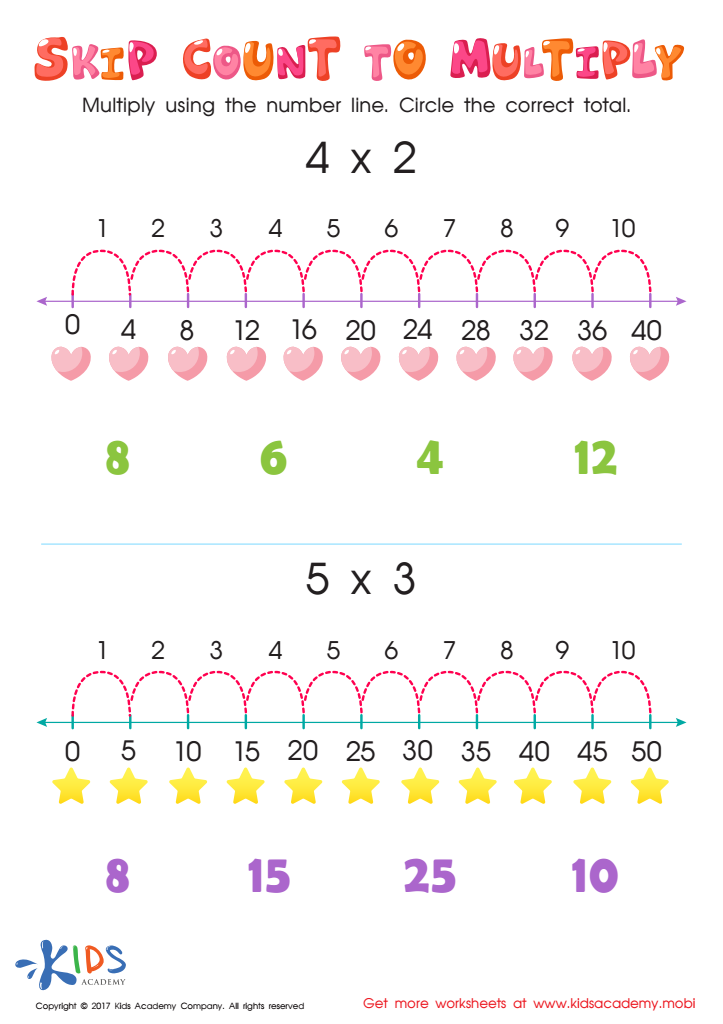
Skip Count Multiplication Worksheet
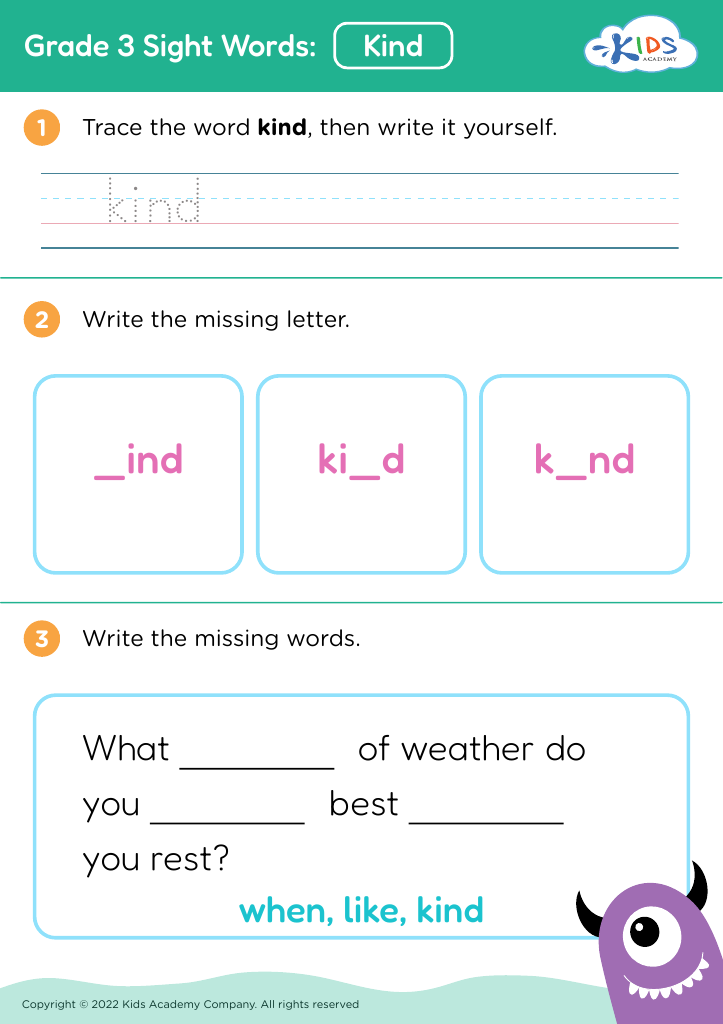
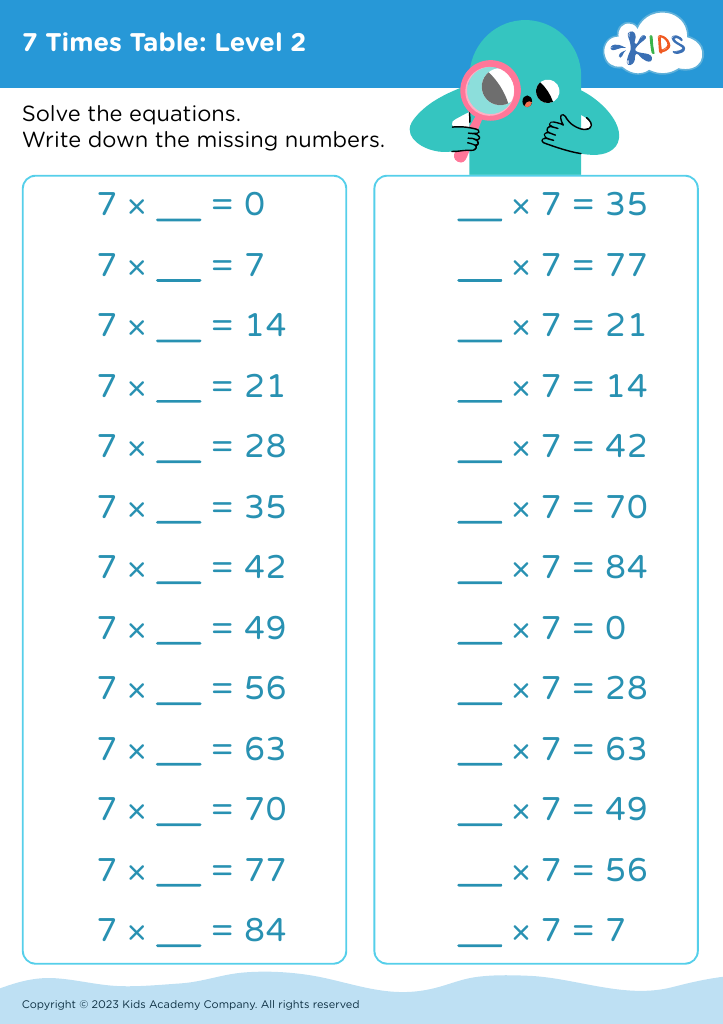
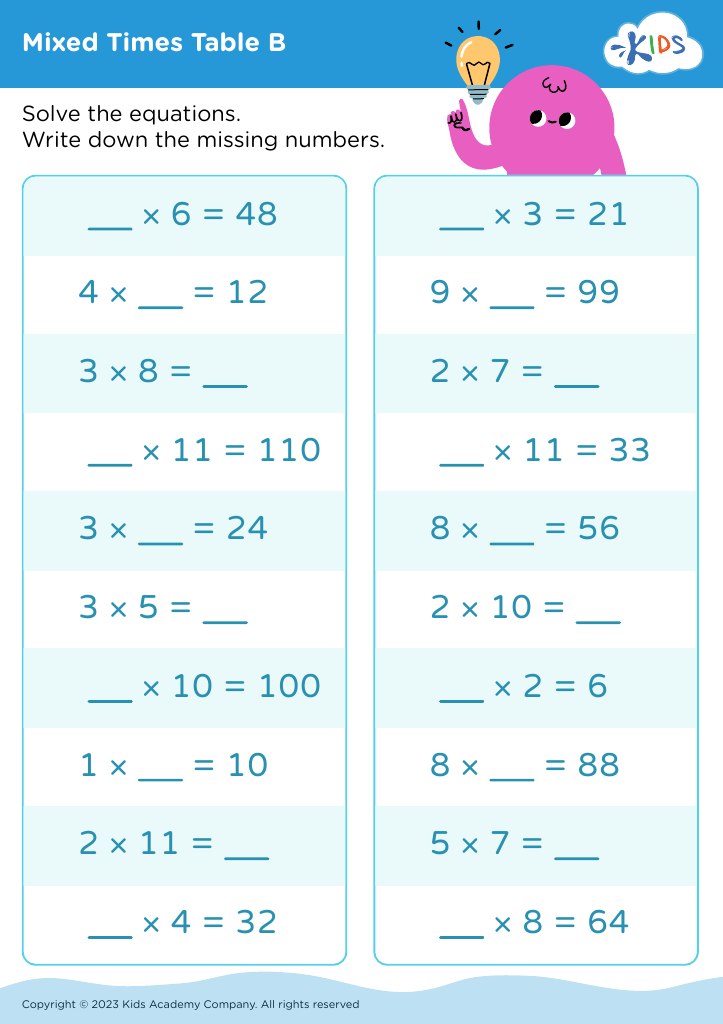








Mental math is a crucial skill for children aged 5-8 because it lays the foundation for future academic and daily-life success. At this early age, developing mental math skills fosters an intuitive understanding of numbers and arithmetic that can boost overall cognitive development. For parents and teachers, emphasizing mental math helps children improve their problem-solving abilities and boosts their confidence in tackling math-related tasks, both in school and in real-world situations.
Students who excel in mental math can generally process information more quickly and accurately. This skill improves their performance not only in math but in all subjects that require analytical thinking, including science and technology. Early success in mental math can increase a child’s enthusiasm for learning, fostering a positive attitude towards challenging projects. Additionally, sharpening these skills supports improved memory, concentration, and logical thinking, all of which aid their overall academic development.
Furthermore, children who are proficient in mental math experiences can participate more actively in class, form better mathematical arguments, and approach complex problems with greater ease. As a result, they build foundational skills essential for more advanced concepts they will encounter in their later educational journey. By prioritizing mental math during the early years, parents and educators equip children with the tools necessary for both academic success and everyday competence.








