Phonics recognition Worksheets for Ages 5-8 - Page 2
25 filtered results
-
From - To
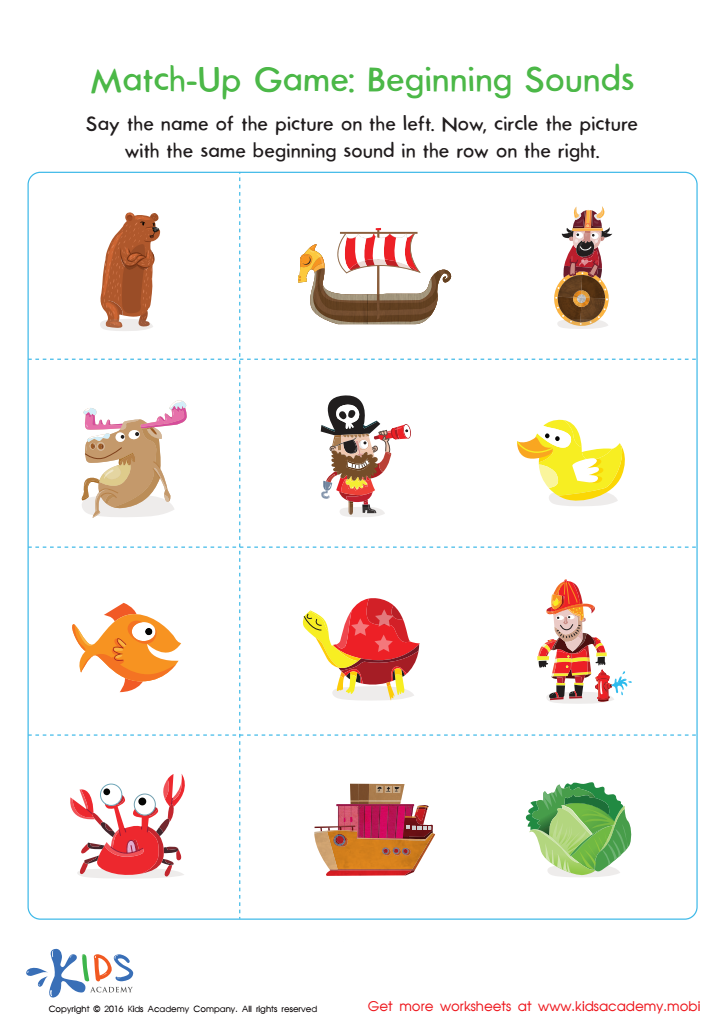
Match–Up Game: Beginning Sounds Worksheet
 Assign to My Students








Phonics recognition is essential for children aged 5-8, as it lays the foundation for reading and literacy development. Understanding the relationship between sounds and written letters enables young learners to decode words, enhancing their reading fluency and comprehension. By mastering phonics, children can recognize familiar patterns in words and apply their skills to unfamiliar texts, fostering independence and confidence in their reading abilities.
Parents and teachers should prioritize phonics recognition because it plays a crucial role in overall academic success. Early proficiency in reading is linked to improved performance in all subjects, as reading skills are fundamental to learning. Moreover, engaging with phonics helps children develop a love for reading, which translates into lifelong learning.
Additionally, phonics recognition supports children's social-emotional development by encouraging them to participate in group reading activities, build friendships, and express themselves more effectively. Promoting phonics in a supportive, structured environment enables young learners to achieve their fullest potential. By investing time and resources into phonics education, parents and teachers can create lasting positive impacts on children's academic journeys and help set them on the path to success. Ultimately, phonics recognition is vital for literacy and overall cognitive development in young children.








