Phonological awareness Worksheets for Ages 5-8
11 filtered results
-
From - To
Discover our engaging Phonological Awareness Worksheets designed specifically for children ages 5-8! These printable resources help young learners develop essential listening and verbal skills through fun and interactive activities. Our worksheets focus on key areas such as sound recognition, rhyming, syllable segmentation, and blending sounds, ensuring a strong foundation for reading success. Ideal for both classroom and home use, these worksheets cater to various learning styles and promote literacy in a playful manner. Enhance your child’s phonemic skills and boost their confidence with our easily accessible and visually appealing worksheets—perfect for nurturing a love of learning and reading!
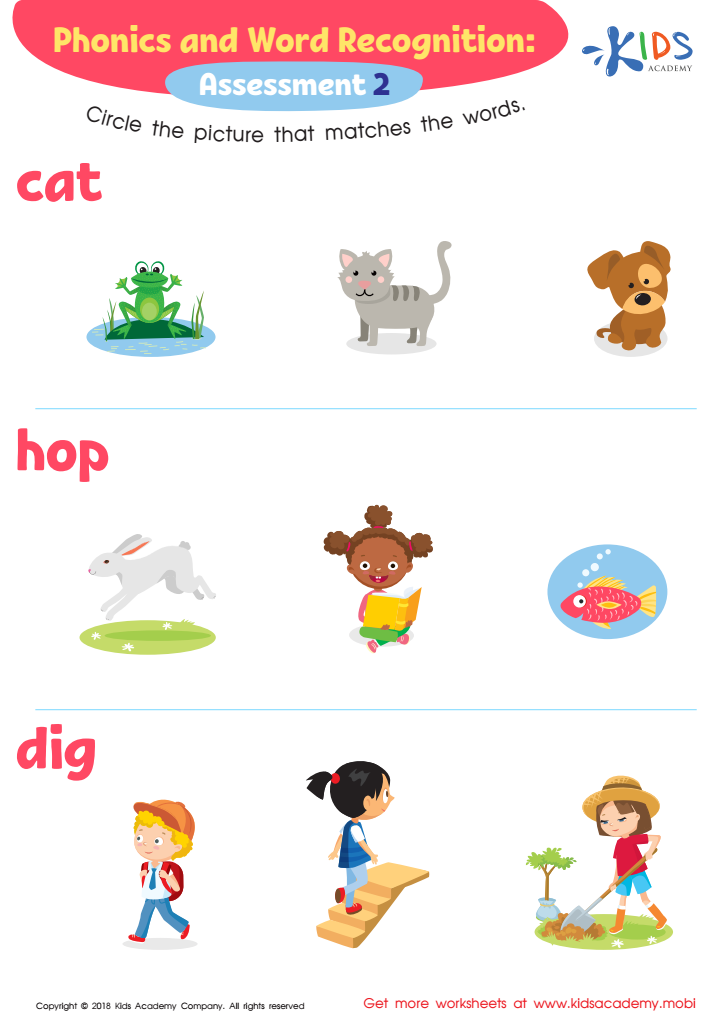
Phonological Awareness: Assessment 2 ELA Worksheet
 Assign to My Students
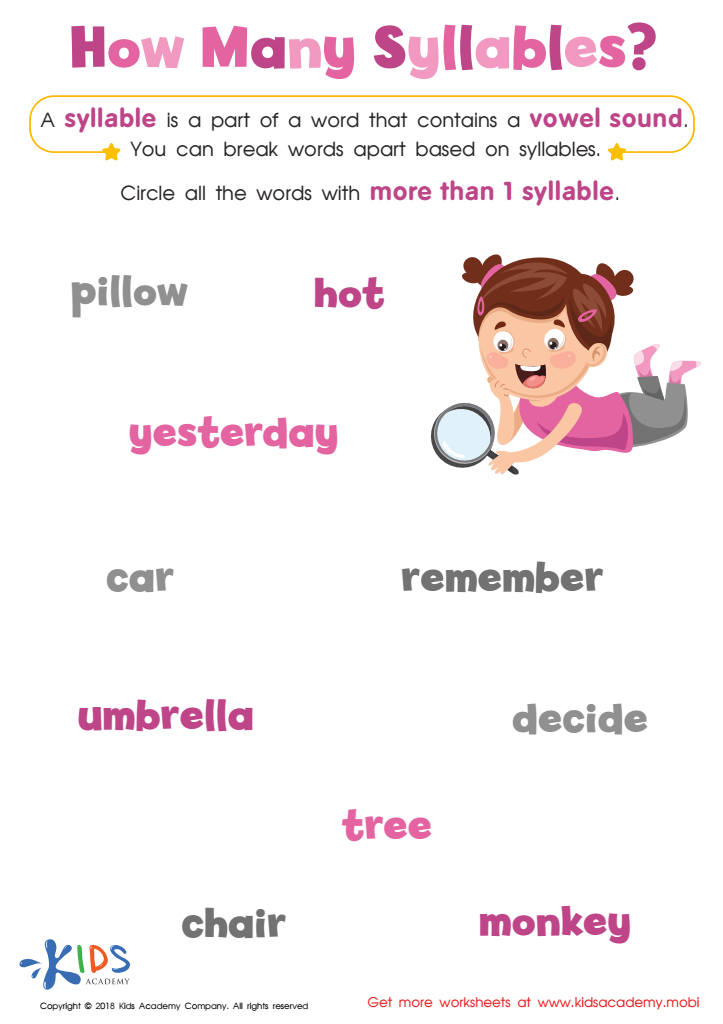
Reading: How Many Syllables Worksheet
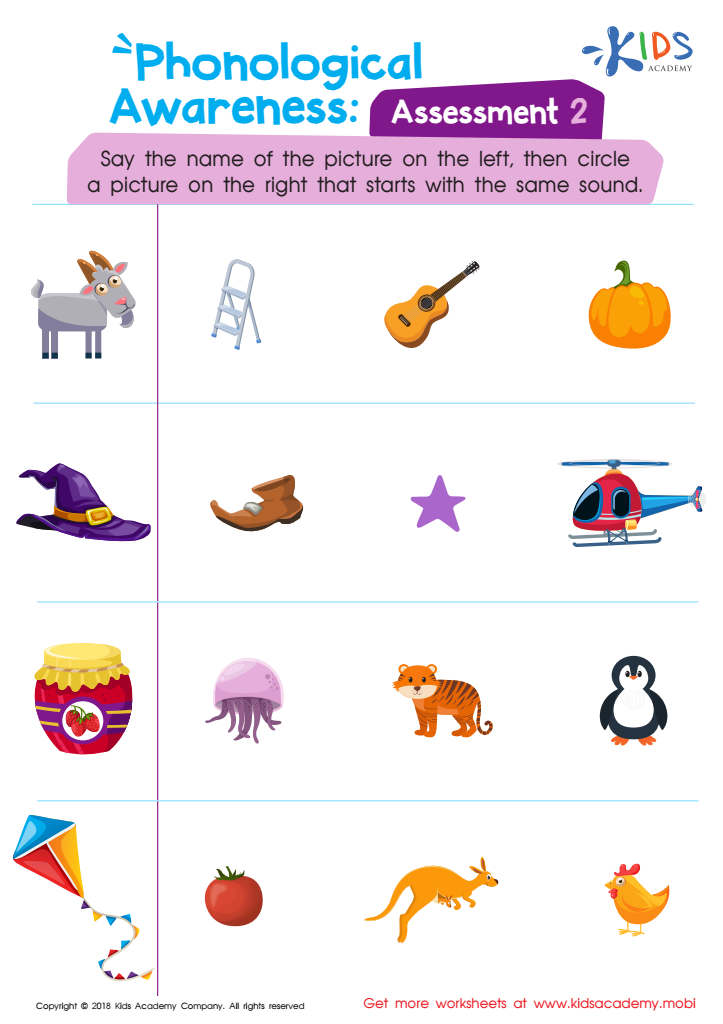
Phonological Awareness: Assessment 2 Worksheet
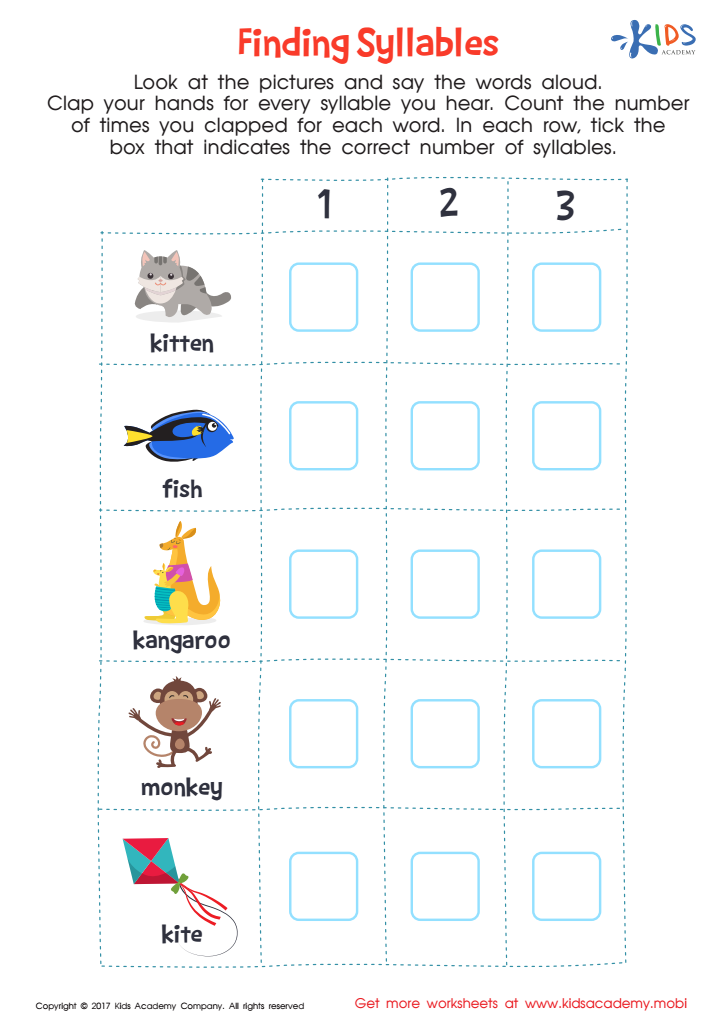
Finding Syllables Word Structure Worksheet
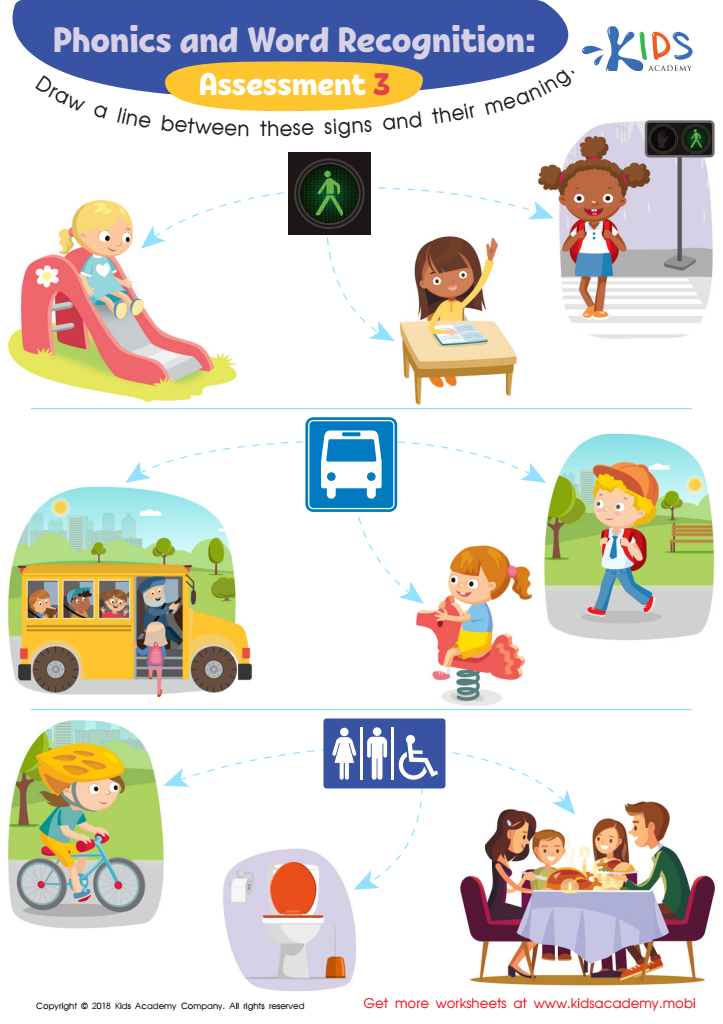
Phonological Awareness: Assessment 3 ELA Worksheet
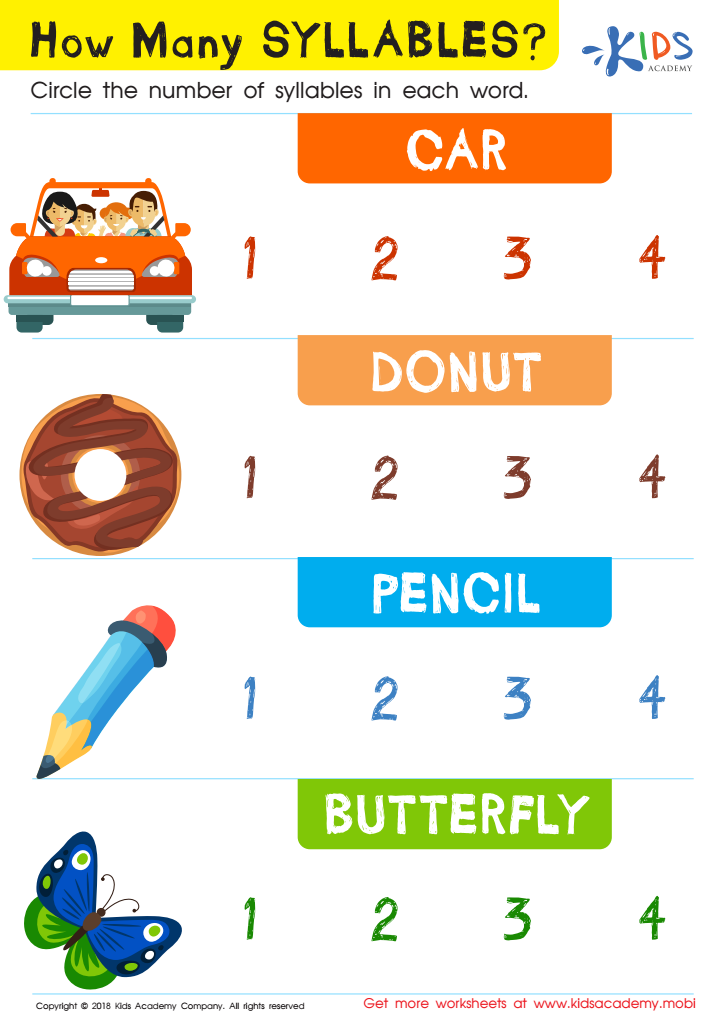
How Many Syllables? Worksheet
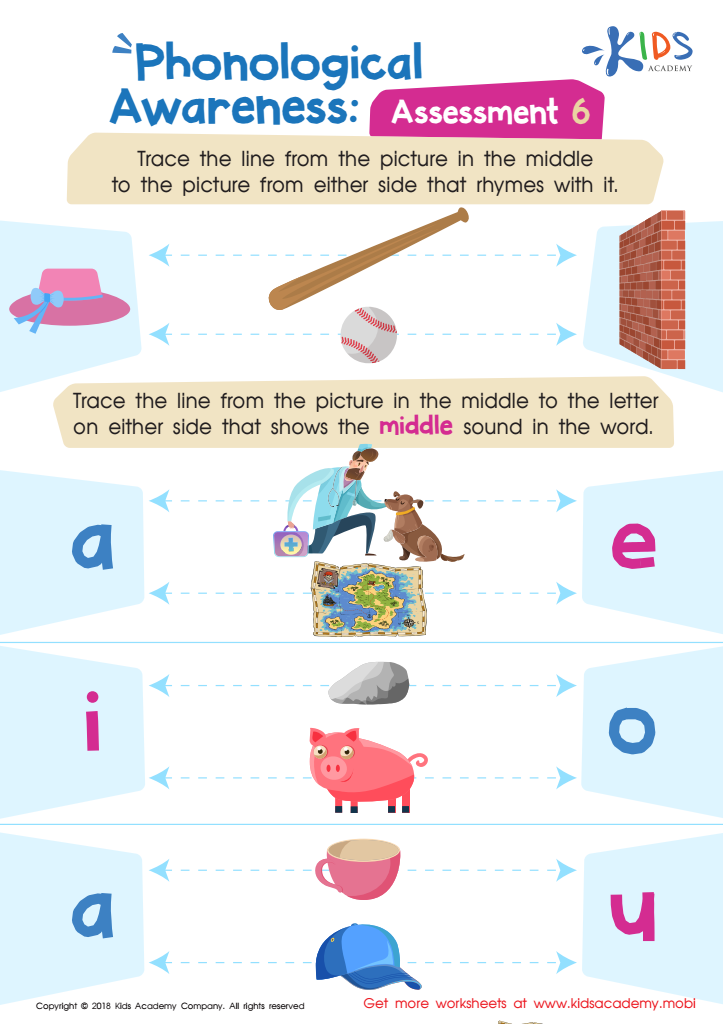
Phonological Awareness: Assessment 6 Worksheet
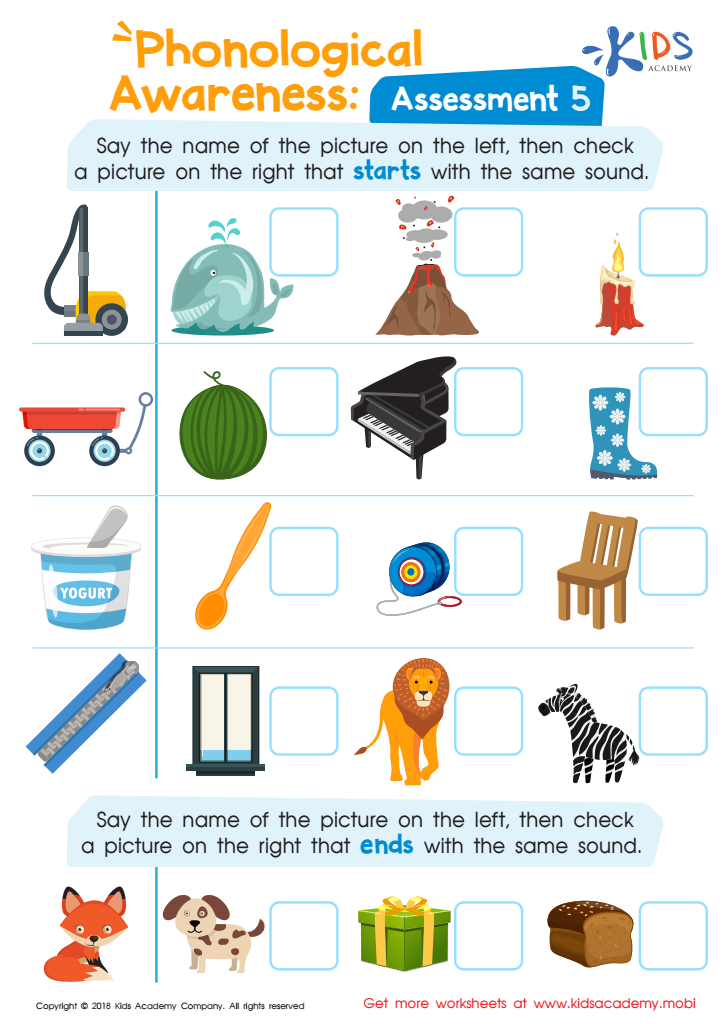
Phonological Awareness: Assessment 5 Worksheet
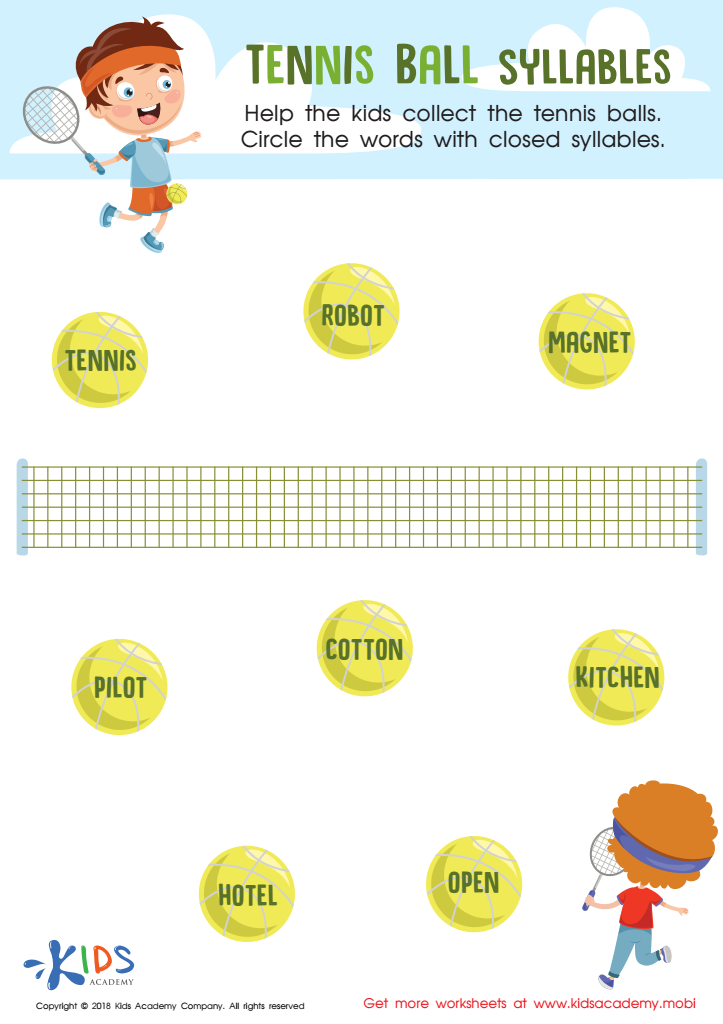
Tennis Ball Syllables Worksheet
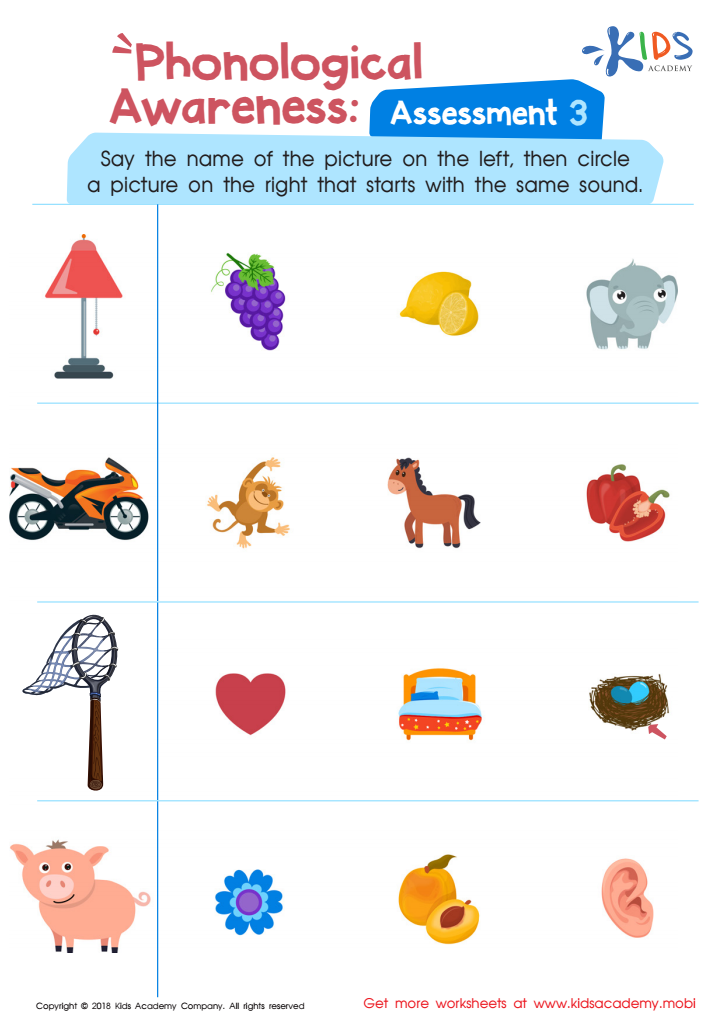
Phonological Awareness: Assessment 3 Worksheet
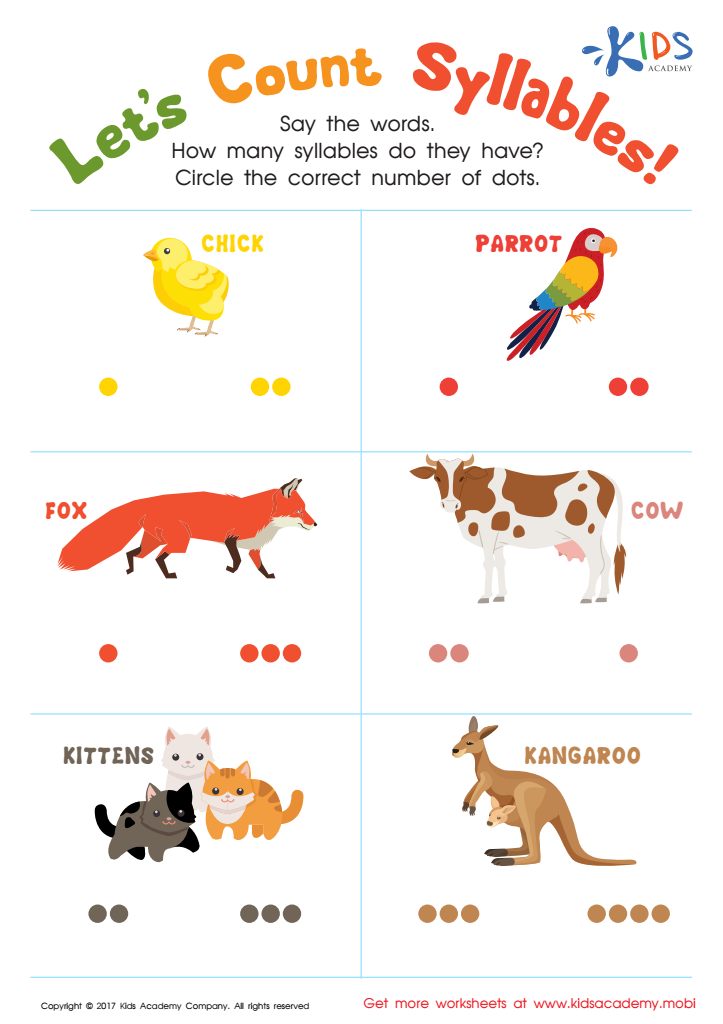
Lets Count Syllables Worksheet







Phonological awareness is a critical early literacy skill that involves recognizing and manipulating the sounds in spoken language. For children aged 5-8, developing phonological awareness lays the foundation for successful reading and writing. Parents and teachers should care about this skill for several reasons.
Firstly, strong phonological awareness enhances a child's ability to decode words when reading, making the connection between letters and sounds essential for phonics instruction. Early identification and support in this area can prevent future reading difficulties and promote confidence in literacy skills.
Secondly, phonological awareness contributes to vocabulary development and overall language comprehension. As children learn to hear and manipulate sounds, they become more adept at understanding the structure of words, which in turn supports their speaking and listening skills.
Moreover, engaging in phonological activities such as rhyming, alliteration, and sound segmentation can be fun and encourage a love of language. This interest in sound processes fosters motivation for further reading and learning.
Lastly, phonological awareness is linked to academic success beyond literacy. Strong readers often perform better in other subjects, emphasizing the importance of investing in these foundational skills during crucial early years. Thus, supporting phonological awareness is vital for holistic child development.








