Time calculation Worksheets for Ages 5-8
4 filtered results
-
From - To
Discover our engaging Time Calculation Worksheets designed specifically for kids aged 5-8. Perfect for young learners, these worksheets focus on mastering essential time-telling skills, including reading clocks, understanding hours and minutes, and performing basic time calculations. Vibrant illustrations and interactive exercises make learning fun, while progressively challenging tasks help build confidence and competence. Ideal for classroom use or homeschooling, our worksheets provide a solid foundation for future math success. Tailored to align with early education standards, they ensure your child develops crucial time-management skills. Explore our collection today and watch your child's time-telling abilities soar!
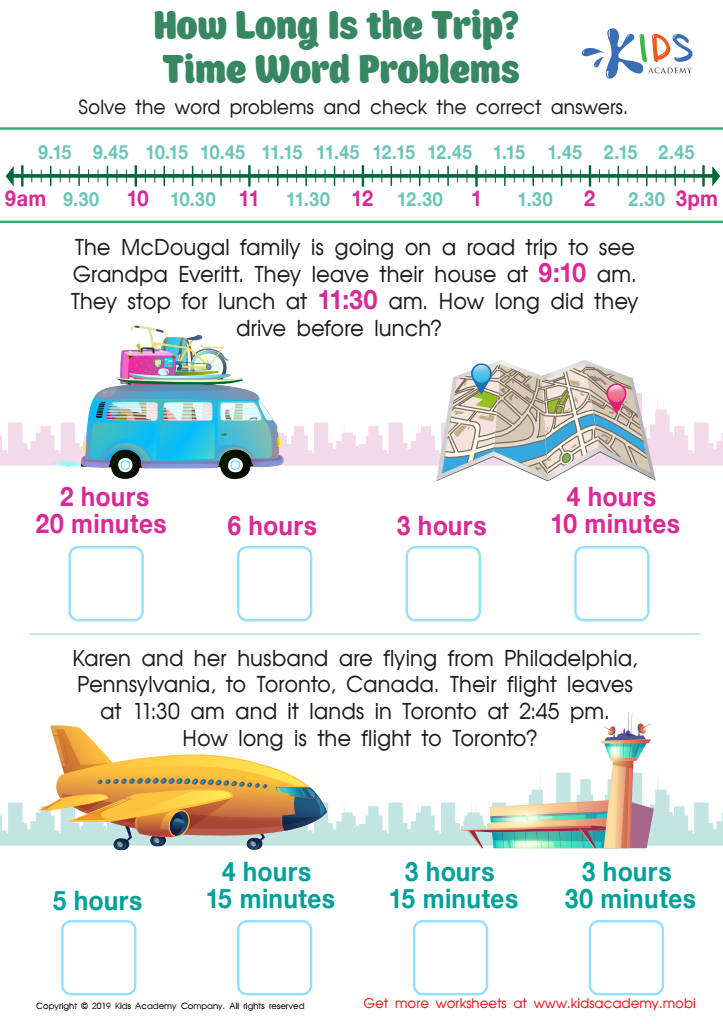
How long is the Trip? Time Word Problems Worksheet
 Assign to My Students
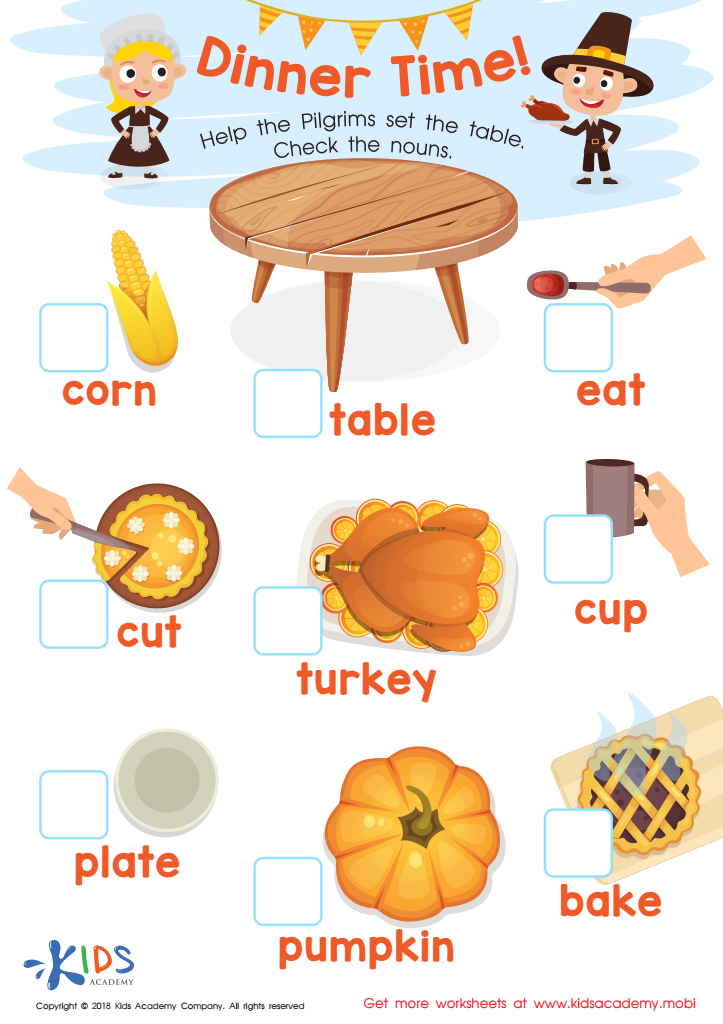
Dinner Time! Worksheet
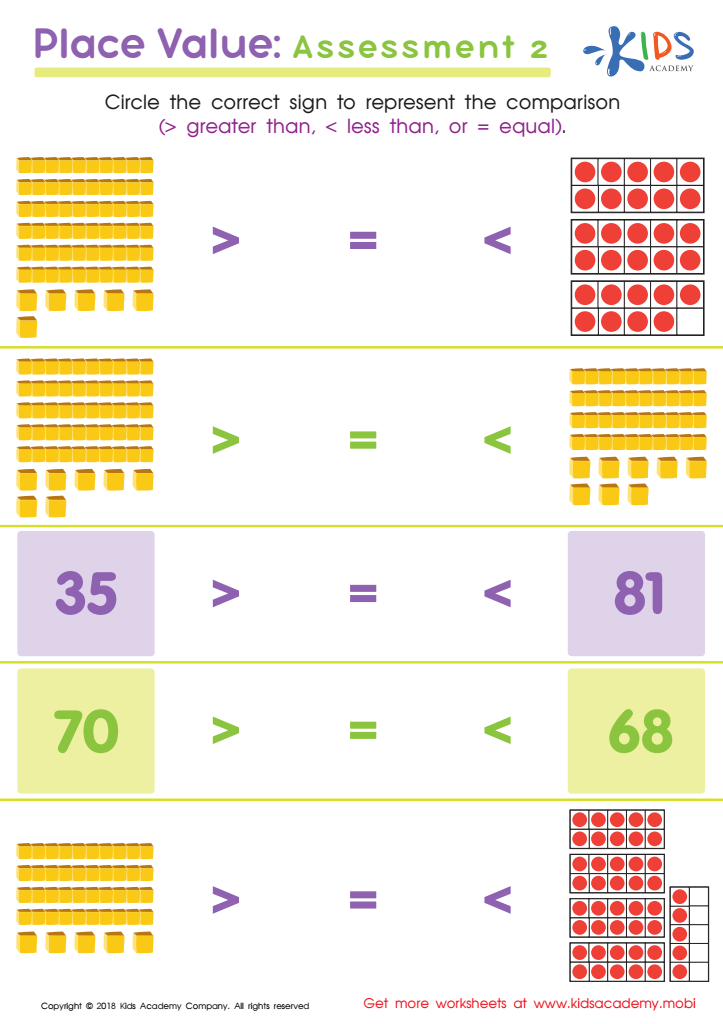
Place Value: Assessment 2 Worksheet
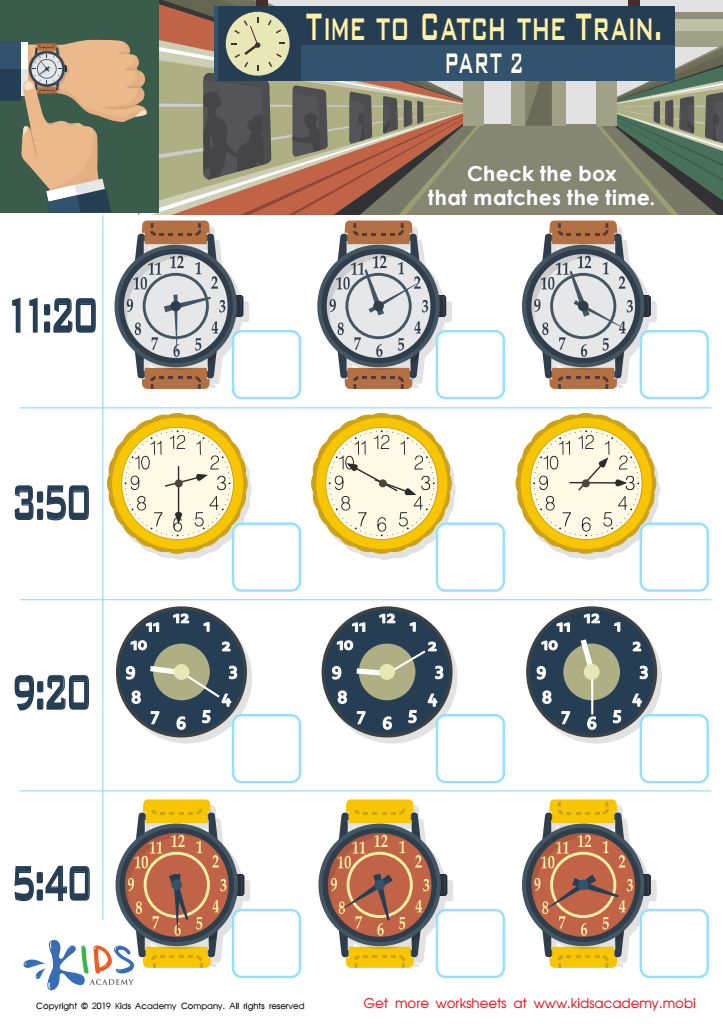
Time to Catch the Train Part 2 Worksheet






Teaching time calculation to children ages 5-8 is crucial for several reasons that impact their daily lives and overall development. First, understanding time helps young children grasp their daily schedule, including school routines, playtime, and bedtime. This fosters a sense of security and helps children become more organized and responsible.
Moreover, learning to read clocks and understand minutes and hours strengthens mathematical skills. It sharpens their ability to perform basic arithmetic operations and understand abstract concepts, laying the foundation for more advanced math topics later on.
Socially and emotionally, understanding time helps children develop patience and the ability to wait for certain activities or events. It encourages time management skills, which are important throughout their educational journey and into adult life.
Additionally, being able to tell time promotes independence. Children feel a sense of achievement and autonomy when they can manage aspects of their day on their own. Parents and teachers who emphasize the importance of time calculation are essentially equipping children with essential life skills that integrate into almost all aspects of daily living.
Overall, learning to calculate time readies children for structured environments, enriching their competency in academics and everyday activities, ultimately bolstering their confidence and independence.








