Time-telling skills Worksheets for Ages 5-8
8 filtered results
-
From - To
Our "Time-telling Skills Worksheets for Ages 5-8" are designed to help young learners confidently master reading analog and digital clocks. With engaging, age-appropriate activities, children will learn to identify hours, minutes, and understand basic time concepts, progressing from simple whole hour tasks to more complex half-hour and quarter-hour scenarios. Our worksheets are perfect for reinforcing classroom learning or homeschooling. These printable exercises are crafted by educational experts to develop time-telling proficiency while keeping kids entertained and motivated. Boost your child's time-telling skills with our comprehensive and enjoyable worksheets! Explore now to unlock time-tracking proficiency.
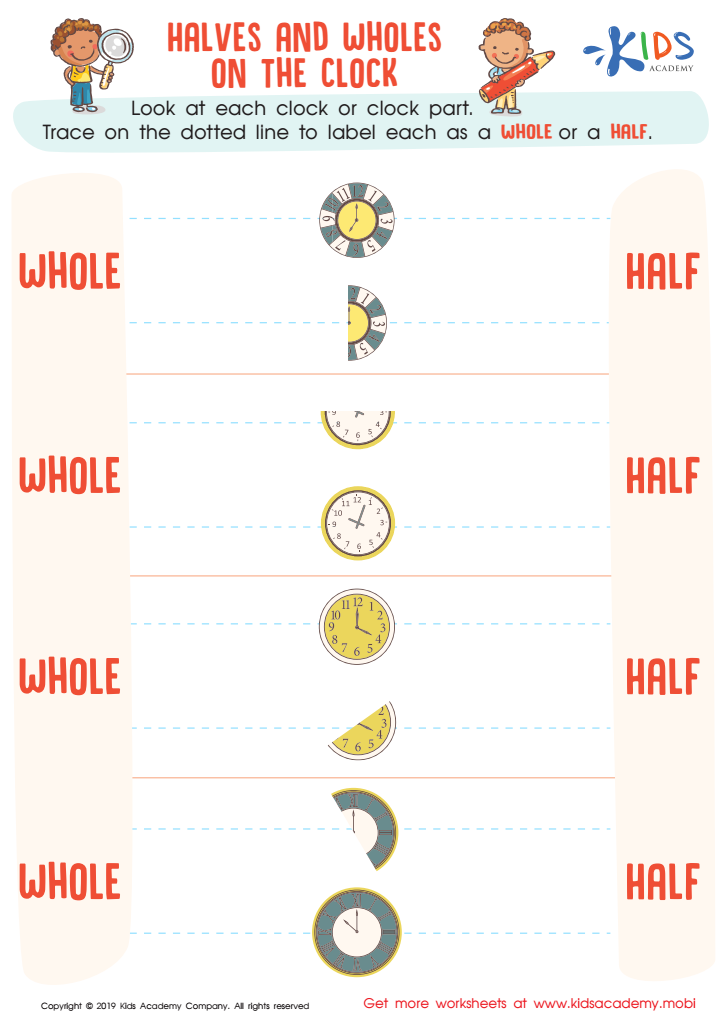
Halves and Wholes on the Clock Worksheet
 Assign to My Students
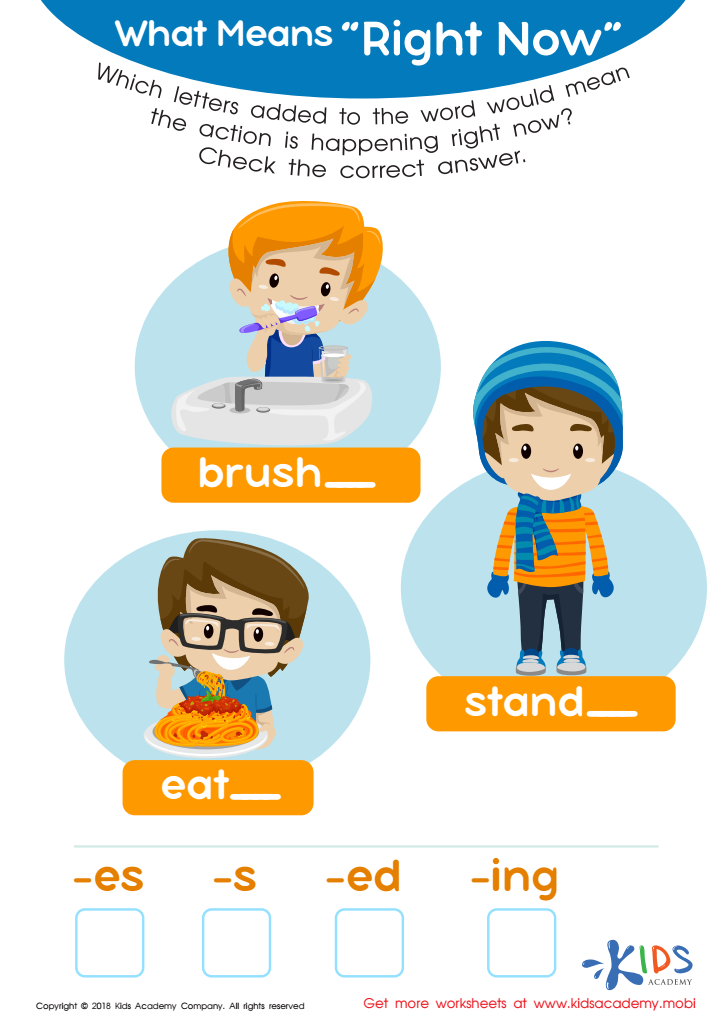
What Means "Right Now" Worksheet
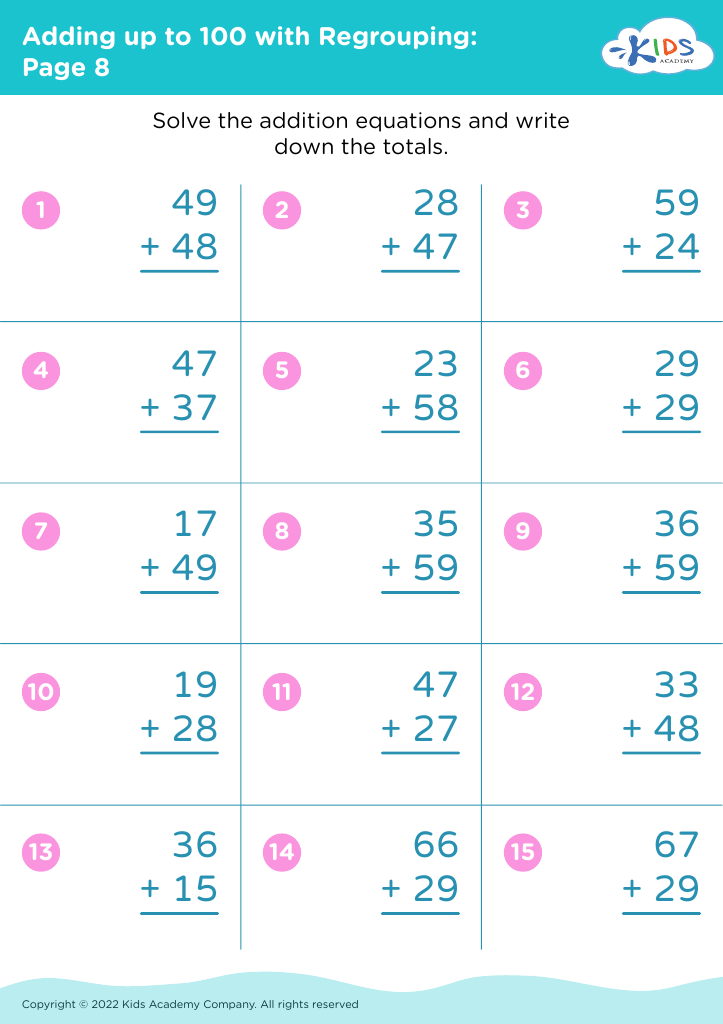
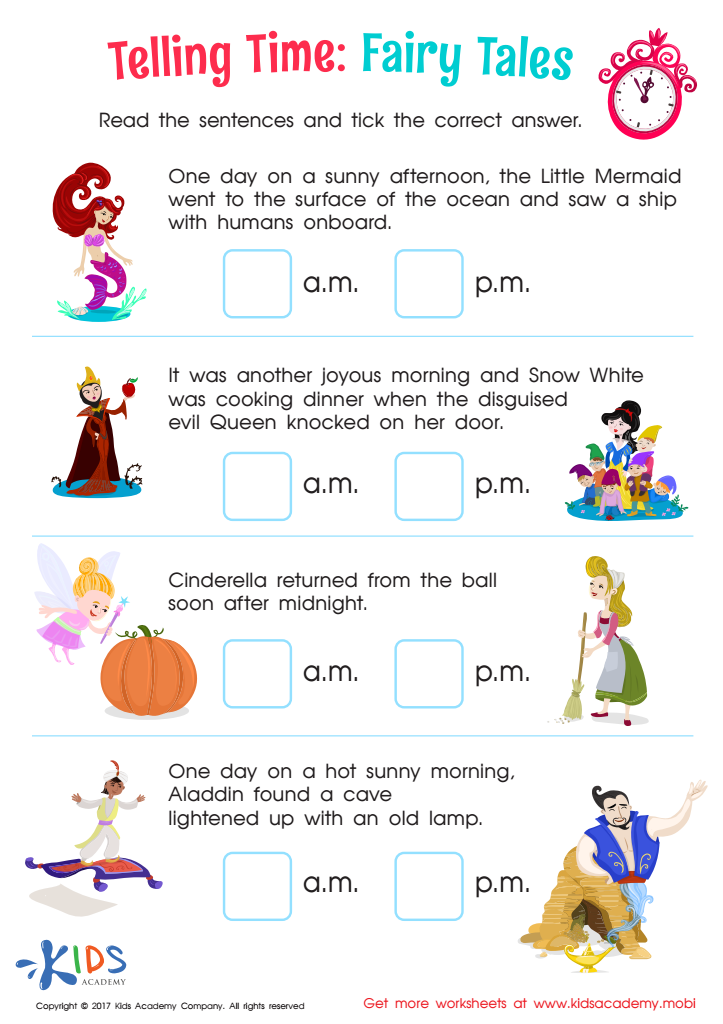
Telling Time: Fairy Tales Worksheet
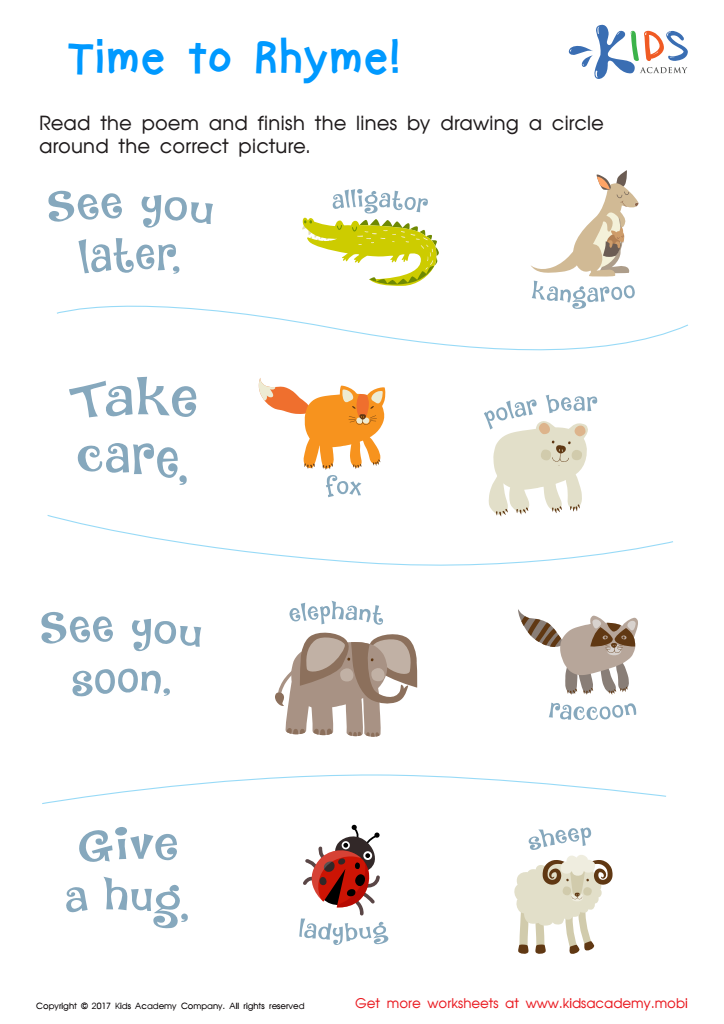
Time to Rhyme Rhyming Worksheet
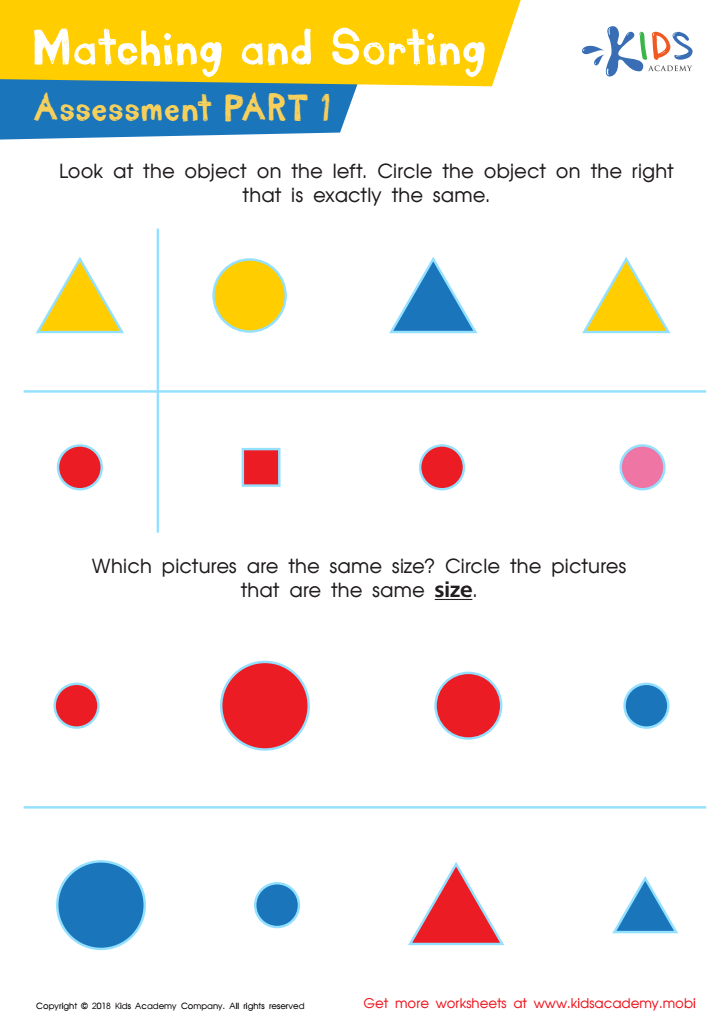
Matching and Sorting for Kindergarten: Assessment 1 Worksheet
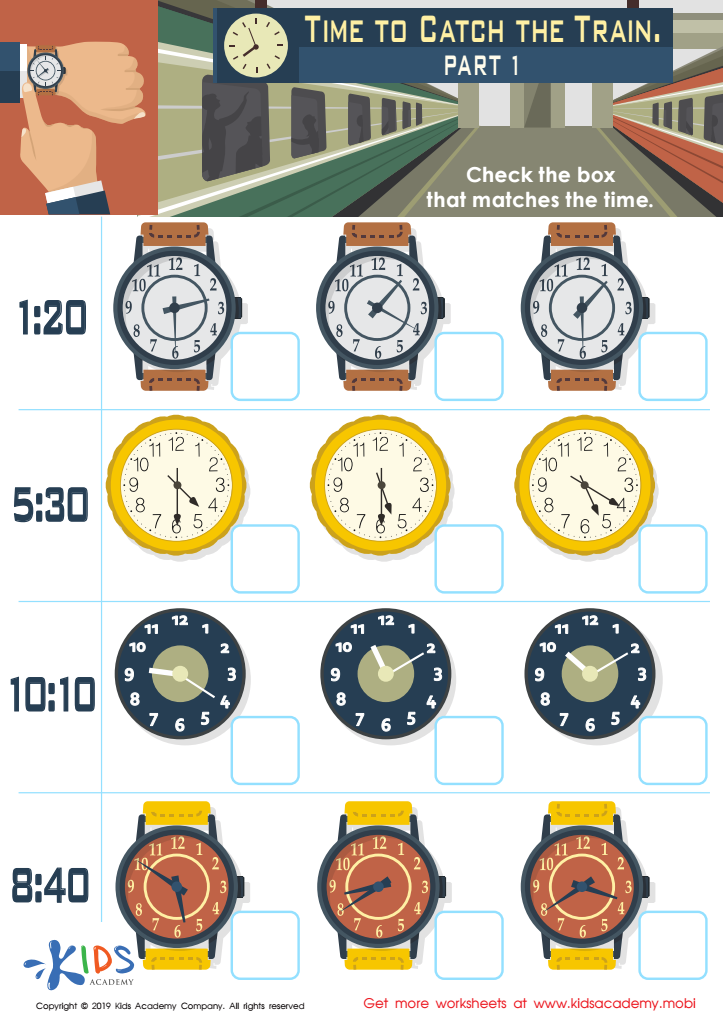
Time to Catch the Train Part 1 Worksheet
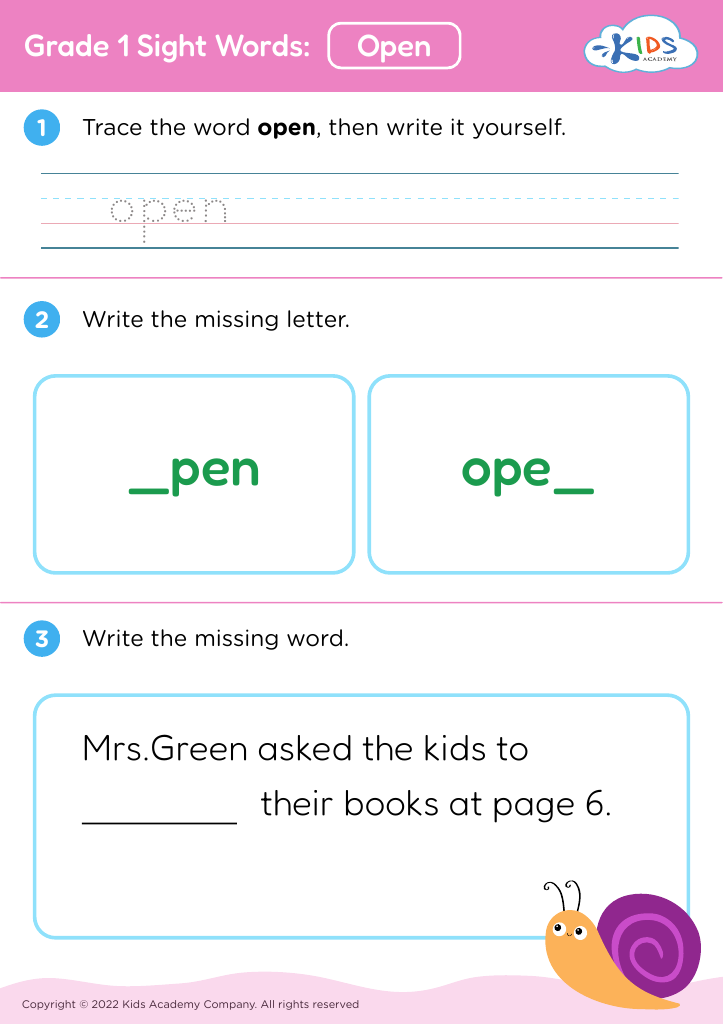


.jpg)

.jpg)



Time-telling skills are crucial for children aged 5-8 as they form a foundational aspect of their cognitive and practical development. Parents and teachers should care about these skills because they promote a sense of responsibility and independence. Knowing how to tell time helps children understand daily routines and manage their schedules effectively, benefiting their overall time-management abilities.
Learning to tell time bolsters mathematical skills, reinforcing concepts like counting, addition, and subtraction, which are key components of early math education. Furthermore, time-telling encourages logical thinking as children learn to differentiate between hours, minutes, and seconds. This understanding also aids in comprehending longer time frames, like weeks, months, and years, expanding their grasp of larger temporal structures.
Time-telling competence also supports children's social development. By knowing how to read clocks and understand schedules, kids can better participate in activities that require punctuality, group coordination, and the concept of time-related boundaries. This directly impacts their preparedness for school routines, extracurricular activities, and future responsibilities.
In essence, cultivating time-telling skills in children aged 5-8 transcends mere ability; it nurtures independence, bolsters critical thinking, enhances math abilities, and equips young learners with a lifelong tool that is indispensable both academically and socially.








