Understanding bar graphs Worksheets for Ages 5-8
8 filtered results
-
From - To
Unlock the power of data visualization with our "Understanding Bar Graphs Worksheets for Ages 5-8." Designed specifically for young learners, these engaging activities help kids comprehend bar graphs through fun and interactive exercises. Children will learn to read, interpret, and create their own bar graphs, gaining foundational skills in data representation and analysis. Perfect for classrooms or at-home learning, these worksheets not only enhance math proficiency but also encourage critical thinking and problem-solving. Equip your child with essential knowledge and make learning an exciting adventure with our expertly crafted bar graph worksheets!
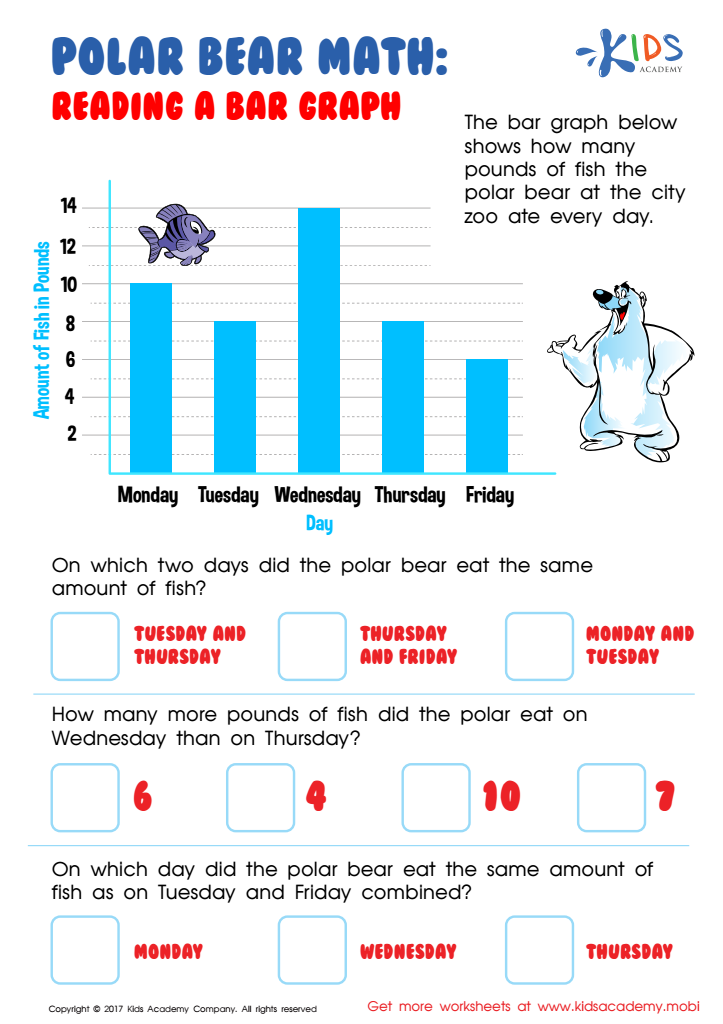
Reading Bar Graph Worksheet
 Assign to My Students
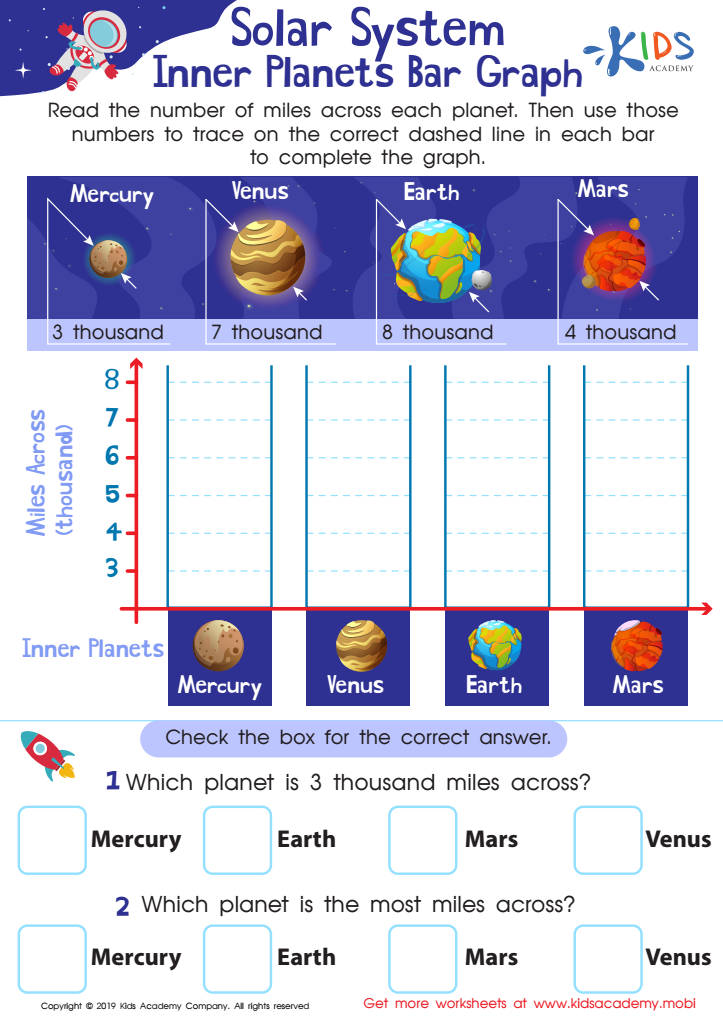
Planets Bar Graph Worksheet
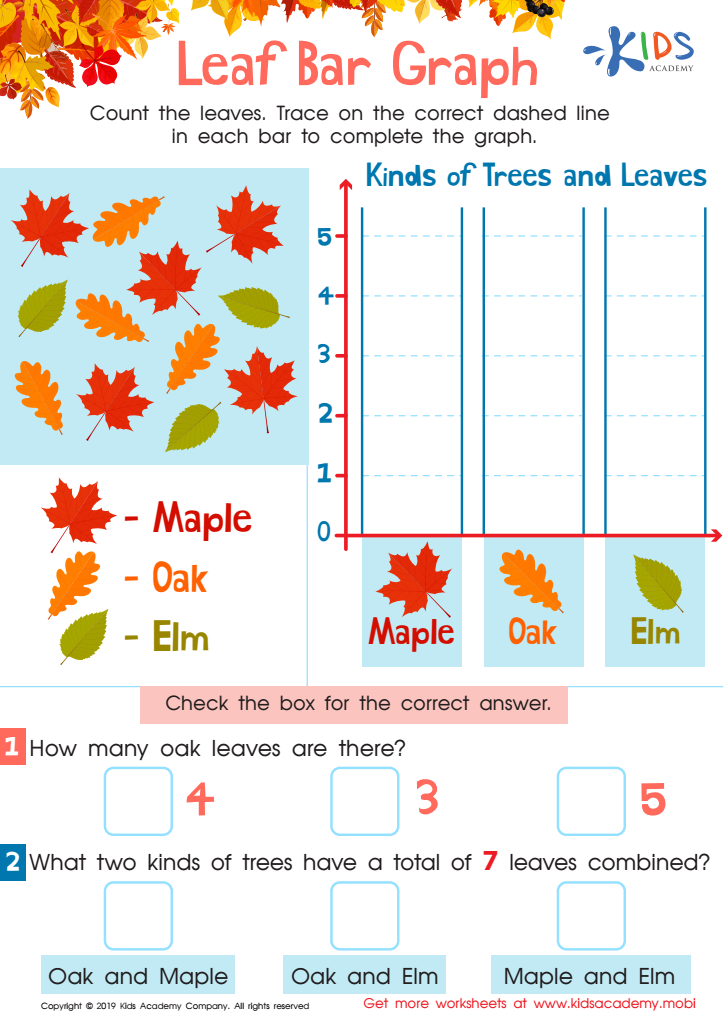
Leaf Bar Graph Worksheet
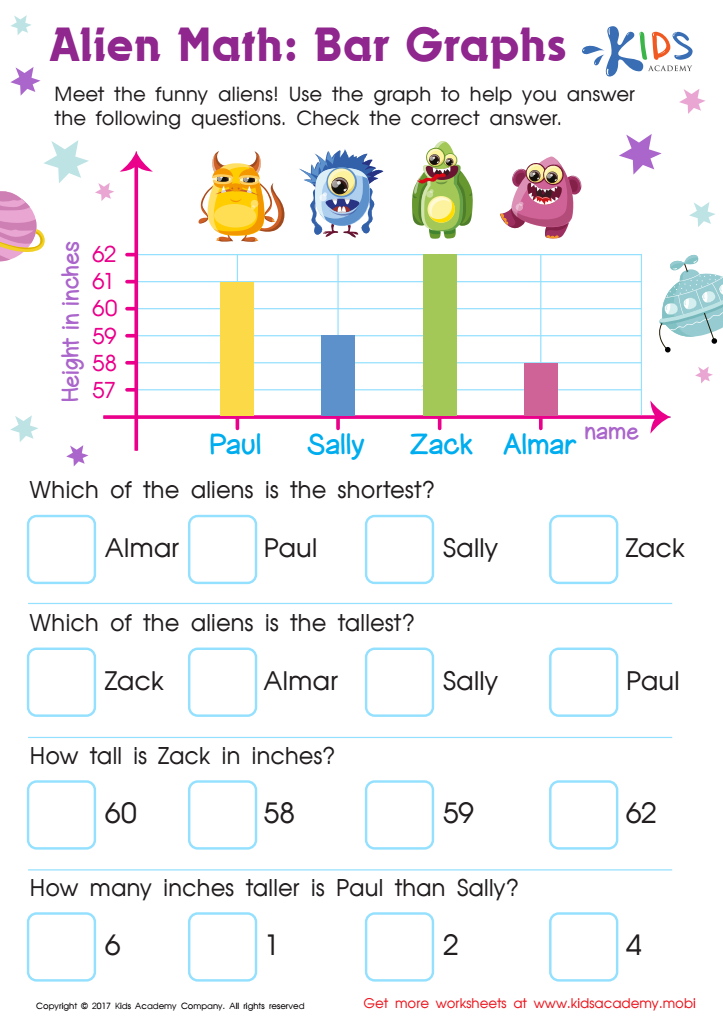
Bar Graphs Worksheet
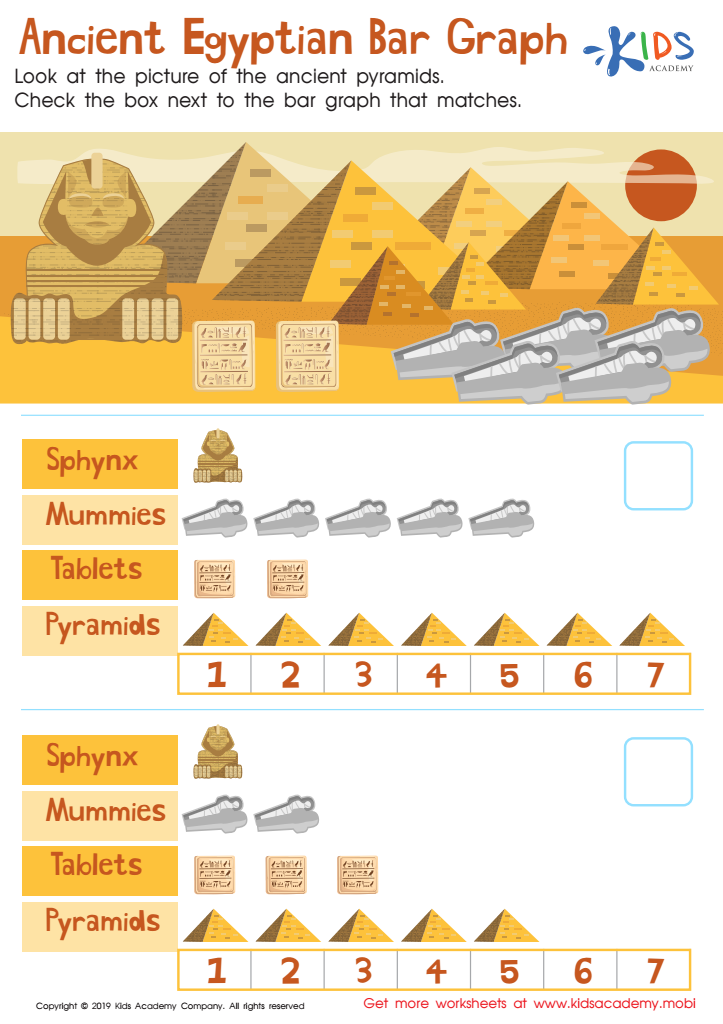
Egyptian Bar Graph Worksheet






Understanding bar graphs is an important foundational skill for children ages 5-8, and it's essential for both parents and teachers to ensure that kids grasp this concept early on. Bar graphs offer a visual representation of data, allowing young learners to easily comprehend and compare information. At this developmental stage, children are naturally curious and have a growing ability to understand basic abstractions. Learning to use bar graphs caters to their inquisitiveness and provides a practical tool for organizing information.
Moreover, engaging with bar graphs helps to promote critical thinking and analytical skills. By interpreting the height or length of bars, kids learn to recognize patterns and make inferences – skills that are crucial for problem-solving in everyday situations and future academic endeavors. Bar graphs also introduce children to the concept of measurement and quantitative comparison, which are fundamental aspects of mathematics.
In addition, understanding and creating bar graphs can make learning more interactive and enjoyable. Activities involving bar graphs can align with topics that children are naturally interested in, such as their favorite fruits, pets, or sports. This connection to personal interests not only solidifies their grasp of the concept but also reinforces the idea that learning can be fun and relevant to their lives. As a result, fostering these early graphing skills sets a solid foundation for more advanced data interpretation and numeracy skills in the future.








