Understanding number patterns Worksheets for Ages 5-8
6 filtered results
-
From - To
Explore our "Understanding Number Patterns Worksheets" designed specifically for children ages 5-8! These engaging and interactive worksheets help young learners identify and analyze number patterns, a foundational math skill. Through fun activities that include visuals, sequences, and comparisons, students will enhance their problem-solving abilities and boost their confidence in math. Ideal for both classroom use and at-home learning, our worksheets cater to various learning styles, making math exciting and accessible. Download now to help your child build a strong mathematical foundation while enjoying creative and educational exercises that promote critical thinking and number sense!
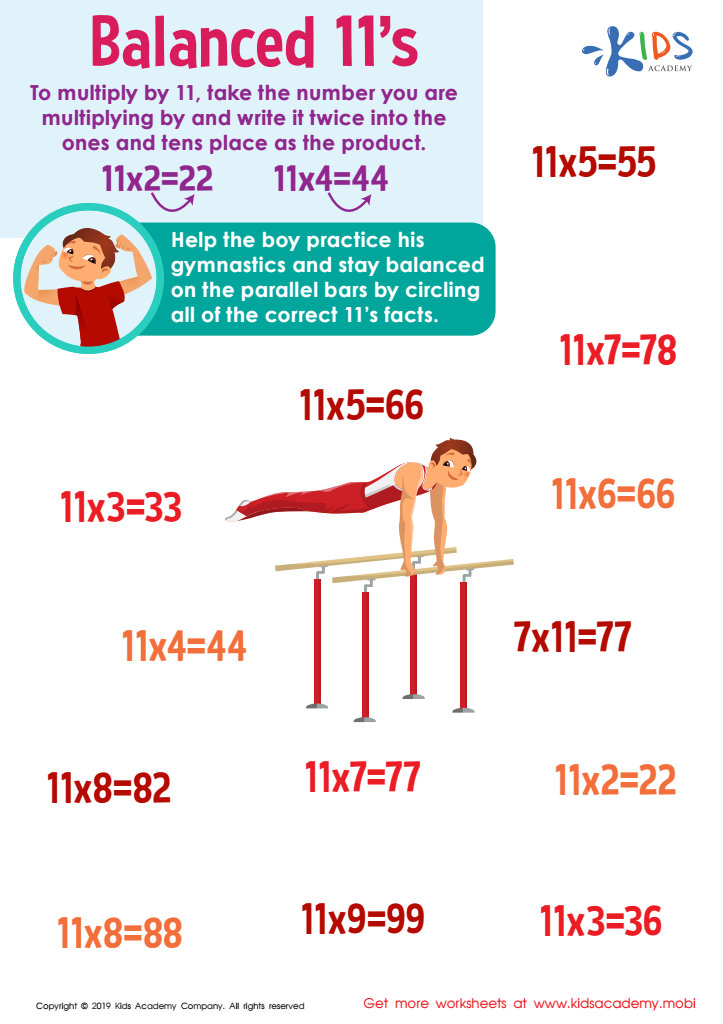
Balanced 11s Worksheet
 Assign to My Students
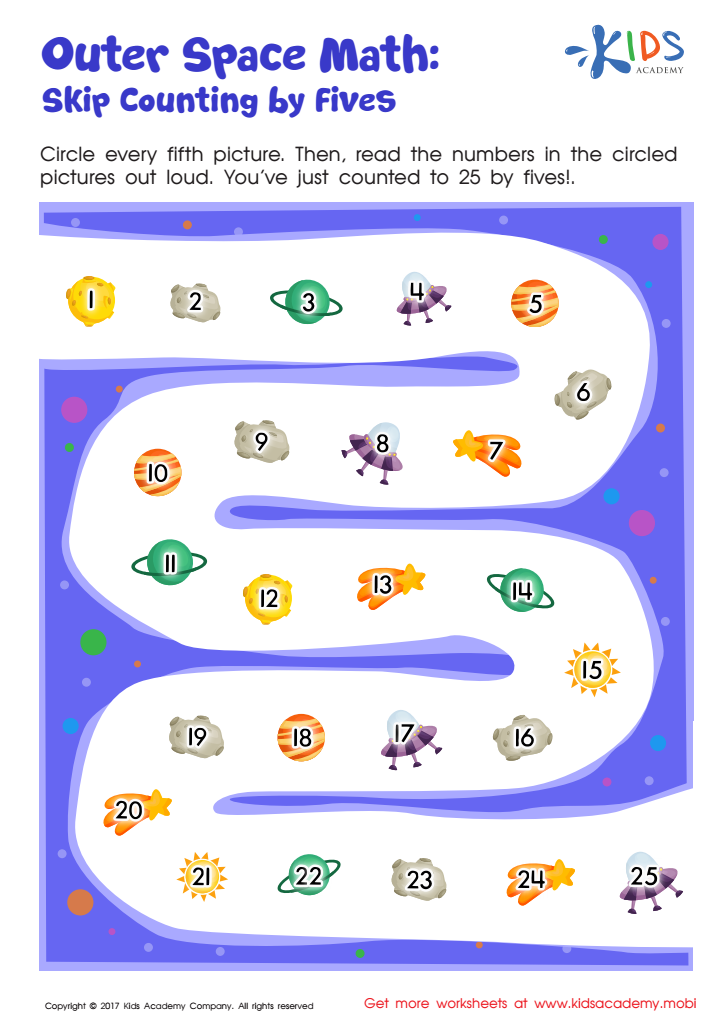
Skip Counting by 5s: Outer Space Math Printable
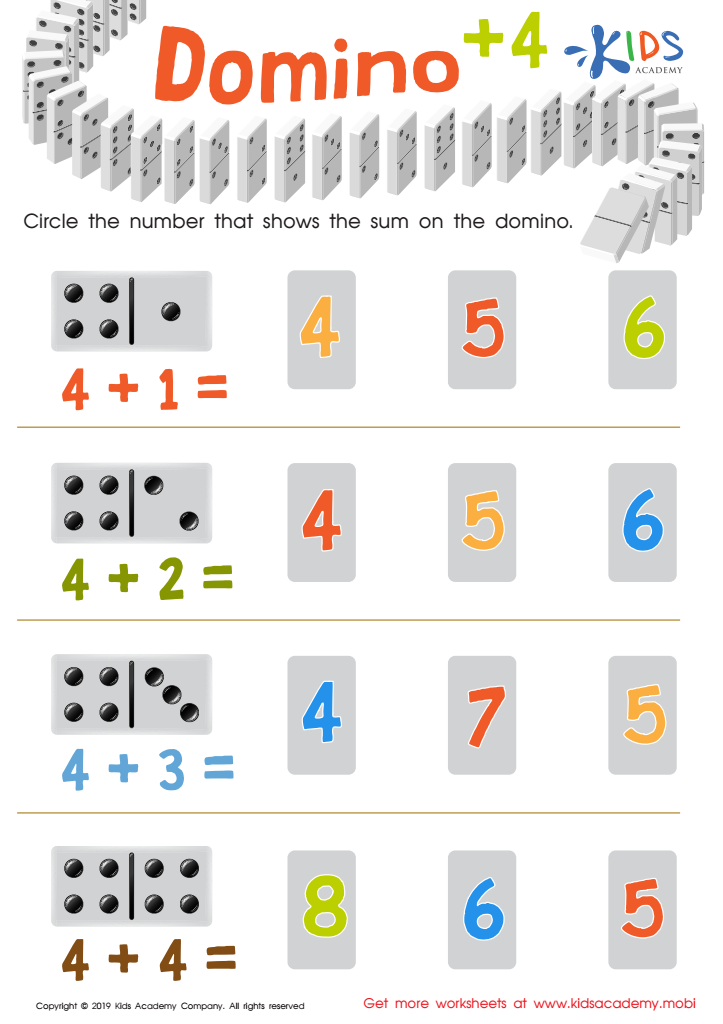
Domino +4 Worksheet
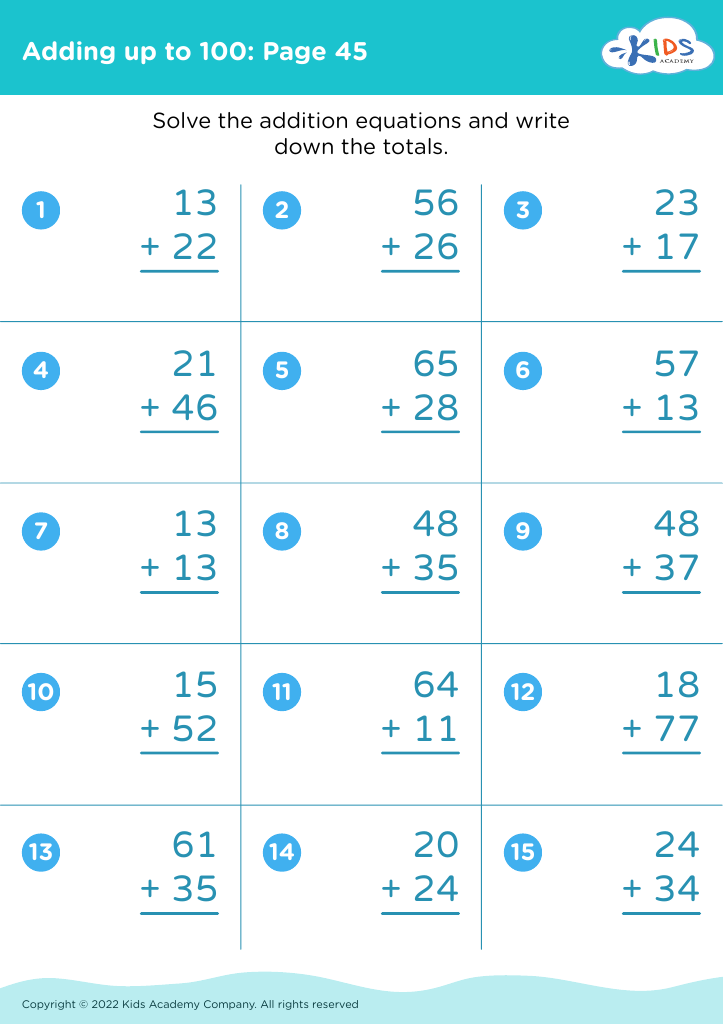
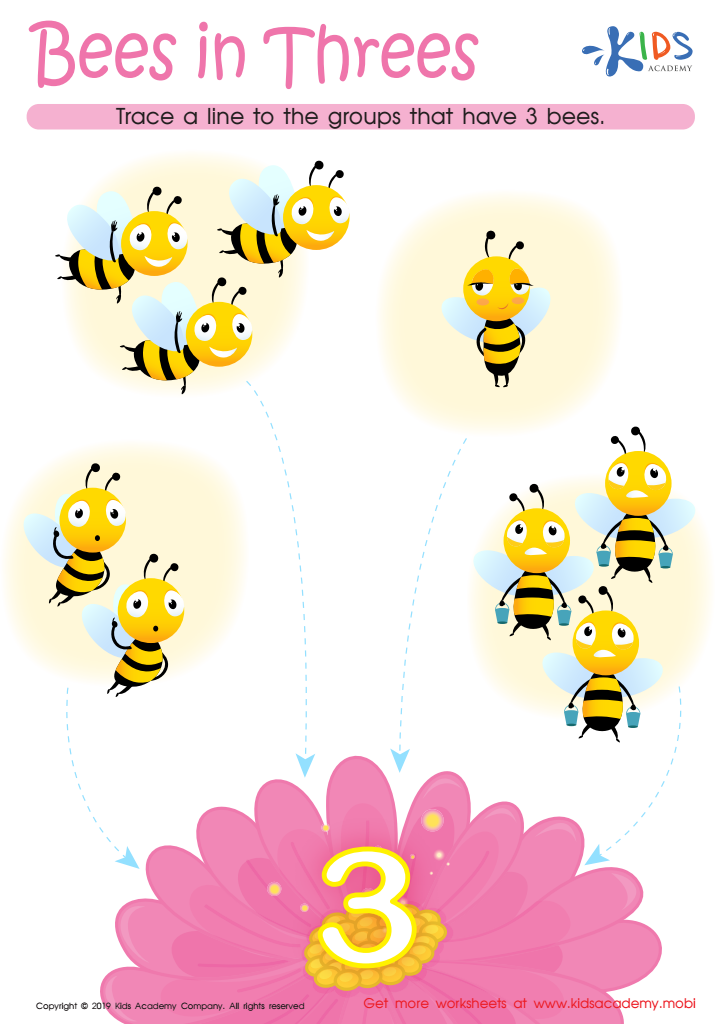
Bees in Threes Worksheet








Understanding number patterns is crucial for children aged 5-8 because it lays the foundation for their mathematical thinking and problem-solving skills. At this young age, children begin to recognize and manipulate numbers, and identifying patterns encourages them to explore relationships and structures within mathematics. When parents and teachers focus on number patterns, they help children understand the sequencing of numbers, which aids in mastering basic operations like addition and subtraction.
Moreover, recognizing patterns contributes to numerical fluency, which is key to future advanced math concepts such as multiplication, division, fractions, and even algebra. Early engagement with patterns also sharpens critical thinking skills, as children learn to make predictions and solve problems through observational reasoning.
Additionally, recognizing patterns aids in developing a child’s cognitive skills, enhancing their ability to make connections across different areas of learning. This skill translates to better outcomes not only in mathematics but also in subjects like science and music. Ultimately, by supporting children in understanding number patterns, parents and teachers set them on a path to become confident, capable learners as they progress through their education.








