Understanding number relationships Worksheets for Ages 5-8
9 filtered results
-
From - To
Explore our engaging "Understanding Number Relationships" worksheets designed for children aged 5-8. These worksheets offer a fun and interactive way to help young learners grasp essential math concepts, including the relationships between numbers, patterns, and basic operations. With colorful visuals and age-appropriate challenges, kids will enhance their critical thinking and problem-solving skills while building a strong foundation in mathematics. Perfect for classroom use or at-home learning, our worksheets cater to various learning styles. Encourage your child's love for math and assist them in mastering number relationships today! Download our printable worksheets for an enriching educational experience.
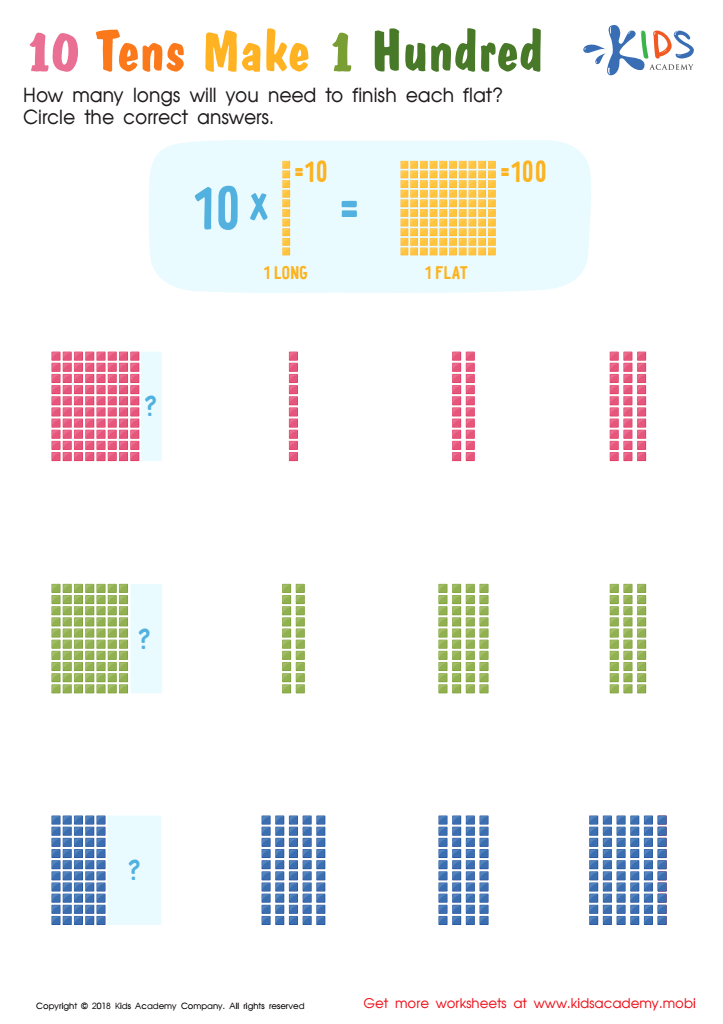
10 Tens Make 1 Hundred Worksheet
 Assign to My Students
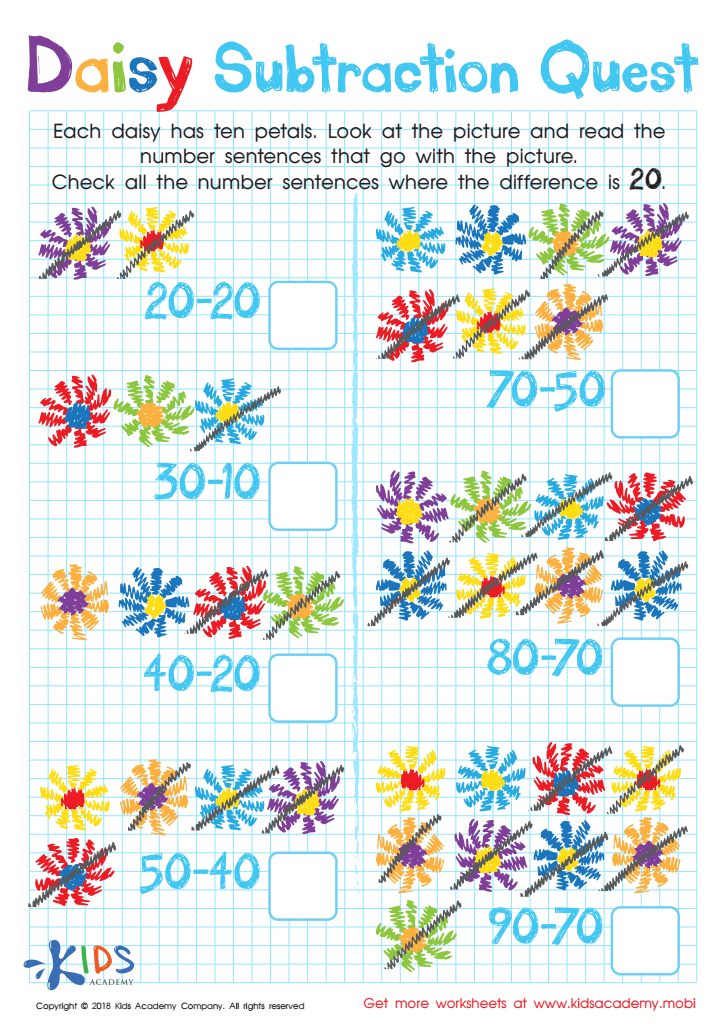
Daisy Subtraction Quest Worksheet
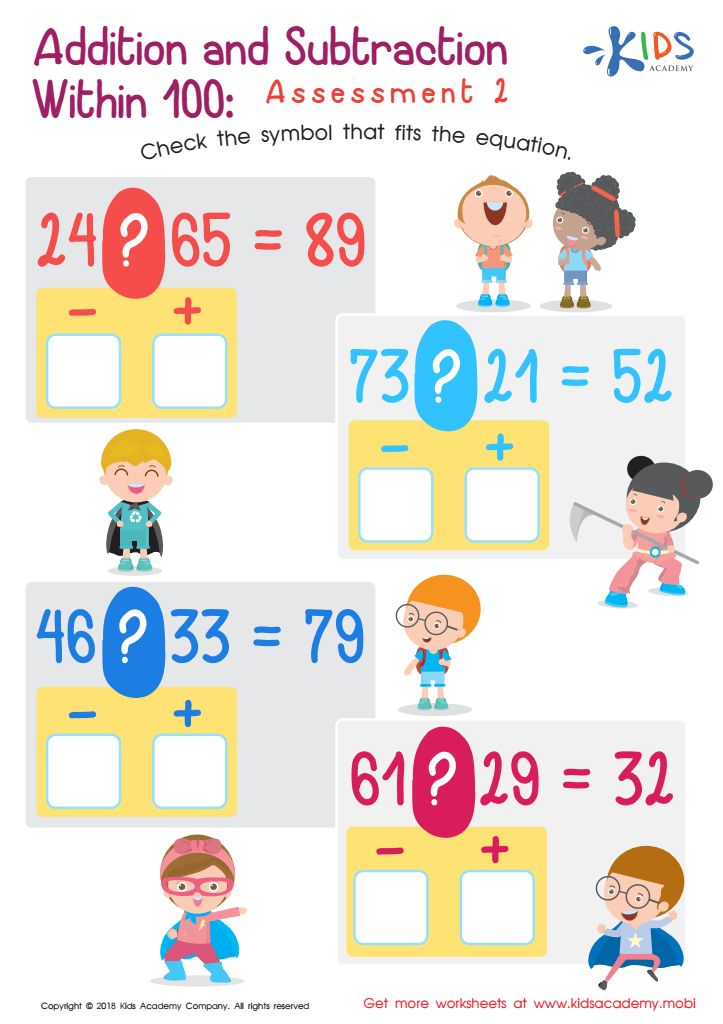
Addition and Subtraction Within 1: Assessment 2 Worksheet
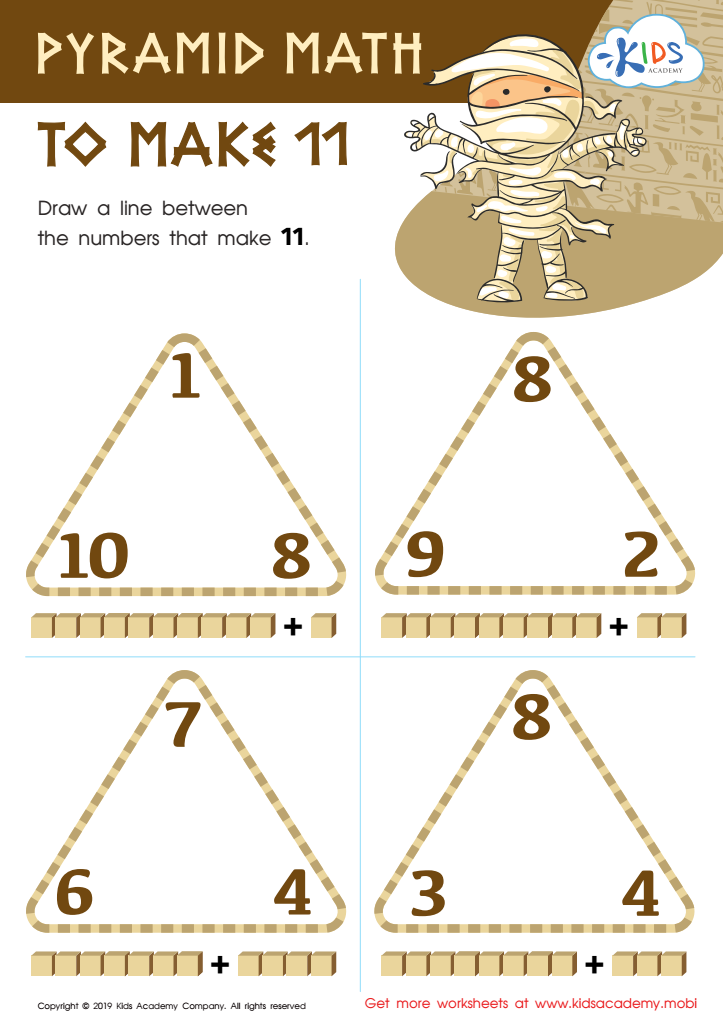
Pyramid Math to Make 11 Worksheet
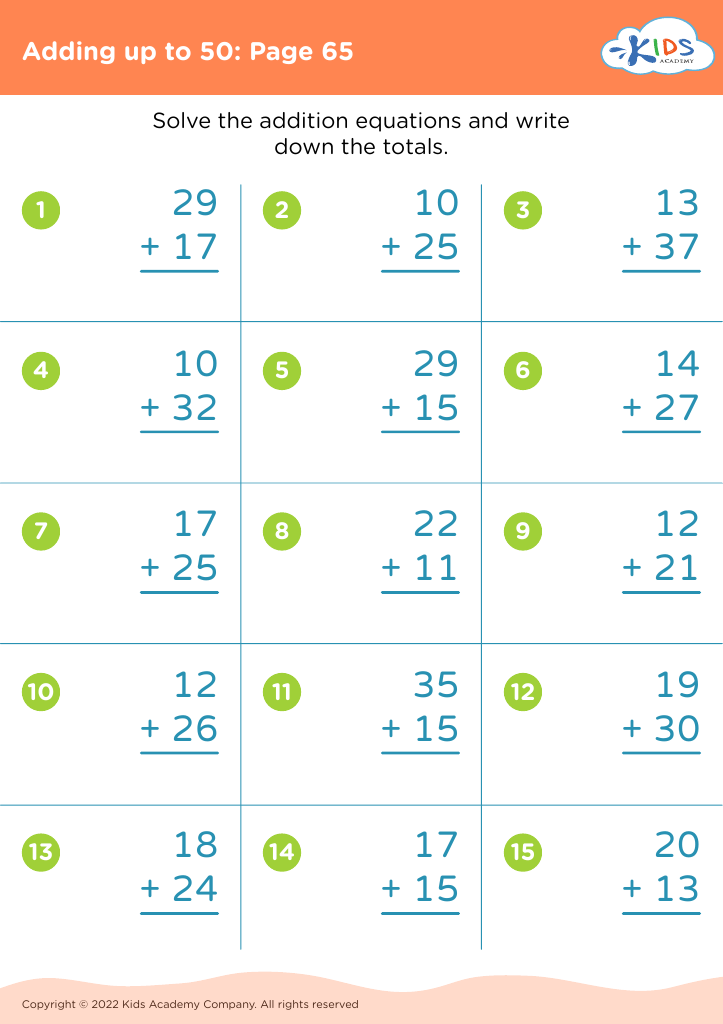








Understanding number relationships is crucial for children aged 5-8 as it forms the foundation for their mathematical development. At this age, children begin to grasp various concepts such as addition, subtraction, and basic number operations. When parents and teachers emphasize number relationships, they help children recognize that numbers are interconnected, which enhances their problem-solving skills and critical thinking.
Additionally, understanding number relationships aids in developing a positive mathematical mindset. Children who can relate numbers easily are more confident in tackling mathematical challenges, which reduces anxiety around math as they progress in their education. This knowledge also supports their ability to explore patterns and sequences, making more complex concepts easier to understand later on.
Furthermore, strong numerical relationships enable students to build practical life skills. Societal functions, such as budgeting or time management, require a fundamental comprehension of numbers. By fostering this understanding early on, we equip our children with the tools they need to navigate their daily lives effectively.
In summary, supporting young children in grasping number relationships not only leads to academic success but also instills essential life skills, ensuring they have a robust groundwork for future learning.








