Understanding symmetry Worksheets for Ages 5-8 - Page 2
38 filtered results
-
From - To
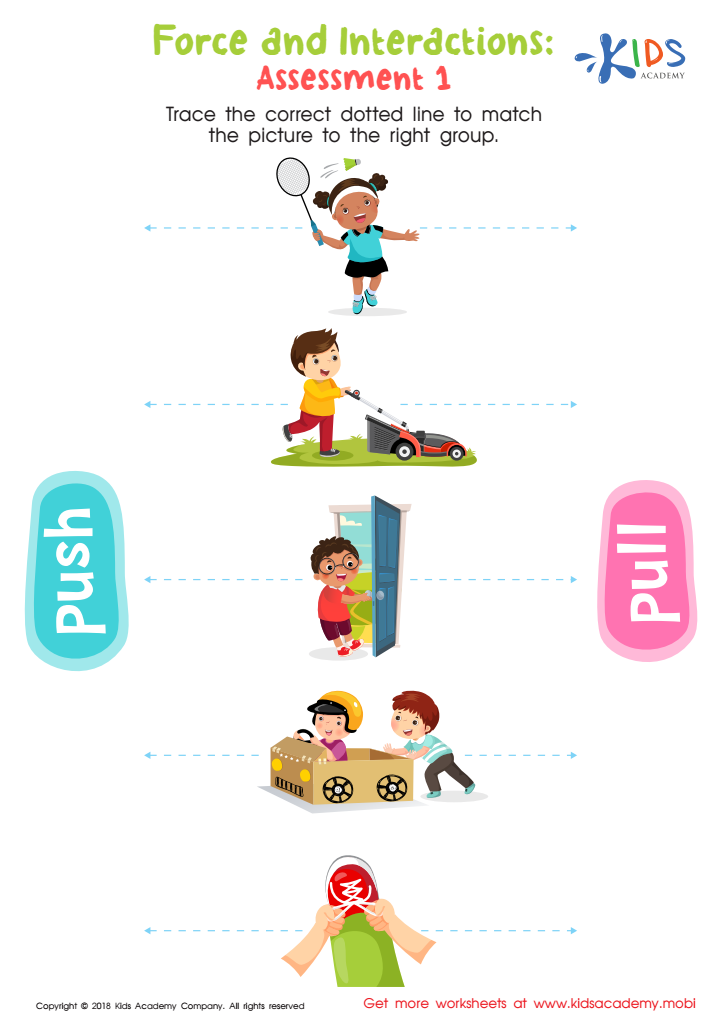
Force and Interactions: Assessment 2 Worksheet
 Assign to My Students
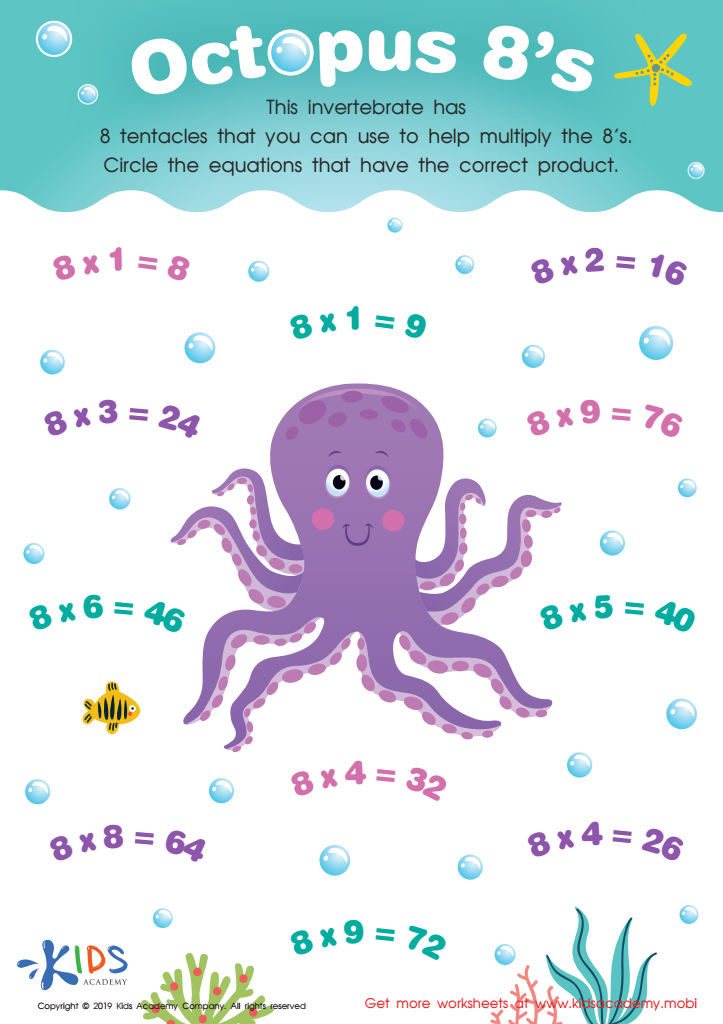
Octopus 8’s Worksheet





Understanding symmetry is crucial for children aged 5-8 as it lays the foundation for essential cognitive skills and mathematical concepts. At this age, children are naturally curious and eager to explore the world around them. Learning about symmetry enhances their ability to recognize patterns, which is vital in developing mathematical reasoning.
Symmetry also fosters spatial awareness, enabling children to visualize and manipulate shapes and objects in their environment. This skill is pivotal, not only in math but also in fields such as art, science, and engineering. By grasping the concept of symmetry, children can improve their problem-solving abilities, as it helps them to categorize and make connections between different concepts.
Moreover, symmetry has aesthetic value; children often respond positively to symmetric designs, fostering an appreciation for art and nature. Engaging in activities centered around symmetry, such as folding paper, creating designs, or exploring nature, encourages creativity and critical thinking.
Ultimately, parents and teachers should care about teaching symmetry as it equips children with vital skills that transcend the math curriculum, promoting a well-rounded education that inspires creativity and enhances analytical capabilities.








