Weather identification Worksheets for Ages 5-8
7 filtered results
-
From - To
Enhance your child's understanding of weather with our engaging Weather Identification Worksheets designed for ages 5-8. These interactive resources foster learning through fun, colorful activities that help young learners identify various weather conditions, such as sunny, rainy, snowy, and windy days. Perfect for classrooms or homeschooling, these worksheets encourage critical thinking and observational skills while introducing essential vocabulary. Each worksheet is thoughtfully crafted to saturate learning with enjoyment, making weather education a breeze. Download our Weather Identification Worksheets today and inspire your child's curiosity about the world around them, ensuring they're well-prepared for any weather encounter!
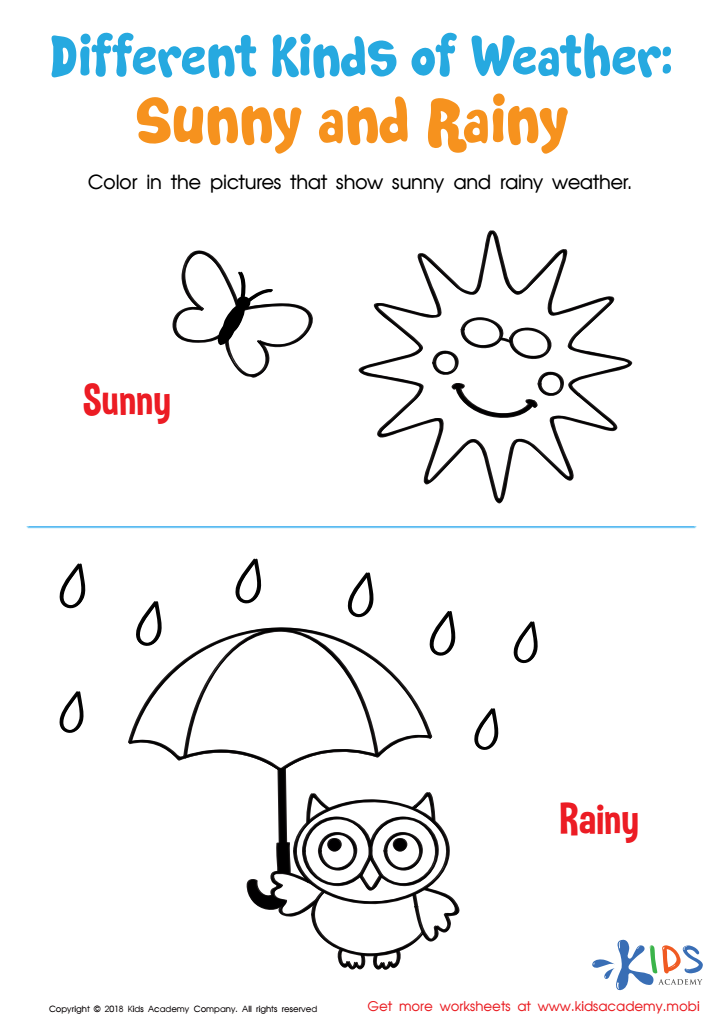
Different Kinds of Weather: Sunny and Rainy Worksheet
 Assign to My Students
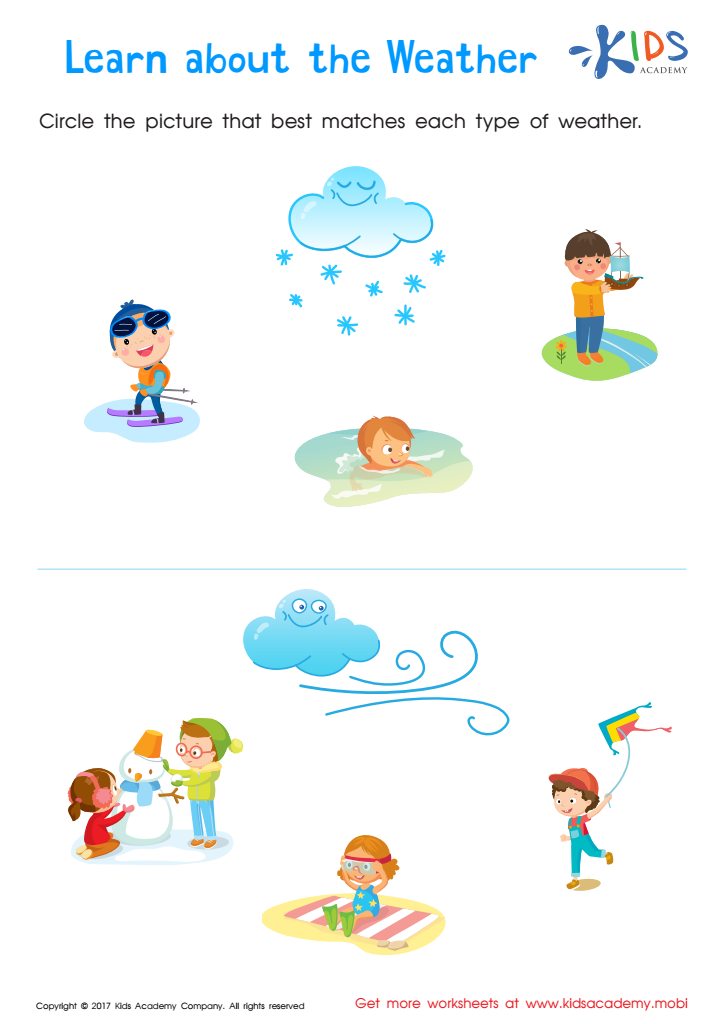
About the Weather Printable
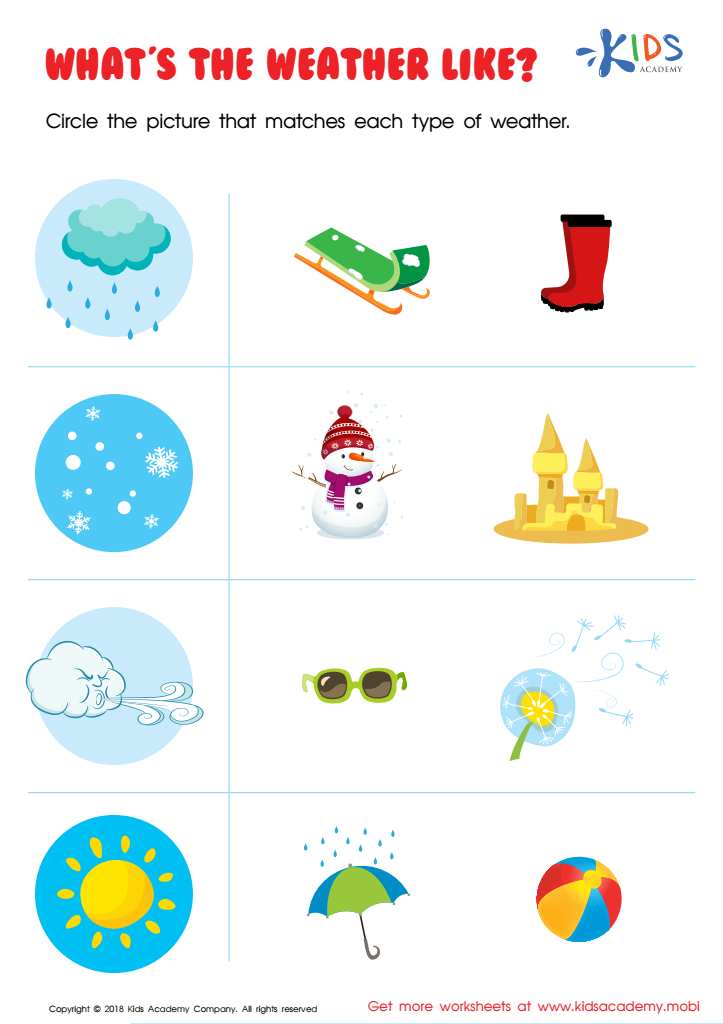
What's the Weather Like? Worksheet
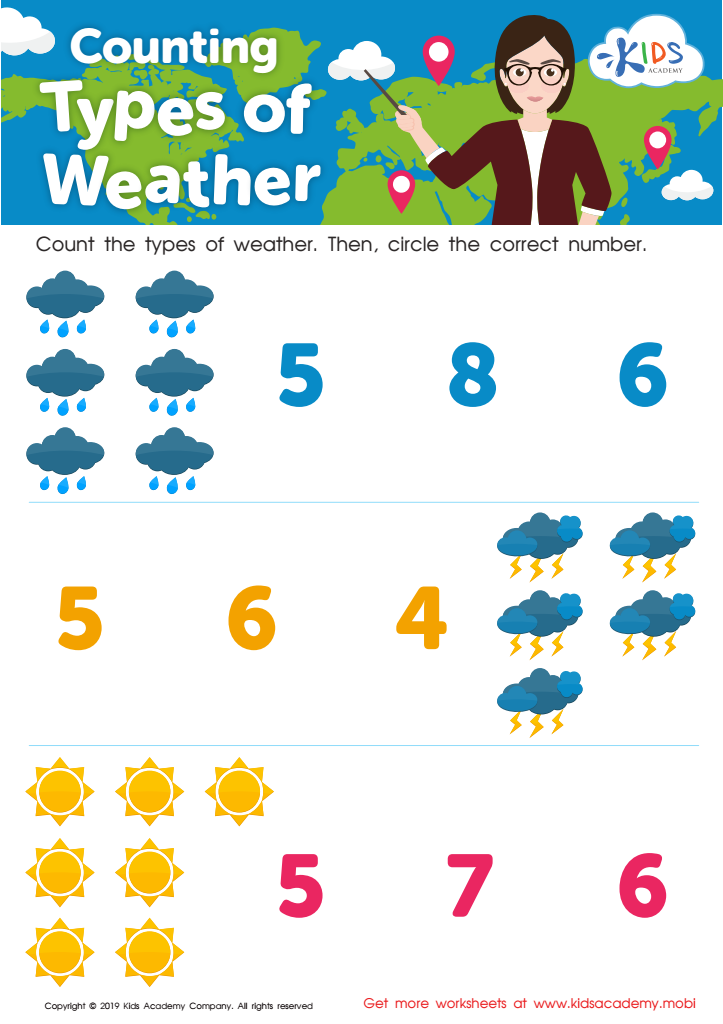
Counting Types of Weather Worksheet
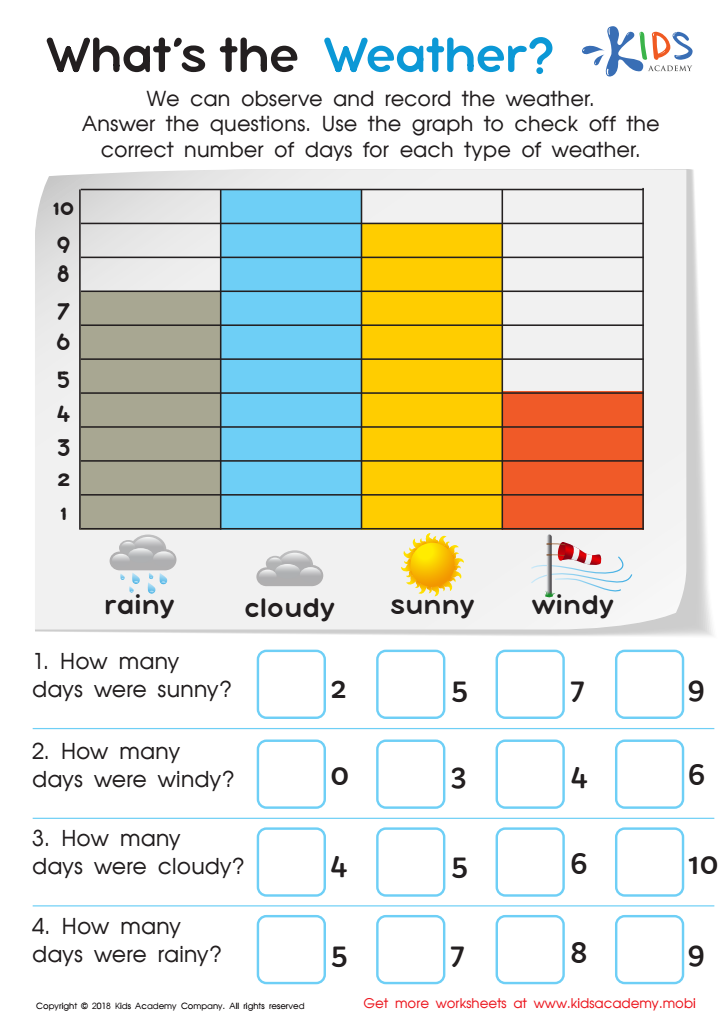
What's the Weather? Worksheet
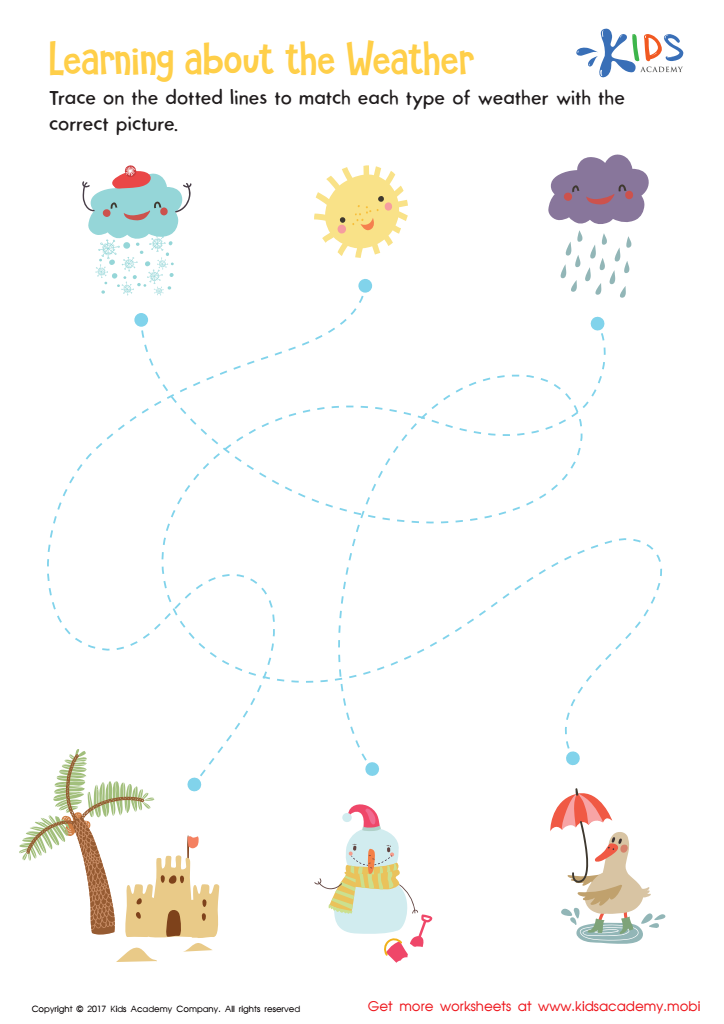







Understanding weather identification is essential for children aged 5-8, as it lays the foundation for critical thinking and observation skills. At this age, children are naturally curious about their environment, and learning about weather patterns can make this exploration both educational and engaging. Knowledge of different weather conditions—such as rain, snow, wind, and sunshine—enables children to predict daily activities and dress appropriately, promoting independence and decision-making skills.
Weather education also enhances safety awareness. Teaching kids to recognize warning signs like dark clouds or strong winds can help them understand when to seek shelter or be cautious, thus instilling lifelong safety habits. Furthermore, weather identification fosters a sense of connection to nature, sparking interest in science and the environment. This foundational knowledge encourages inquiries into broader topics such as seasons, climate change, and the importance of natural resources.
Incorporating weather education in early learning also supports key areas of development—including language and communication—as children learn new vocabulary to describe the weather. Collaborative weather projects or games can engage siblings and classmates, enhancing social skills and teamwork. Overall, by prioritizing weather identification, parents and teachers equip young learners with critical life skills and a deeper appreciation for the world around them.








