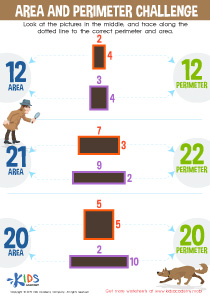
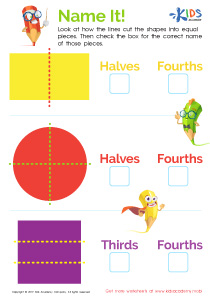
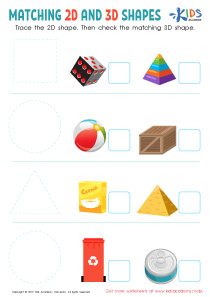
Comparing shapes 2D Shapes Worksheets for Ages 5-8
4 filtered results
-
From - To
Discover the joy of geometry with our "Comparing 2D Shapes Worksheets" tailored for ages 5-8! These fun, engaging worksheets enhance children's understanding of various 2D shapes like circles, squares, triangles, and more. Differentiated activities focus on identifying, comparing, and contrasting shapes, helping young learners build essential math skills. Perfect for both classroom and home use, these worksheets encourage hands-on learning through interactive exercises. Spark curiosity and creativity as kids explore the world of shapes, laying a strong foundation for future mathematical success. Download today and watch your child's confidence in geometry grow!
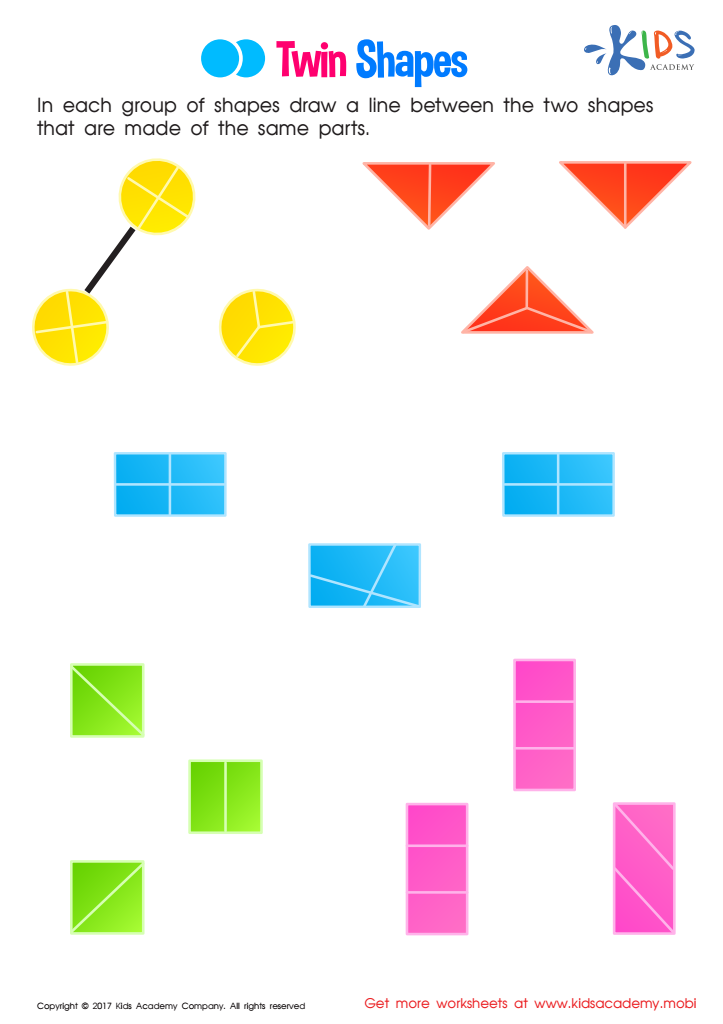
Twin Shapes Worksheet
 Assign to My Students

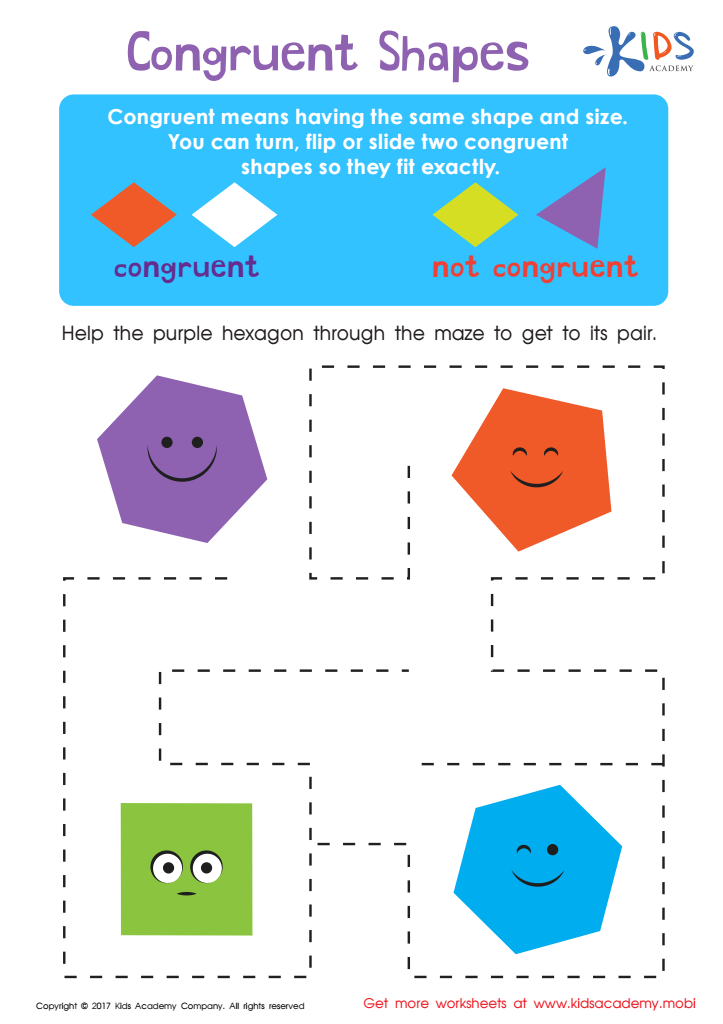
Congruent Shapes Worksheet
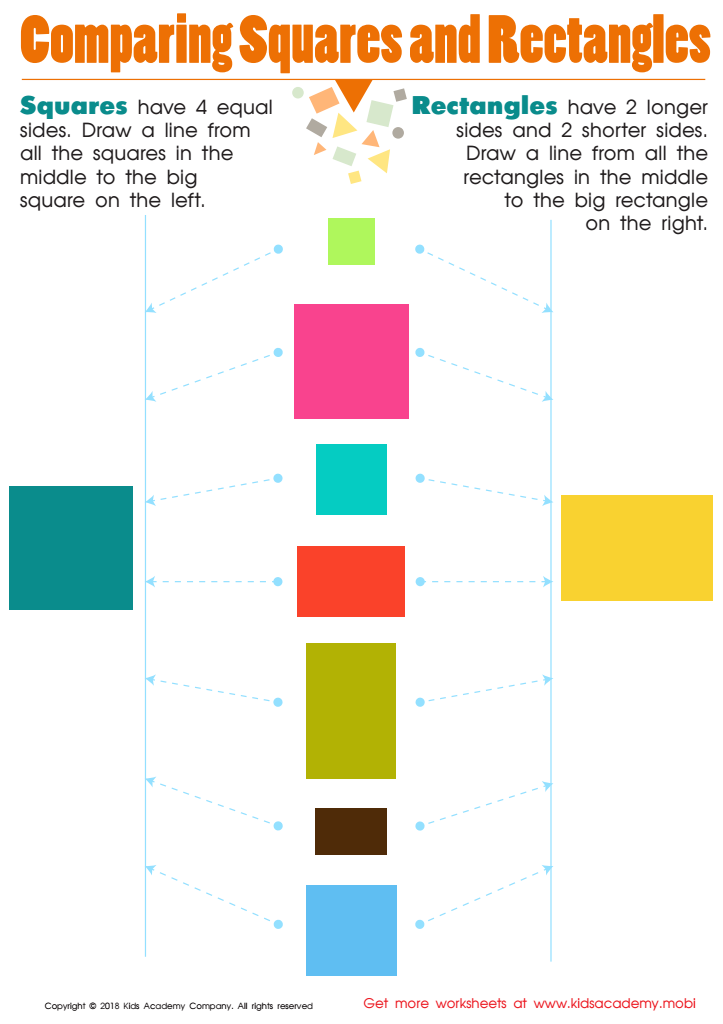
Comparing Squares Rectangles Worksheet
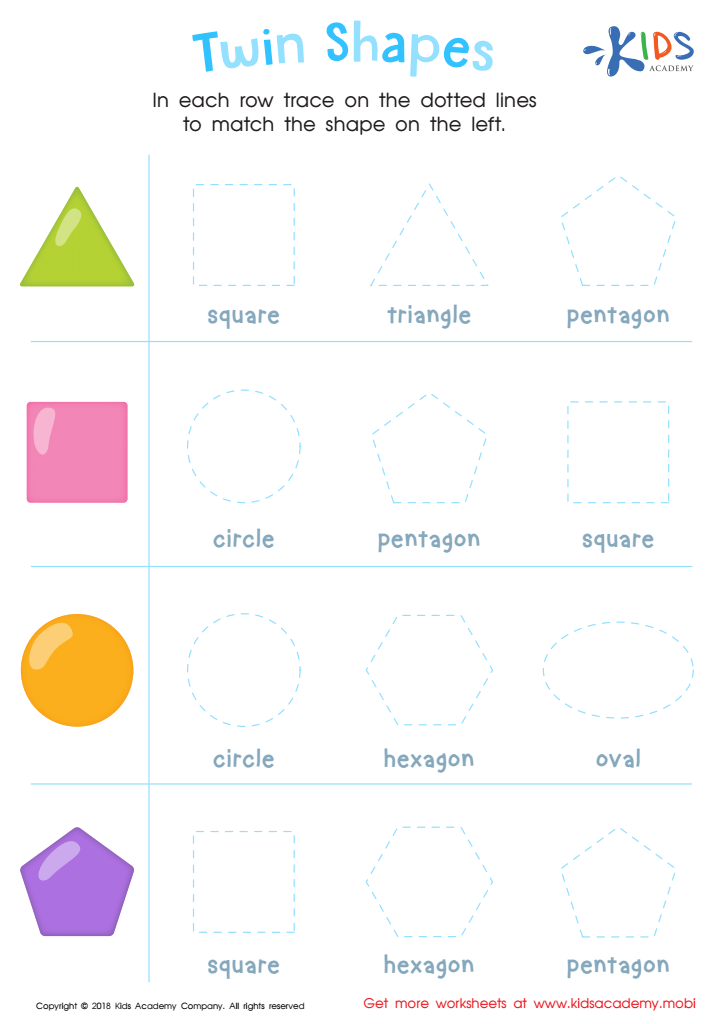
Twin Shapes Dot-to-Dot Worksheet








Comparing 2D shapes for children ages 5-8 serves as a fundamental component of early childhood education that fosters a multitude of cognitive skills. First, it lays the groundwork for geometry. By identifying and comparing shapes such as circles, squares, triangles, and rectangles, kids develop spatial awareness and learn to recognize patterns and relationships, which are critical skills not only in math but also in everyday navigation and problem-solving.
Moreover, this foundational knowledge in shapes helps improve visual discernment, a skill that is crucial for reading and writing. As children notice differences and similarities between shapes, they can more easily distinguish between different letters and numbers, enhancing their literacy and numerical skills.
Additionally, dissecting attributes like the number of sides and corners hones children's critical thinking and categorization abilities. Engaging activities such as drawing, sorting, and matching shapes are not just academically beneficial but also make learning interactive and fun, nurturing a positive attitude towards education.
Incorporating shape comparison in early education builds confidence in young learners. It prepares them to tackle more complex mathematical concepts in higher grades and nurtures a love for learning by making foundational subjects approachable and engaging. Hence, educators and parents should prioritize this essential aspect of mathematics education.