Recognizing shapes Adding up to 100 Worksheets for Ages 5-8
8 filtered results
-
From - To
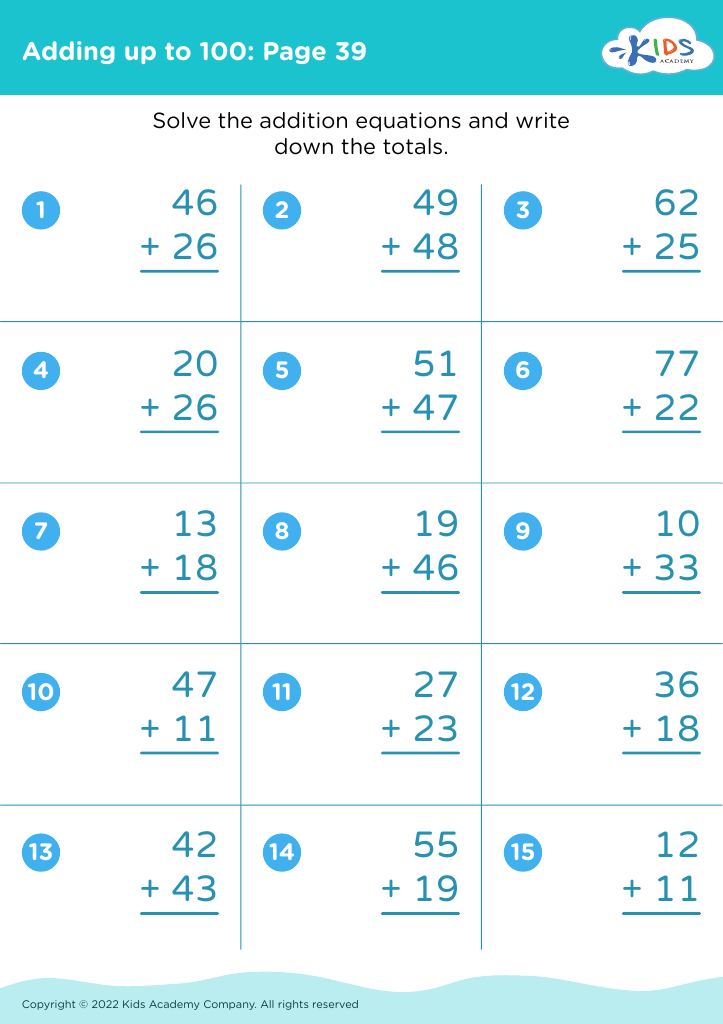
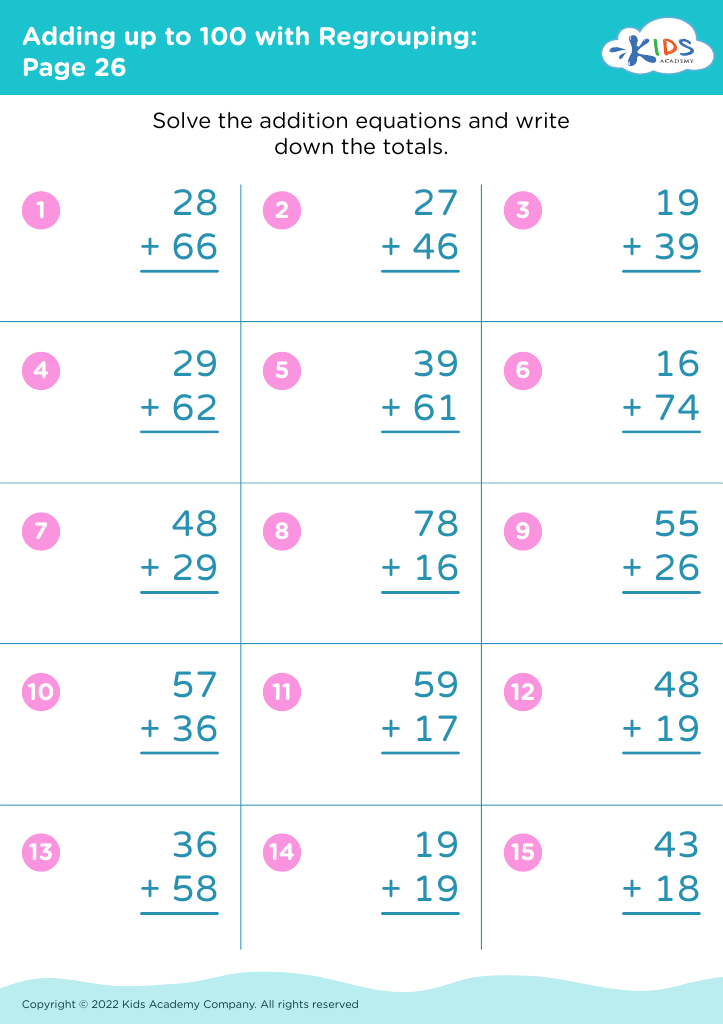
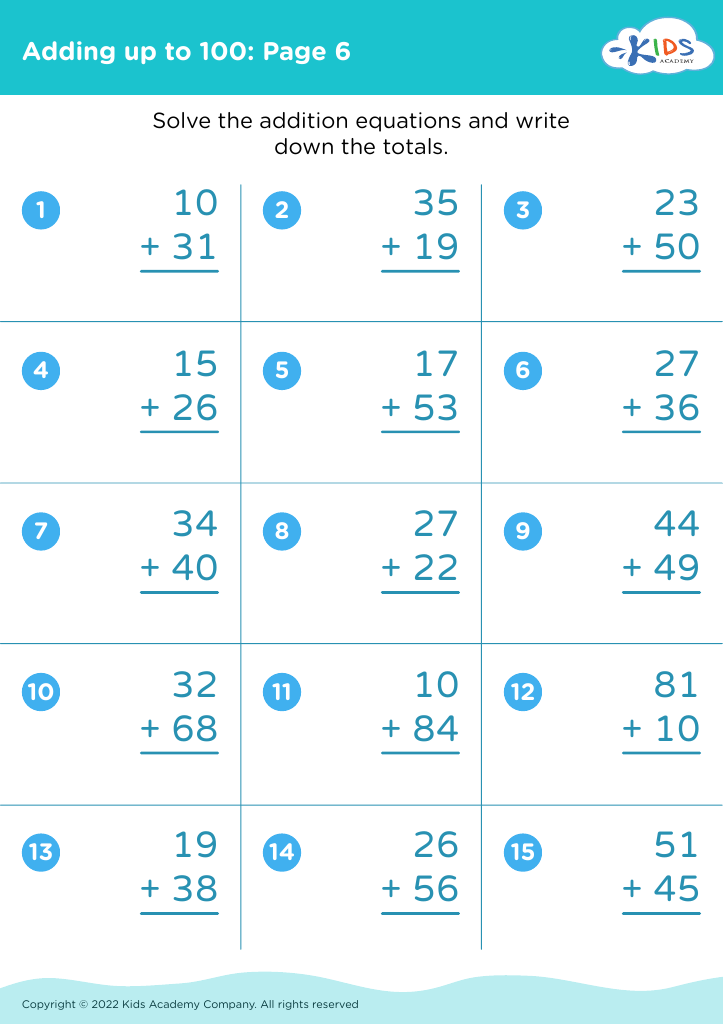
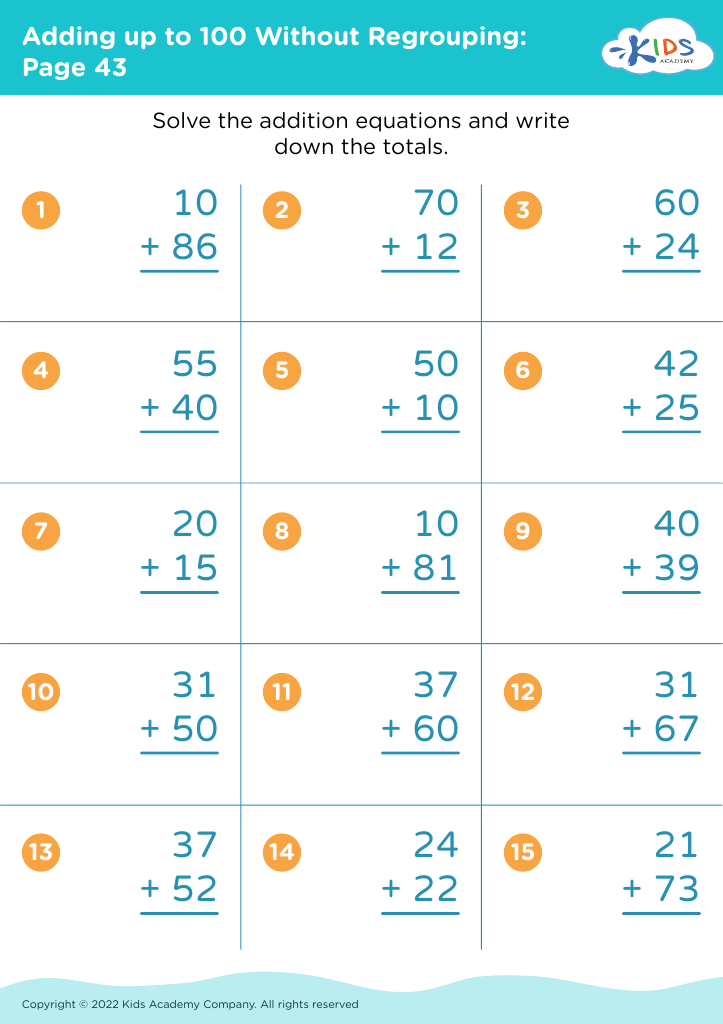
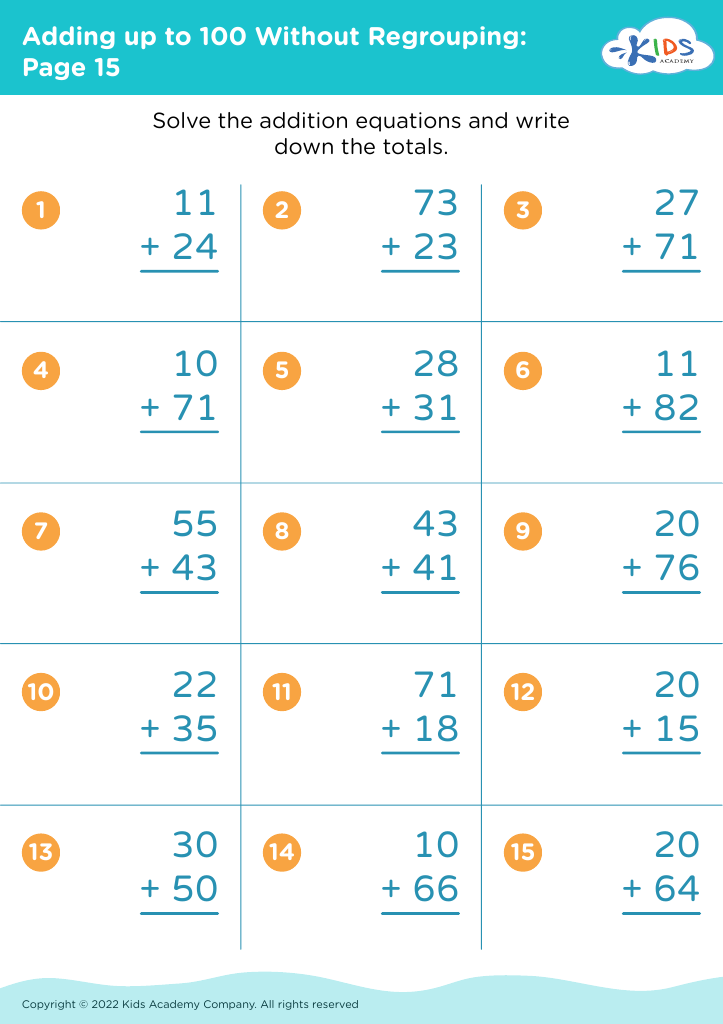
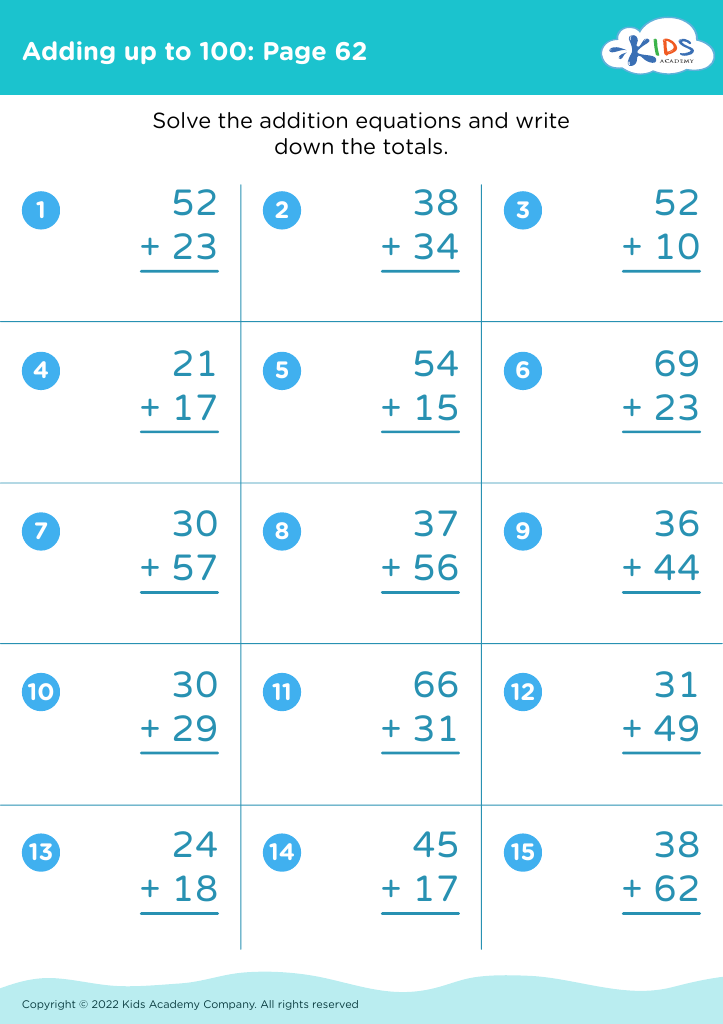
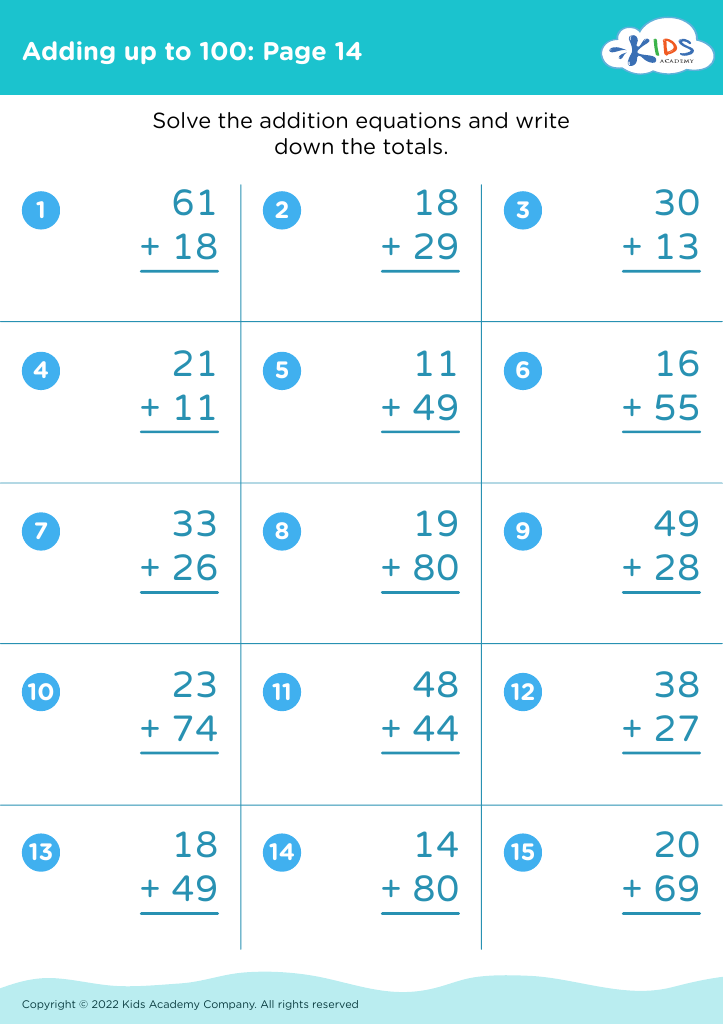
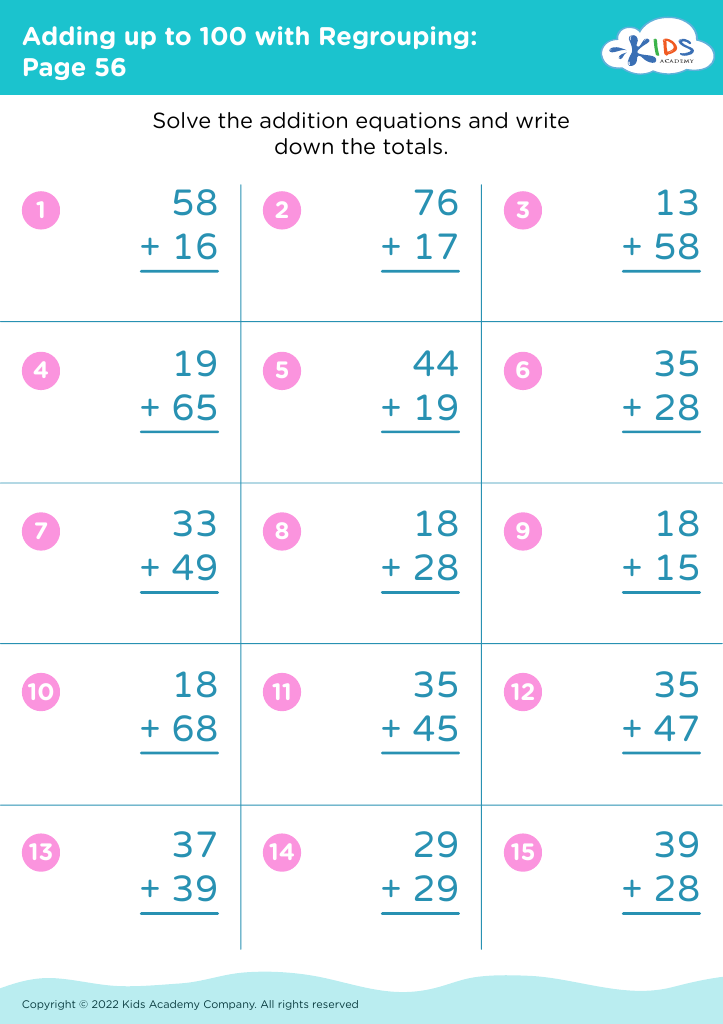
Introduce young learners to the world of shapes and numbers with our "Recognizing Shapes Adding Up to 100 Worksheets" designed for children ages 5-8. These engaging worksheets help children develop essential skills in recognizing various shapes while practicing their addition skills up to 100. With fun illustrations and interactive exercises, our resources make learning enjoyable and effective. Perfect for both classroom and home settings, these worksheets promote foundational math skills and encourage creativity. Whether enhancing visual recognition or honing addition abilities, kids will gain confidence as they complete each activity. Start your child’s math journey today with these exciting worksheets!






%20(1).jpg)
Recognizing shapes and understanding numerical concepts such as adding up to 100 are foundational skills for children aged 5-8, crucial for their cognitive development and future learning success. For parents and teachers, fostering these skills has several important benefits.
Shape recognition helps children make sense of the world around them. It enhances their spatial awareness, aids in problem-solving, and supports future learning in geometry and even art. When children identify various shapes, they develop critical observation skills that are fundamental to their overall cognitive growth.
On the other hand, mastering addition, especially concepts like summing up to 100, builds a strong mathematical foundation. It not only equips children with essential arithmetic skills but also nurtures their ability to think logically and engage in complex problem-solving as they progress in their education. Understanding numbers lays the groundwork for more advanced math topics, such as multiplication and division.
Furthermore, these skills are interconnected; for example, children can use shapes to design equations visually, reinforcing both math and spatial reasoning. By emphasizing shape recognition and addition, adults can help create confident, curious learners who are well-prepared for future academic challenges and real-life applications.








