Understanding quantity Adding Up to 5 Worksheets for Ages 5-8
17 filtered results
-
From - To
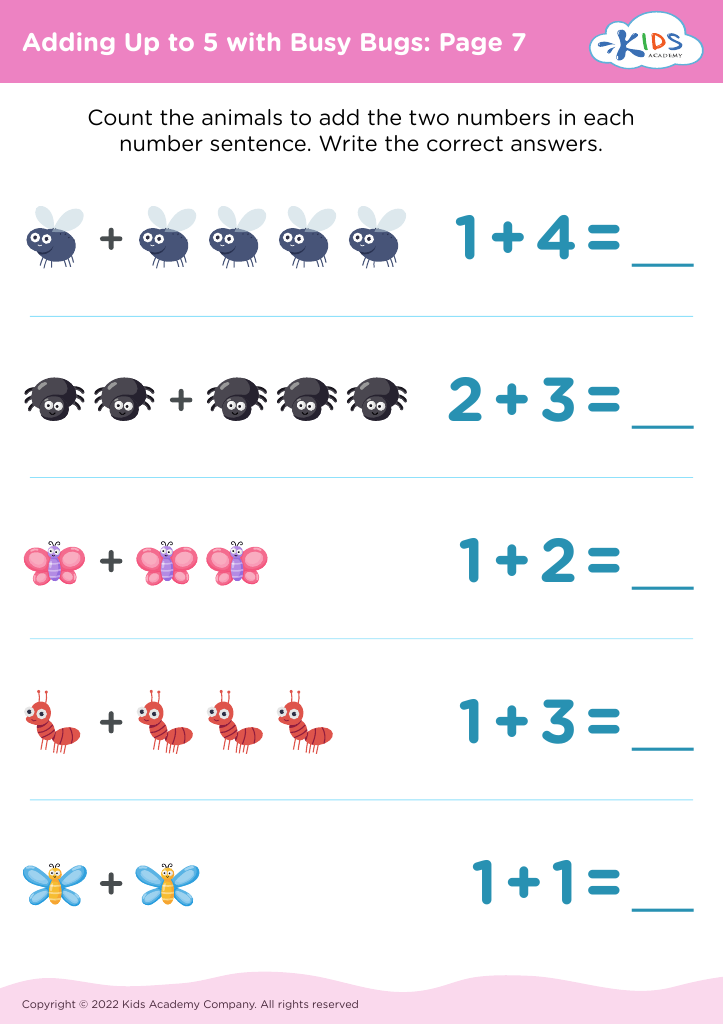
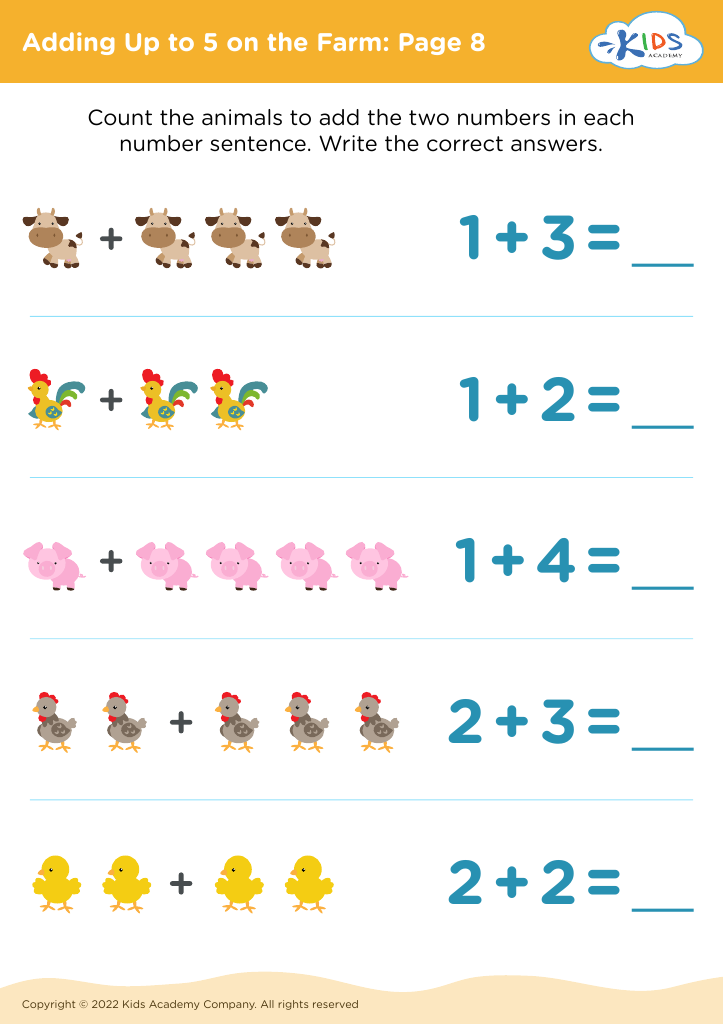
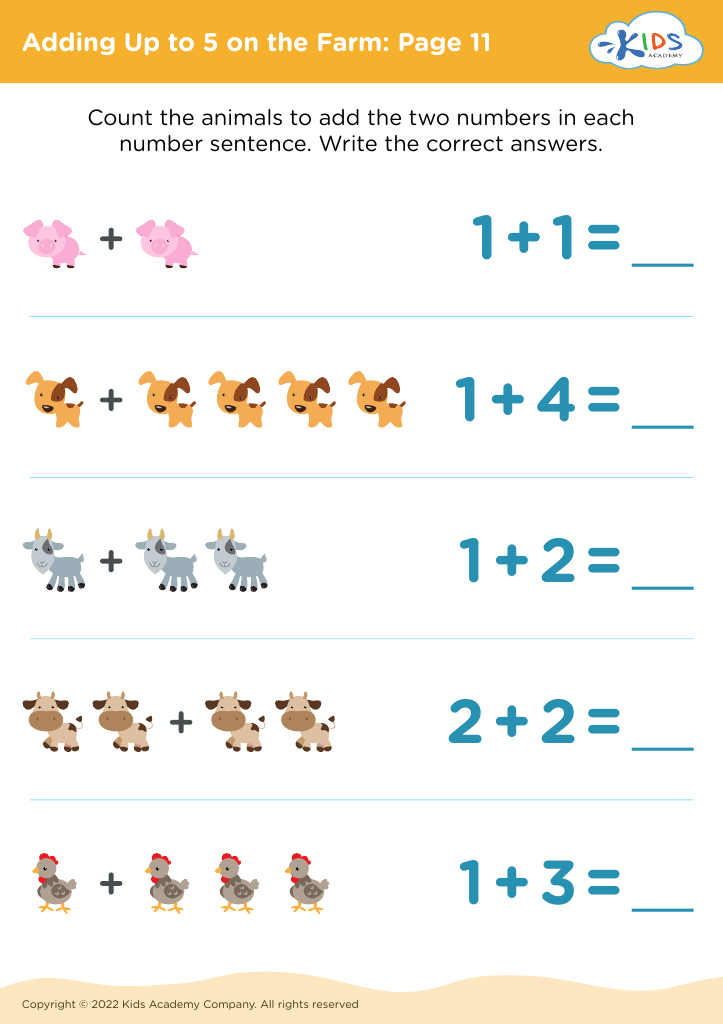
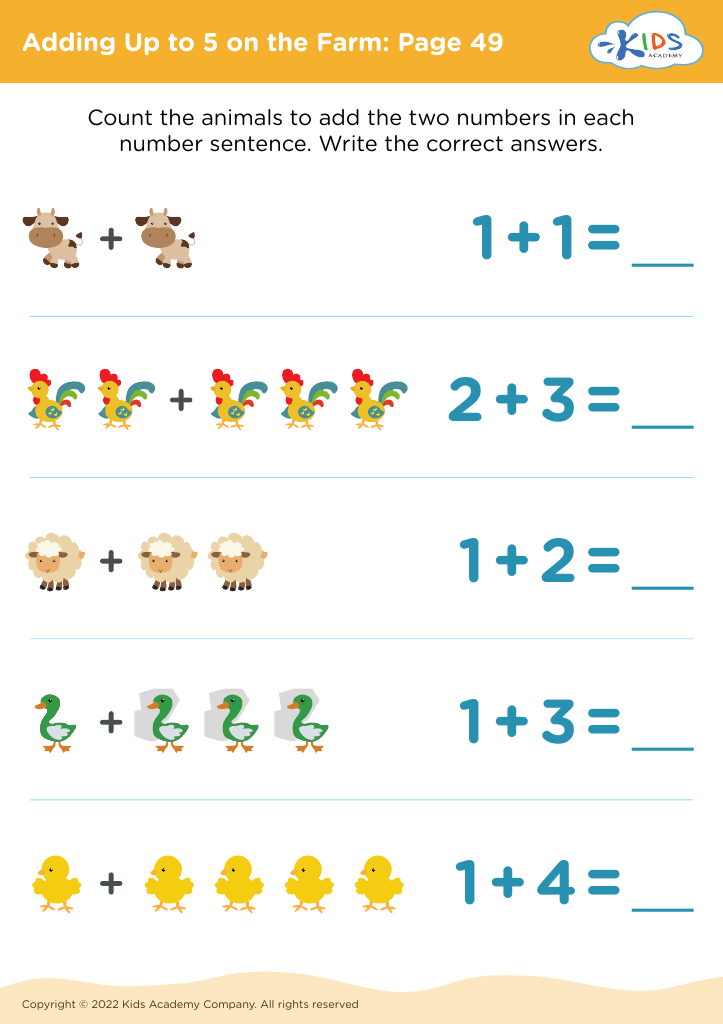
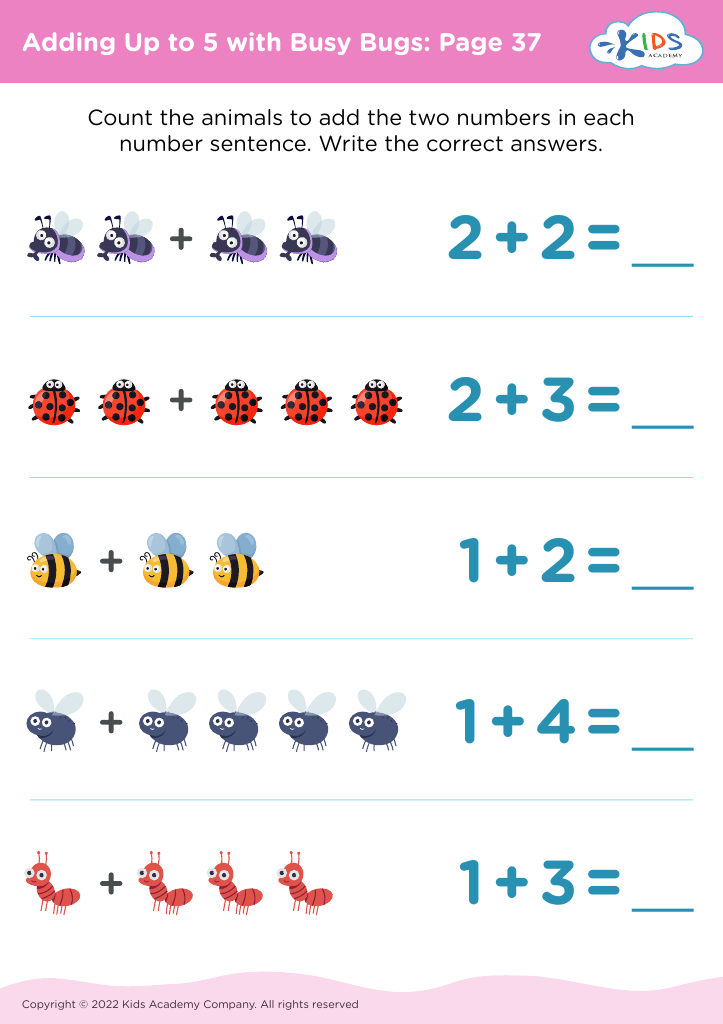
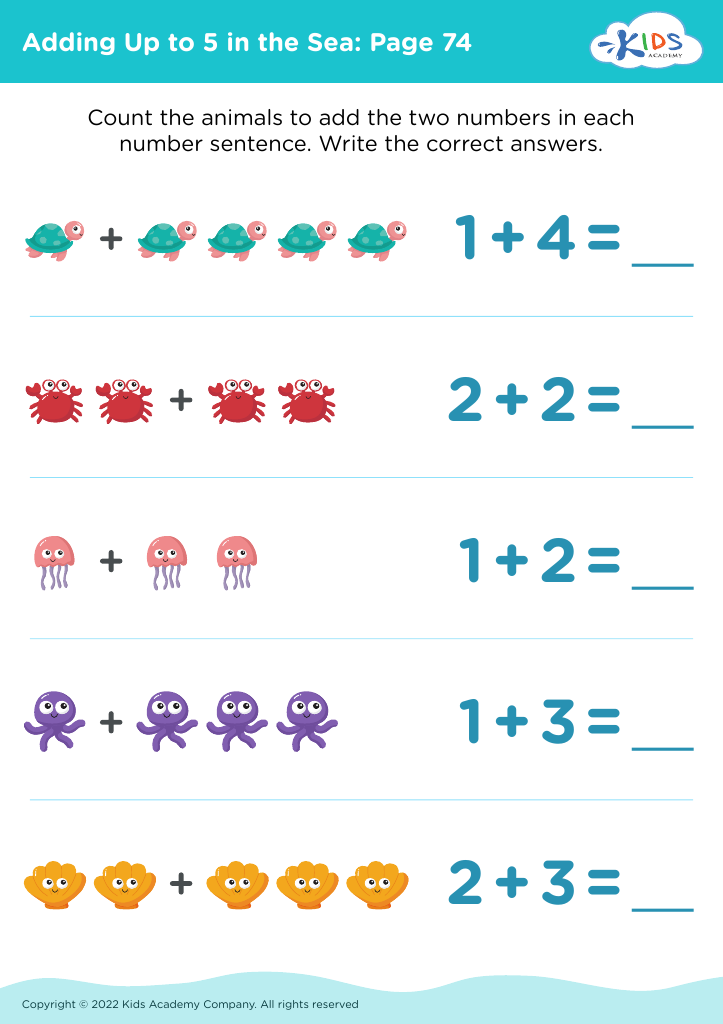
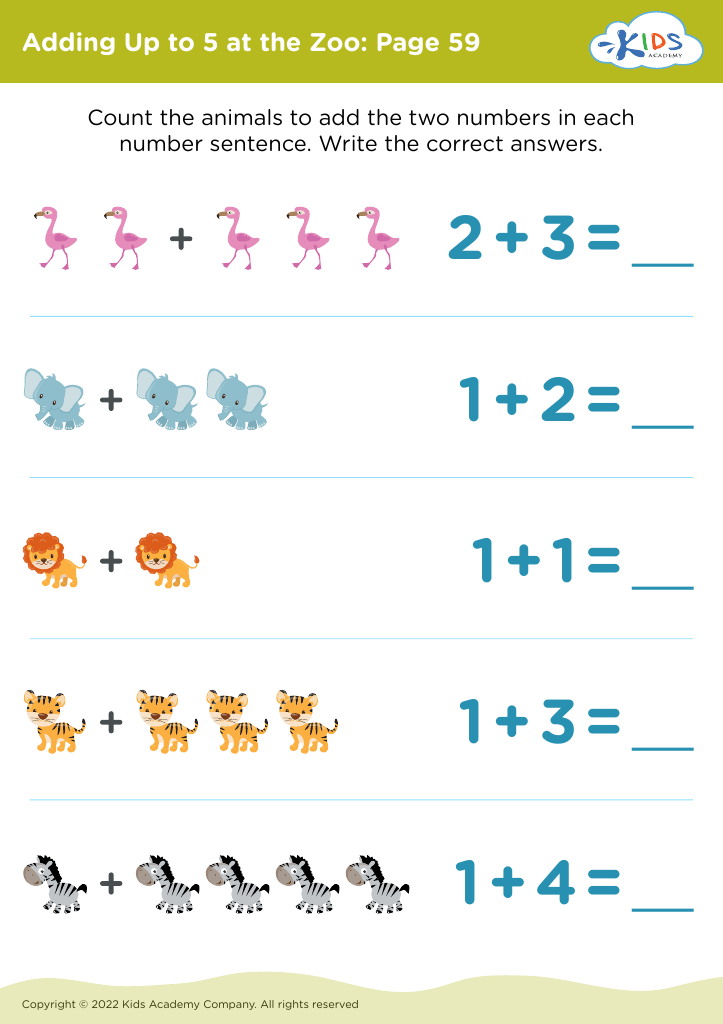
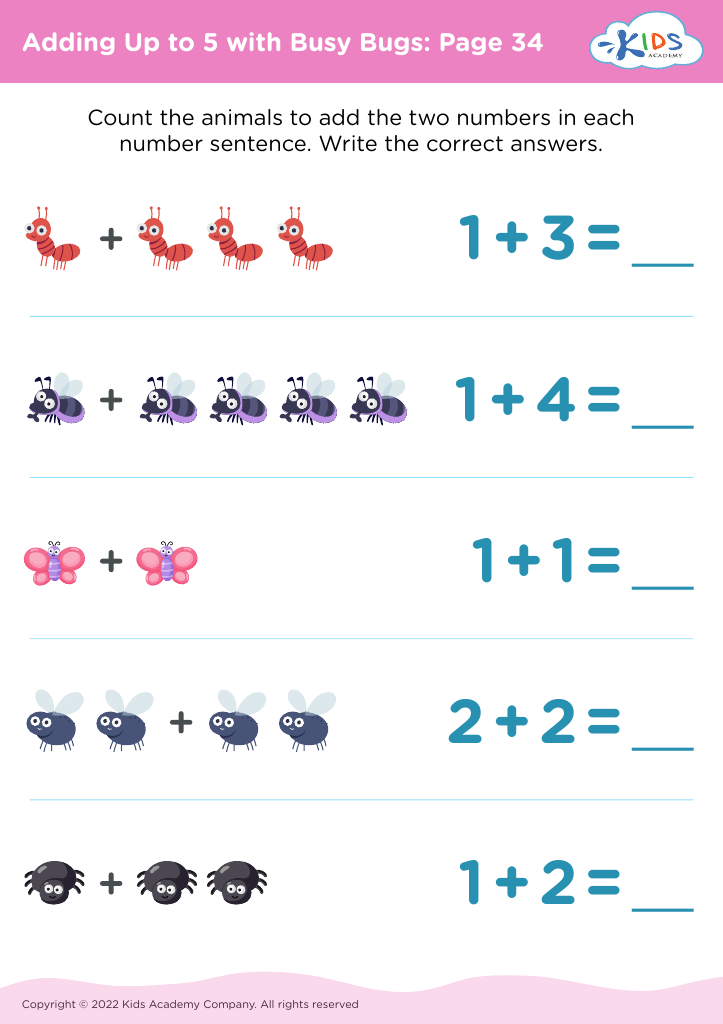
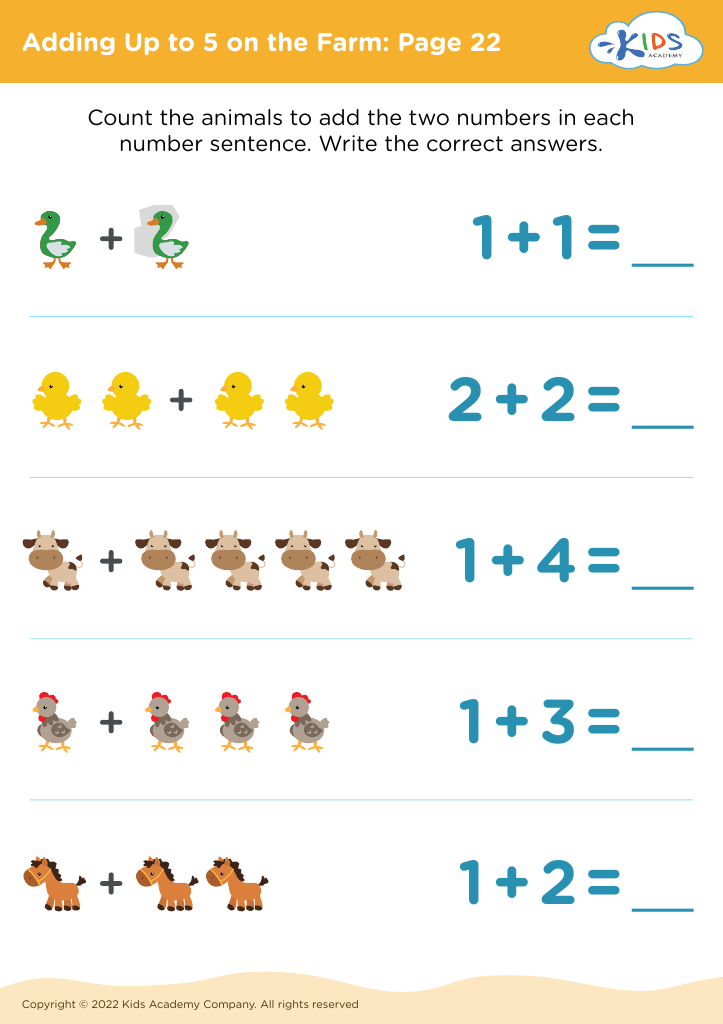
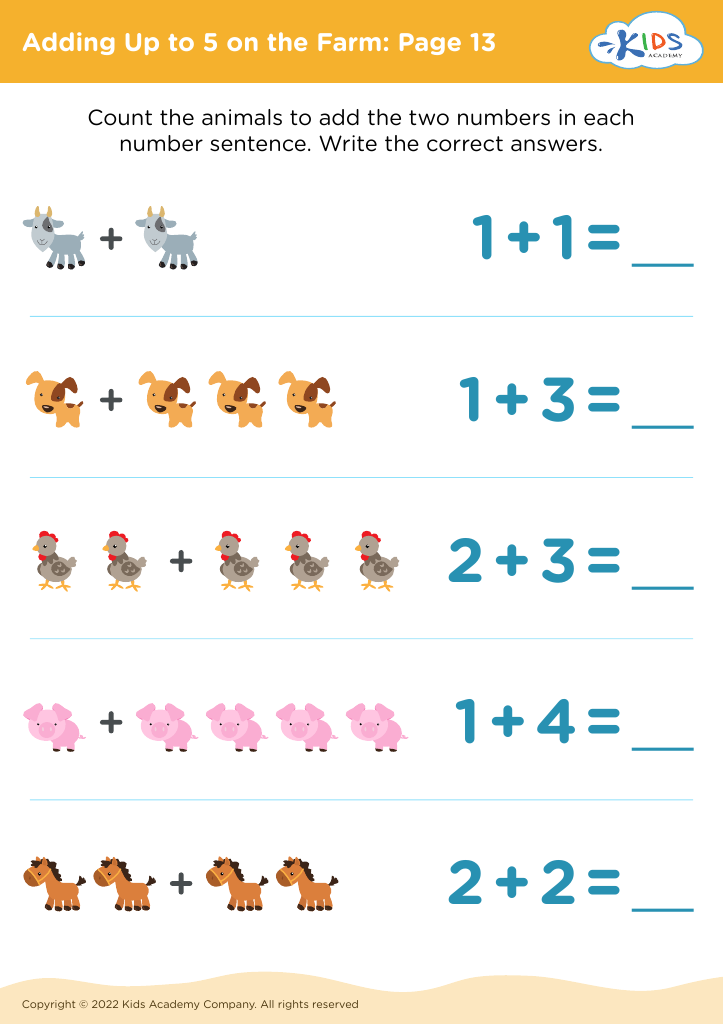
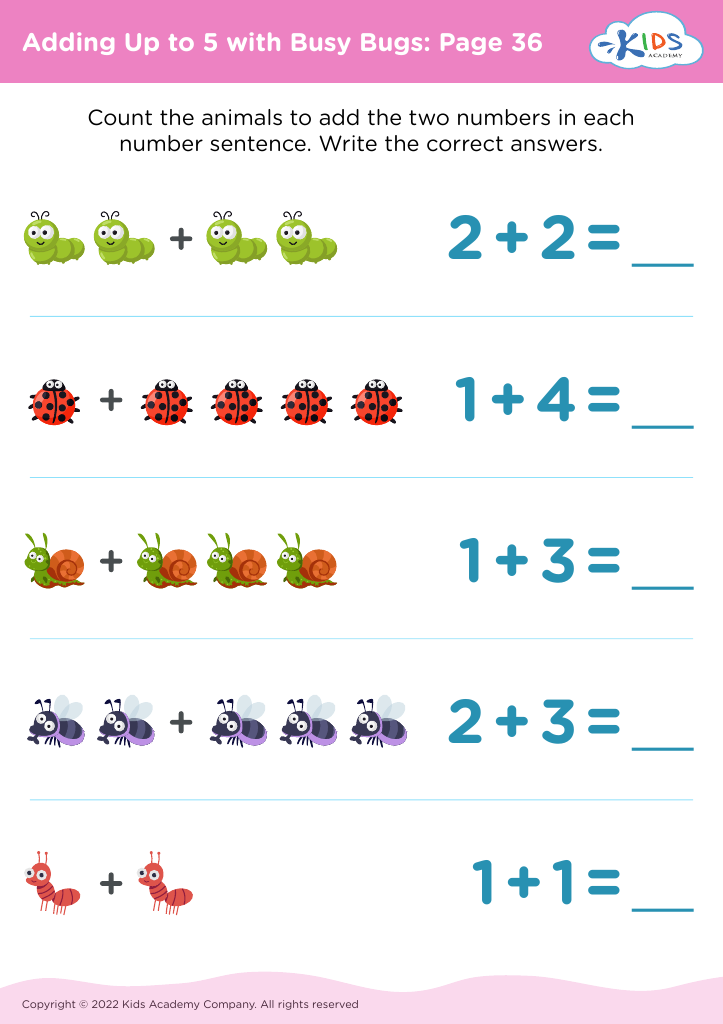
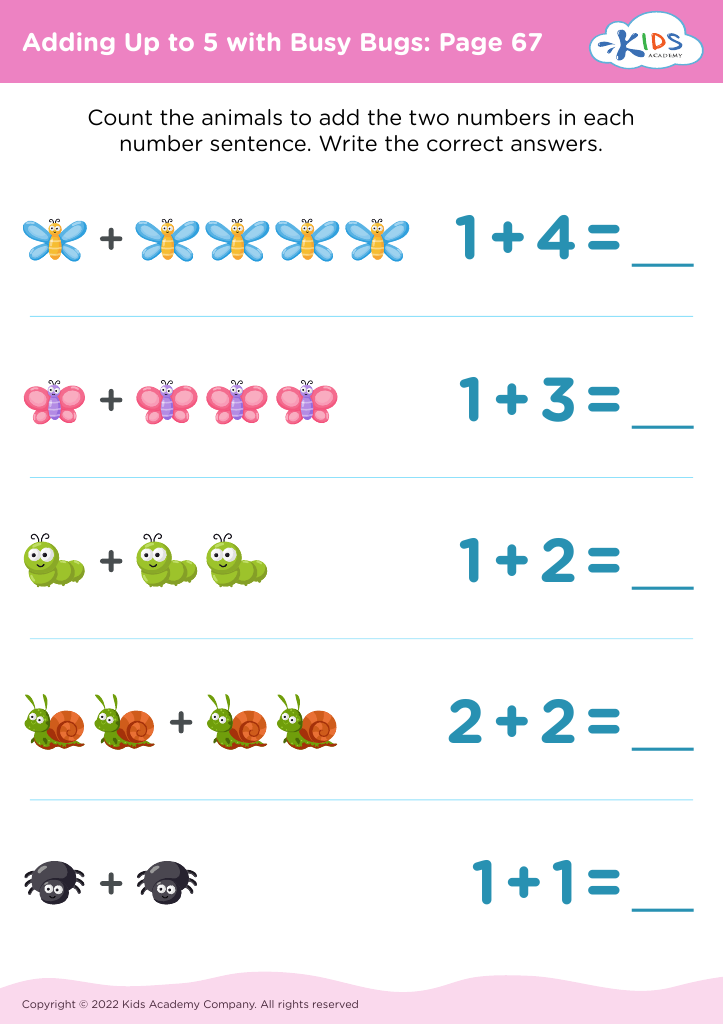
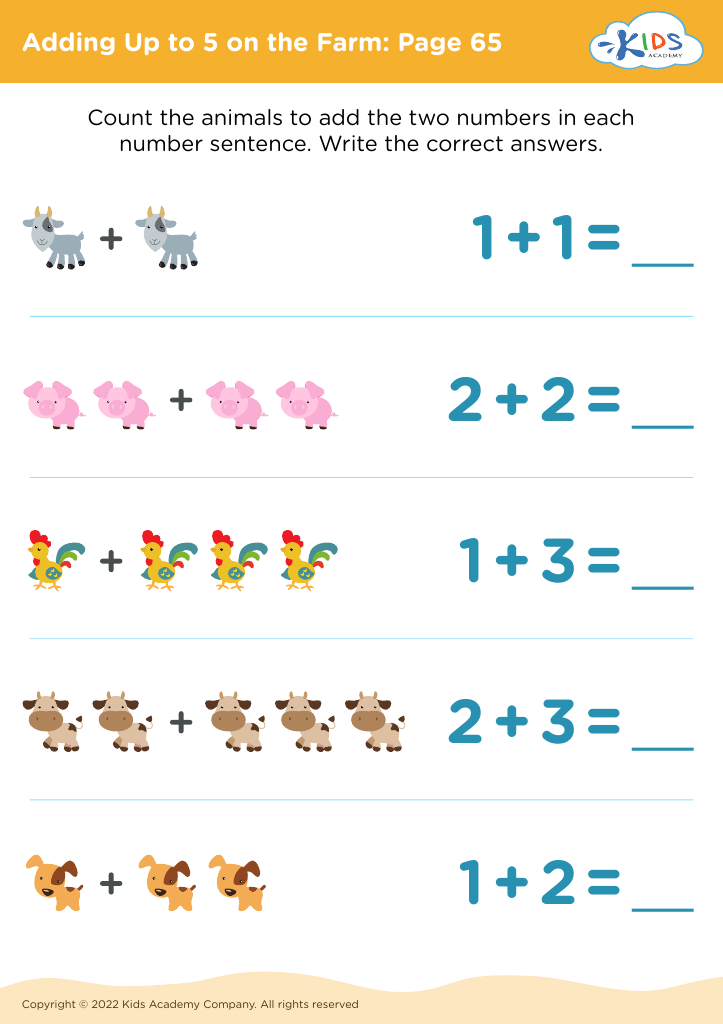
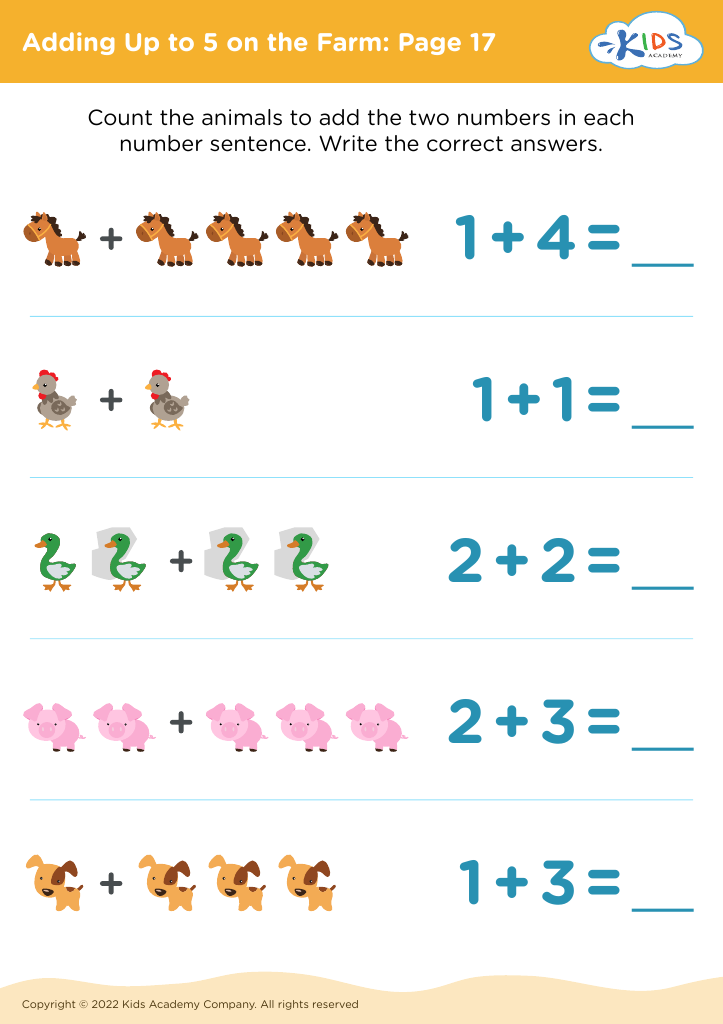
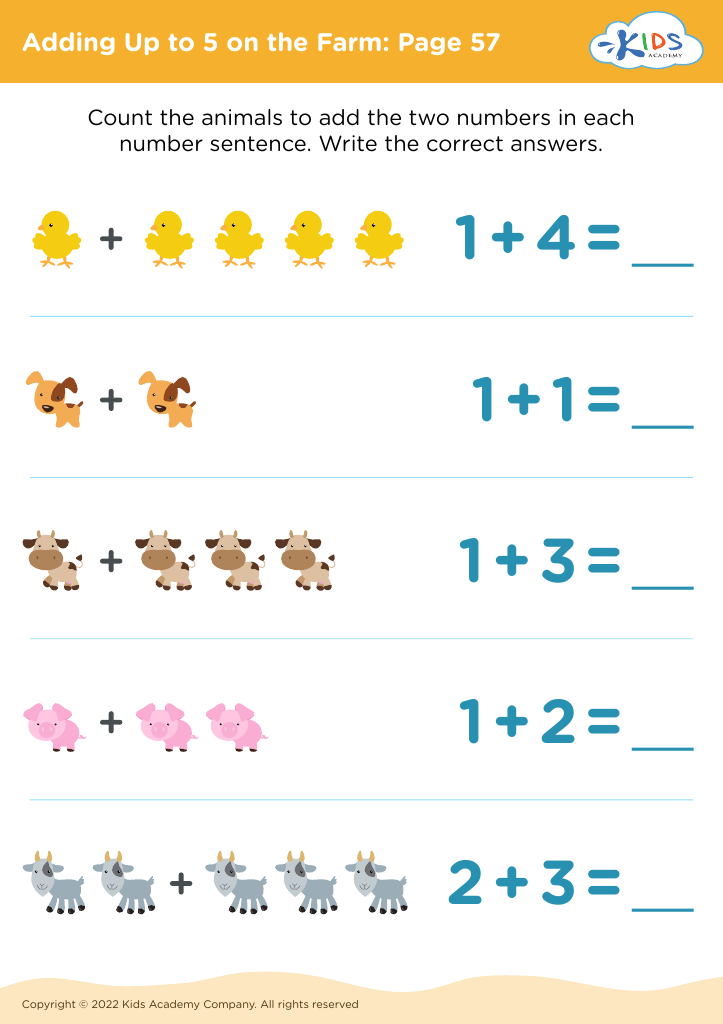
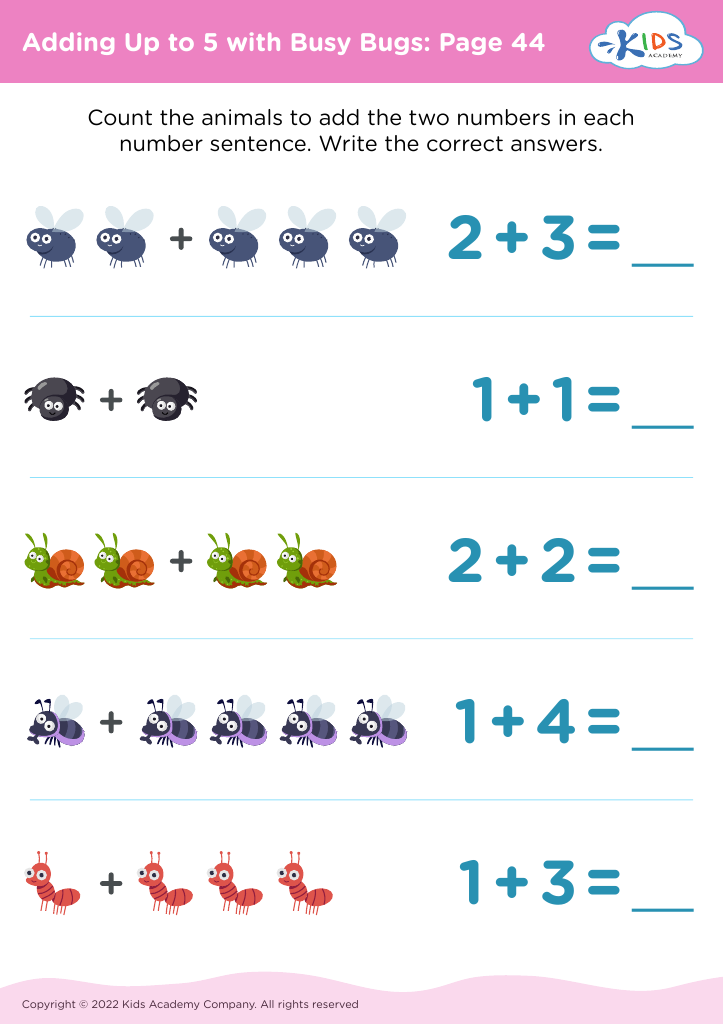
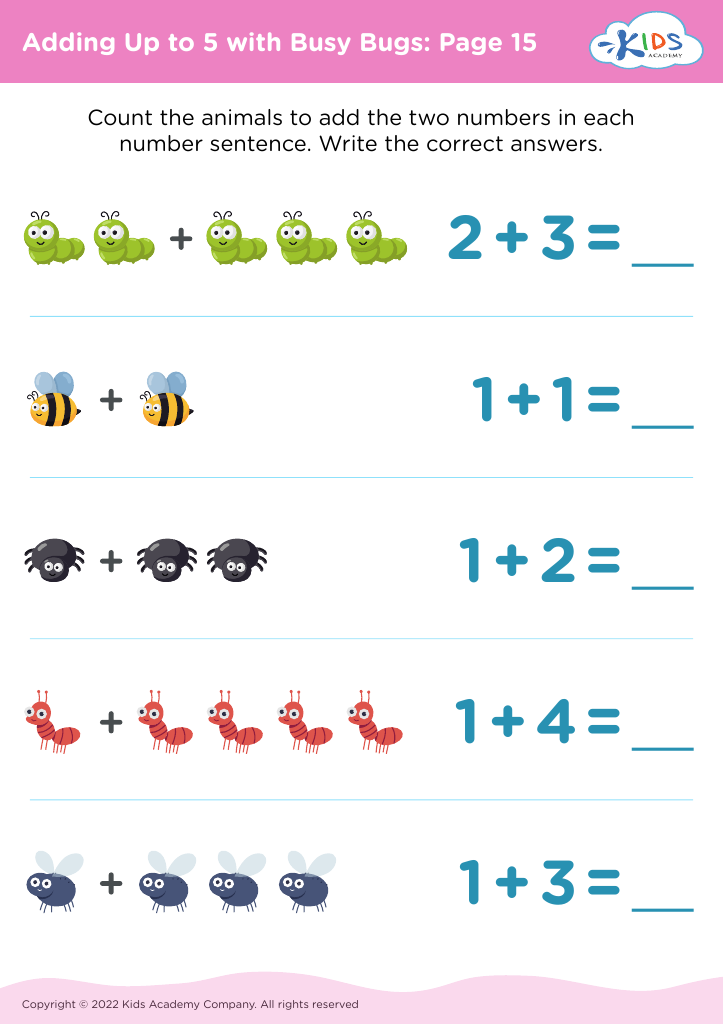
Enhance your child's math skills with our "Understanding Quantity: Adding Up to 5 Worksheets" designed for children ages 5-8. These engaging worksheets focus on helping young learners grasp the concept of quantity and develop foundational addition skills. Through hands-on activities, colorful visuals, and fun exercises, children will learn to recognize numbers and their meanings, fostering confidence in their mathematical abilities. Each worksheet encourages critical thinking and problem-solving, making math fun and interactive. Perfect for parents and educators, these resources are ideal for use at home or in the classroom, ensuring a comprehensive understanding of basic addition concepts. Start learning today!






%20(1).jpg)

Understanding quantity and the concept of adding up to 5 is foundational for children aged 5-8. This critical learning phase marks the beginning of not only mathematical skills but also logical thinking and problem-solving abilities. When parents and teachers focus on this concept, they help children grasp the basics of counting, comparison, and simple addition.
Learning to add quantities up to 5 enables children to make sense of numbers and helps them develop a strong number sense. It allows them to visualize relationships between numbers, recognize combinations, and use strategies for simple calculations. By fostering these skills early on, educators and parents lay the groundwork for more complex mathematical concepts, such as addition and subtraction, as well as operations with larger numbers.
Moreover, the ability to confidently work with small quantities supports cognitive development, enhances social interactions (through sharing and grouping), and prepares children for everyday tasks requiring basic math, like shopping or scheduling. This early arithmetic fluency encourages a positive attitude towards math, reducing anxiety and building confidence. Ultimately, investing time and resources in understanding quantity by adding up to 5 promotes a lifelong love of learning and equips children with essential skills for their educational journey.








