Cognitive Development Addition and Subtraction Word Problems Worksheets for Ages 5-8
4 filtered results
-
From - To
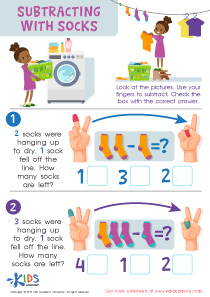
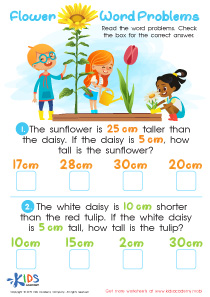
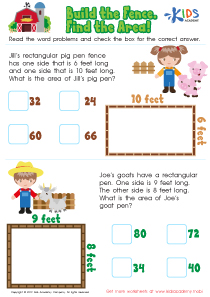
Unlock your child's cognitive potential with our Addition and Subtraction Word Problems Worksheets designed specifically for ages 5-8. These engaging worksheets promote critical thinking and problem-solving skills through fun, relatable scenarios that children can easily understand. Each activity encourages young learners to apply their math knowledge to real-life situations, helping to solidify their grasp of addition and subtraction. Ideal for classroom or home use, these worksheets cater to varying skill levels, ensuring every child can grow at their own pace. Support your child’s cognitive development and make learning math enjoyable with our comprehensive collection of word problems!
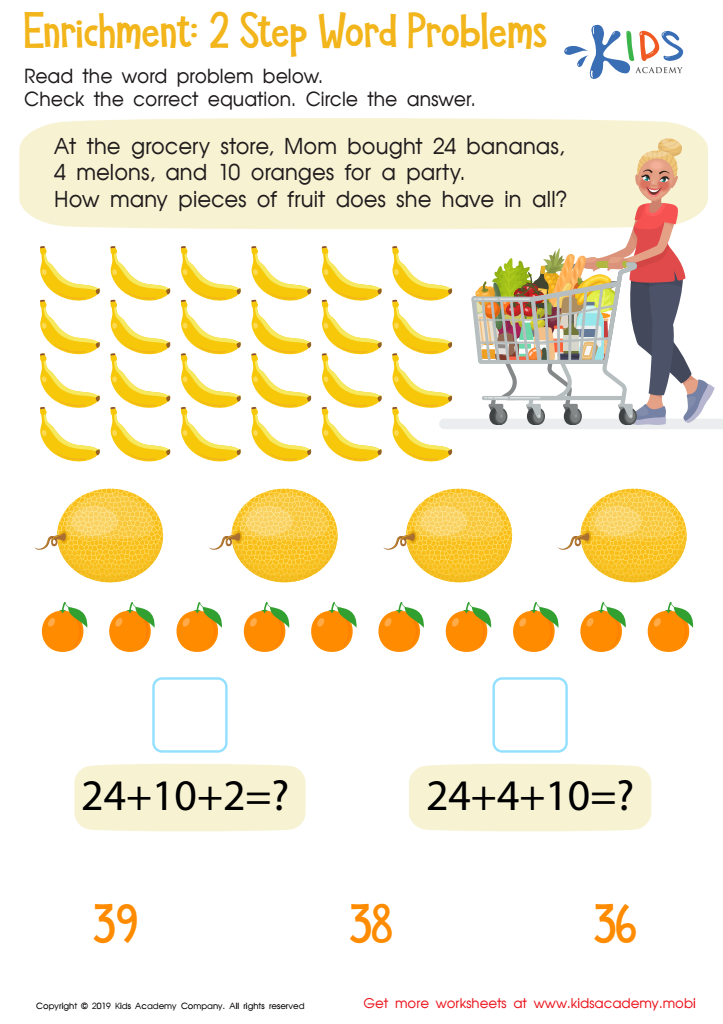
Enrichment -2 Step Word Problems Worksheet
 Assign to My Students
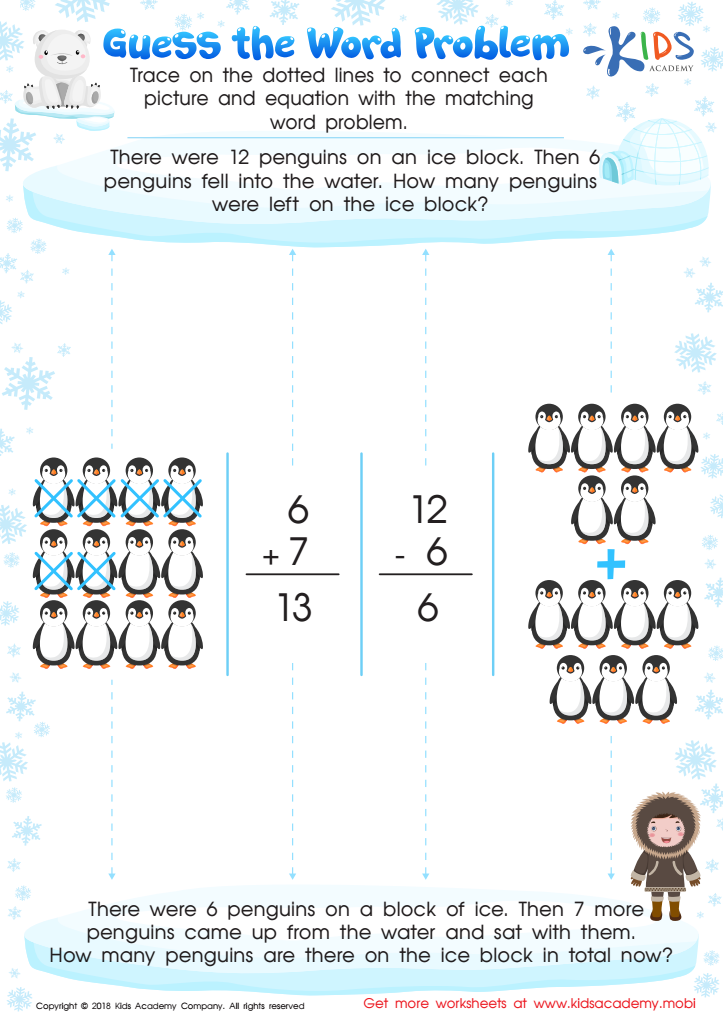
Guess the Word Problem Worksheet
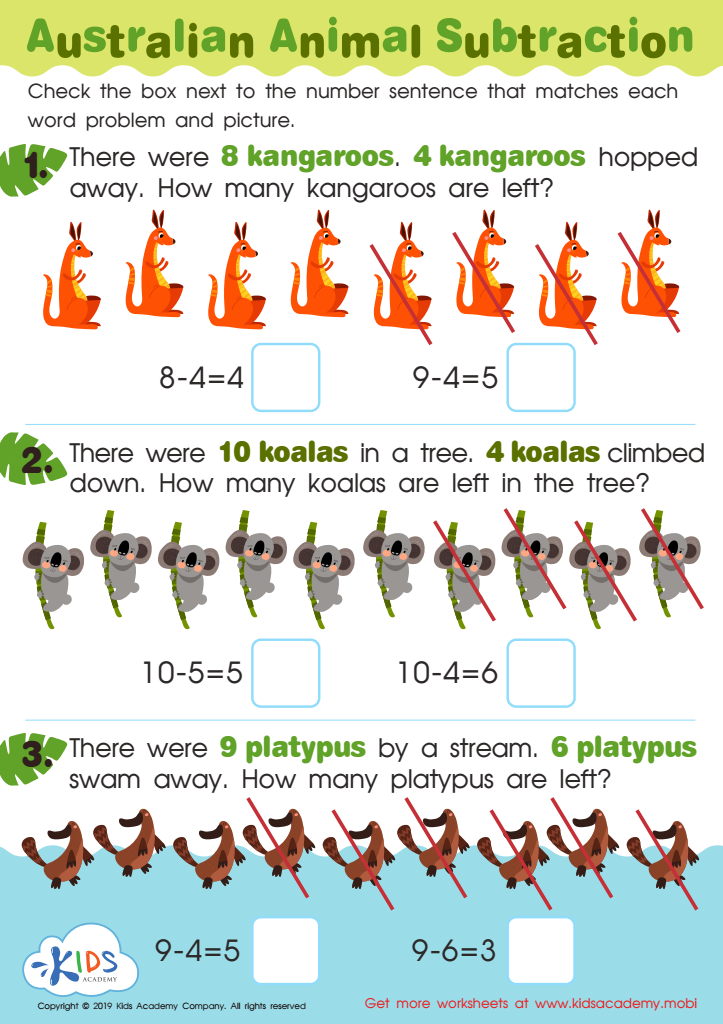
Australian Animal Subtraction Worksheet
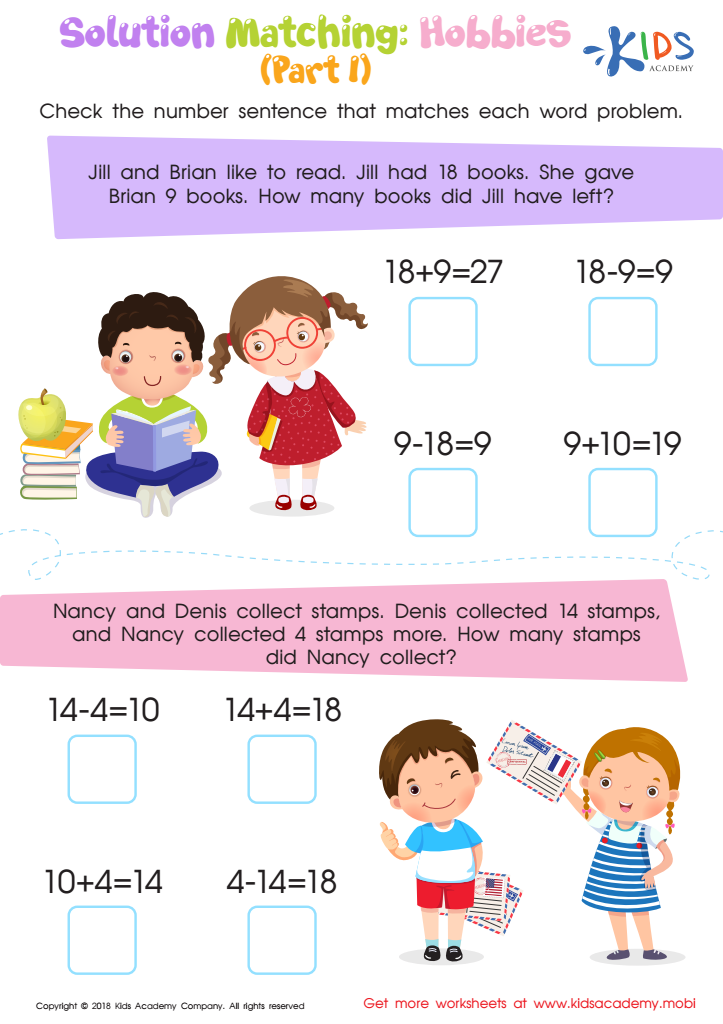
Solution Matching: Hobbies. Part 1 Worksheet








Cognitive development during early childhood is crucial as it lays the foundations for future learning, particularly in mathematics. Addition and subtraction word problems for children ages 5-8 not only enhance their numerical skills but also promote critical thinking and problem-solving abilities. Engaging with word problems helps students translate real-world scenarios into mathematical concepts, fostering a deeper understanding of numbers and operations.
Parents and teachers play a vital role in guiding this cognitive development. Practicing word problems encourages young learners to identify relevant information, explore strategies, and arrive at solutions. This process enhances their comprehension and reasoning skills, vital for advanced math concepts later on. Moreover, tackling word problems promotes language skills, as children must interpret text and convey their thinking verbally or in writing.
Additionally, working through these challenges boosts confidence and perseverance, teaching students that struggle and failure are part of the learning journey. By prioritizing cognitive development through addition and subtraction word problems, parents and teachers can equip children with essential skills that benefit their overall academic trajectory, lifelong learning, and everyday problem-solving. Investing in children's early math experiences is an investment in their future, fostering a positive attitude toward mathematics as they grow.