Fraction representation Addition & Subtraction Worksheets for Ages 5-8
3 filtered results
-
From - To
Explore our engaging Fraction Representation Addition and Subtraction Worksheets designed specifically for children ages 5-8. These worksheets make learning about fractions fun and interactive, helping young learners grasp the concepts of adding and subtracting fractions with ease. Each worksheet features colorful illustrations and age-appropriate exercises that enhance understanding and retention. From simple visual representations to guided practice, these resources cater to different learning styles, ensuring each child can master their fraction skills. Perfect for homeschooling or supplementary classroom activities, our collection supports foundational math skills while promoting confidence in young mathematicians. Start your child’s journey to math success today!
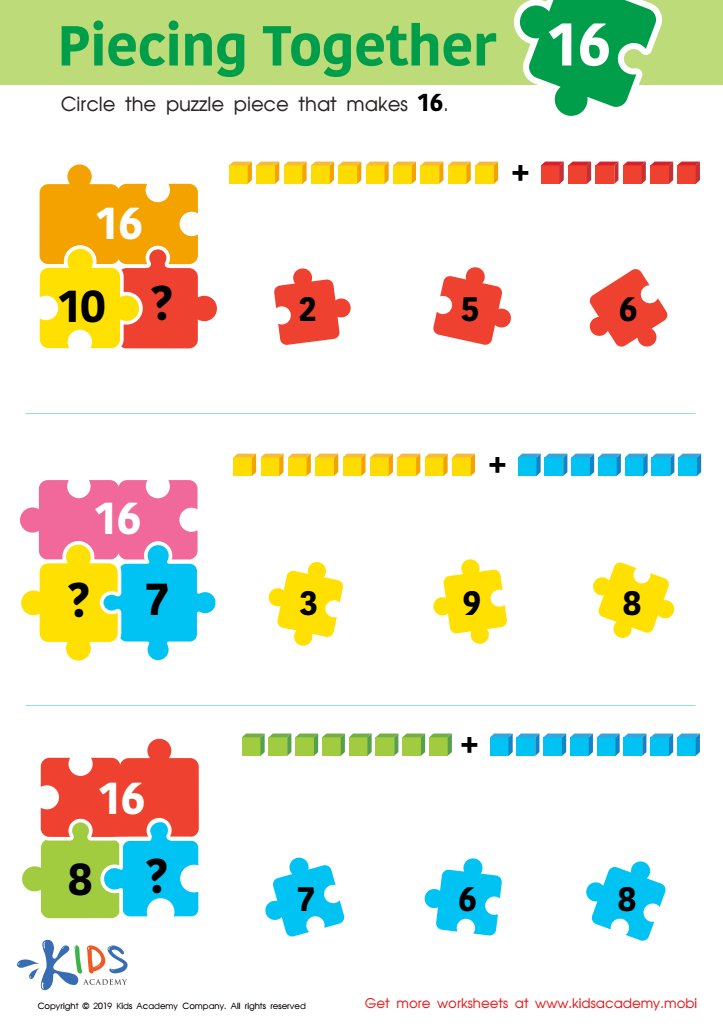
Piecing Together 16 Worksheet
 Assign to My Students
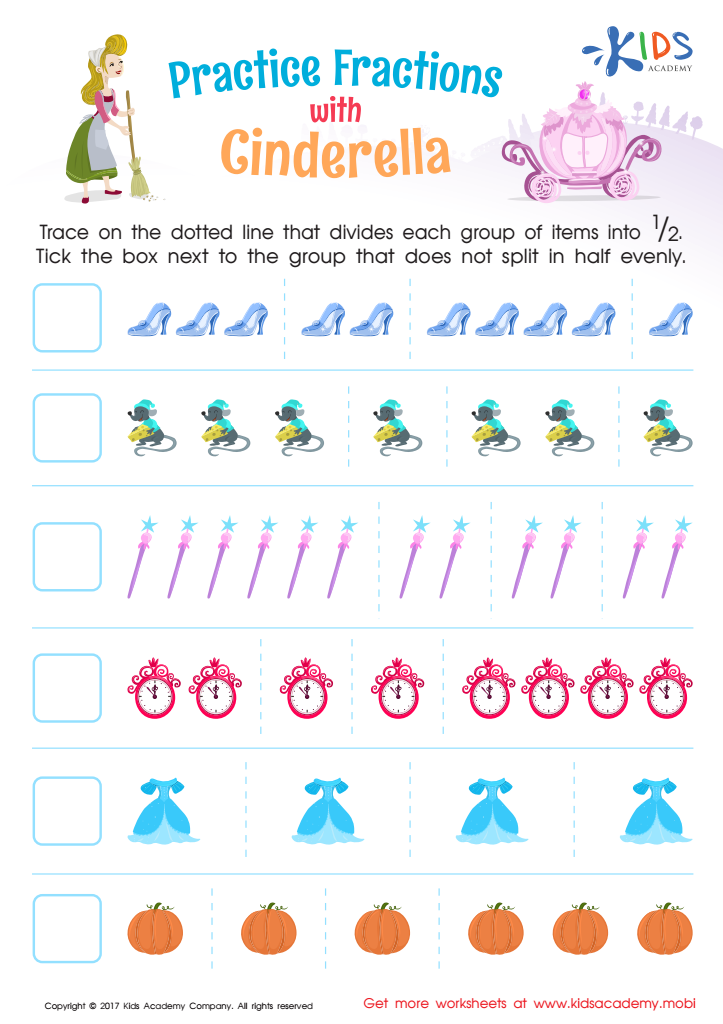
Fractions: Cinderella Printable








Fraction representation, including addition and subtraction, is an essential concept for young learners aged 5-8, as it lays the groundwork for future mathematical understanding and problem-solving. First, understanding fractions fosters numerical literacy. Teaching children to visualize fractions through shapes, number lines, or everyday objects cultivates their ability to recognize parts of a whole, a fundamental mathematical concept they will encounter throughout their academic journey.
Second, engaging with fractions enhances critical thinking and reasoning skills. When children learn to add and subtract fractions, they are encouraged to explore relationships between numbers, boosting their cognitive development. This process nurtures a deeper understanding of quantity and measurement, essential skills in both mathematics and real-life applications.
Moreover, mastering fraction addition and subtraction early on can increase a child's confidence in handling more complex mathematical operations later in their education. Unaided arithmetic like integers can build confidence but may fall short in contextualizing things like division or multiplication when these concepts are encountered.
Ultimately, investing time in teaching fractions at this early age supports a robust mathematical foundation, fostering a sense of curiosity and competency in young learners that will serve them well into their future studies and real-life challenges.








