Improving calculation skills Addition & Subtraction Worksheets for Ages 5-8
3 filtered results
-
From - To
Enhance your child's arithmetic proficiency with our "Improving Calculation Skills" addition and subtraction worksheets designed for ages 5-8. Our engaging, educational exercises help young learners build a solid mathematical foundation. With a variety of fun and colorful worksheets, kids will enjoy practicing addition and subtraction, boosting their confidence and accuracy. Tailored to support early learning standards, these resources are perfect for reinforcing classroom lessons or extra practice at home. Set your child up for success with our expertly crafted worksheets that make learning math enjoyable. Explore now to give your child the advantage they deserve!
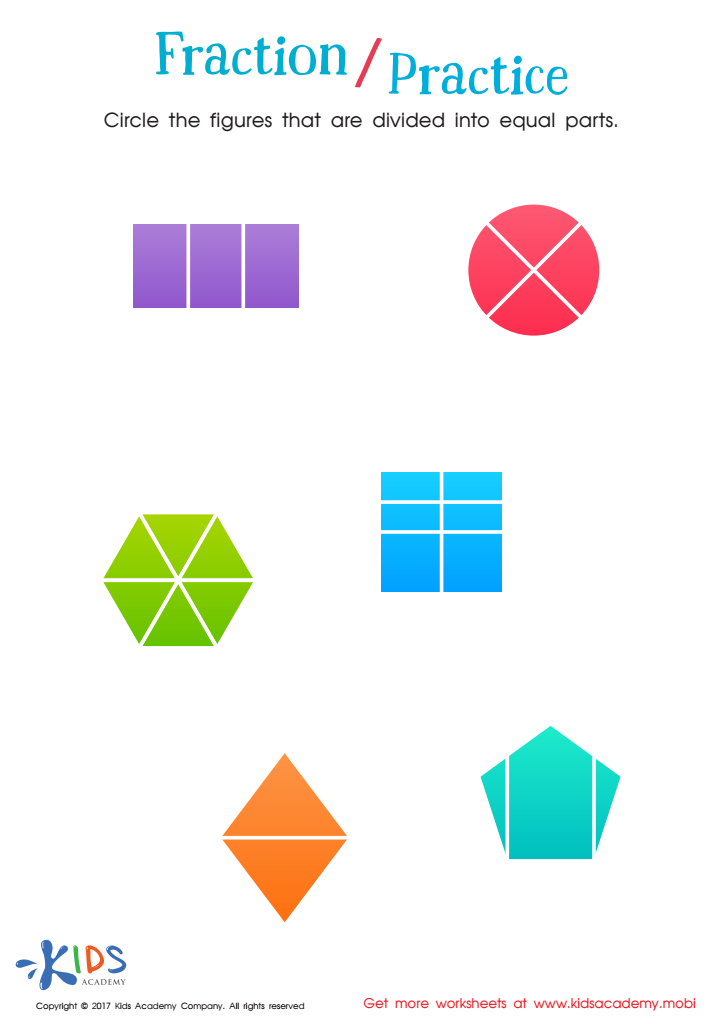
Fractions: Shapes Worksheet
 Assign to My Students
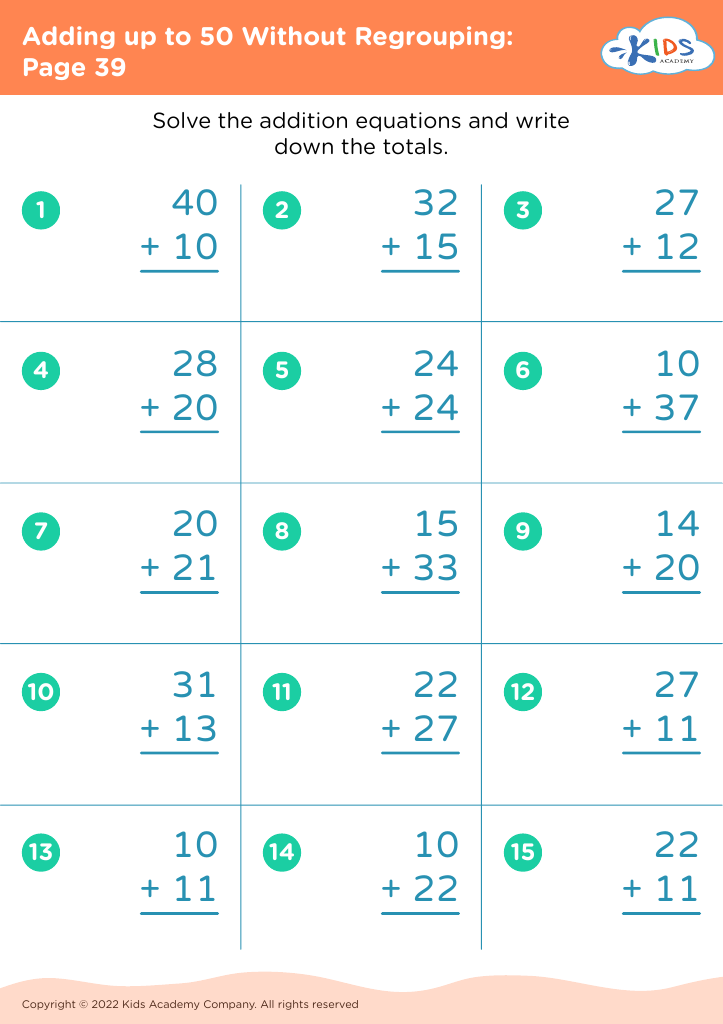
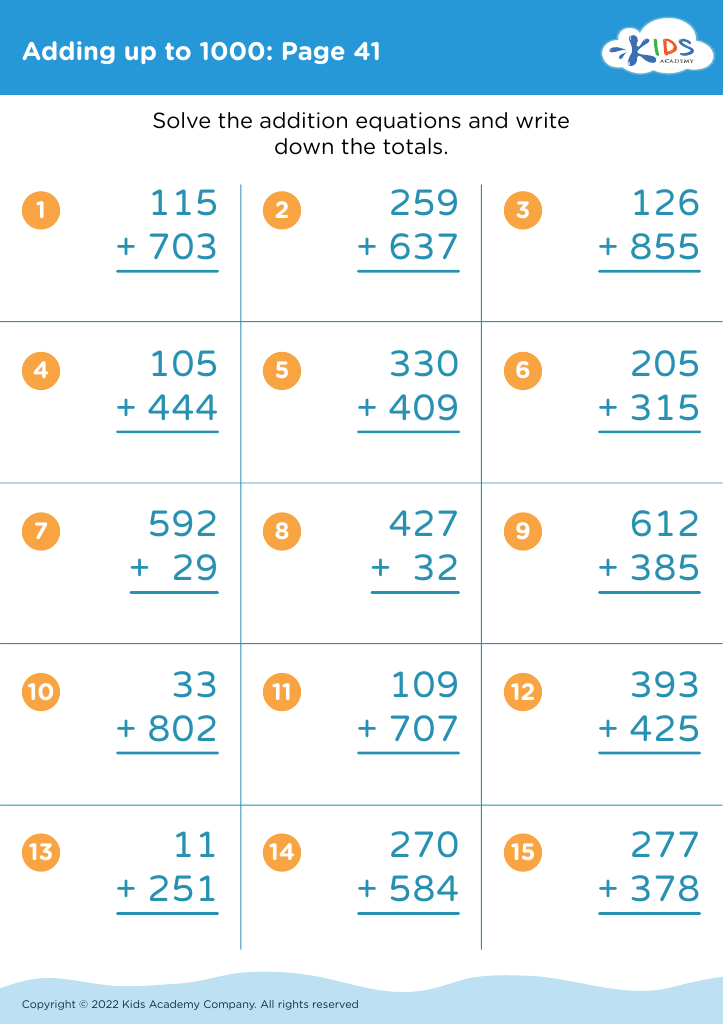








Improving calculation skills in addition and subtraction for children ages 5-8 is crucial because it forms the bedrock of their mathematical understanding and everyday problem-solving abilities. At this age, young learners' brains are especially receptive to building fundamental skills that will support their educational journey and beyond. Strengthening these skills not only enhances arithmetic competence but also boosts overall cognitive development, including logical thinking, pattern recognition, and spatial awareness.
Being proficient in basic addition and subtraction aids children in grasping more complex mathematical concepts in the future, such as multiplication, division, fractions, and algebra. This early competence also helps reduce math anxiety, promoting a positive attitude towards learning and persistence in tackling challenging subjects.
From a practical standpoint, fluency in basic math is essential for daily life activities such as budgeting, cooking, and time management. As adults, we constantly use these skills, often without realizing it. Therefore, equipping children with strong foundational math skills empowers them both academically and in real-world scenarios.
As parents or teachers, focusing on developing these skills fosters a supportive learning environment that celebrates progress and cultivates a lifelong appreciation for math. This foundational knowledge not only contributes to academic success but also unlocks opportunities in numerous career fields, underscoring the importance of early math education.








