Number Sequencing Addition & Subtraction Worksheets for Ages 5-8
17 filtered results
-
From - To
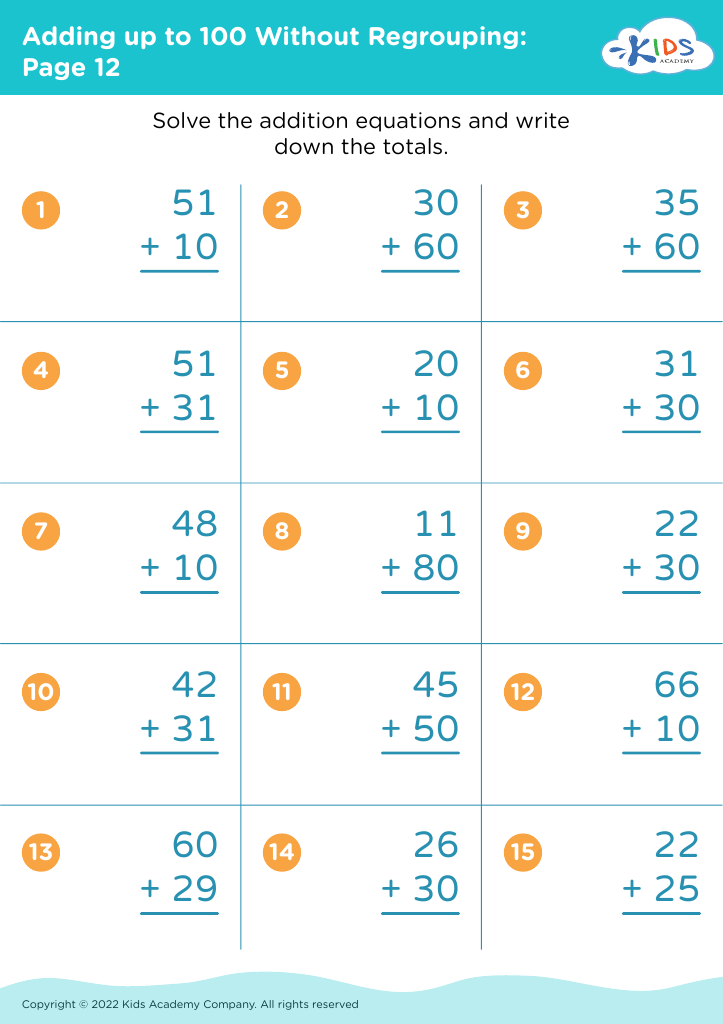
Discover engaging Number Sequencing Addition & Subtraction Worksheets designed for ages 5-8 on Kids Academy. These expertly crafted printables aim to bolster your child's math skills through fun, interactive exercises in number sequencing, addition, and subtraction. Each worksheet offers a variety of activities to help young learners grasp essential mathematical concepts, enhance problem-solving abilities, and build a strong arithmetic foundation. Perfect for homeschool or classroom use, these worksheets adapt to individual learning styles and paces. Transform math practice into an exciting adventure with our dynamic, easy-to-use resources that support meaningful learning and academic confidence.
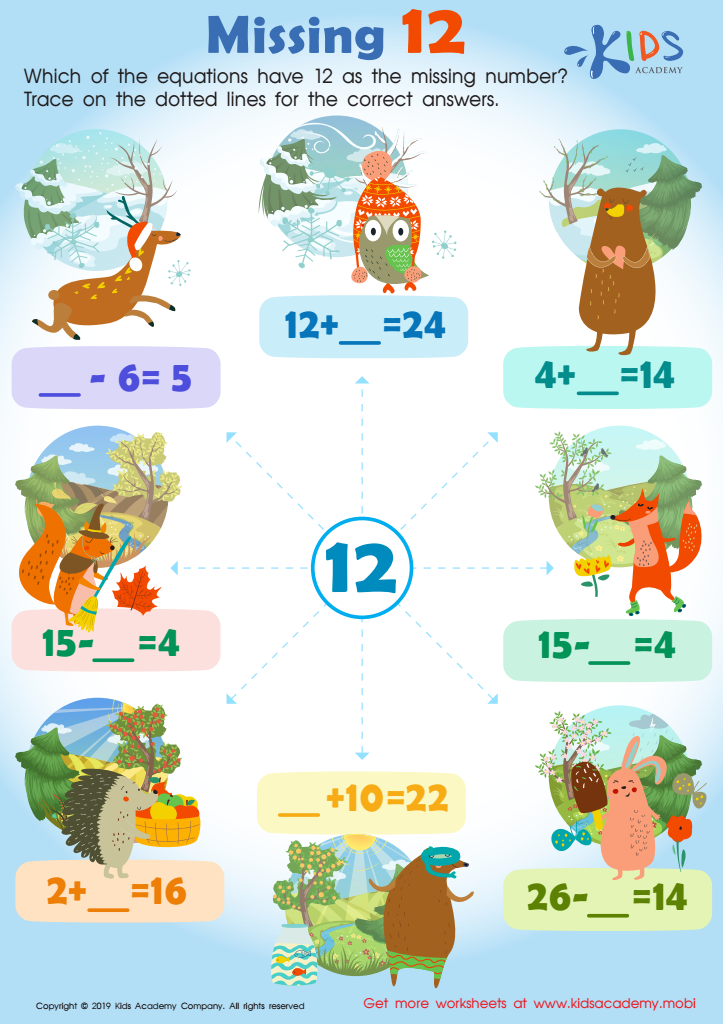
Missing 12 Worksheet
 Assign to My Students
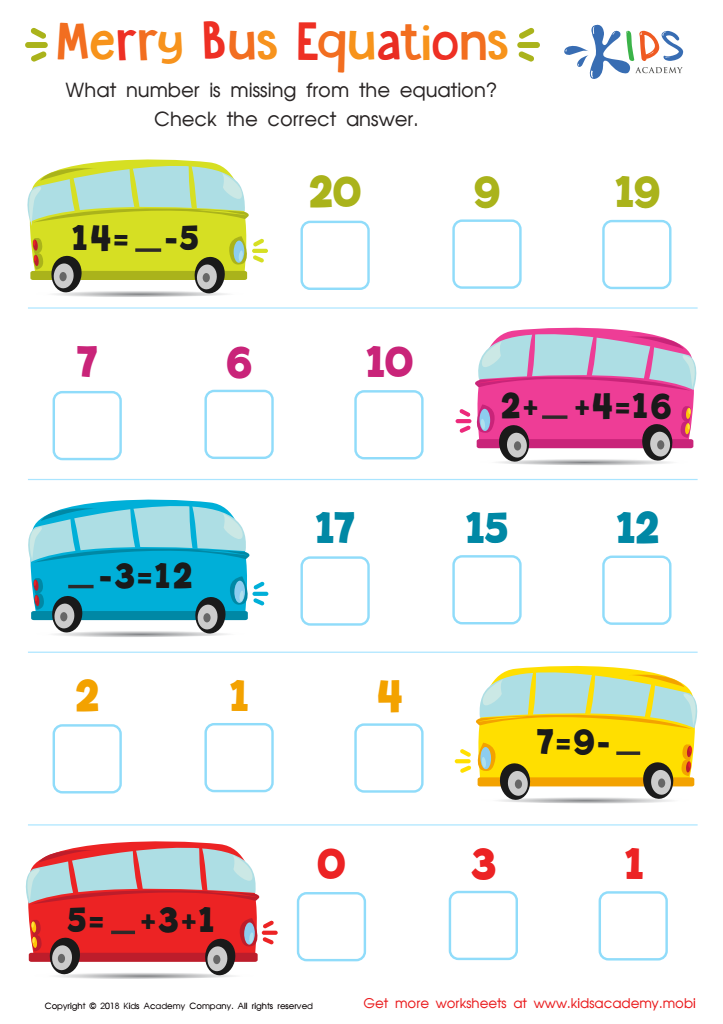
Merry Bus Equations Worksheet
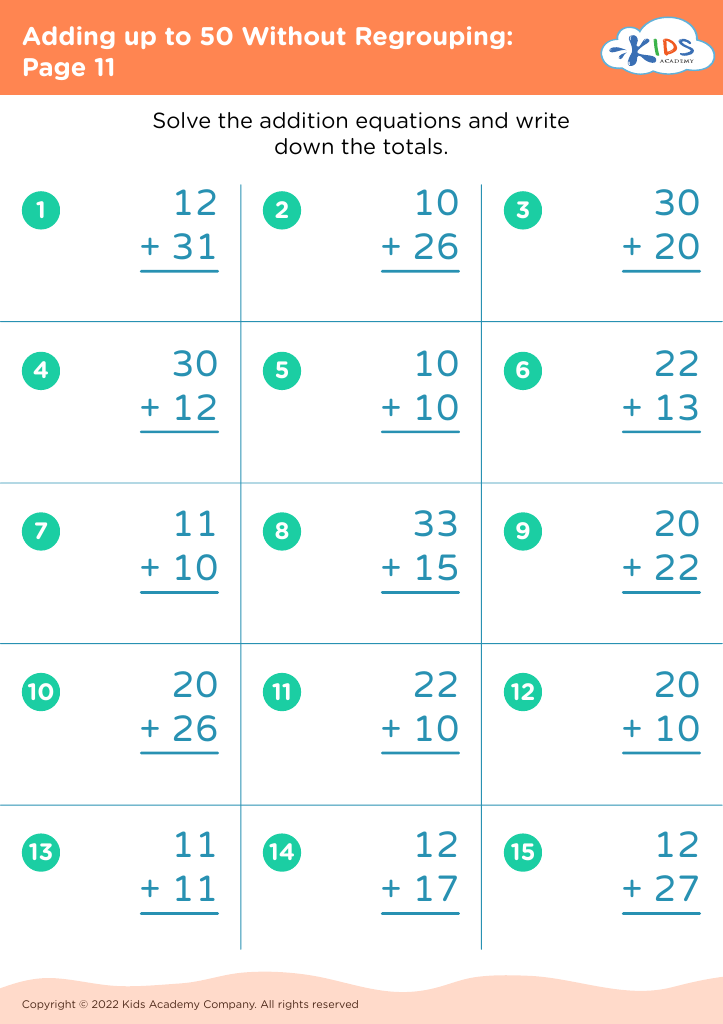
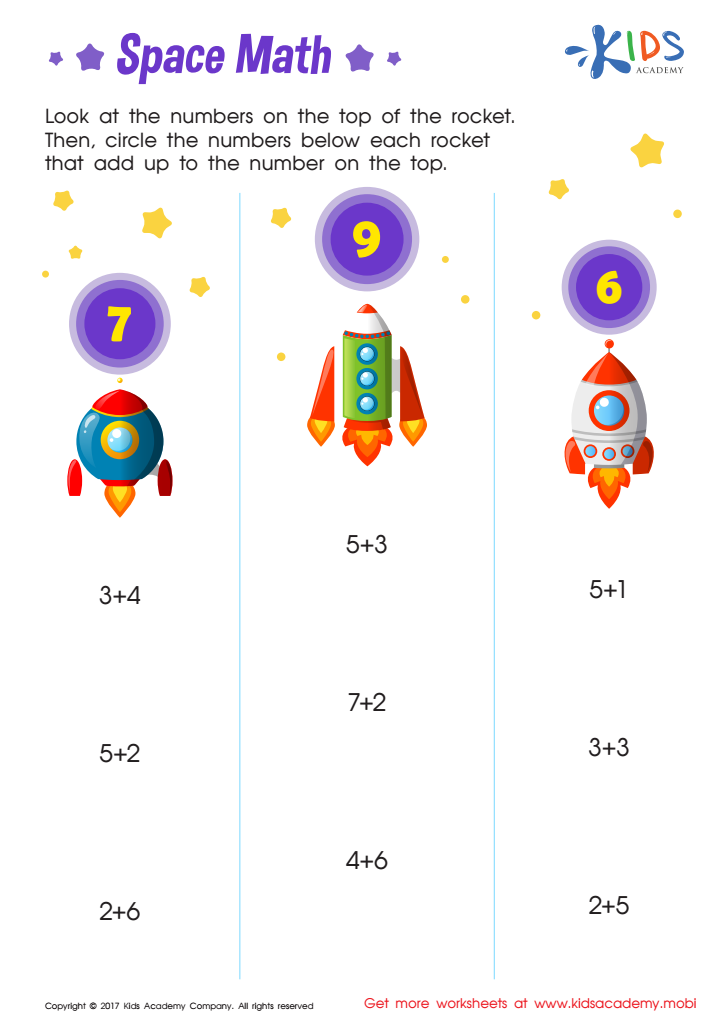
Addition: Space Math Worksheet
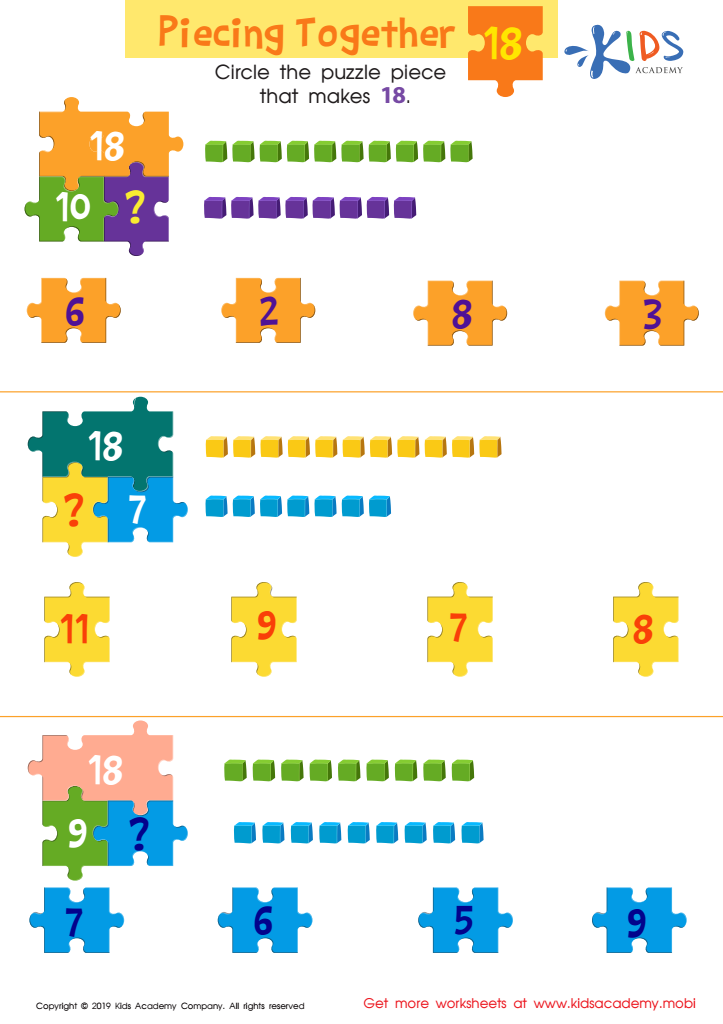
Piecing Together 18 Worksheet
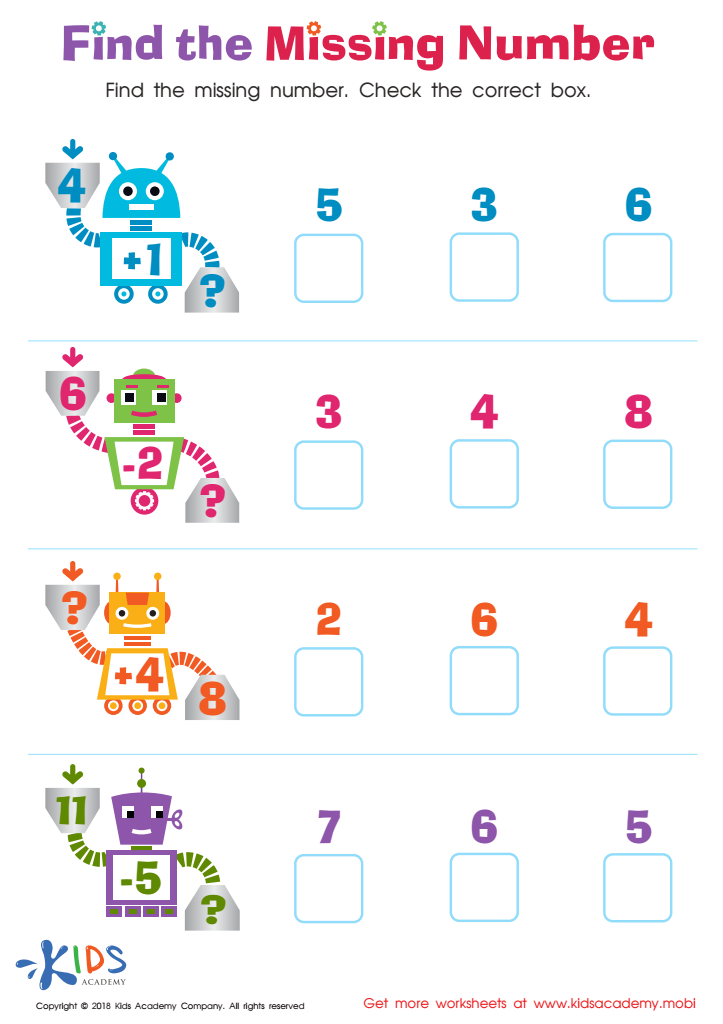
Find the Missing Number Worksheet
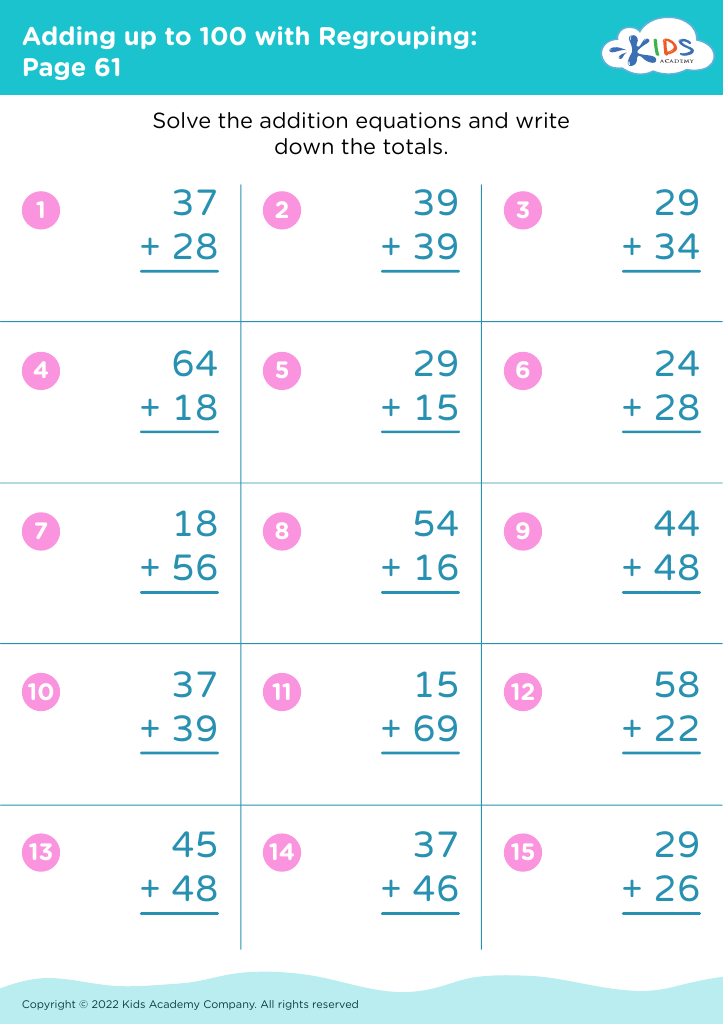
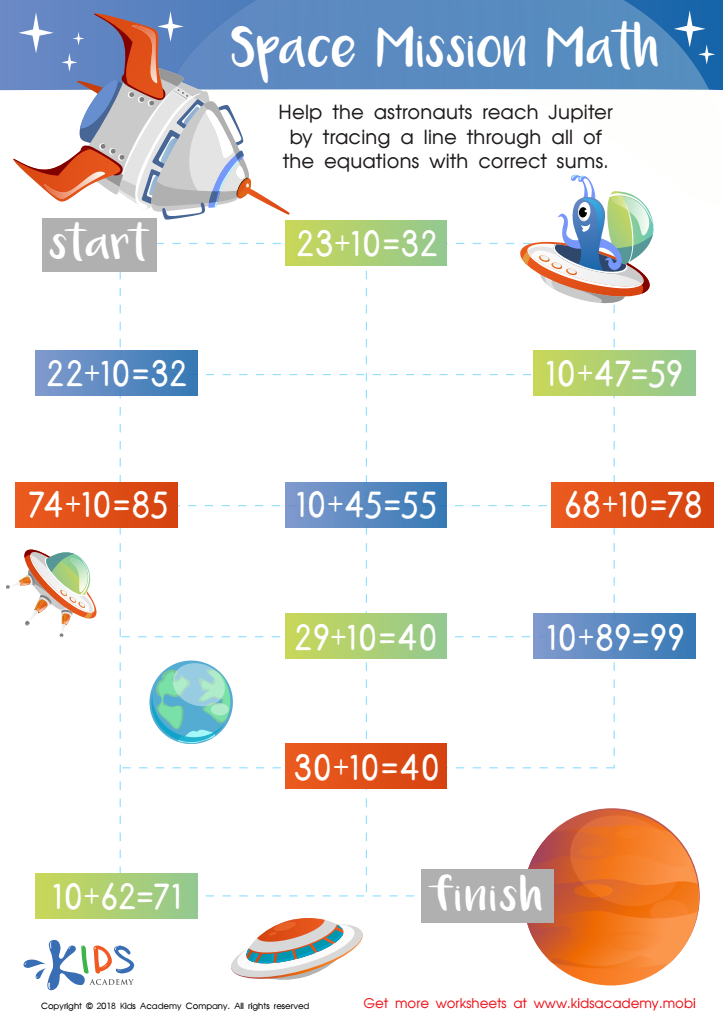
Space Mission Math Worksheet
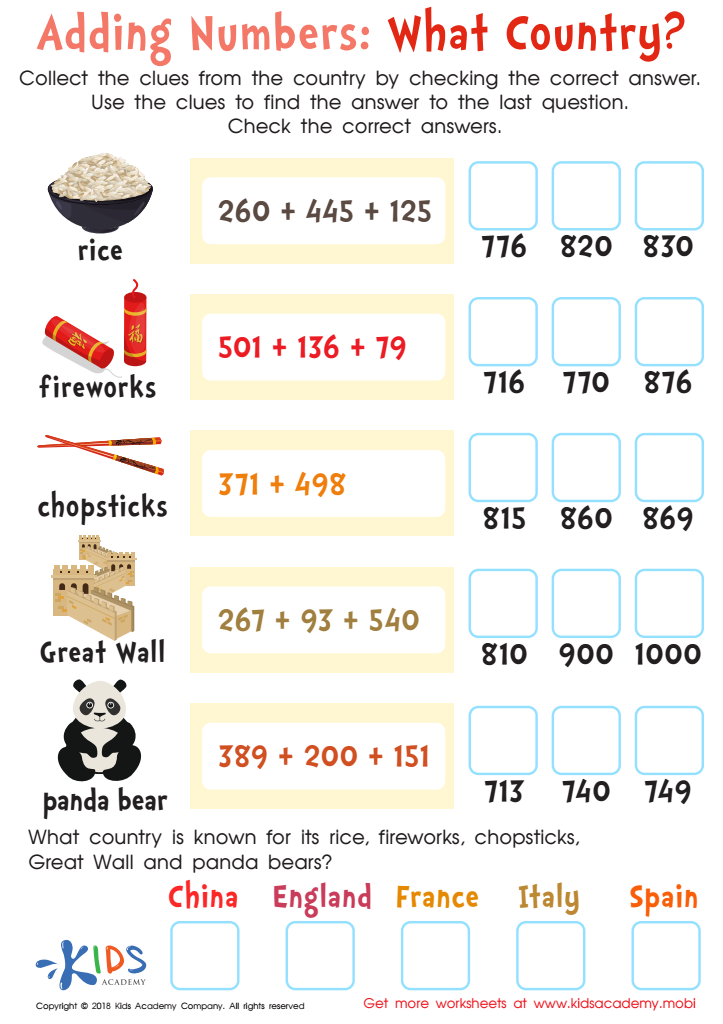
Adding Numbers: What Country Worksheet
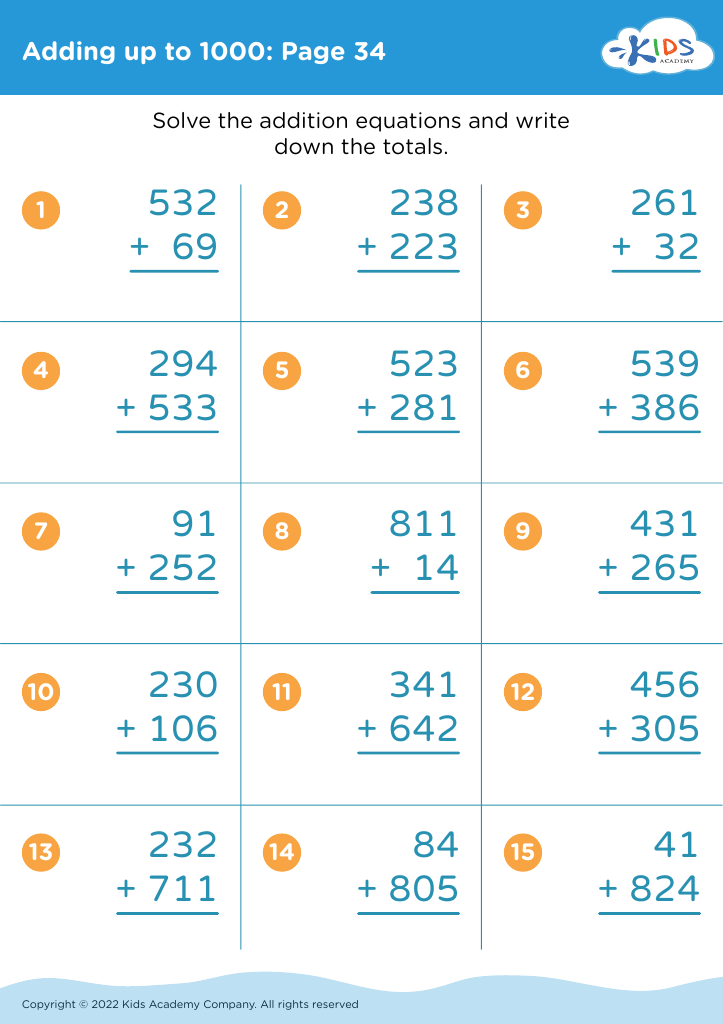
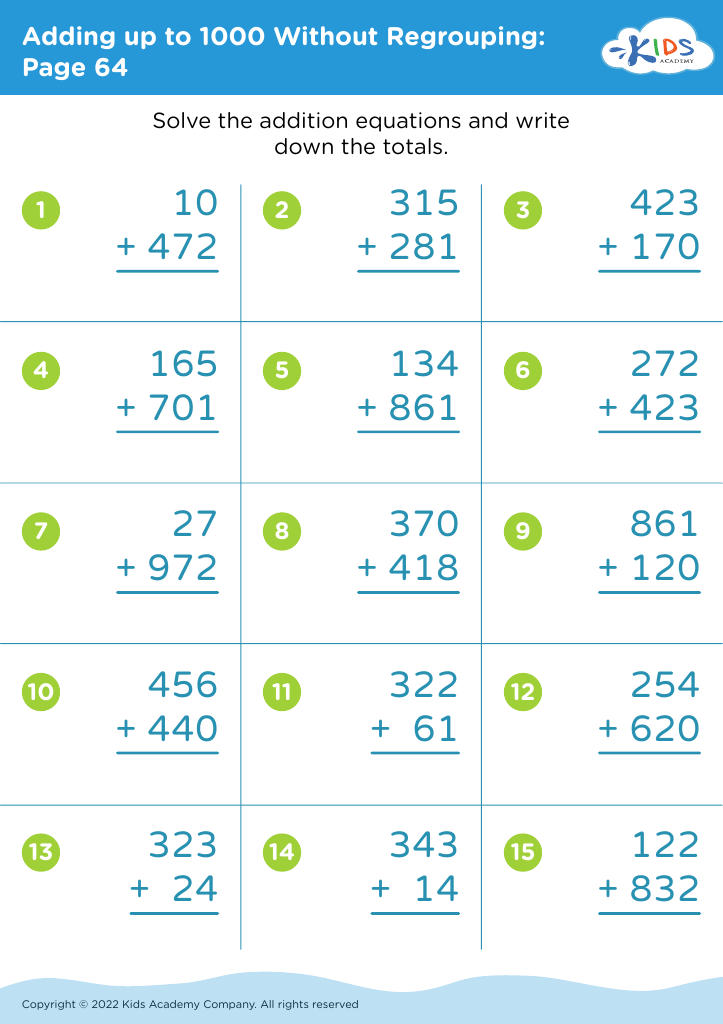
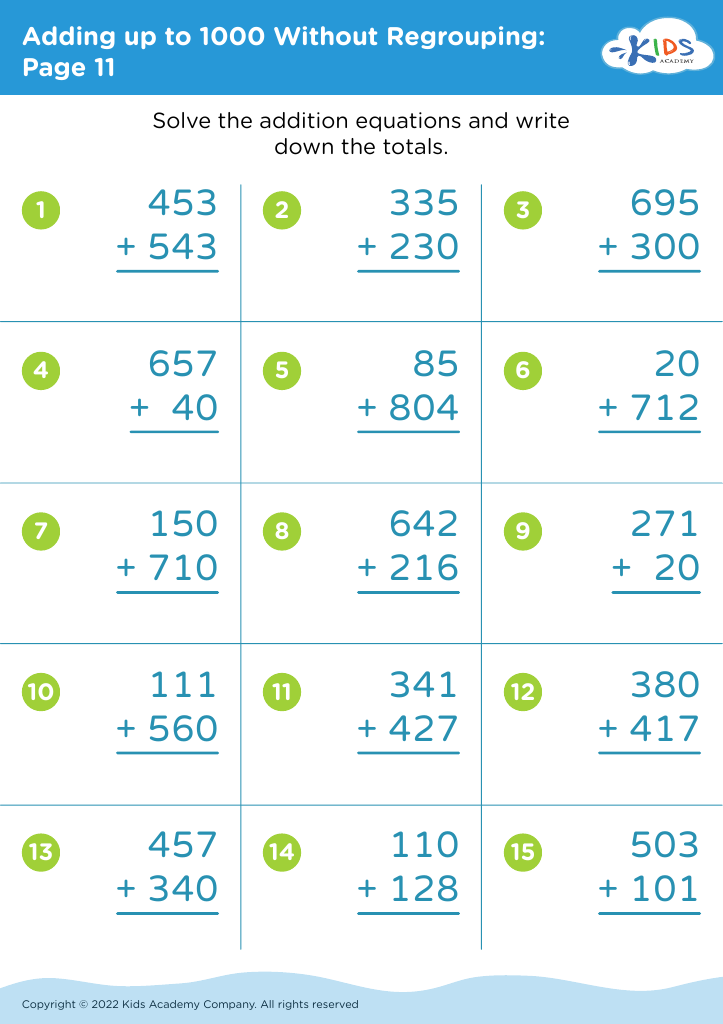
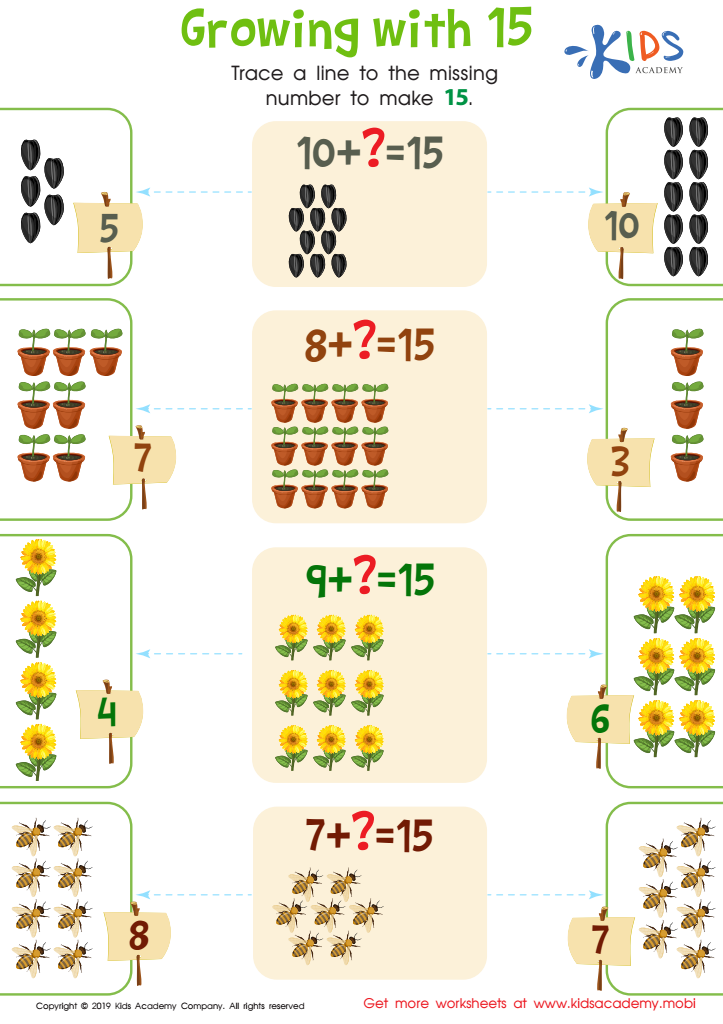
Growing with 15 Worksheet








Number sequencing, addition, and subtraction are foundational mathematical skills crucial for children aged 5-8. These skills form the basis for more complex arithmetic and mathematical problem-solving in later years. Understanding number sequences helps kids recognize patterns, predict subsequent numbers, and understand the concept of order and magnitude.
Incorporating addition and subtraction alongside number sequencing brings a practical aspect to children's learning experiences. For instance, realizing that 3+2 has the same result as 5-0 helps solidify their grasp on the concept of numbers and their relationships to one another. Mastery in these areas enhances a child’s cognitive abilities by developing logical thinking and problem-solving skills.
For parents and teachers, emphasizing these skills early forms a critical component of a child’s overall academic success. It enables children to build confidence in their math abilities, reducing math anxiety and promoting a positive attitude towards learning. As these skills are practiced and reinforced, children are more likely to excel not only in mathematics but in subjects that require critical thinking and analytical skills.
In essence, a strong foundation in number sequencing, addition, and subtraction equips children with essential tools for academic achievement and everyday life, making it imperative for parents and teachers to prioritize these skills in early education.








