Understanding bar graphs Addition & Subtraction Worksheets for Ages 5-8
3 filtered results
-
From - To
Discover an engaging way for children aged 5-8 to grasp bar graphs and improve their addition and subtraction skills with our printable worksheets. Designed by experts at Kids Academy, these worksheets make learning interactive and fun. They help young learners interpret graph data, perform basic calculations, and understand mathematical concepts through visually appealing activities. The worksheet exercises range from simple graph reading to solving addition and subtraction problems using bar graphs. Perfect for both classroom and home use, these resources play a pivotal role in developing foundational math skills in a meaningful and enjoyable manner.
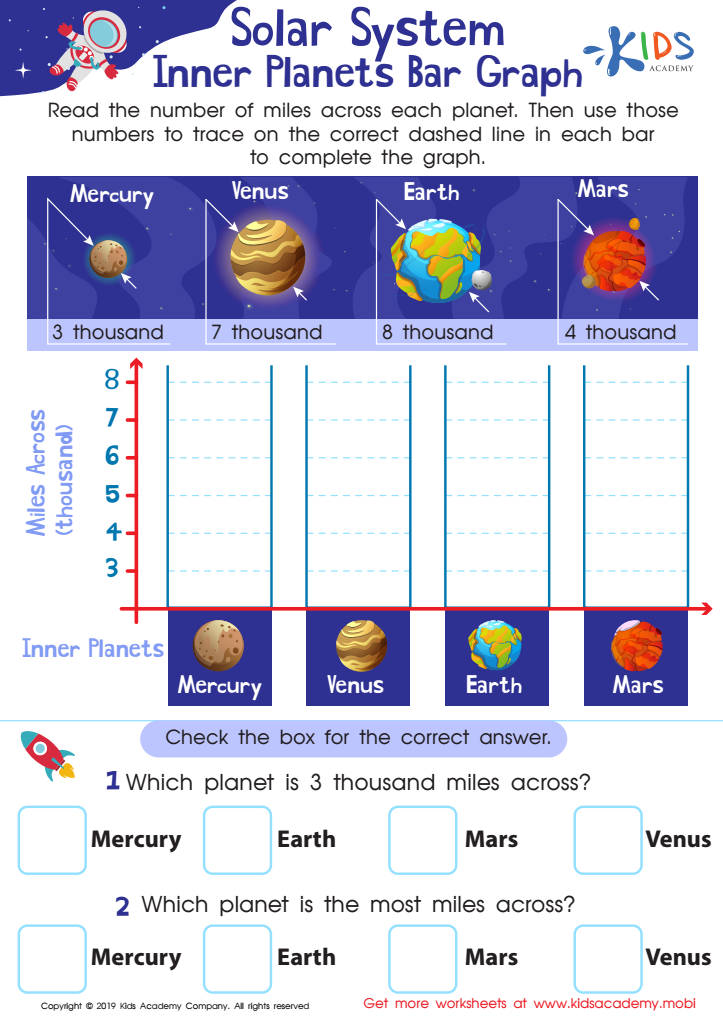
Planets Bar Graph Worksheet
 Assign to My Students
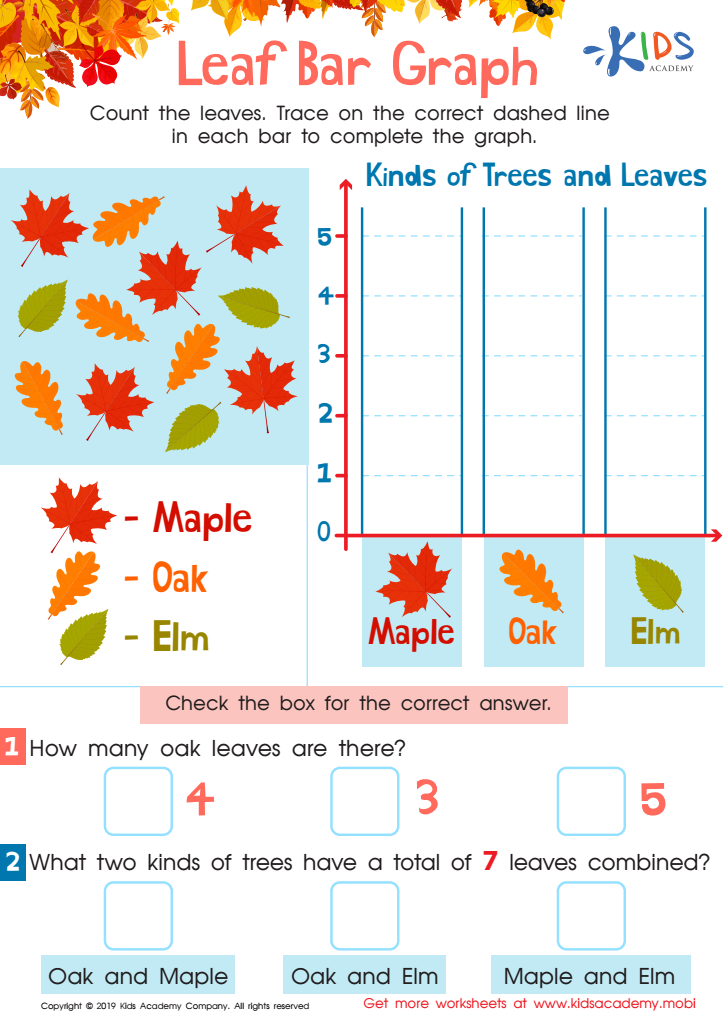
Leaf Bar Graph Worksheet
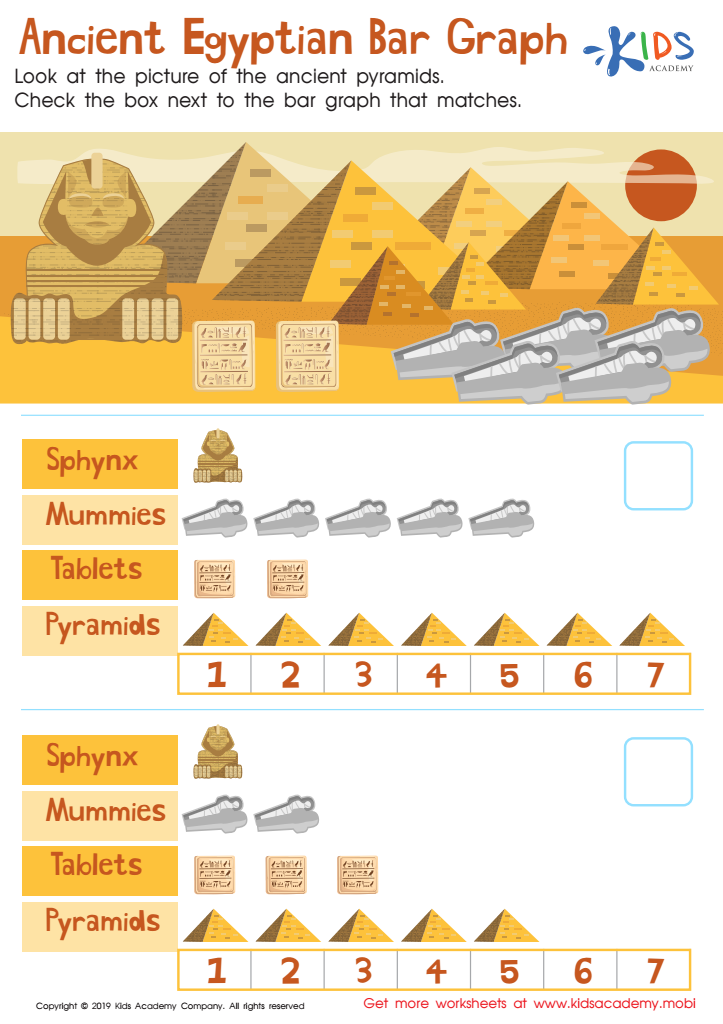
Egyptian Bar Graph Worksheet








Understanding bar graphs, addition, and subtraction for young children is crucial for their foundational mathematical development. At ages 5-8, children are in a critical period for cognitive development where they start forming basic mathematical concepts and problem-solving skills.
For bar graphs, learning to interpret data visually helps children develop critical thinking and analytical skills. It's the beginning of understanding how to collect, organize, and interpret data—abilities that are essential in today's data-driven world. Children who grasp these concepts early are better equipped to tackle more complex data analysis later in their education, making subjects like science and geography more accessible.
Addition and subtraction are the building blocks of arithmetic. Mastery of these skills at a young age sets the stage for future success in mathematics. Addition and subtraction introduce children to the fundamental principles of how numbers work, promoting numerical literacy and a sense of quantity, which are necessary for tackling higher-order math concepts like multiplication, division, and fractions.
Activities focused on understanding bar graphs, addition, and subtraction don't just build math skills; they also enhance problem-solving abilities, attention to detail, and logical thinking. Ensuring children are proficient in these areas makes them more confident learners, contributing to overall academic success and fostering a positive attitude towards learning.








