Check out this FREE Trial Lesson on Addition & Subtraction for age 5-8!

Match Exactly the Same

Favorites
With answer key
Interactive
  • 5-8
  • Understanding fractions
  • Addition & Subtraction
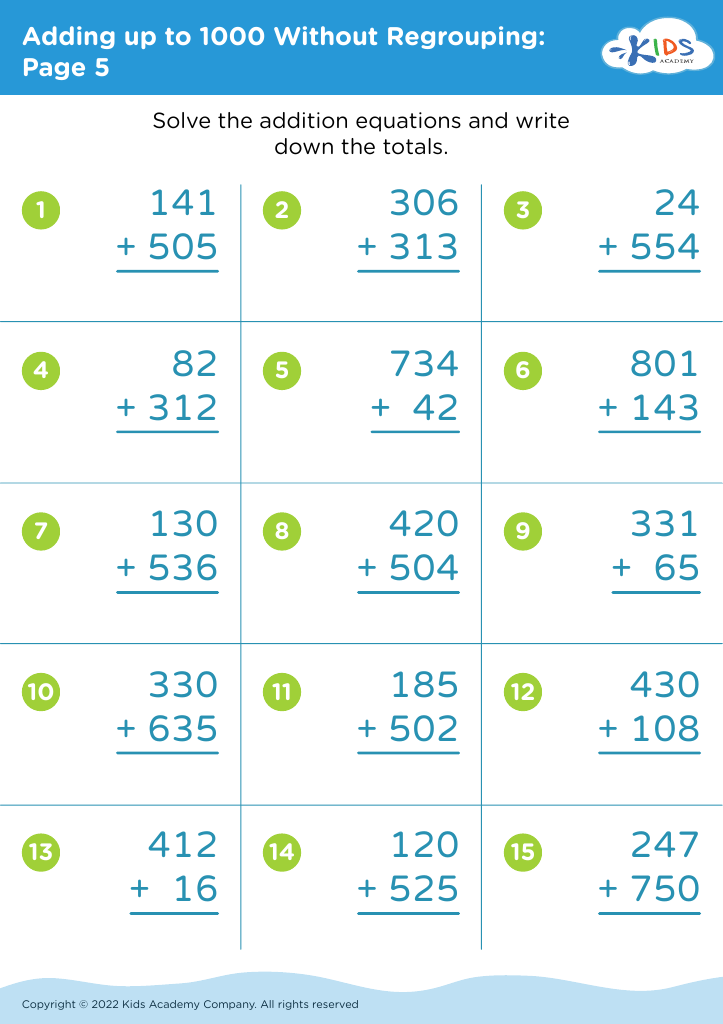
Adding up to 1000 Without Regrouping: Page 5
Worksheet
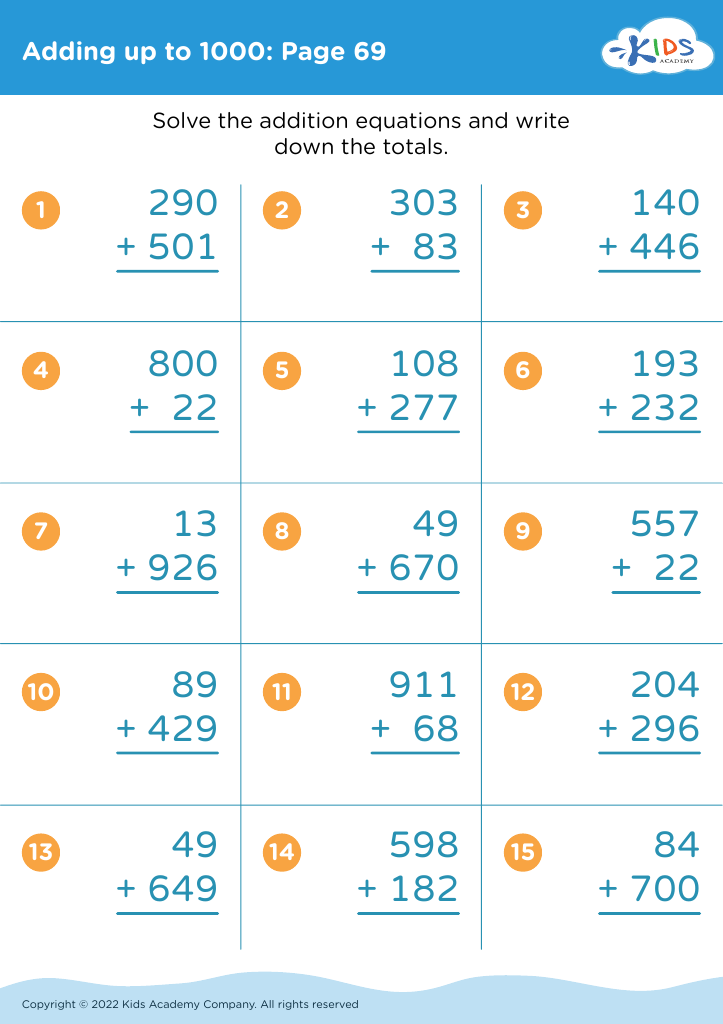
Adding up to 1000: Page 69

Adding up to 1000: Page 69

Adding up to 1000: Page 69
Worksheet
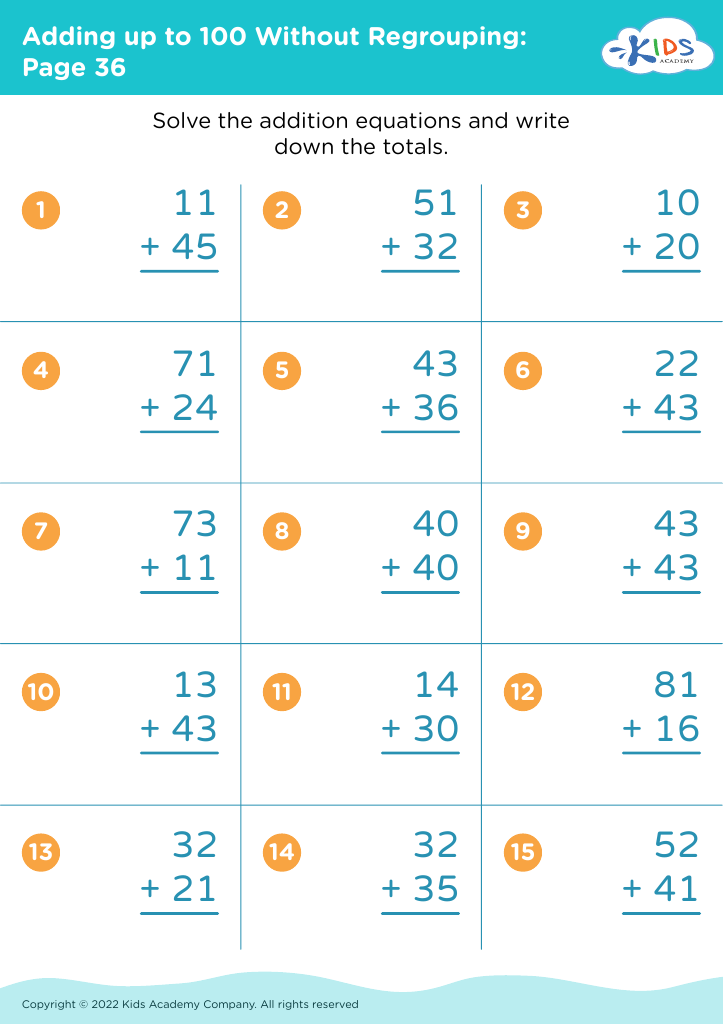
Adding up to 100 Without Regrouping: Page 36
Worksheet
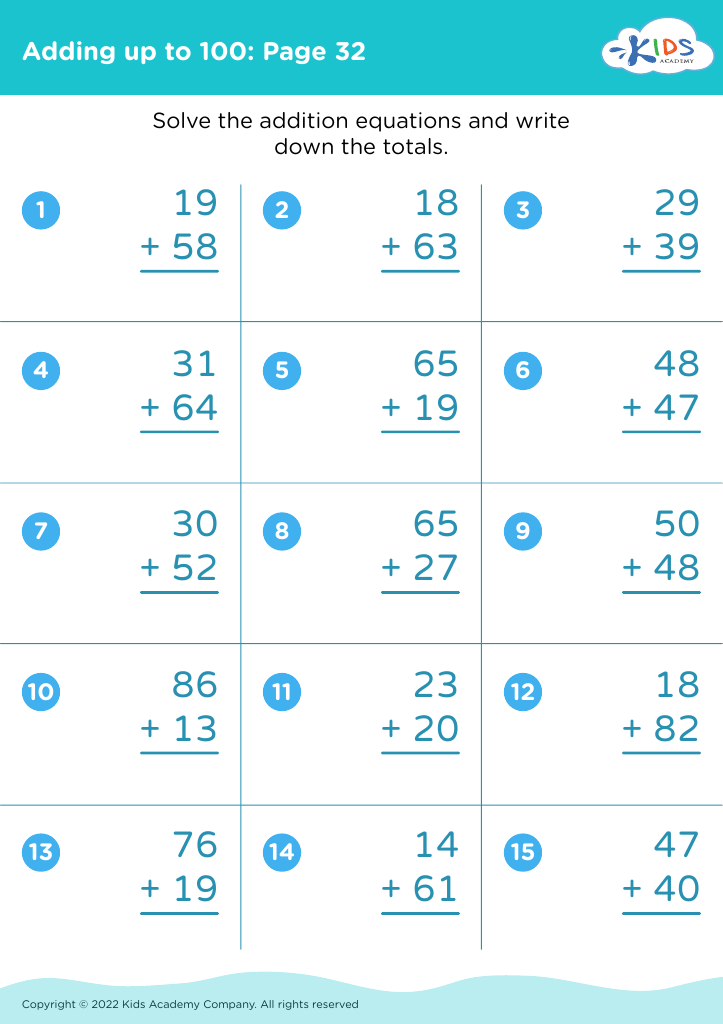
Adding up to 100: Page 32

Adding up to 100: Page 32

Adding up to 100: Page 32
Worksheet
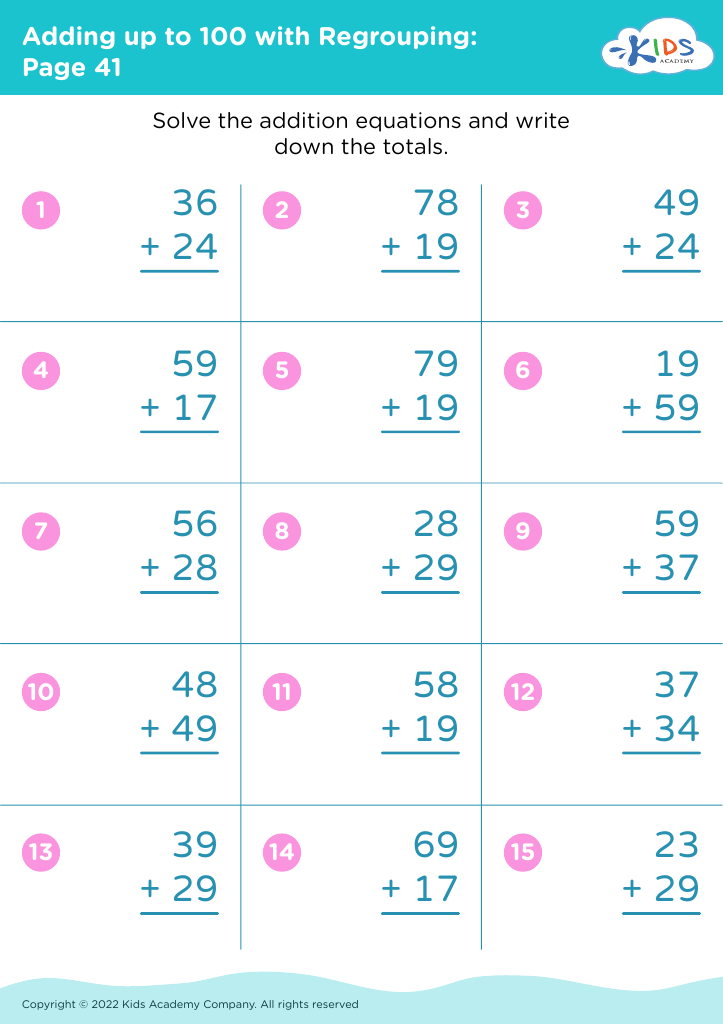
Adding up to 100 with Regrouping: Page 41
Worksheet
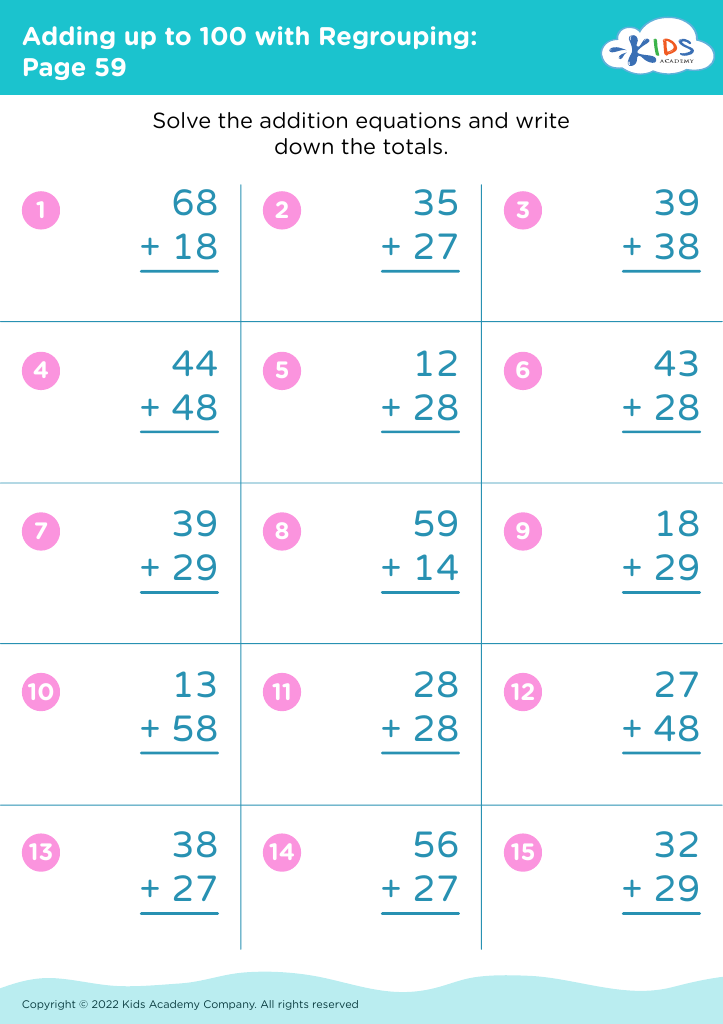
Adding up to 100 with Regrouping: Page 59
Worksheet
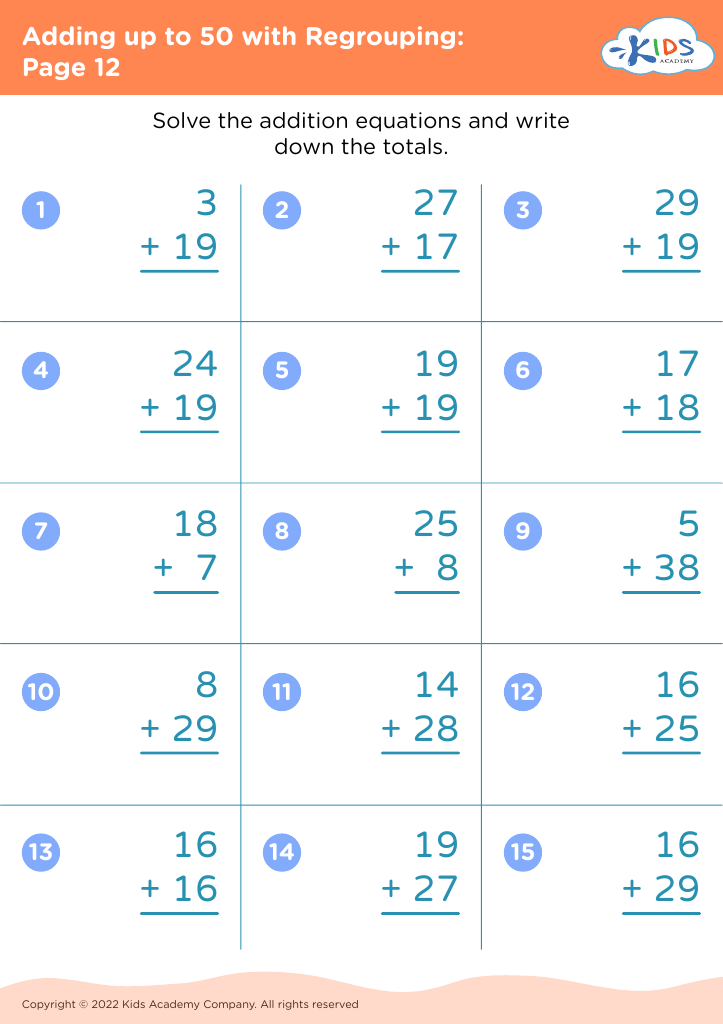
Adding up to 50 with Regrouping: Page 12
Worksheet
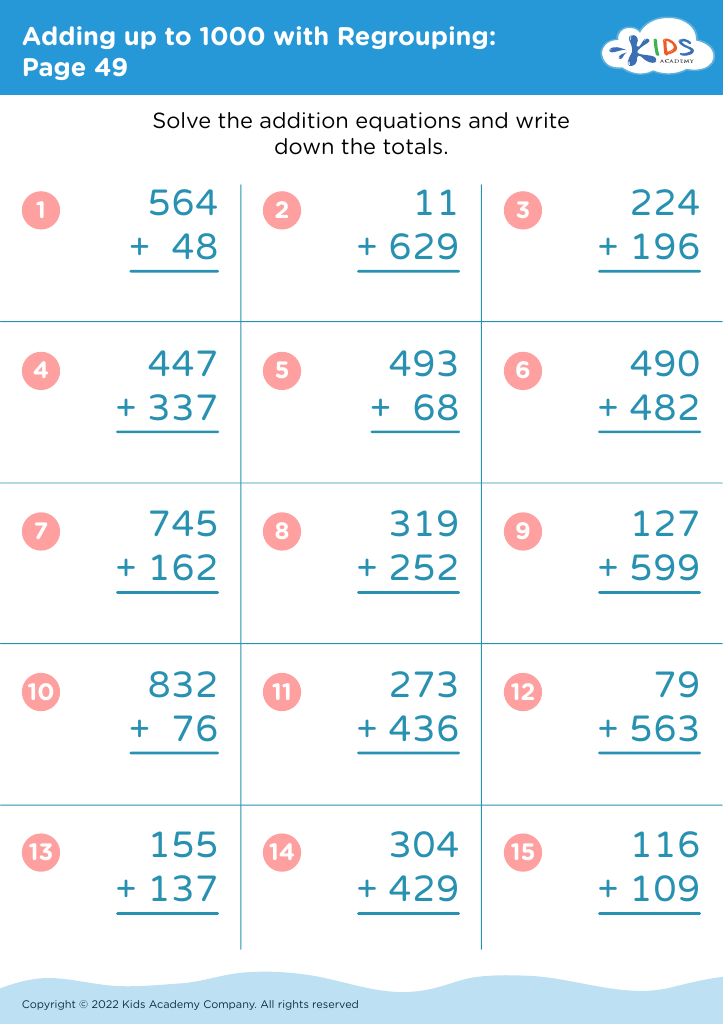
Adding up to 1000 with Regrouping: Page 49
Worksheet
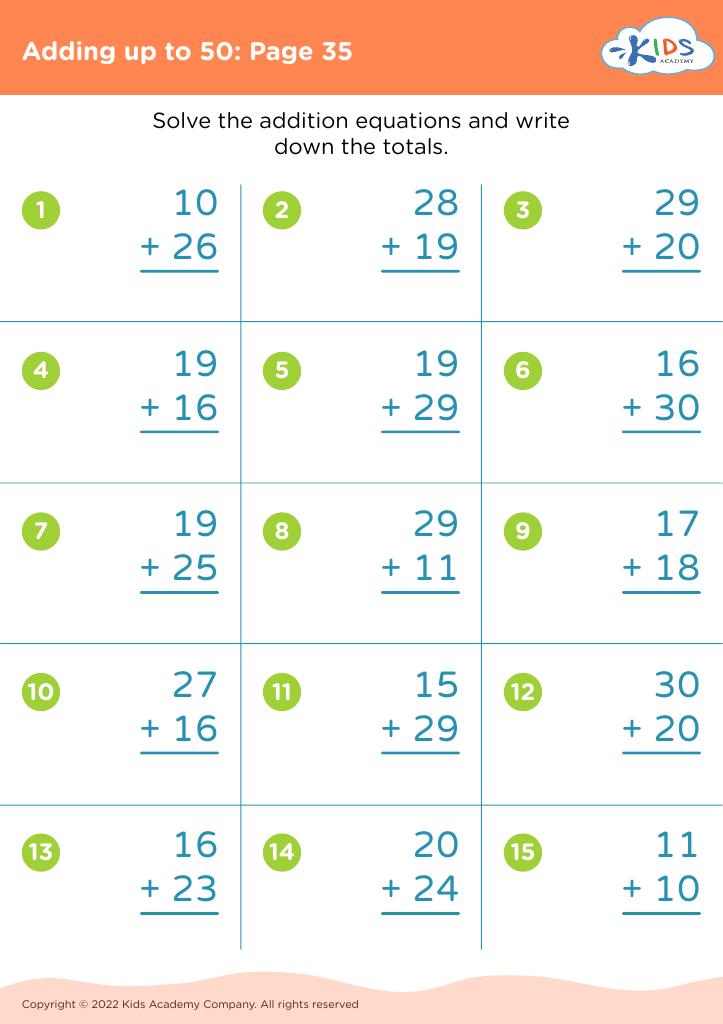
Adding up to 50: Page 35

Adding up to 50: Page 35

Adding up to 50: Page 35
Worksheet
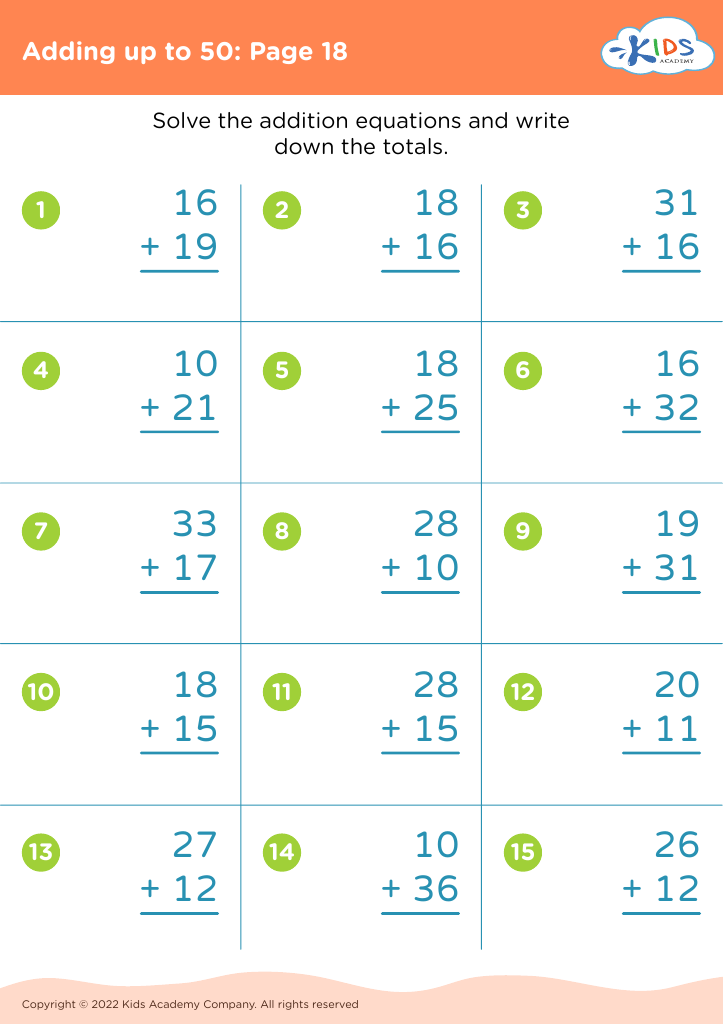
Adding up to 50: Page 18

Adding up to 50: Page 18

Adding up to 50: Page 18
Worksheet
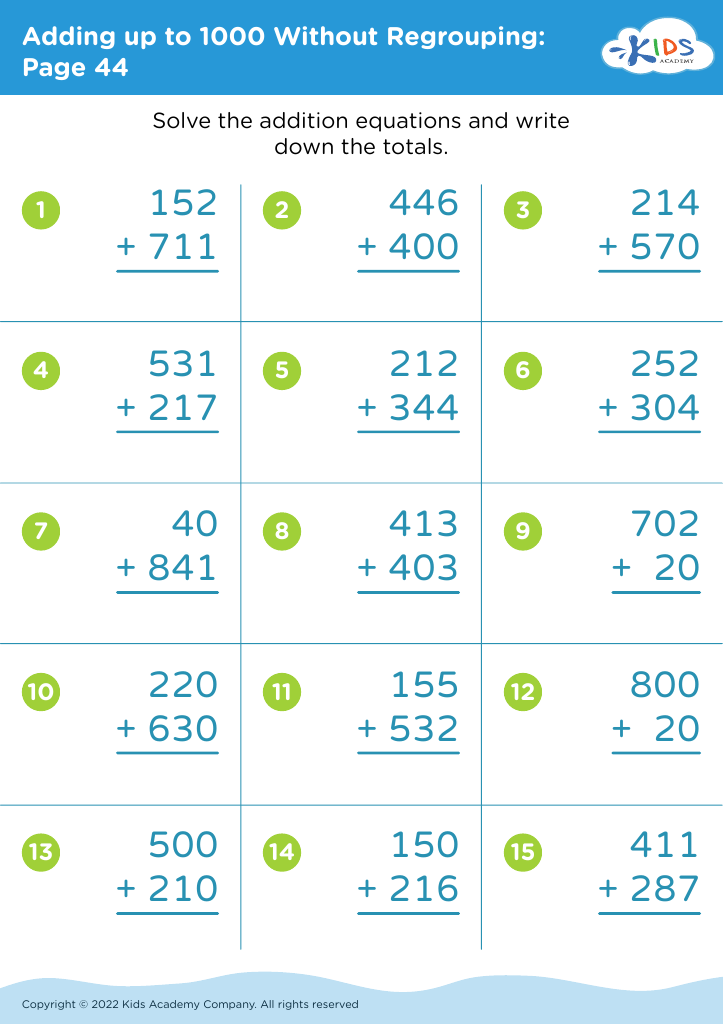
Adding up to 1000 Without Regrouping: Page 44
Worksheet
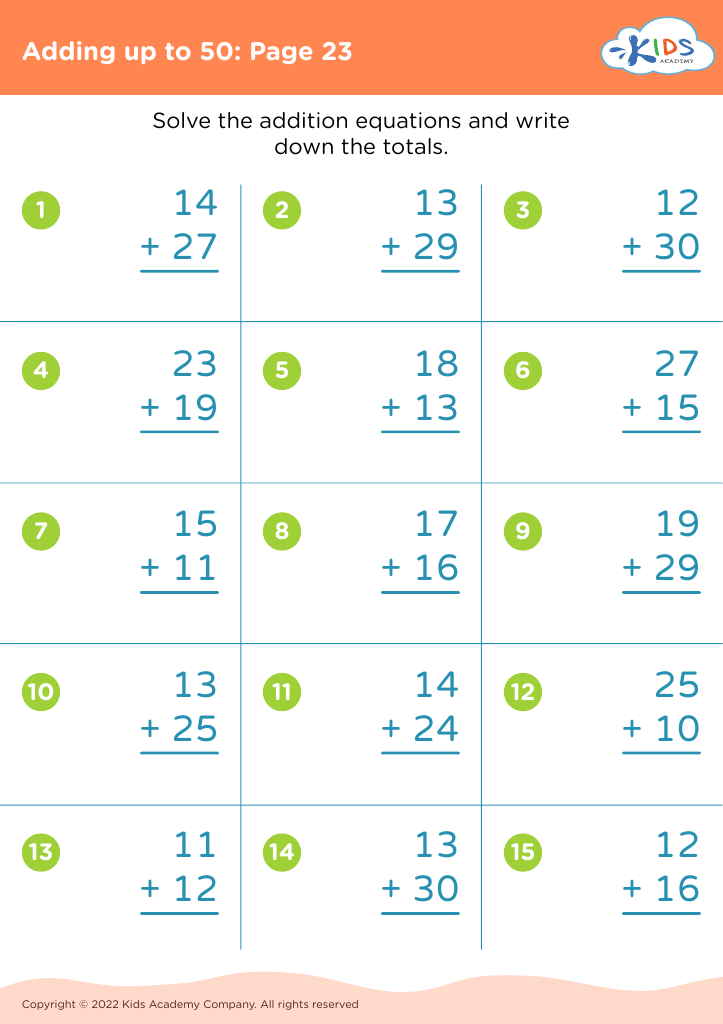
Adding up to 50: Page 23

Adding up to 50: Page 23

Adding up to 50: Page 23
Worksheet
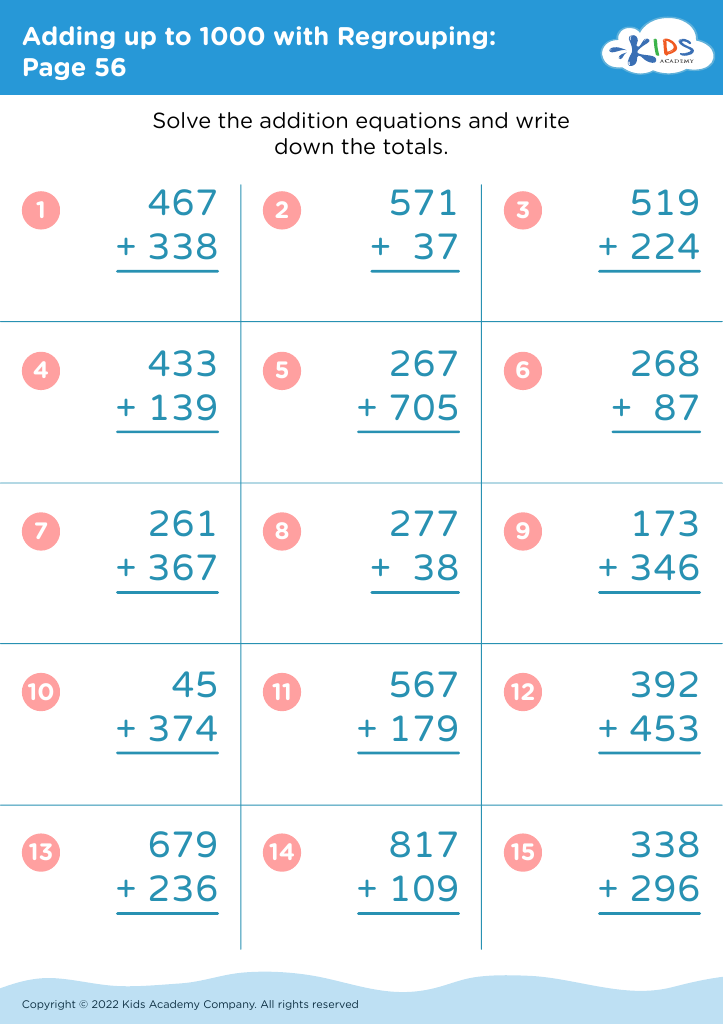
Adding up to 1000 with Regrouping: Page 56
Worksheet
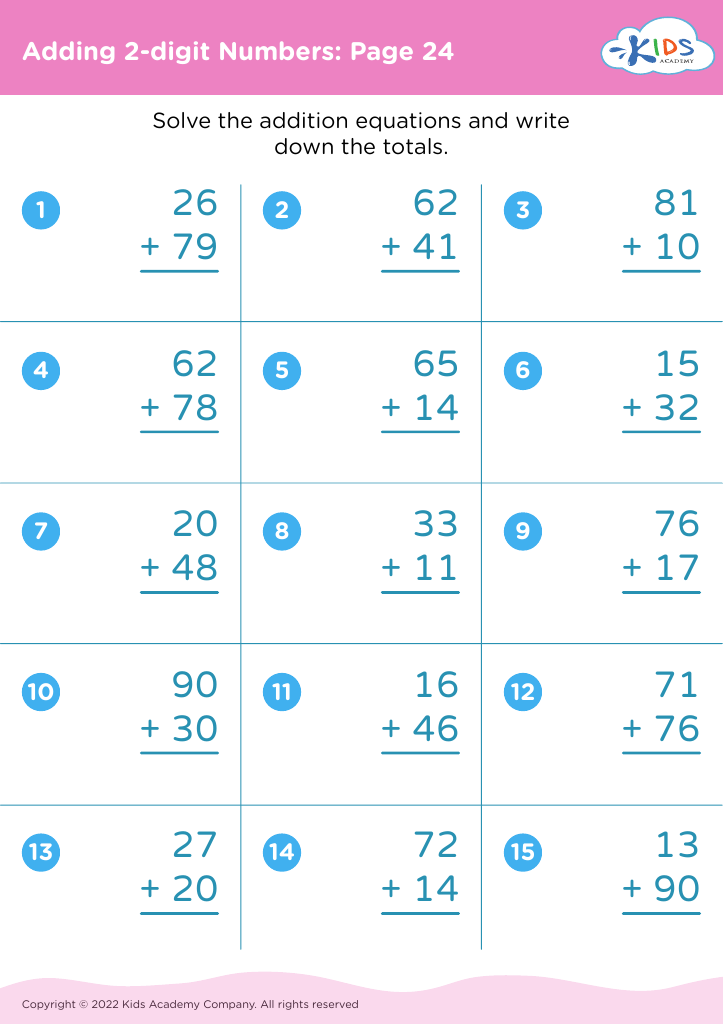
Adding 2-digit Numbers: Page 24

Adding 2-digit Numbers: Page 24

Adding 2-digit Numbers: Page 24
Worksheet
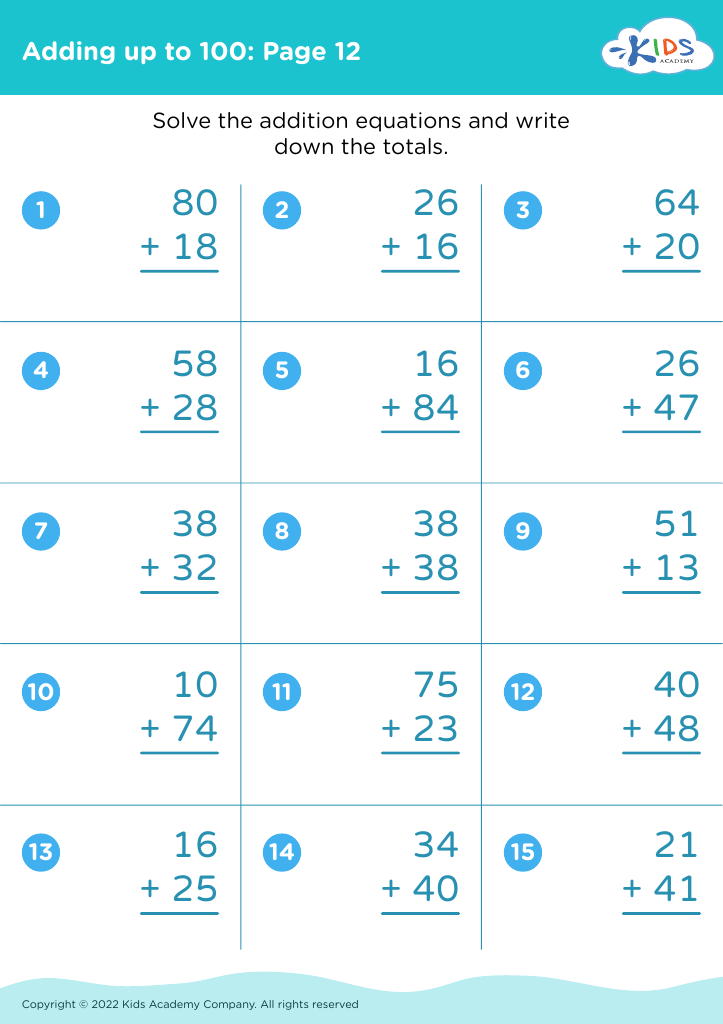
Adding up to 100: Page 12

Adding up to 100: Page 12

Adding up to 100: Page 12
Worksheet
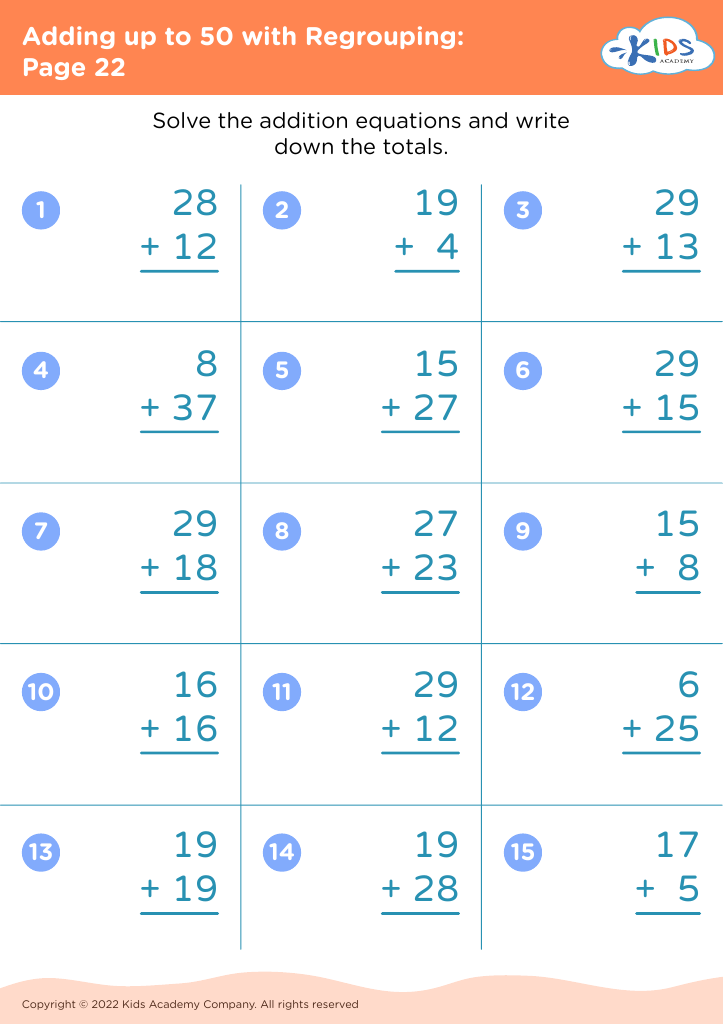
Adding up to 50 with Regrouping: Page 22
Worksheet
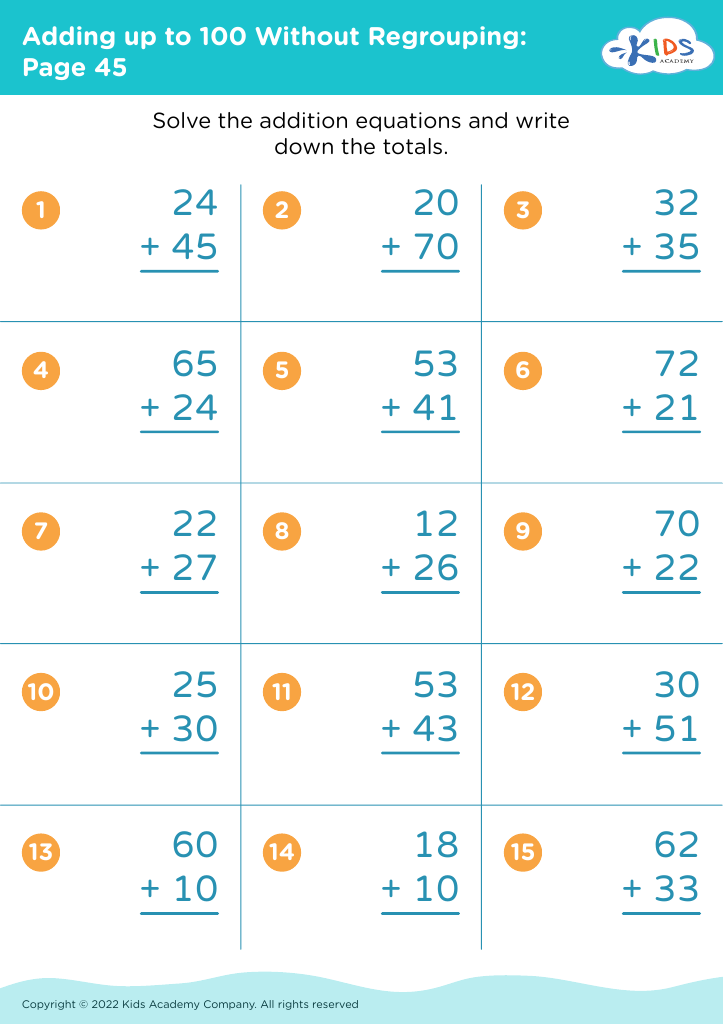
Adding up to 100 Without Regrouping: Page 45
Worksheet
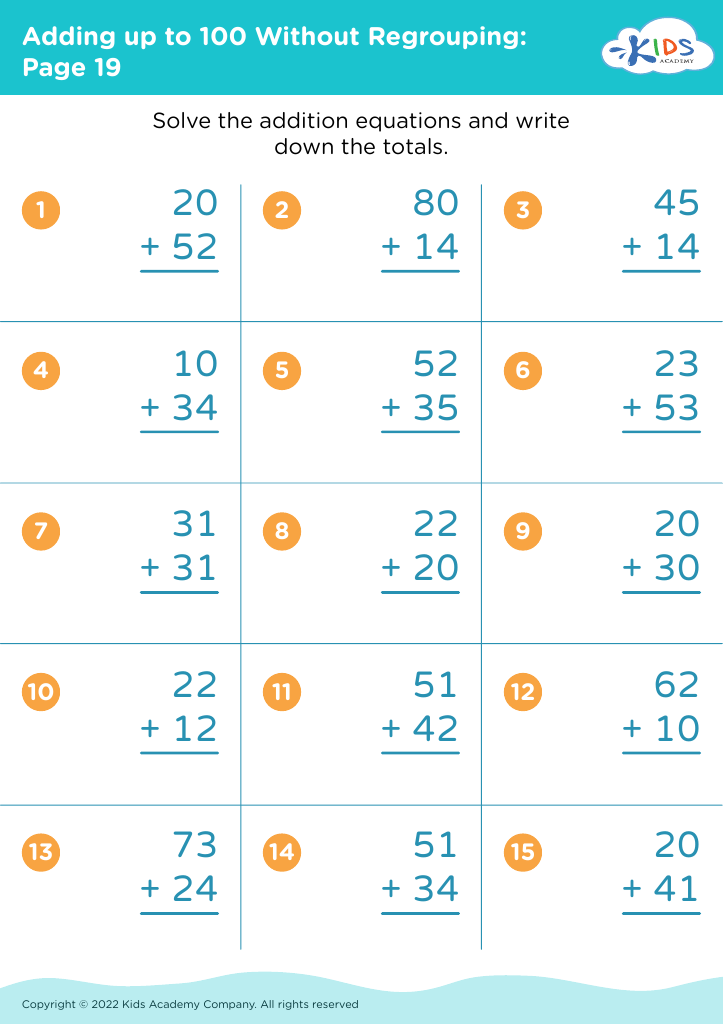
Adding up to 100 Without Regrouping: Page 19
Worksheet
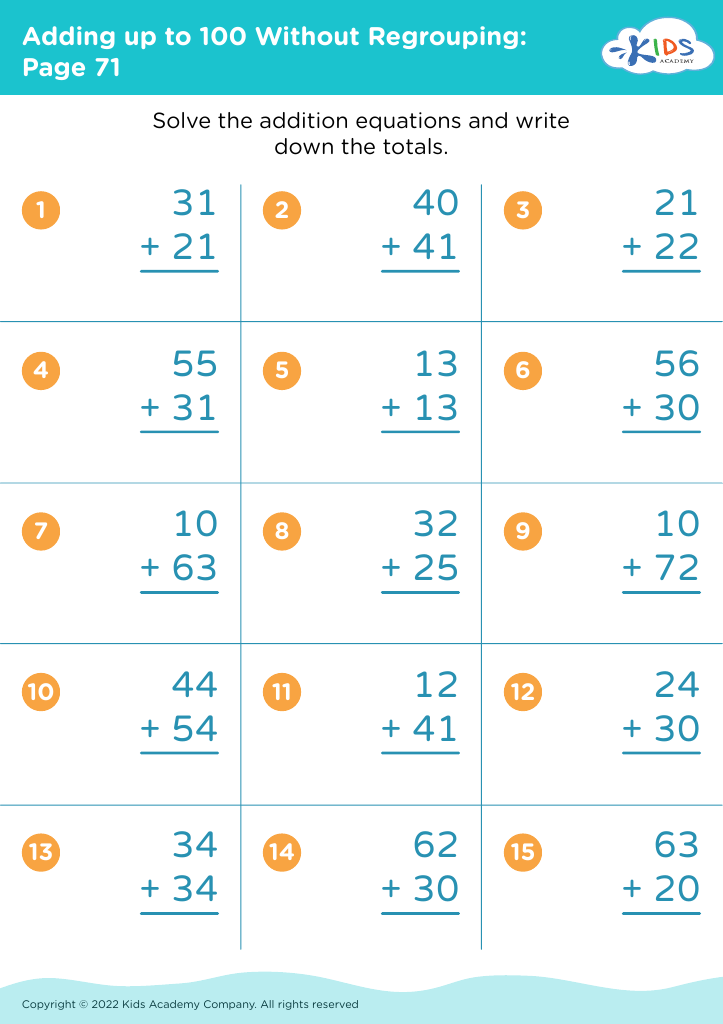
Adding up to 100 Without Regrouping: Page 71
Worksheet
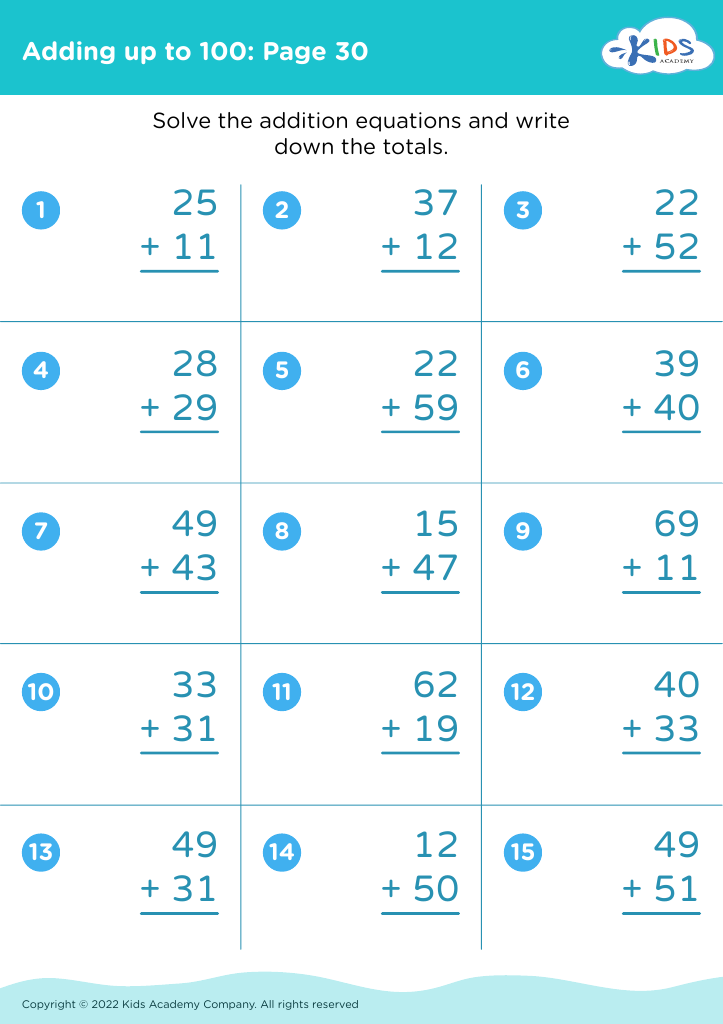
Adding up to 100: Page 30

Adding up to 100: Page 30

Adding up to 100: Page 30
Worksheet
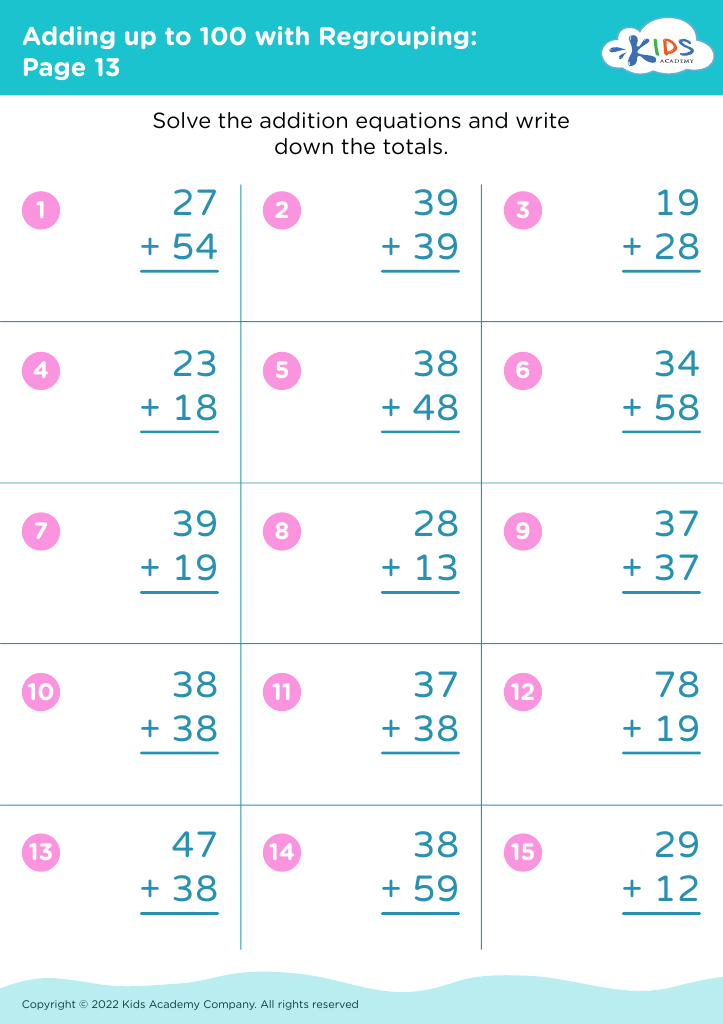
Adding up to 100 with Regrouping: Page 13
Worksheet
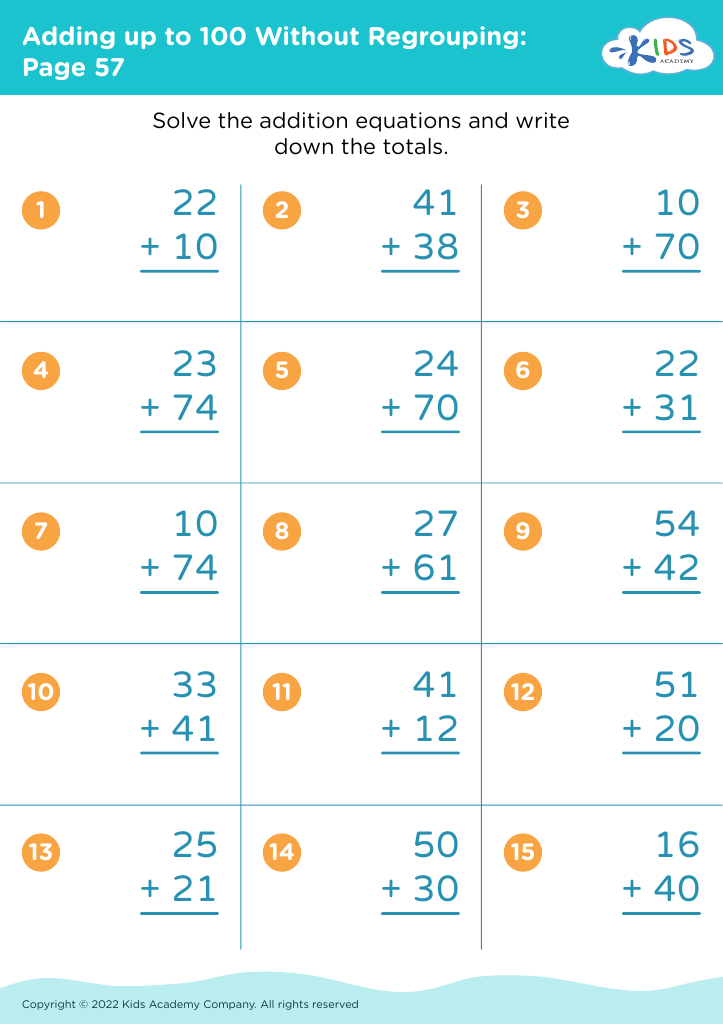
Adding up to 100 Without Regrouping: Page 57
Worksheet
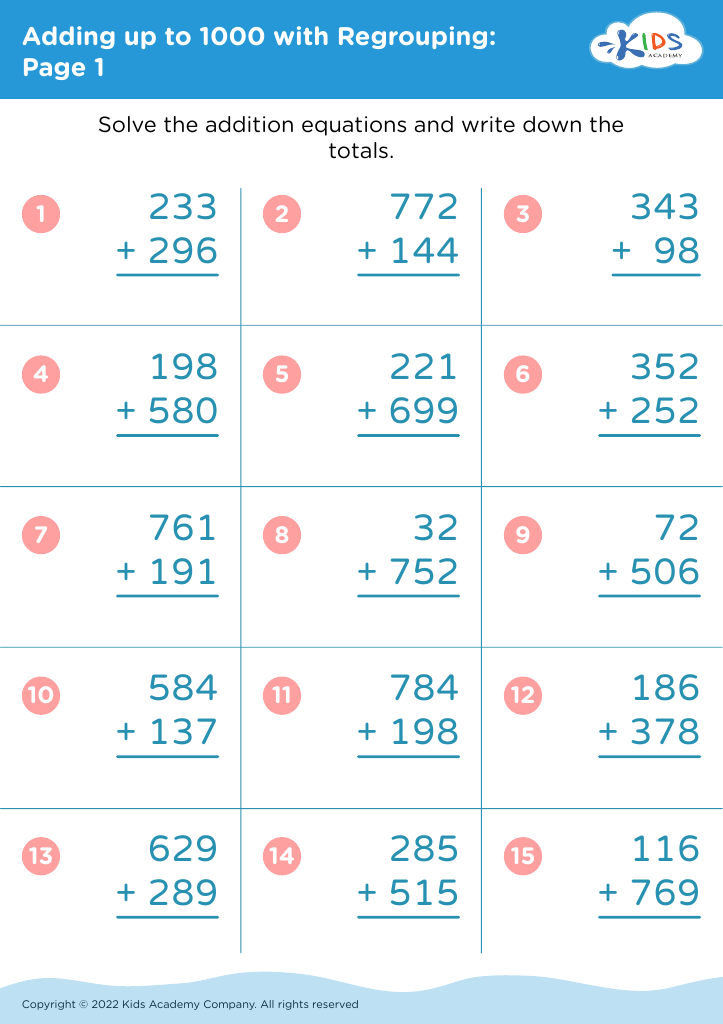
Adding up to 1000 with Regrouping: Page 1
Worksheet
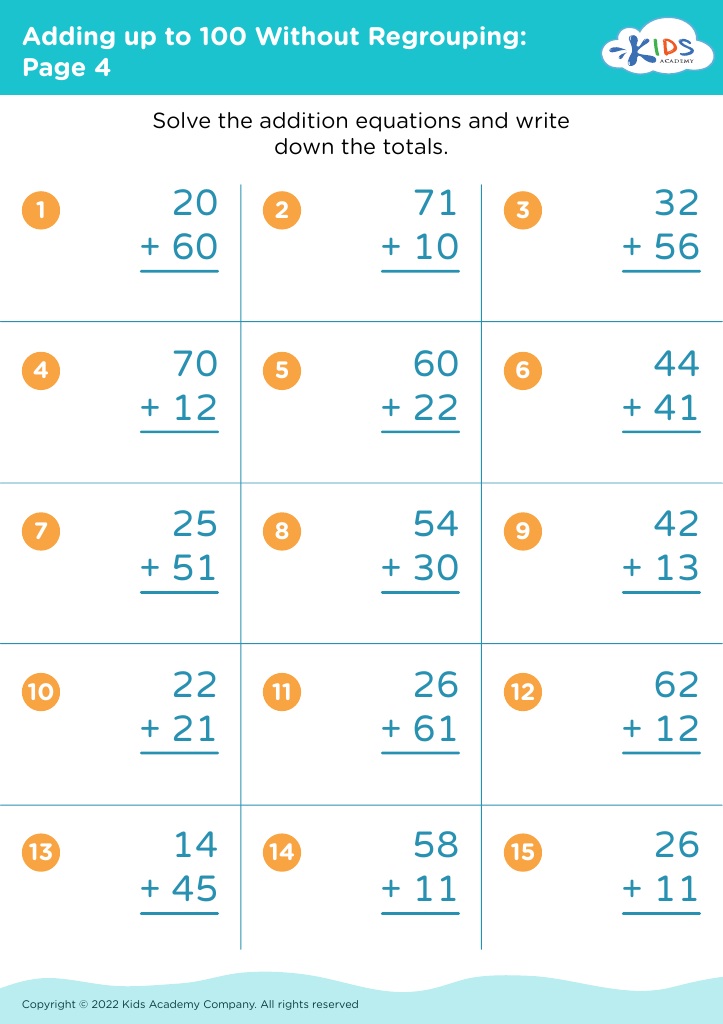
Adding up to 100 Without Regrouping: Page 4
Worksheet


Understanding fractions, particularly addition and subtraction, is crucial for children aged 5-8 as it lays the foundation for their mathematical skills. At this young age, children begin to grasp basic concepts of parts of a whole, which is the core of fractions. By engaging with fractions, children can develop spatial awareness and logical reasoning. This skill is not only important in math but translates to everyday situations, such as cooking or dividing items among friends.

Moreover, mastering addition and subtraction of fractions enhances their problem-solving abilities. It encourages critical thinking as children learn to compare sizes, combine parts, and understand equivalency. Teaching these concepts early cultivates a positive attitude towards mathematics, reducing anxiety connected to the subject later in life.

For parents and teachers, focusing on fraction comprehension also facilitates stronger communication about mathematical ideas. Activities involving fractions, like slicing fruits or sharing toys, make learning interactive and meaningful. This hands-on approach boosts engagement and retention.

Ultimately, an early understanding of fractions sets the stage for more complex math topics in the future. Hence, both teachers and parents should prioritize this aspect of learning to equip children with skills essential for their academic journey and everyday life.