Filters

20 filtered results

Clear all filters
Favorites
With answer key
Interactive

20 filtered results

Difficulty Level

Grade


Unlock the world of fractions with our engaging Understand Fractions Addition Worksheets designed for children aged 5 to 8! These carefully crafted worksheets introduce young learners to the concept of fractions through fun, interactive exercises. Kids will practice adding fractions using visuals and hands-on activities that enhance their comprehension of this essential math skill. Our resources promote critical thinking and problem-solving while perfectly aligning with early grade curriculum standards. With vibrant designs and age-appropriate challenges, these worksheets ensure that learning about fractions becomes an enjoyable adventure. Download and create a strong foundation for your child's math journey today!
Check out this FREE Trial Lesson on Addition for age 5-8!

Exactly the Same, or Not

Favorites
With answer key
Interactive
  • 5-8
  • Understand fractions
  • Addition
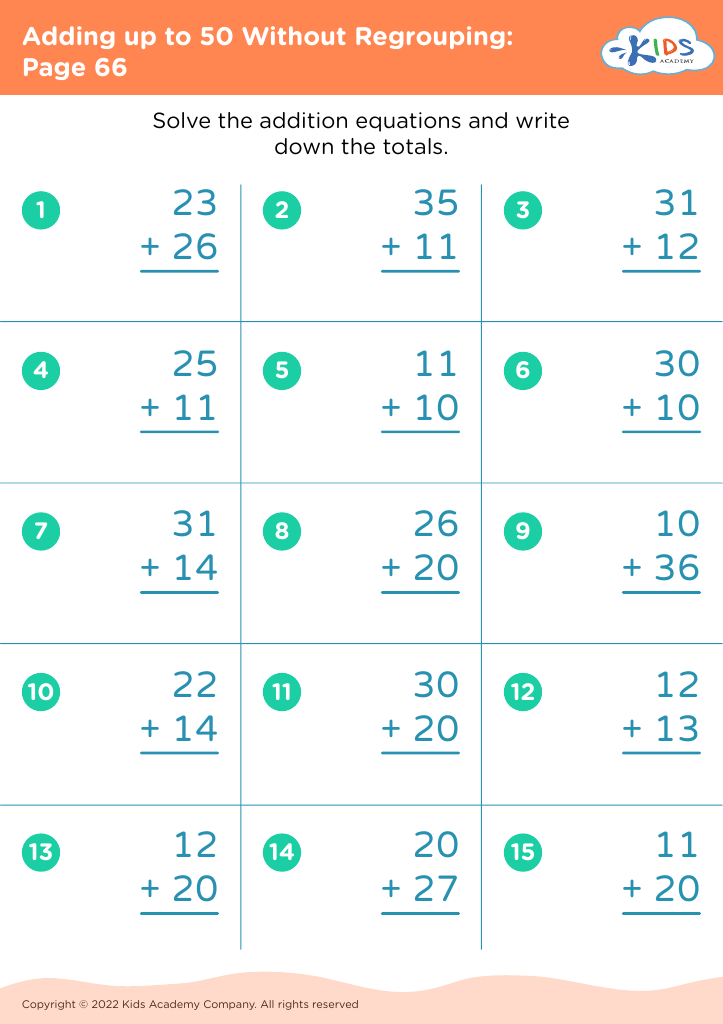
Adding up to 50 Without Regrouping: Page 66
Worksheet
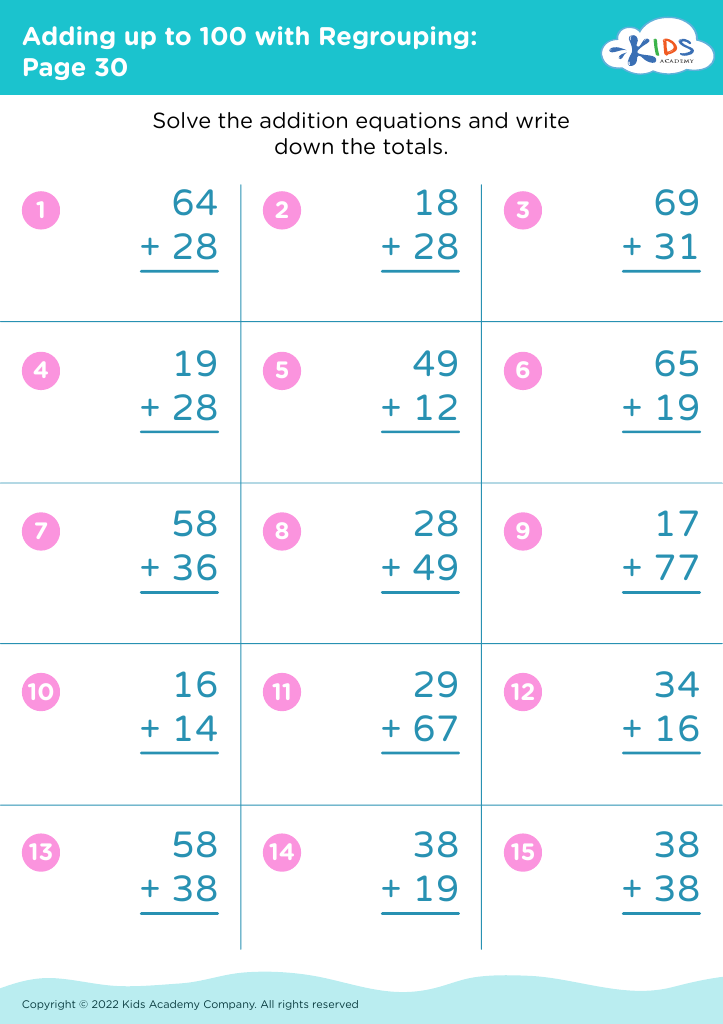
Adding up to 100 with Regrouping: Page 30
Worksheet
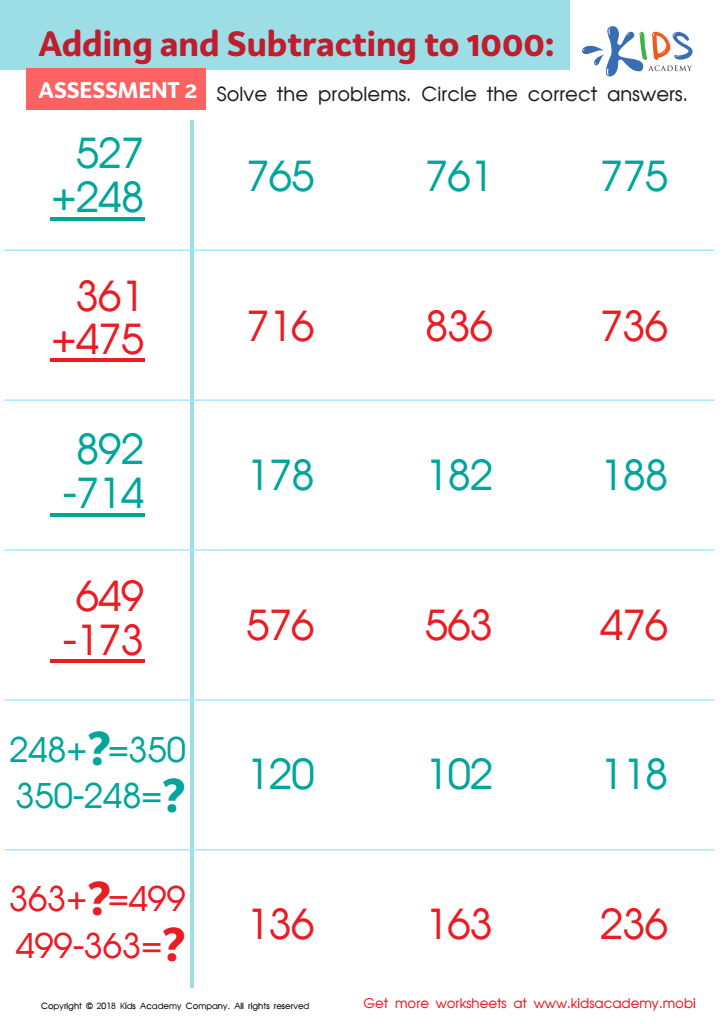
Adding and Subtracting to 1 Worksheet: Assessment 2

Adding and Subtracting to 1 Worksheet: Assessment 2

Test your child's addition and subtraction of 3-digit numbers with this assessment worksheet! They'll practice regrouping and pre-algebra skills to show their expertise. Have them work through the page and circle their answers, then see how many they got right to check their understanding and progress.
Adding and Subtracting to 1 Worksheet: Assessment 2
Worksheet
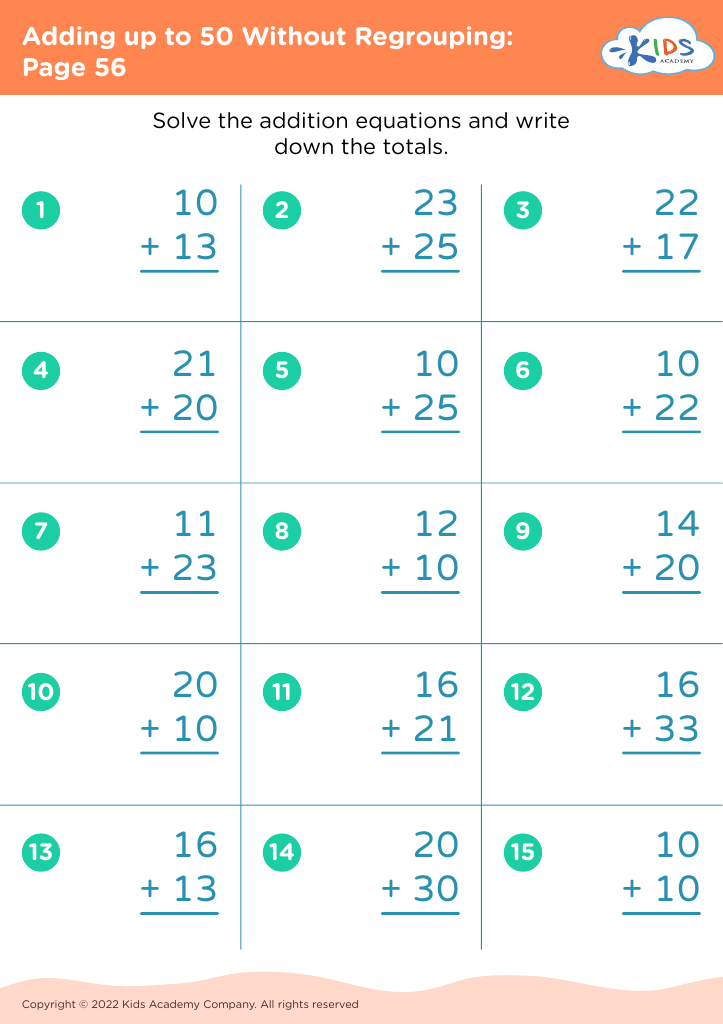
Adding up to 50 Without Regrouping: Page 56
Worksheet
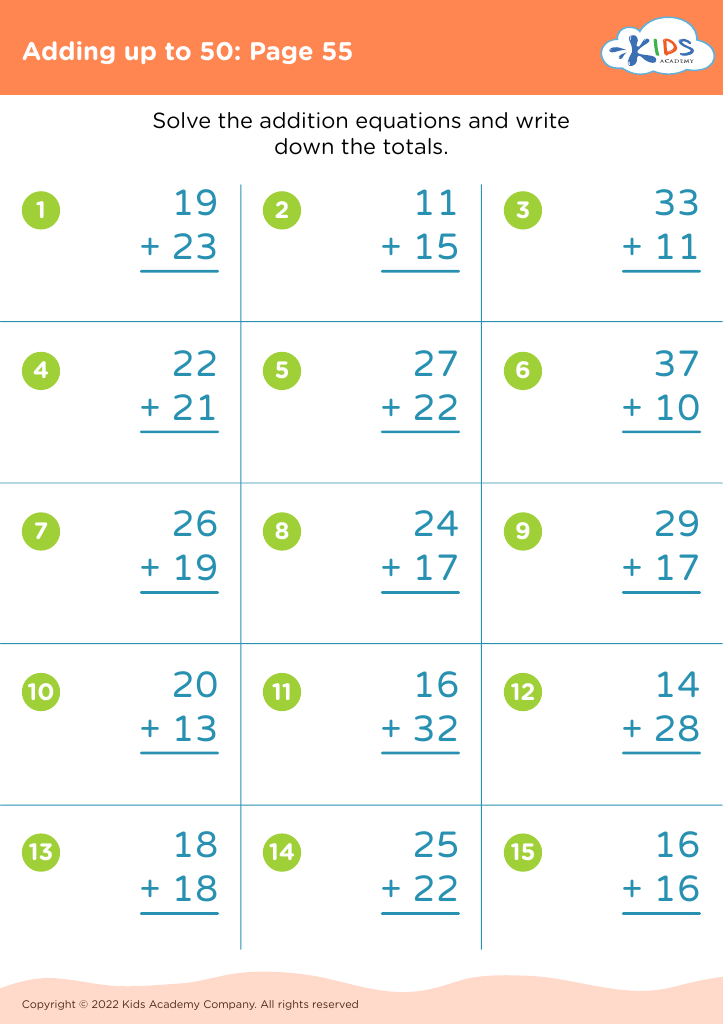
Adding up to 50: Page 55

Adding up to 50: Page 55

Adding up to 50: Page 55
Worksheet
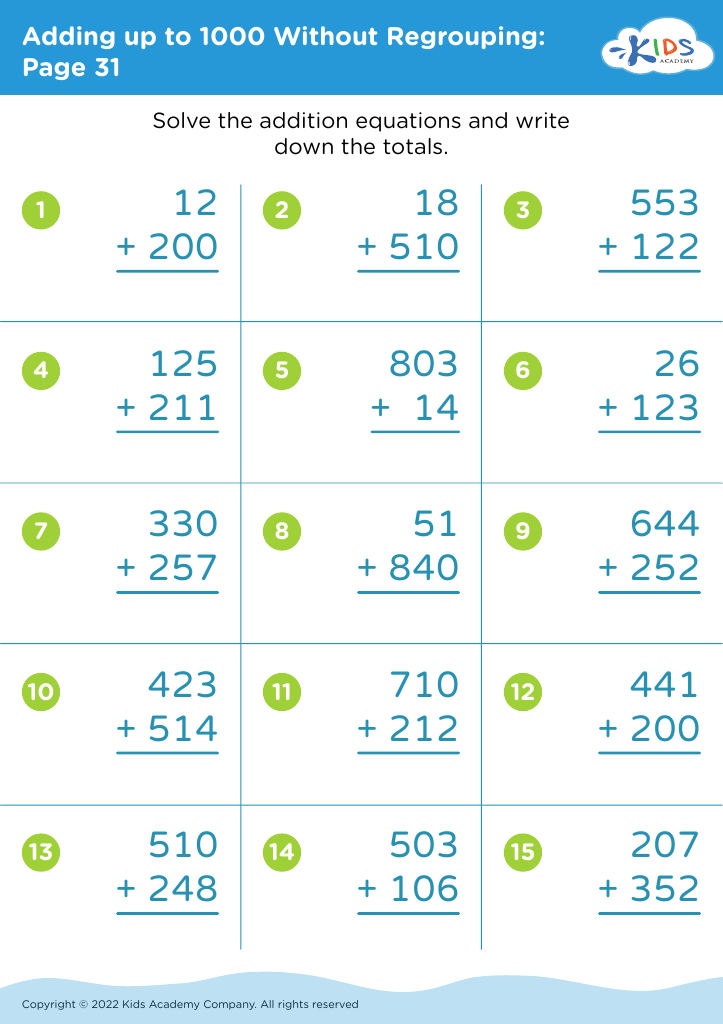
Adding up to 1000 Without Regrouping: Page 31
Worksheet
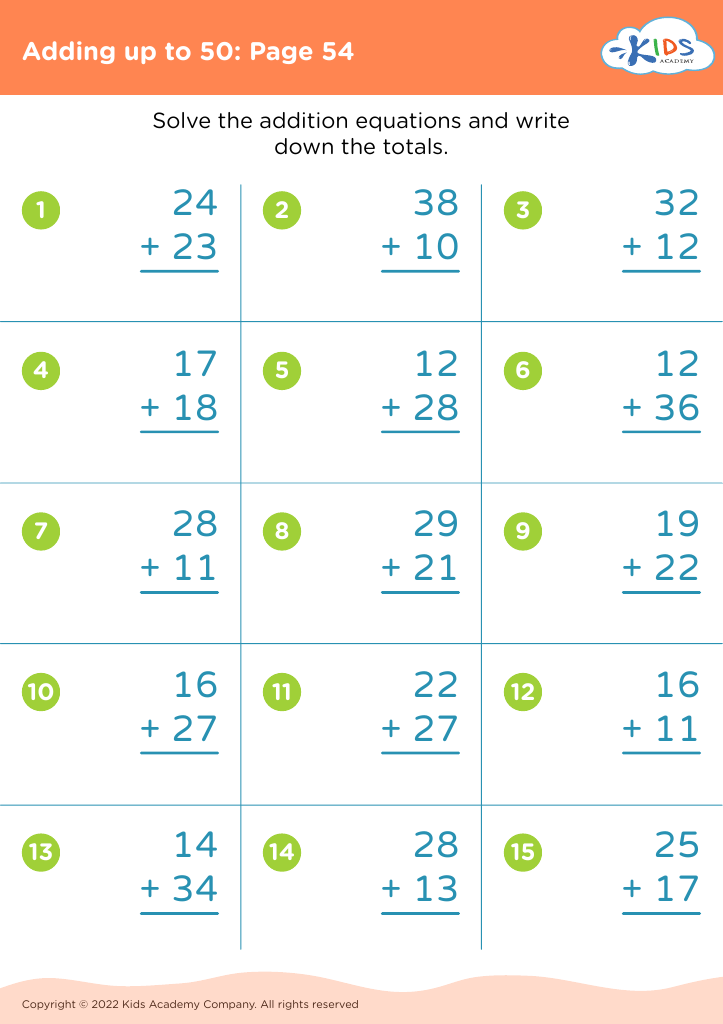
Adding up to 50: Page 54

Adding up to 50: Page 54

Adding up to 50: Page 54
Worksheet
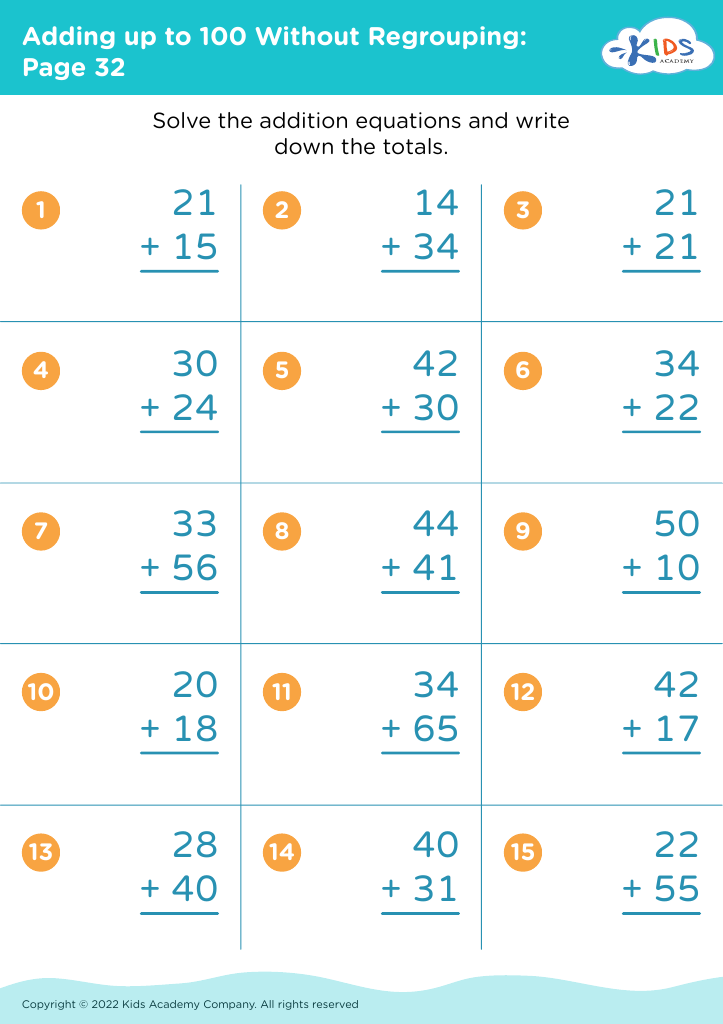
Adding up to 100 Without Regrouping: Page 32
Worksheet
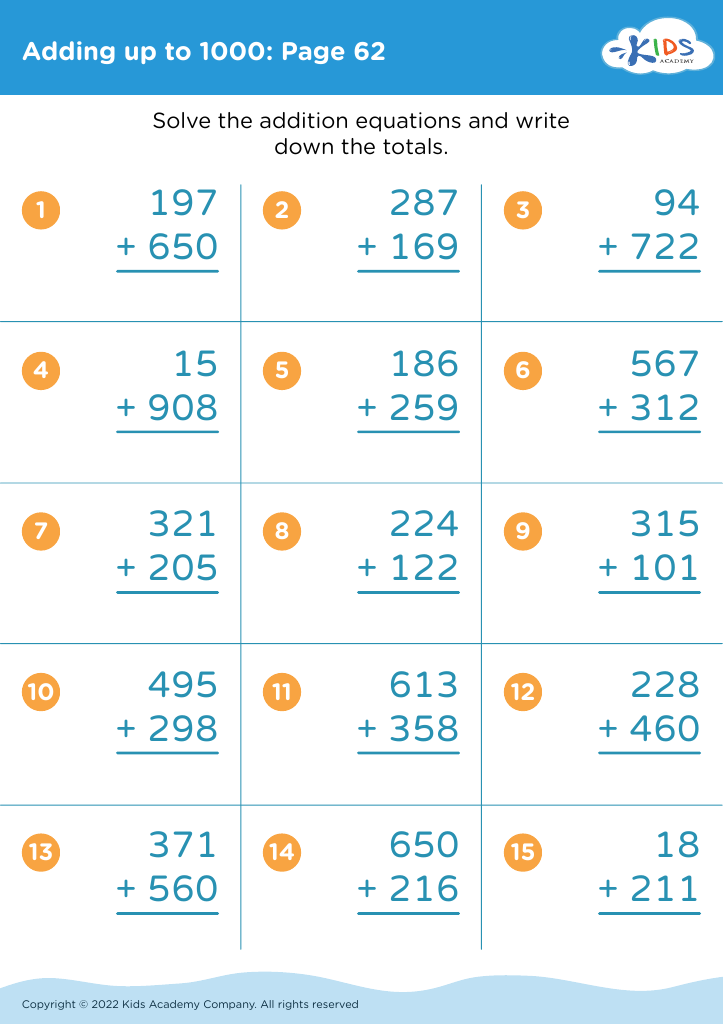
Adding up to 1000: Page 62

Adding up to 1000: Page 62

Adding up to 1000: Page 62
Worksheet
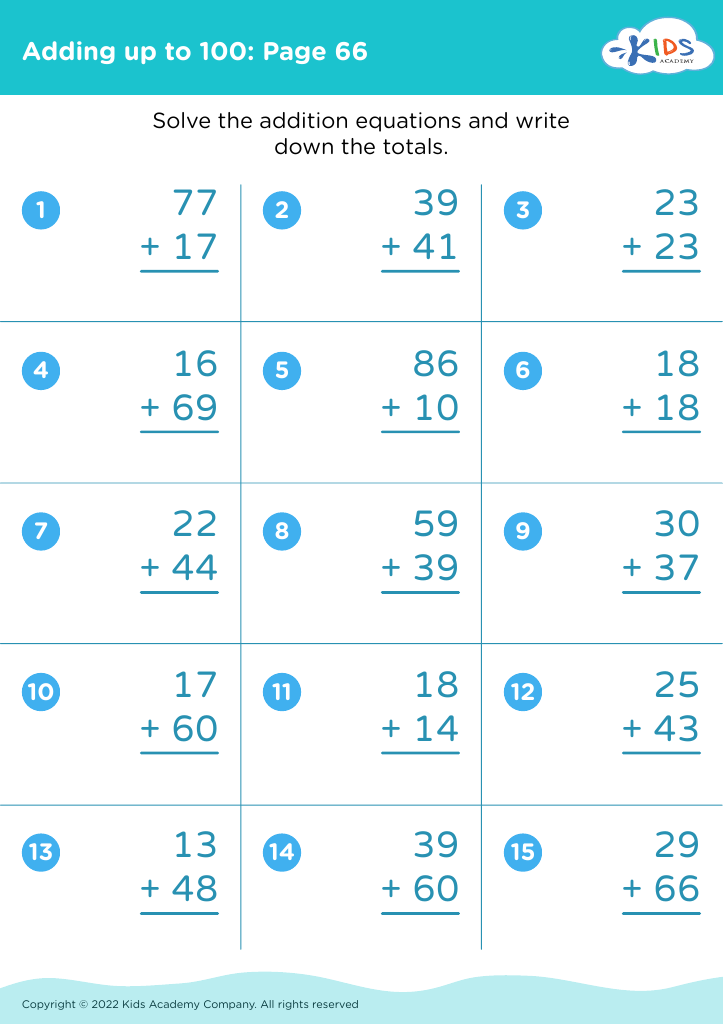
Adding up to 100: Page 66

Adding up to 100: Page 66

Adding up to 100: Page 66
Worksheet
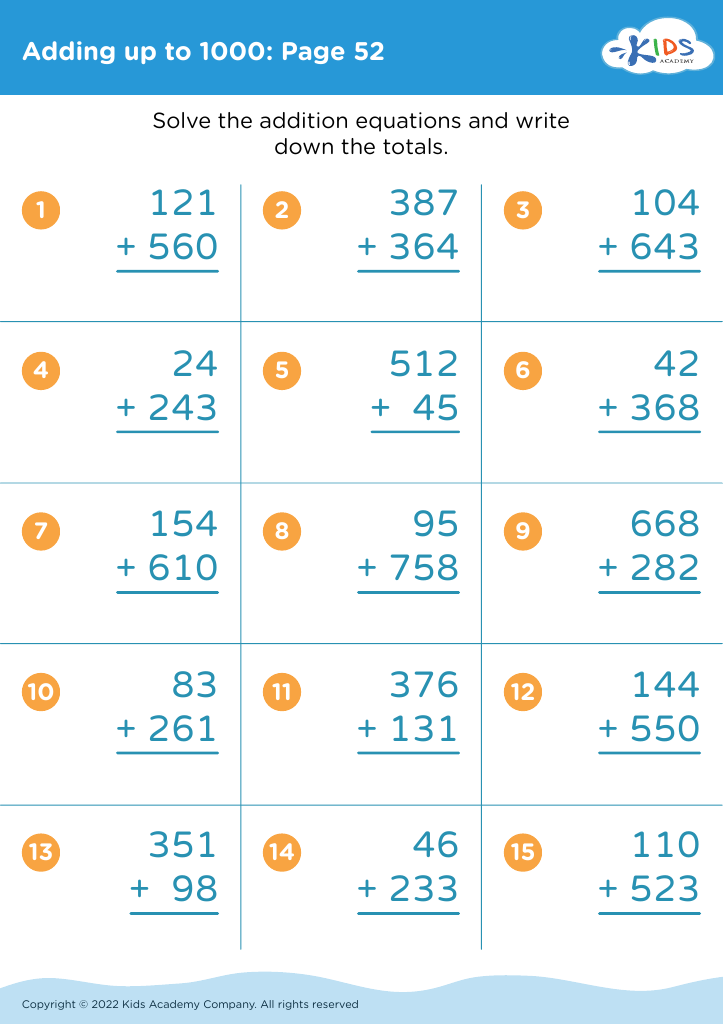
Adding up to 1000: Page 52

Adding up to 1000: Page 52

Adding up to 1000: Page 52
Worksheet
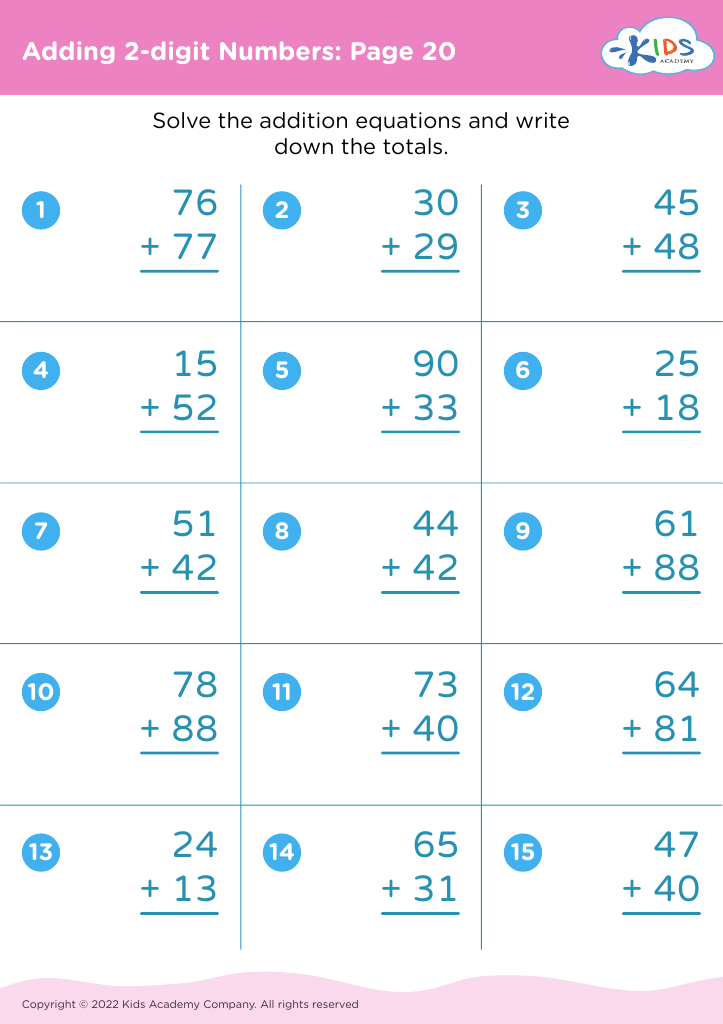
Adding 2-digit Numbers: Page 20

Adding 2-digit Numbers: Page 20

Adding 2-digit Numbers: Page 20
Worksheet
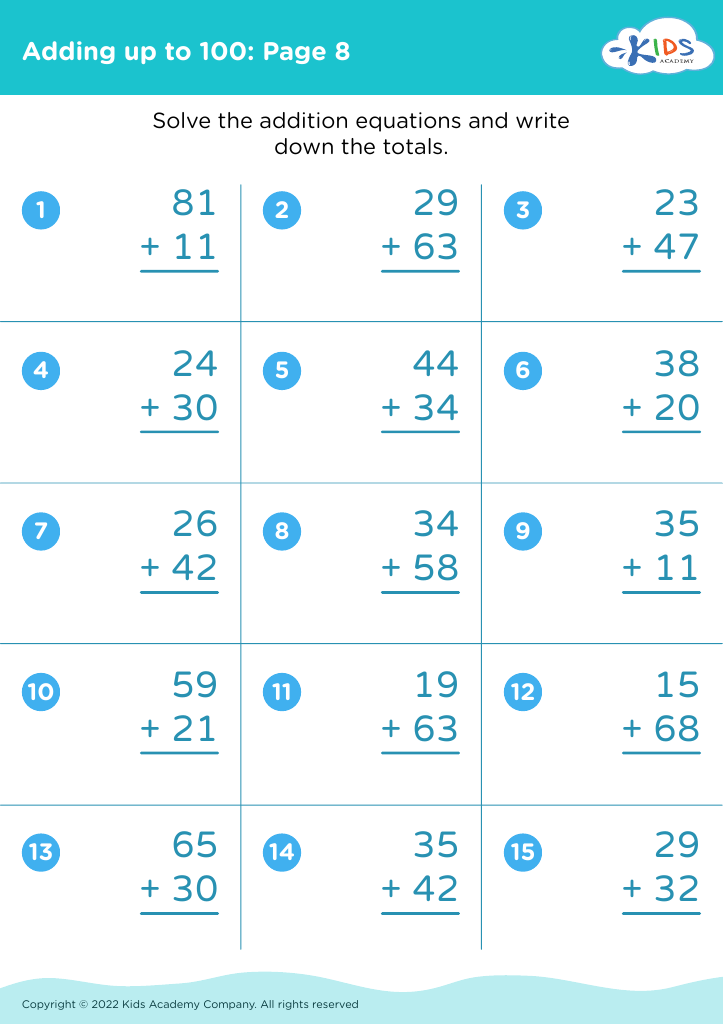
Adding up to 100: Page 8

Adding up to 100: Page 8

Adding up to 100: Page 8
Worksheet
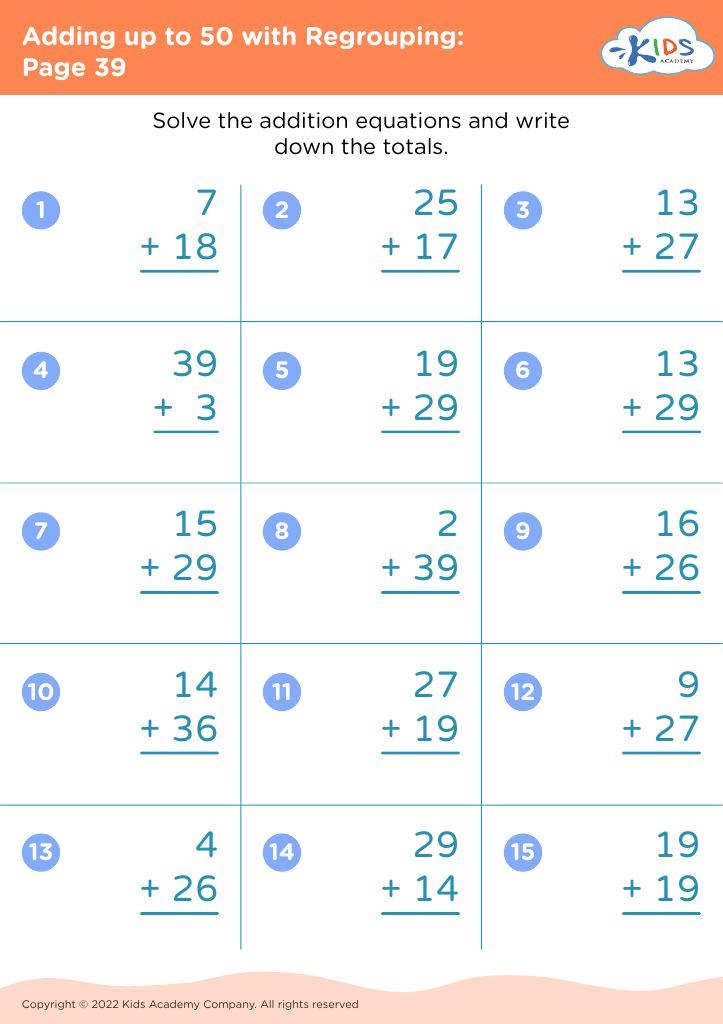
Adding up to 50 with Regrouping: Page 39
Worksheet
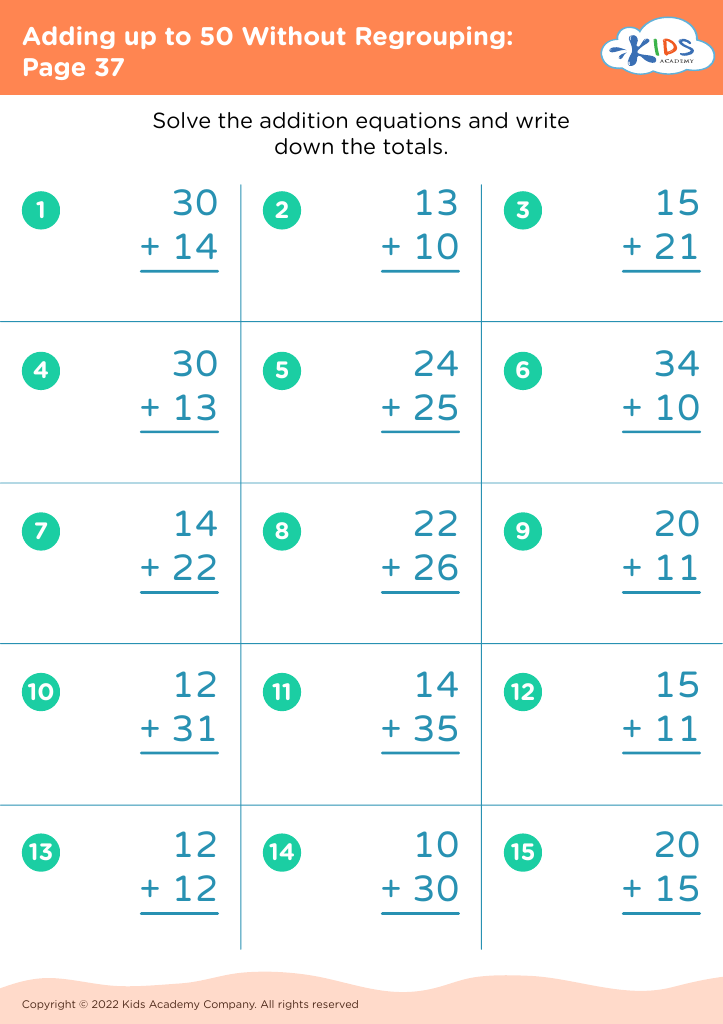
Adding up to 50 Without Regrouping: Page 37
Worksheet
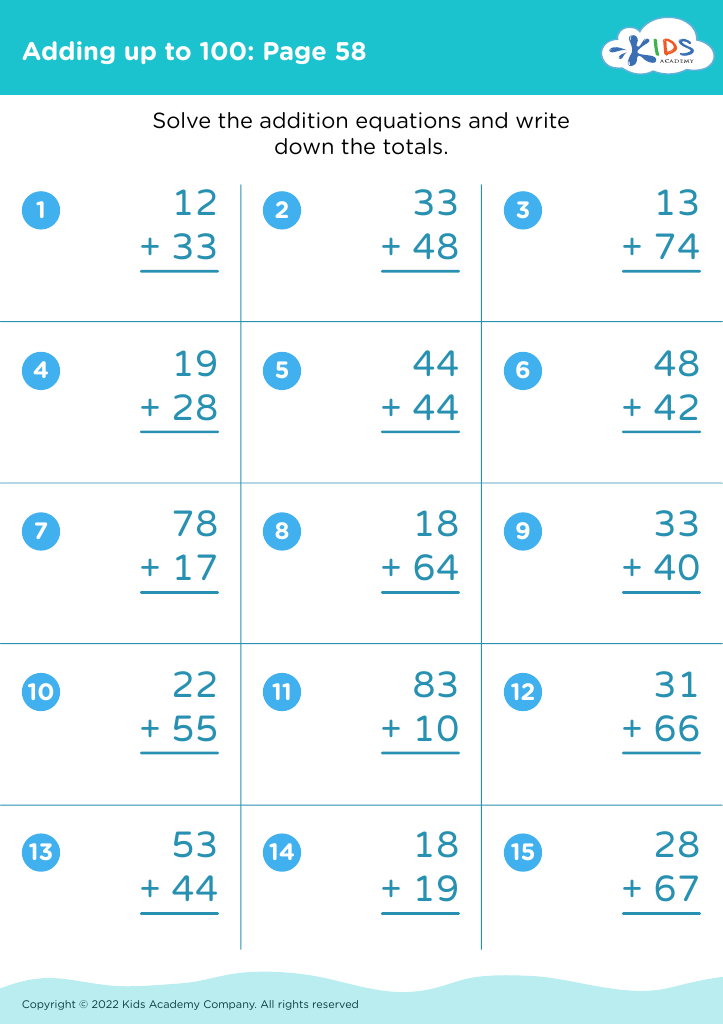
Adding up to 100: Page 58

Adding up to 100: Page 58

Adding up to 100: Page 58
Worksheet
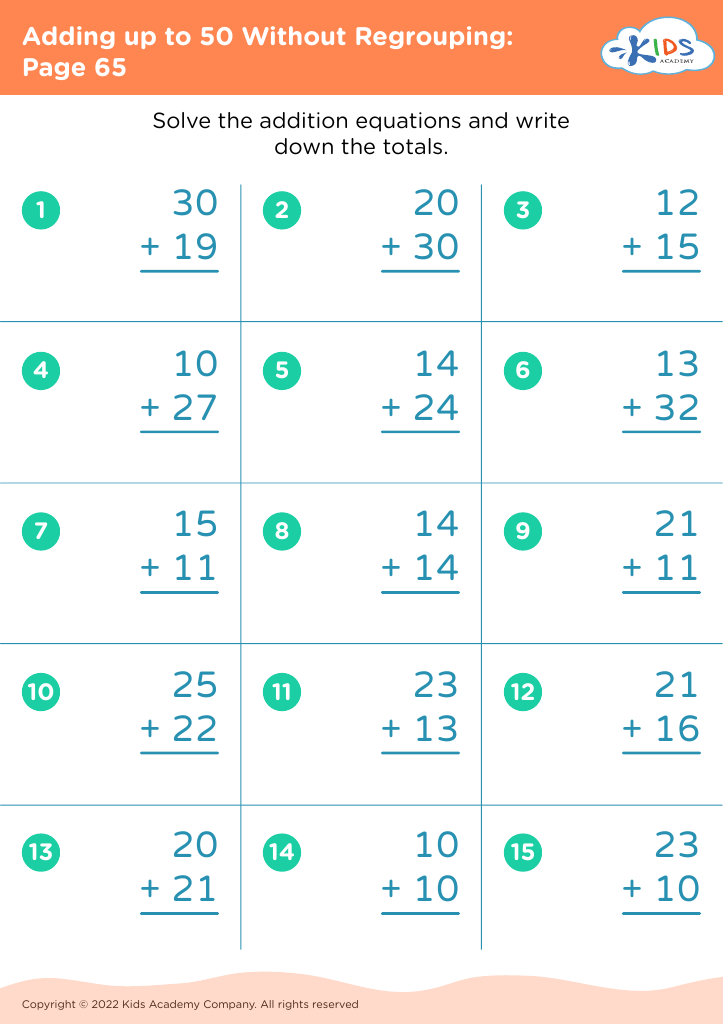
Adding up to 50 Without Regrouping: Page 65
Worksheet
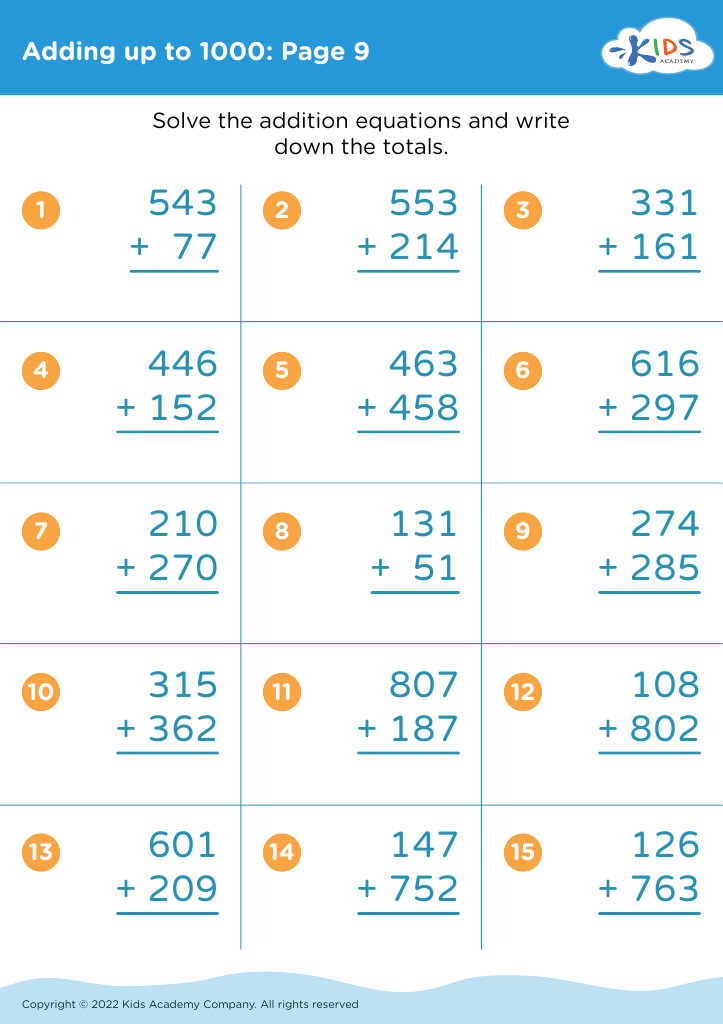
Adding up to 1000: Page 9

Adding up to 1000: Page 9

Adding up to 1000: Page 9
Worksheet
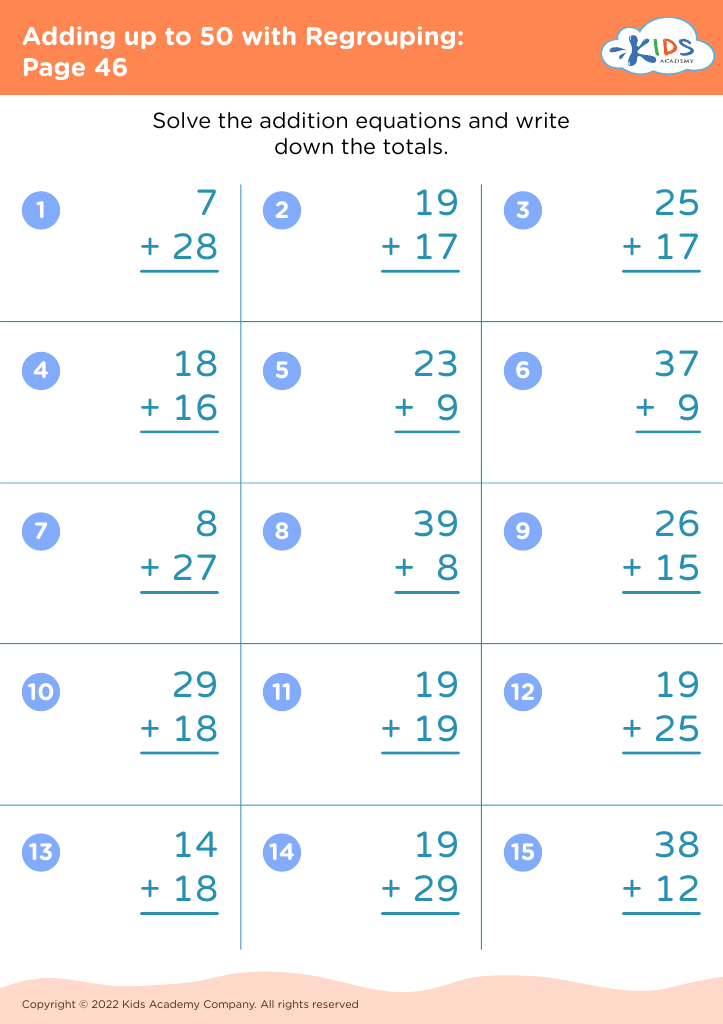
Adding up to 50 with Regrouping: Page 46
Worksheet
Adding up to 50: Page 29

Adding up to 50: Page 29

Adding up to 50: Page 29
Worksheet


Understanding fractions and their addition is crucial for children aged 5-8, as it lays the foundation for their future mathematical skills. At this developmental stage, children begin to grasp fundamental mathematical concepts, and fractions introduce them to the idea of parts of a whole. This understanding is vital for everyday situations, such as sharing snacks, dividing toys, or measuring ingredients in a recipe, fostering practical life skills.

Teaching fractions enhances children’s cognitive abilities, improving critical thinking as they learn to visualize problems and recognize relationships between numbers. Parents and teachers play a pivotal role in this learning process, as they can create engaging, hands-on activities that help children internalize these concepts. Utilizing relatable examples makes fractions less abstract and more comprehensible.

Additionally, a strong grasp of addition involving fractions prepares children for more complex mathematical concepts in later grades. By emphasizing the importance of fractions at an early age, educators and parents will help establish children’s confidence in math, encouraging a positive attitude toward learning. This early intervention not only enriches their educational journey but also promotes lifelong skills in problem-solving and analytical thinking, essential for future academic and personal success. An early focus on fractions can inspire curious and confident learners.