Basic counting skills Geometry Worksheets for Ages 5-8
3 filtered results
-
From - To
Discover engaging Basic Counting Skills Geometry Worksheets designed for children aged 5-8! These interactive resources help young learners develop essential counting abilities while exploring shapes and spatial relationships. With colorful visuals and age-appropriate activities, kids will enhance their math skills in a fun and supportive environment. Our worksheets cover fundamental concepts, encouraging children to recognize shapes, count corresponding objects, and understand geometric patterns. Perfect for homeschooling, classroom learning, or extra practice at home, these worksheets aim to build confidence and a solid mathematical foundation. Unlock the joy of counting and geometry with our thoughtfully crafted materials tailored for early learners!
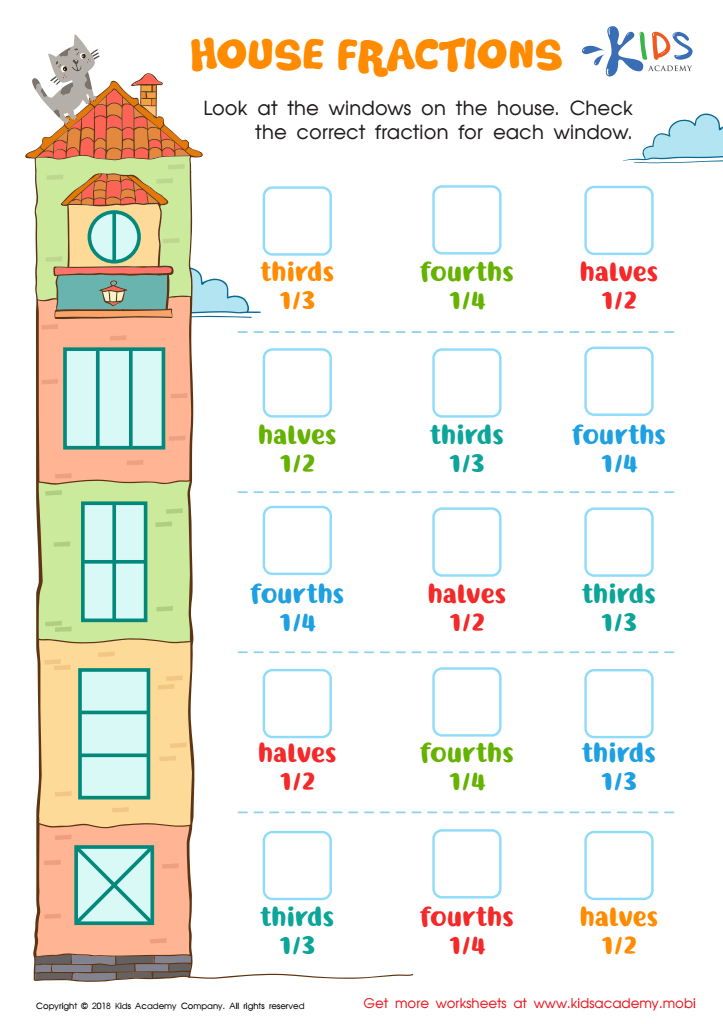
House Fractions Worksheet
 Assign to My Students











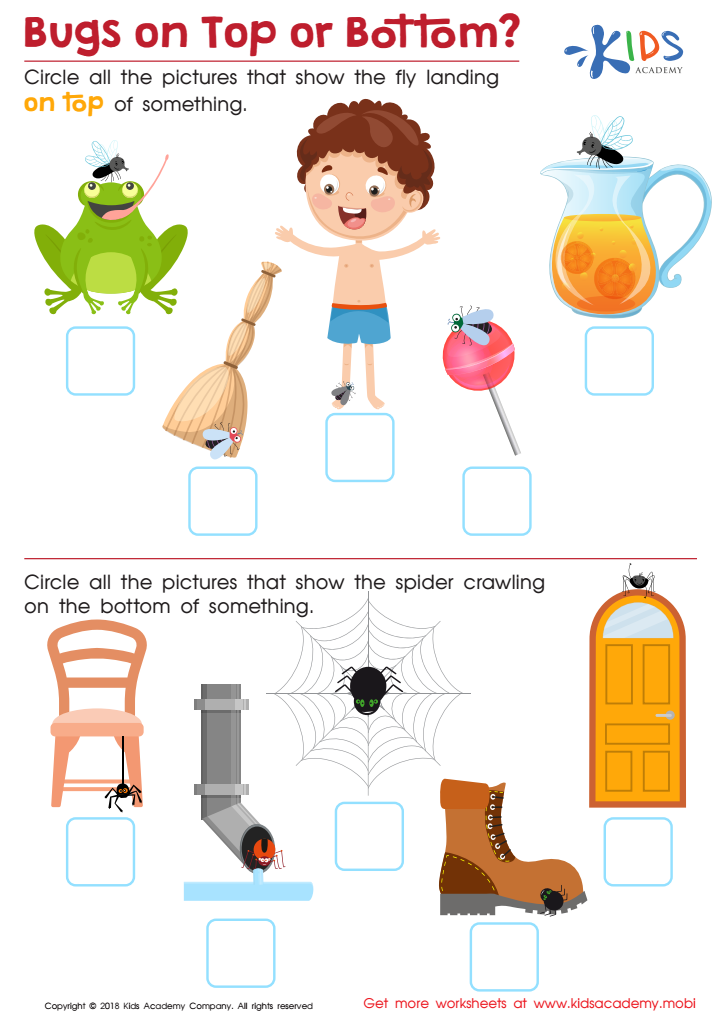
Bugs on Top or Bottom? Worksheet
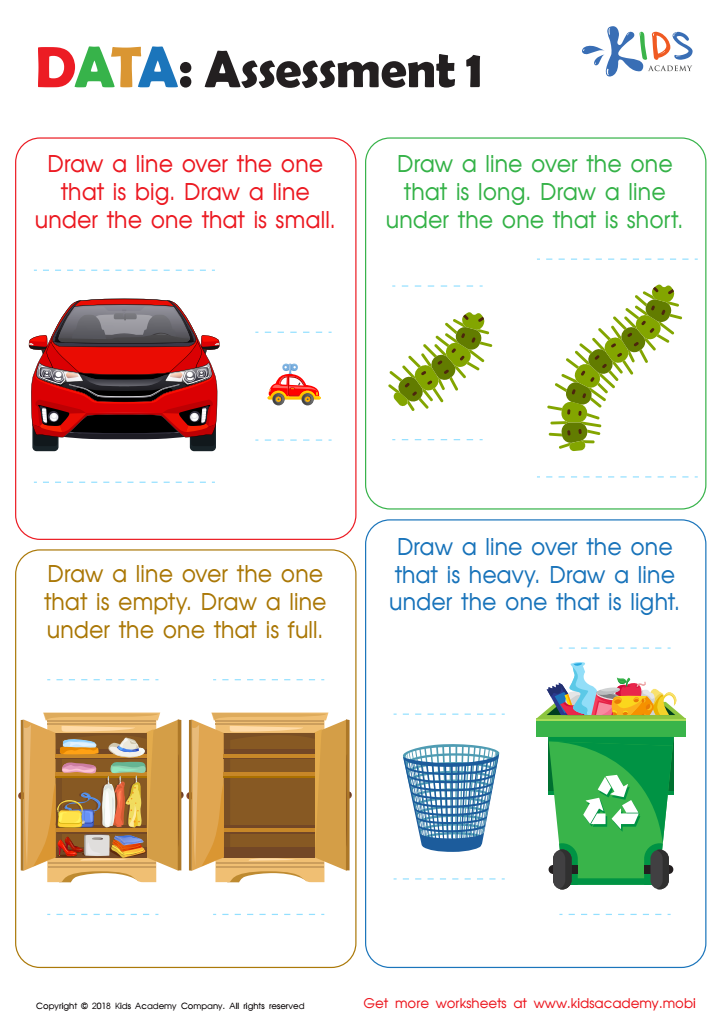
Data: Assessment 1 Worksheet








Basic counting skills and geometry are fundamental components of early mathematics education for children aged 5-8. Parents and teachers should prioritize these skills as they lay the groundwork for future mathematical understanding and critical thinking.
Counting enables children to grasp the concepts of quantity and number sense. This foundational skill not only supports more complex mathematical operations but also fosters logical reasoning and problem-solving abilities. Engaging children in counting activities, whether through songs, games, or everyday scenarios, can enhance their ability to recognize numbers and patterns in their surroundings.
Similarly, introducing basic geometry at this age cultivates spatial awareness and observational skills. Understanding shapes, sizes, and spatial relationships helps children make sense of their world, enabling them to formulate relationships between different objects. Activities that involve sorting, comparing, and building shapes support their ability to visualize concepts and think creatively.
Incorporating these skills into daily experiences strengthens a child's cognitive development and confidence in their abilities. Furthermore, a solid foundation in counting and geometry fosters a positive attitude towards mathematics, encouraging continued interest and success in the subject as they progress in their education. By prioritizing these skills, parents and teachers can empower children for future academic achievement and overall learning success.








