Color differentiation Geometry Worksheets for Ages 5-8
3 filtered results
-
From - To
Explore our engaging Color Differentiation Geometry Worksheets designed for children ages 5-8! These worksheets combine the fundamental concepts of geometry with the power of color recognition, making learning both fun and effective. Young learners will develop essential skills such as shape identification, sorting, and categorization through colorful exercises. Each worksheet is thoughtfully designed to enhance cognitive abilities and foster creativity by integrating colors with geometric shapes. Perfect for home or classroom use, these resources support early math readiness and improve visual perception. Watch your child gain confidence in their geometry skills while enjoying vibrant, interactive activities that spark their imagination!
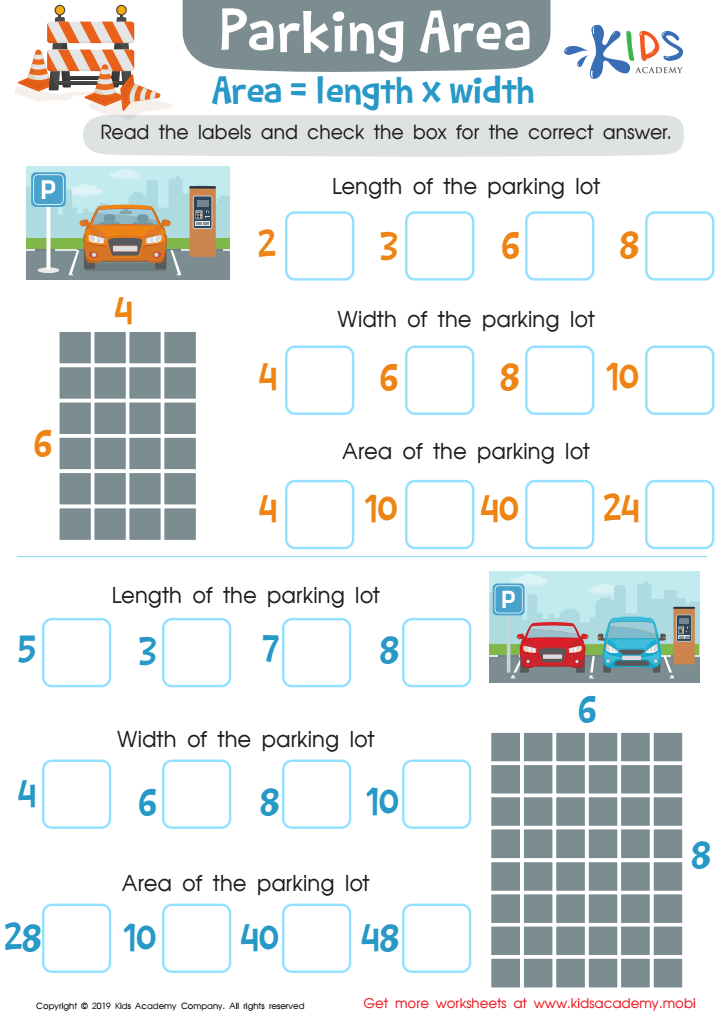
Parking Area Worksheet
 Assign to My Students











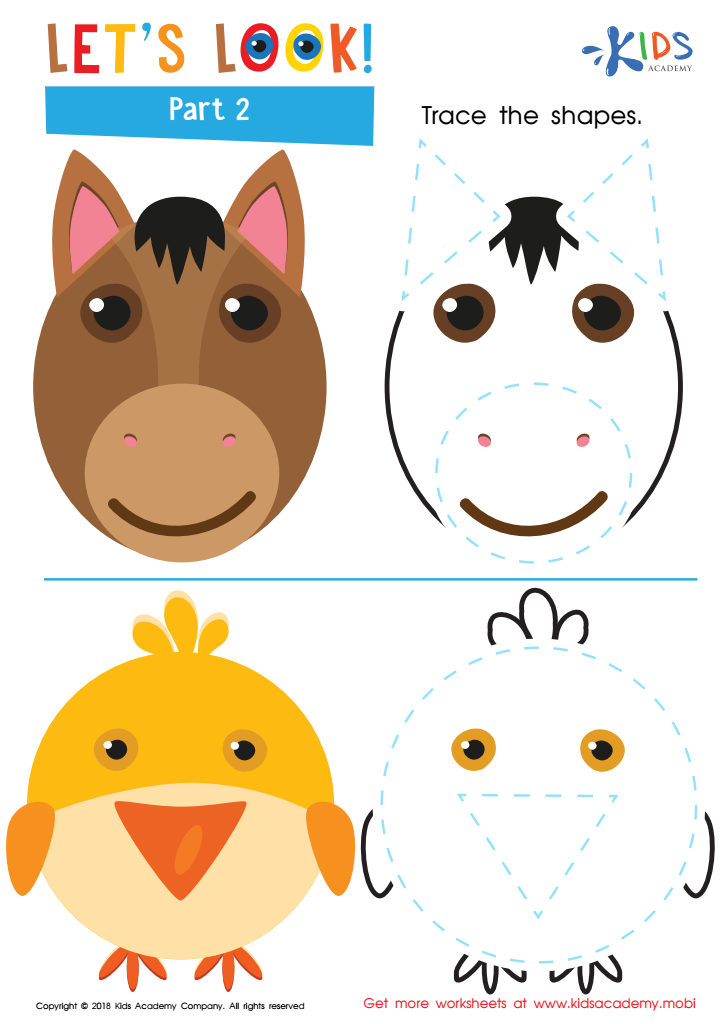
Let's Look! Part 2 Worksheet
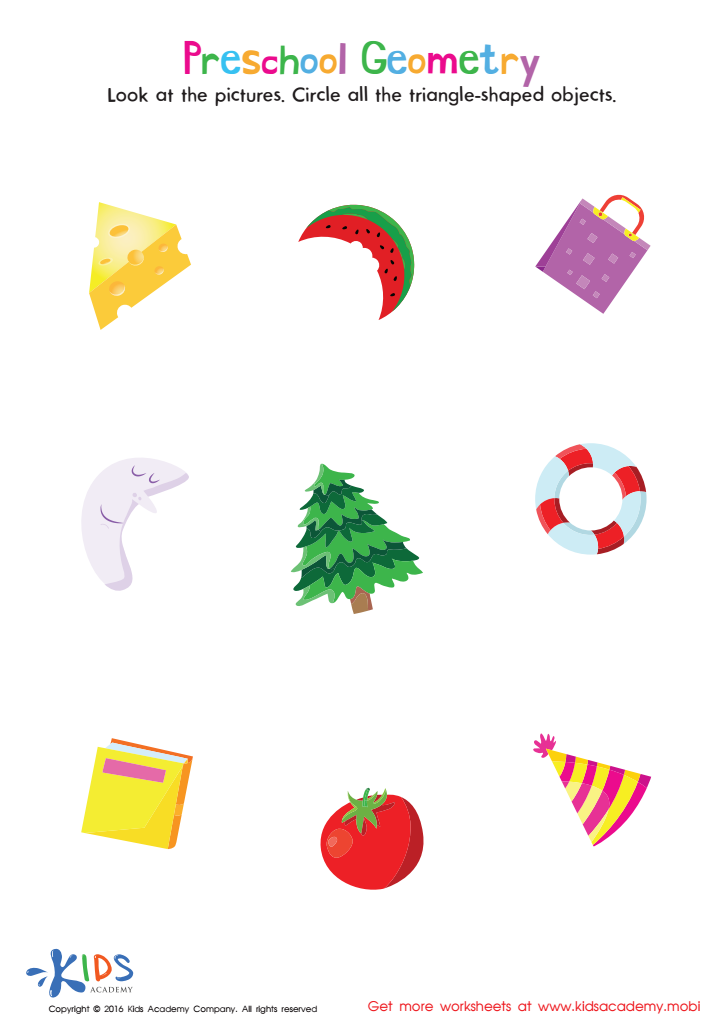








Color differentiation in geometry for children aged 5-8 plays a vital role in their early education and cognitive development. At this age, children are naturally curious, and incorporating colors into geometric concepts enhances their learning experiences. By exploring shapes and forms through vibrant colors, children can more easily identify and differentiate between various geometric figures. This method not only makes learning engaging but also aids memory retention, as colorful visuals tend to stick in young minds.
Additionally, color differentiation supports the development of critical thinking and problem-solving skills. When children categorize shapes by color, they learn classification and patterns, foundational elements of mathematical understanding. Furthermore, using colors can foster creativity and imagination, encouraging children to visualize and manipulate shapes in unique ways.
In a diverse classroom setting, color differentiation also accommodates various learning styles, ensuring that all children—whether visual learners or those needing kinesthetic engagement—can grasp geometric concepts effectively. For parents and teachers, emphasizing color differentiation in geometry empowers young learners and lays a strong foundation for future mathematical success, contributing to their overall cognitive growth and enjoyment of learning. Engaging them in this colorful exploration cultivates both academic skills and a lifelong interest in mathematics.








