Identifying shapes Geometry Worksheets for Ages 5-8
3 filtered results
-
From - To
Explore our engaging Identifying Shapes Geometry Worksheets designed specifically for children ages 5-8! These worksheets provide a fun and interactive way for young learners to recognize, name, and categorize various shapes, enhancing their spatial awareness and critical thinking skills. Aligned with early math standards, our printable resources include colorful images and hands-on activities that make learning shapes enjoyable. Whether you're a teacher looking to enhance your curriculum or a parent striving to supplement your child's education, our worksheets provide valuable practice for mastering basic geometric concepts. Foster your child's love for math with these exciting shape-identification activities today!
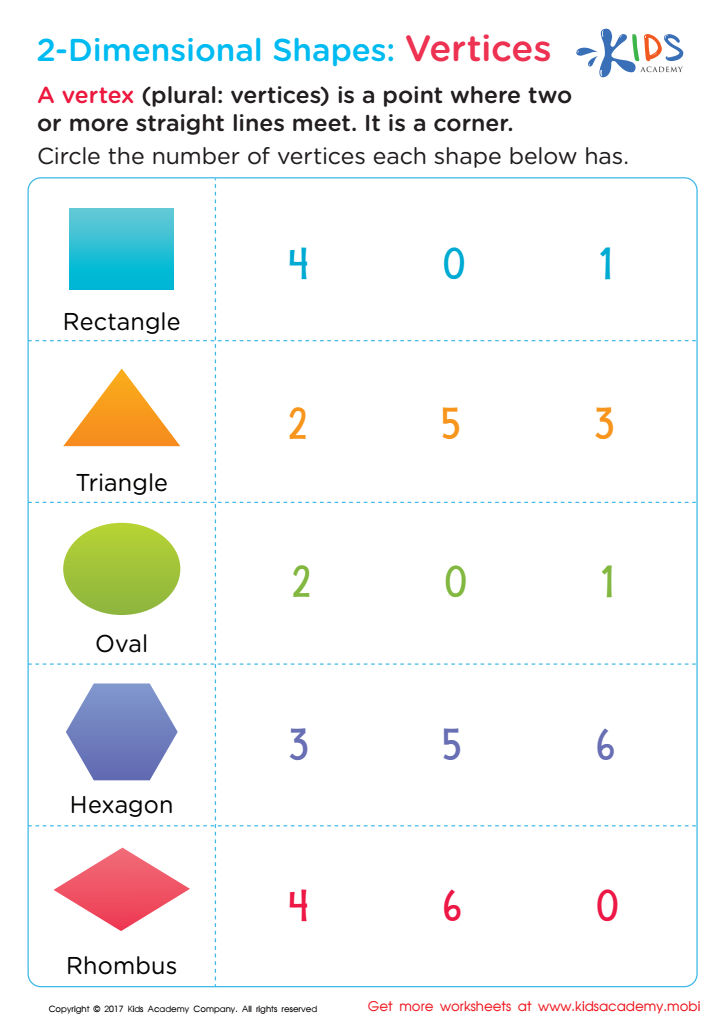
Two–Dimensional Shapes: Vertices Printable











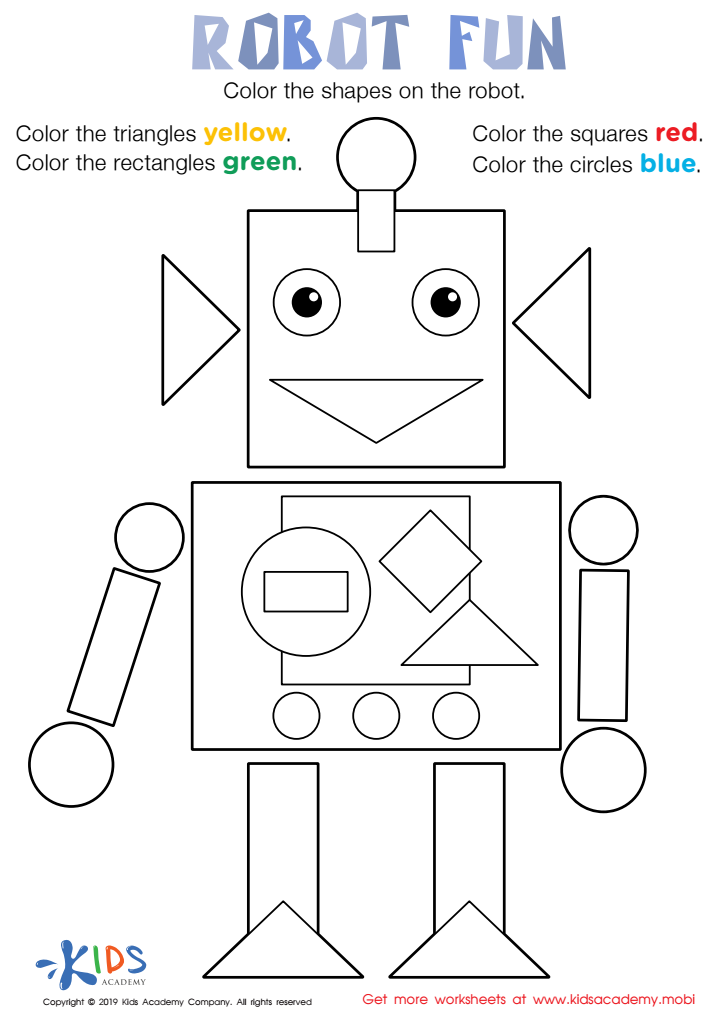
Robot Fun Worksheet
 Assign to My Students
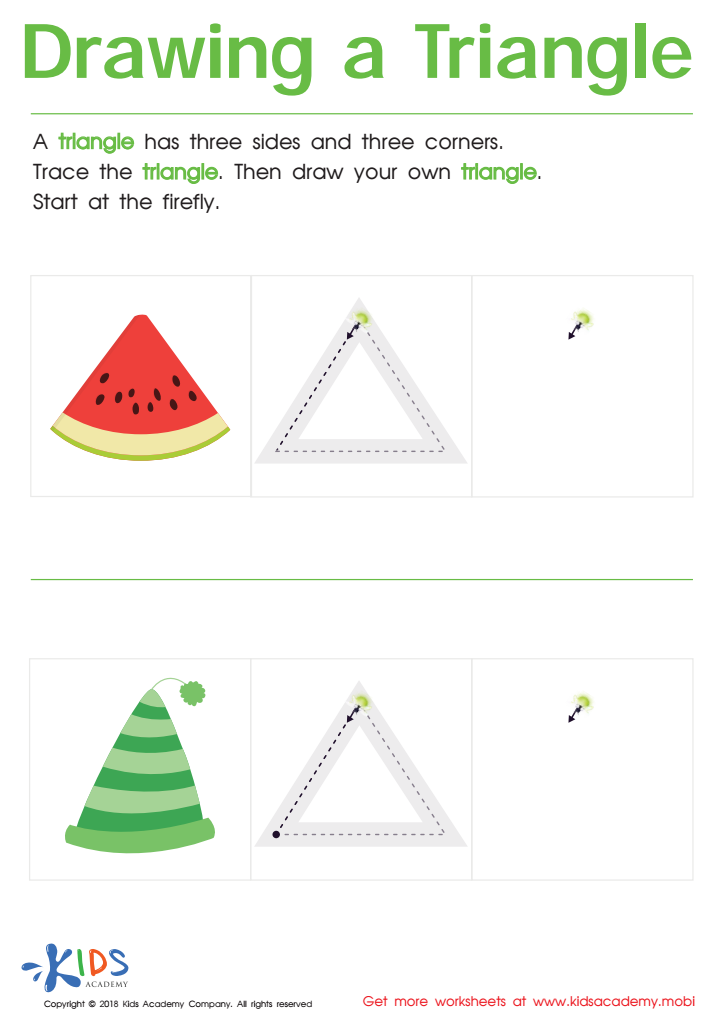
Drawing a Triangle Worksheet








Understanding and identifying shapes is a crucial aspect of early geometry education for children ages 5-8, and it significantly impacts their overall cognitive development. At this age, children are naturally curious and eager to explore their environment, making it an ideal time to introduce geometric concepts. Recognizing different shapes helps develop spatial awareness, which supports skills such as problem-solving and critical thinking.
Parents and teachers should care about shape identification because it lays the groundwork for more advanced mathematical concepts later on. Mastering shapes helps children learn how to categorize and organize information, enhancing their logical reasoning abilities. Additionally, identifying shapes helps improve fine motor skills through hands-on activities like drawing, cutting, and building with blocks.
Engaging with shapes also has real-world applications; children begin to see shapes in their surroundings, fostering a sense of observation and exploration. This connection to everyday life makes learning more meaningful. Furthermore, focusing on geometry encourages collaborative activities, promoting social interaction and communication skills among peers.
By prioritizing shape identification, parents and teachers help cultivate a rich foundation of mathematical understanding that children can build upon throughout their academic journey and everyday lives.








