Understanding area Geometry Worksheets for Ages 5-8
3 filtered results
-
From - To
Discover our engaging "Understanding Area Geometry Worksheets" designed specifically for children ages 5-8! These worksheets help young learners grasp the concept of area through fun and interactive activities. With clear visuals and age-appropriate challenges, kids can measure, compare, and calculate area in various shapes, enhancing their spatial awareness and math skills. Perfect for classroom settings or at-home learning, our worksheets encourage curiosity and foster a love for geometry. Each worksheet progressively builds knowledge, ensuring students develop a solid foundation in understanding area. Empower your child’s math journey today with our thoughtfully crafted geometry worksheets!
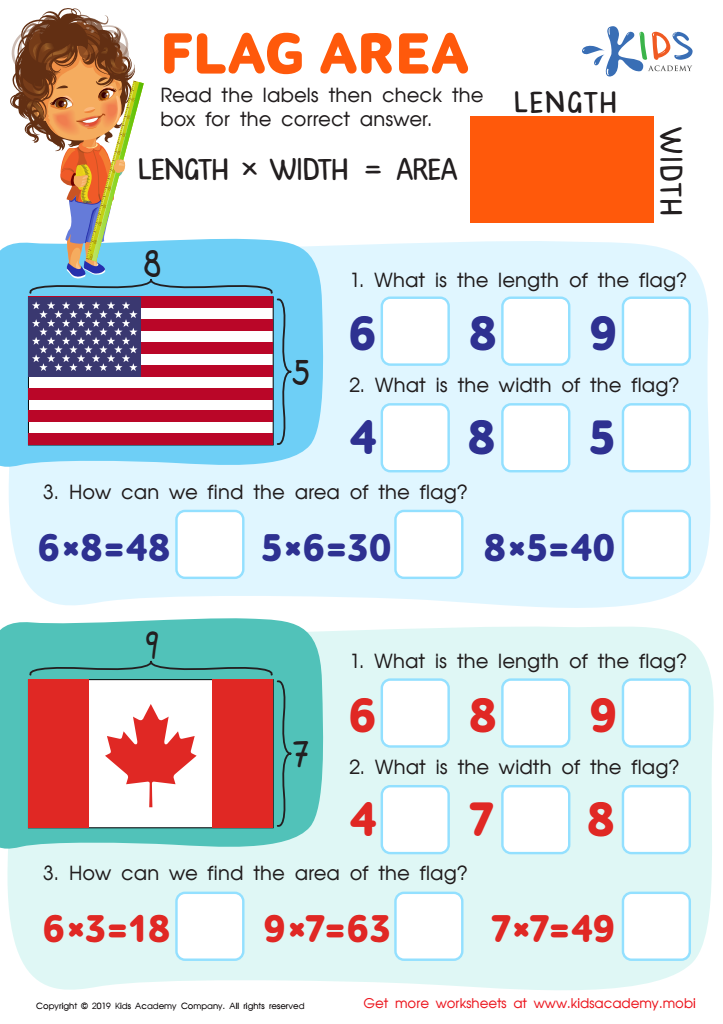
Flag Area Worksheet
 Assign to My Students











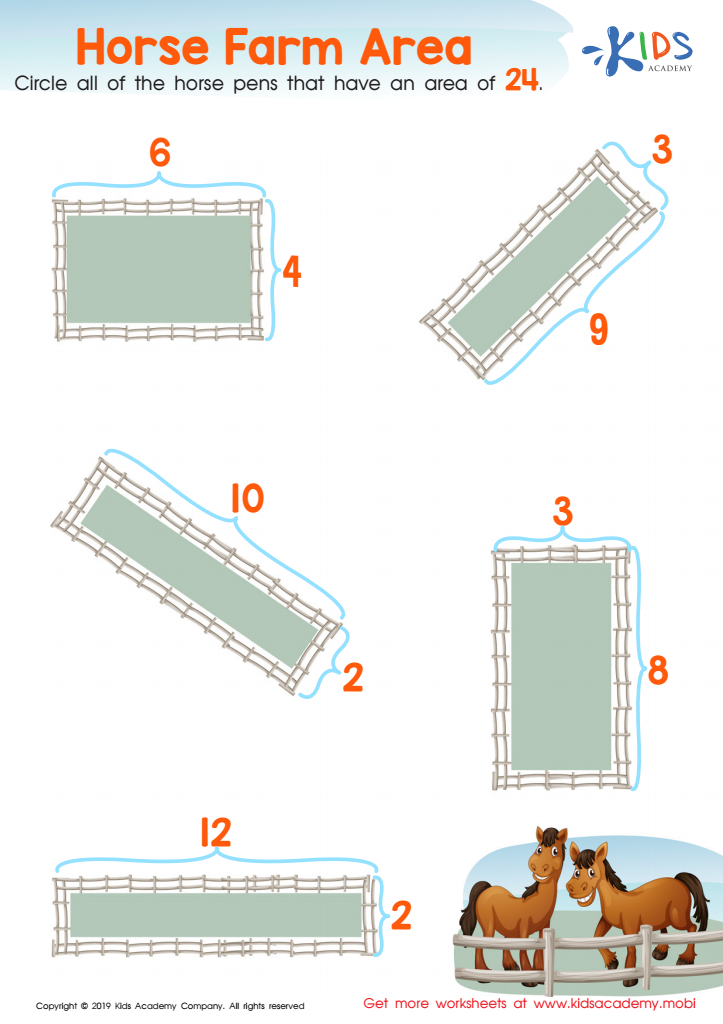
Horse Farm Area Worksheet
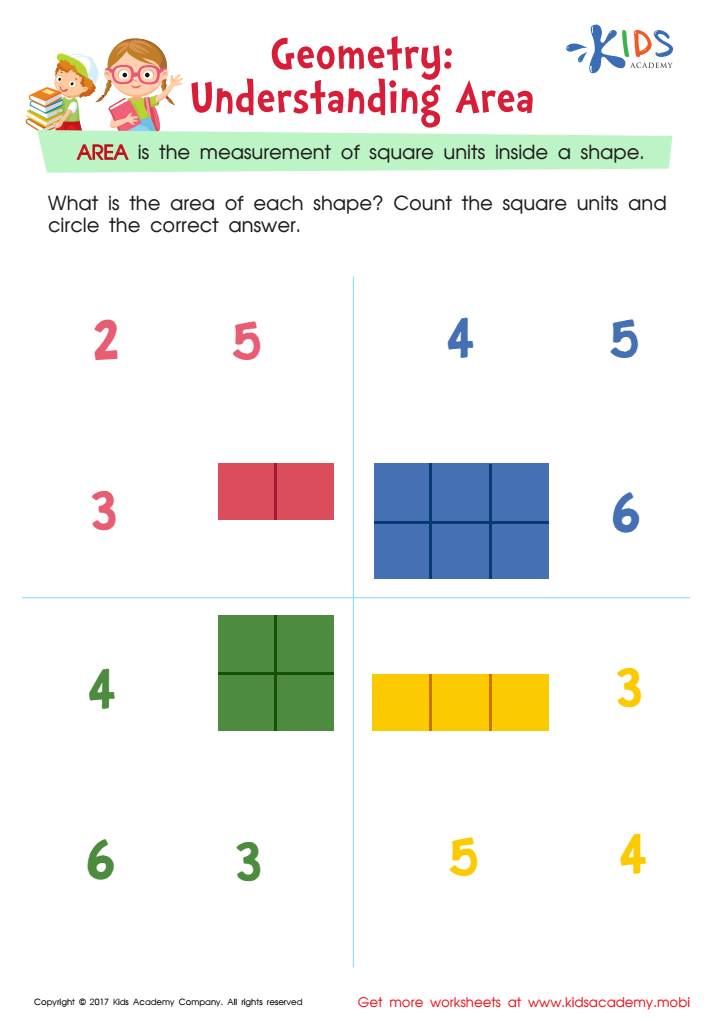
Understanding Area Worksheet








Understanding area and basic geometry is vital for children ages 5-8, as it lays the foundation for their mathematical thinking. At this stage, children are developing essential cognitive skills, and exposure to geometry helps them understand spatial relationships, shapes, and sizes, promoting their ability to visualize and manipulate objects.
Teaching area provides practical experiences that encourage exploration and problem-solving. For instance, when students measure the area of a rectangle with blocks or drawing, they learn to identify units of measurement while applying mathematical concepts to real-world scenarios, enhancing their confidence in using math outside the classroom. It's also a fantastic opportunity for them to practice critical thinking as they decide how to solve practical challenges.
Furthermore, spatial reasoning and shape recognition are connected to later success in more complex math topics, including algebra and calculus. Parents and teachers can engage children through fun activities, such as art projects or games that involve measuring and comparing areas, making learning enjoyable.
Incorporating geometry into early education ensures that children build a strong, practical math foundation, fostering a love for learning while equipping them with skills applicable in everyday life. It emphasizes the importance of curiosity, creativity, and critical thinking in their overall development.








