Visual Perception Skills Geometry Worksheets for Ages 5-8
3 filtered results
-
From - To
Enhance your child's geometrical understanding with our Visual Perception Skills Geometry Worksheets, designed for ages 5-8. These interactive, fun-filled worksheets foster essential skills in recognizing shapes, patterns, and spatial relationships. Tailored to elevate visual discernment, these exercises blend engaging illustrations and hands-on activities, inspiring young learners to explore geometry with enthusiasm. Our expertly crafted sheets boost critical thinking, problem-solving, and cognitive development, making learning enjoyable and effective. Perfect for classroom use or at-home practice, these worksheets support your child’s foundational geometry knowledge while strengthening their overall visual processing abilities. With Kids Academy, unlock the joy of learning Geometry today!
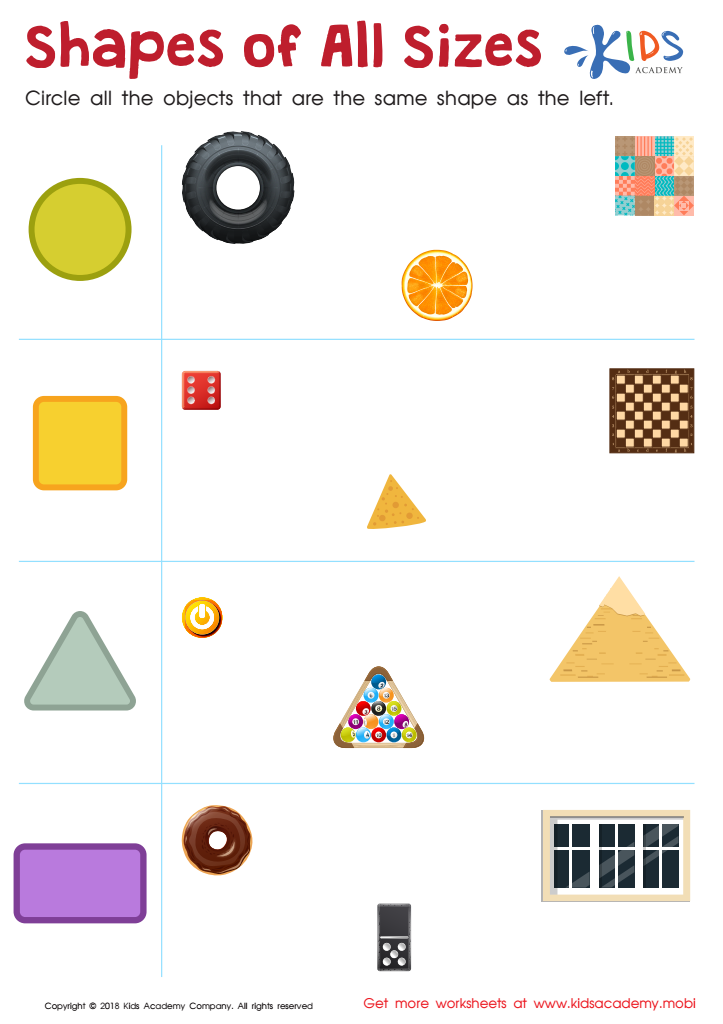
Shapes of All Sizes Worksheet
 Assign to My Students











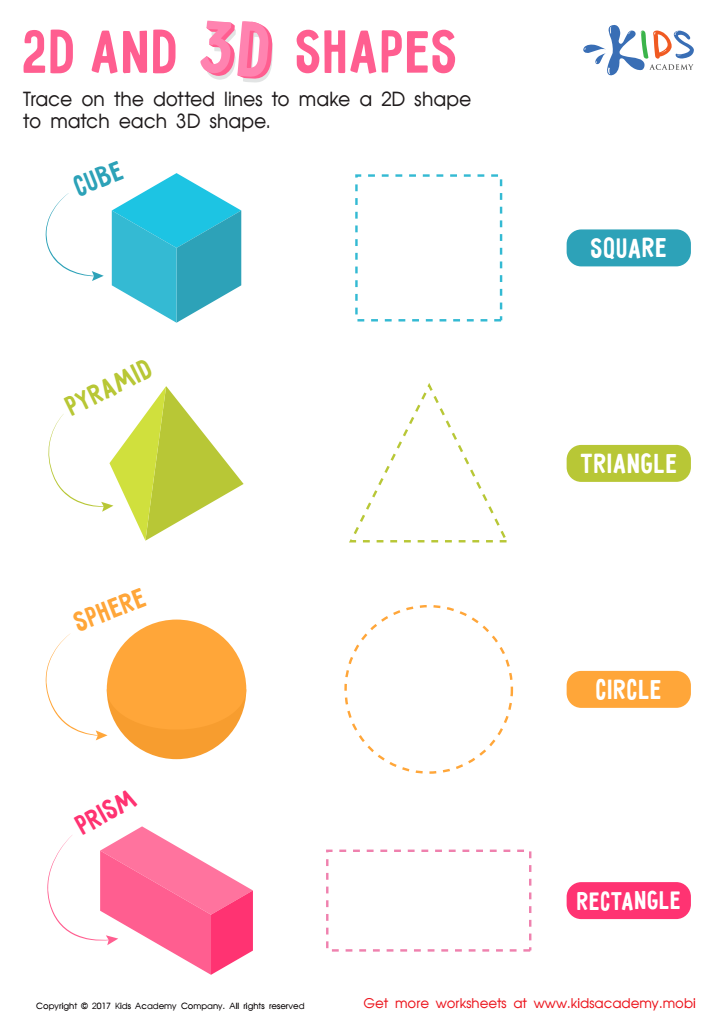
2D and 3D Shapes Worksheet
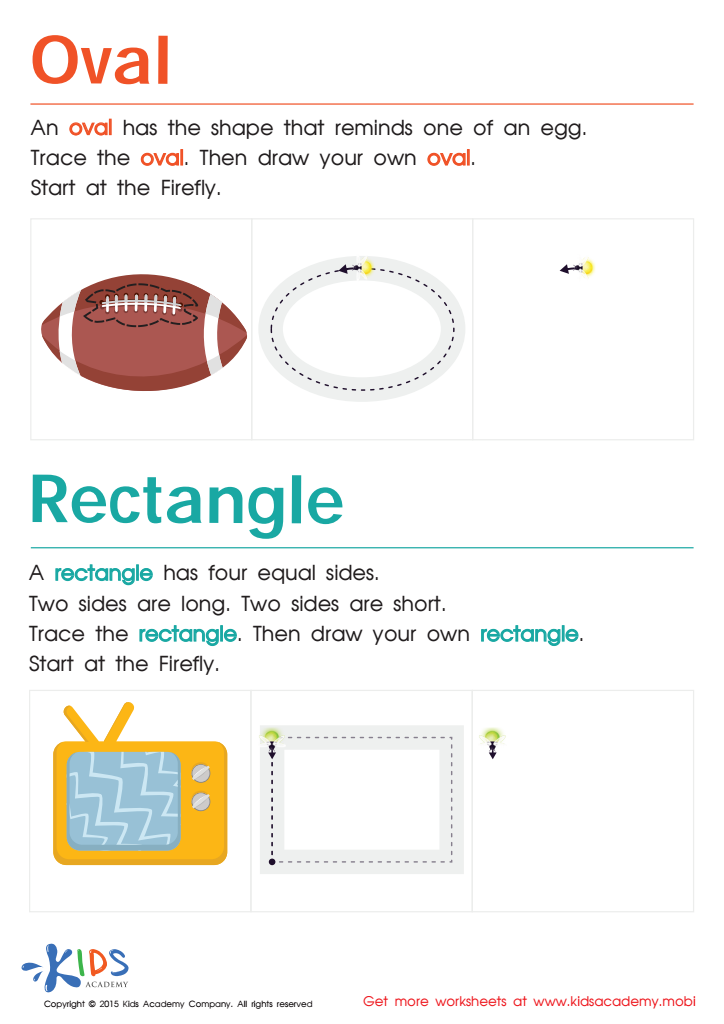
Easy Drawing of Ovals And Rectangles Worksheet








Visual perception skills are critical for young children, especially those ages 5-8, as they form the foundation for numerous cognitive and educational tasks. For parents and teachers, cultivating these skills is essential for several reasons.
Firstly, geometry skills enhance spatial awareness. Children learn to understand shapes, sizes, and the relationships between objects in space. This spatial intelligence aids in navigating daily life and environment, laying the groundwork for more complex mathematical concept development later on, such as geometry and physics.
Secondly, fostering visual perception skills improves reading and writing capabilities. Recognizing letters, numbers, and symbols accurately involves visual discrimination, an essential component of visual perception. The ability to differentiate similar-looking letters like 'b' and 'd' directly impacts literacy.
Beyond academics, visual perception skills also contribute to better problem-solving and critical thinking. By assessing patterns and symmetries, children enhance their ability to think logically and make decisions based on visual information.
Lastly, visual perception skills support social interactions. Understanding non-verbal cues like facial expressions and body language is critical for effective communication and social development.
By prioritizing developmental activities like puzzles, drawing, and matching games, parents and teachers help nurture these essential visual perception skills, setting children up for academic success and healthy interpersonal relationships.








