Vocabulary Building Geometry Worksheets for Ages 5-8
3 filtered results
-
From - To
Enhance your child's understanding of basic geometry with our Vocabulary Building Geometry Worksheets designed for ages 5-8. Created to make learning fun and interactive, these printable worksheets help young learners grasp essential geometric terms and concepts. Through engaging activities and colorful visuals, kids will familiarize themselves with shapes, angles, and spatial relationships, laying a strong foundation for future math success. Ideal for both classroom and at-home practice, our worksheets promote critical thinking and vocabulary development. Give your child a head start in math with our expertly crafted resources at Kids Academy.
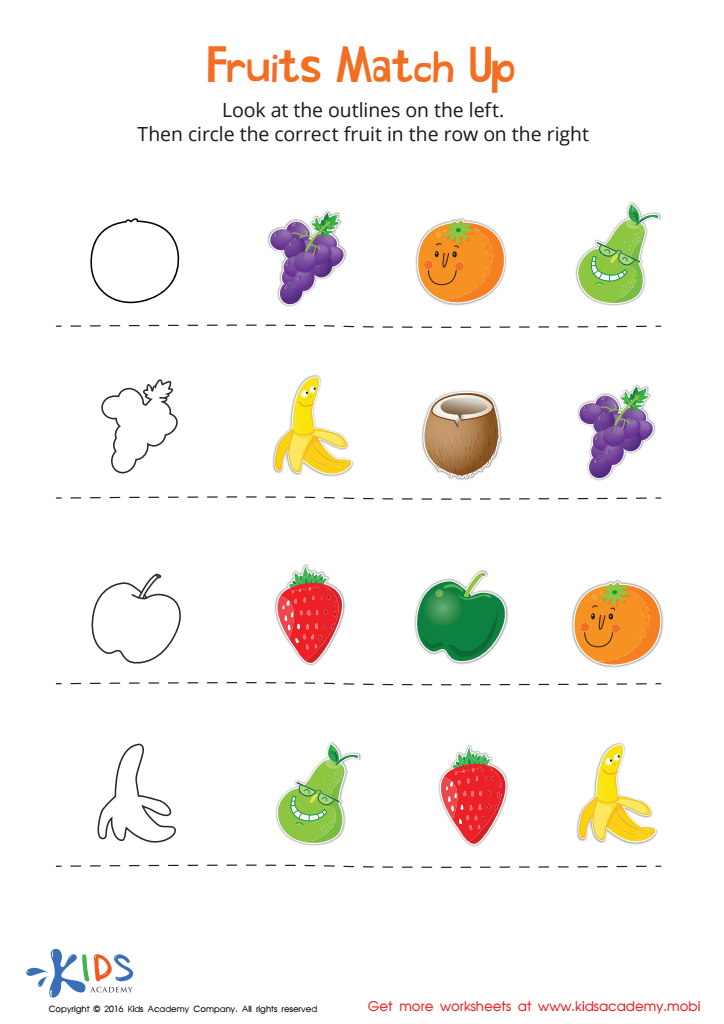
Fruits Match Up Worksheet
 Assign to My Students











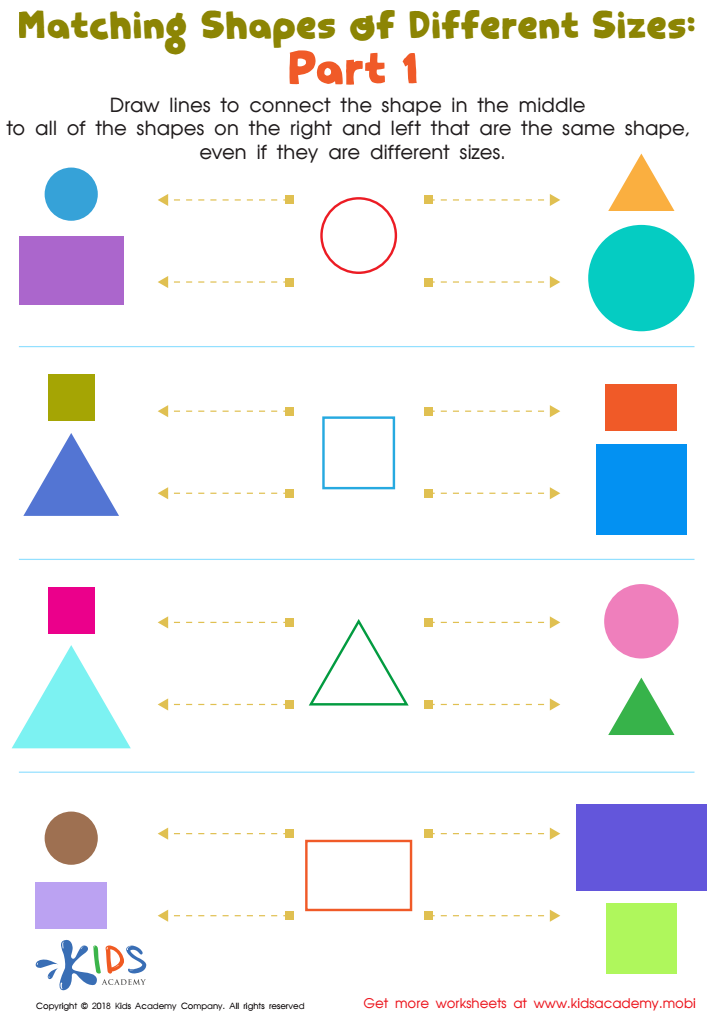
Geometry: part 1 Worksheet
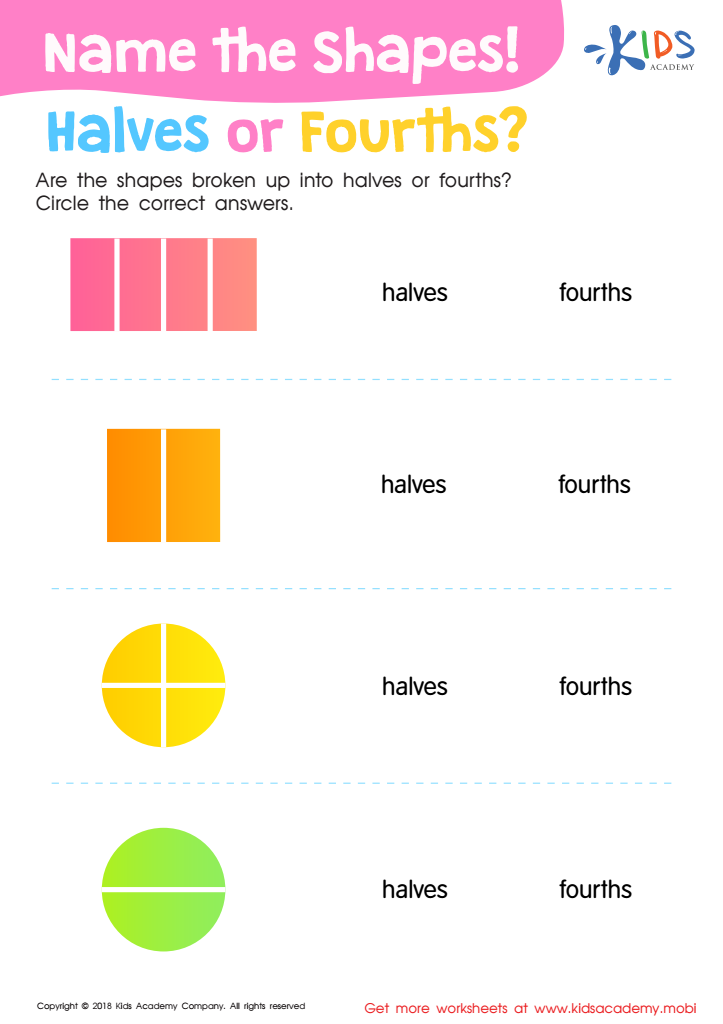
Name the Shapes Halves or Fourths? Worksheet








Parents and teachers play crucial roles in children's early education, and Vocabulary Building in Geometry for ages 5-8 holds substantial significance. At this developmental stage, children are like sponges, eager to absorb new concepts and words. Introducing vocabulary related to geometry helps them grasp fundamental concepts early, laying a strong foundation for future academic success.
Learning geometric vocabulary enriches spatial awareness—a critical cognitive skill contributing to math proficiency and problem-solving capabilities. Words like “circle,” “triangle,” “square,” and “rectangle” help children visualize and understand these shapes in their environment, aiding in pattern recognition and symmetry.
Moreover, early exposure to geometry vocabulary enhances language development. Children learn to articulate their thoughts and describe the world around them with precision. For instance, being able to identify and name shapes during playtime or storytelling activities promotes communication skills and improves descriptive language.
Integrating geometry vocabulary in everyday situations also fosters engagement and curiosity in learning. It's not merely about memorizing terms, but about interacting with the world through a mathematical lens, making learning fun and relevant.
Therefore, parents and teachers should prioritize vocabulary building in geometry to equip children with essential cognitive tools, bridging the connection between mathematical concepts and linguistic development. This holistic approach supports comprehensive growth, both intellectually and linguistically.








