
Developing analytical thinking Numbers Worksheets for Ages 5-8
3 filtered results
Difficulty Level
Grade
Age
-
From - To
Subject
Activity
Standards
Unlock your child's potential with our Developing Analytical Thinking Numbers Worksheets, designed specifically for ages 5-8. These engaging worksheets help young learners enhance their critical thinking and problem-solving skills through fun, interactive exercises. Each worksheet focuses on numerical concepts, fostering a solid foundation in mathematics while encouraging children to analyze patterns, make connections, and draw conclusions. With a variety of activities that promote creativity and logical reasoning, your child will thrive in mastering numbers. Explore our thoughtfully crafted resources to support your child's educational journey and watch them develop the confidence they need for future math success!
Favorites
With answer key
Interactive
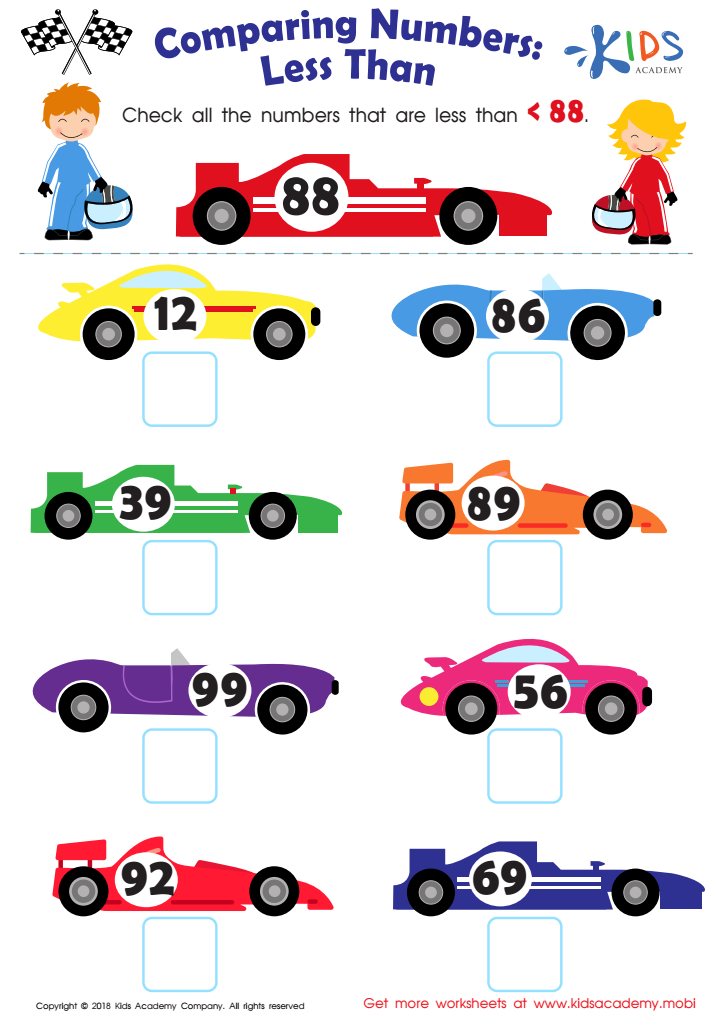
Less Than Worksheet
Compare numbers with your child using this fun worksheet! Paintings of sports cars add visuals to the task of counting up to 88. Make learning enjoyable with this colorful activity - your child will stay engaged and eager to learn more.
 Assign to My Students
Less Than Worksheet
Worksheet
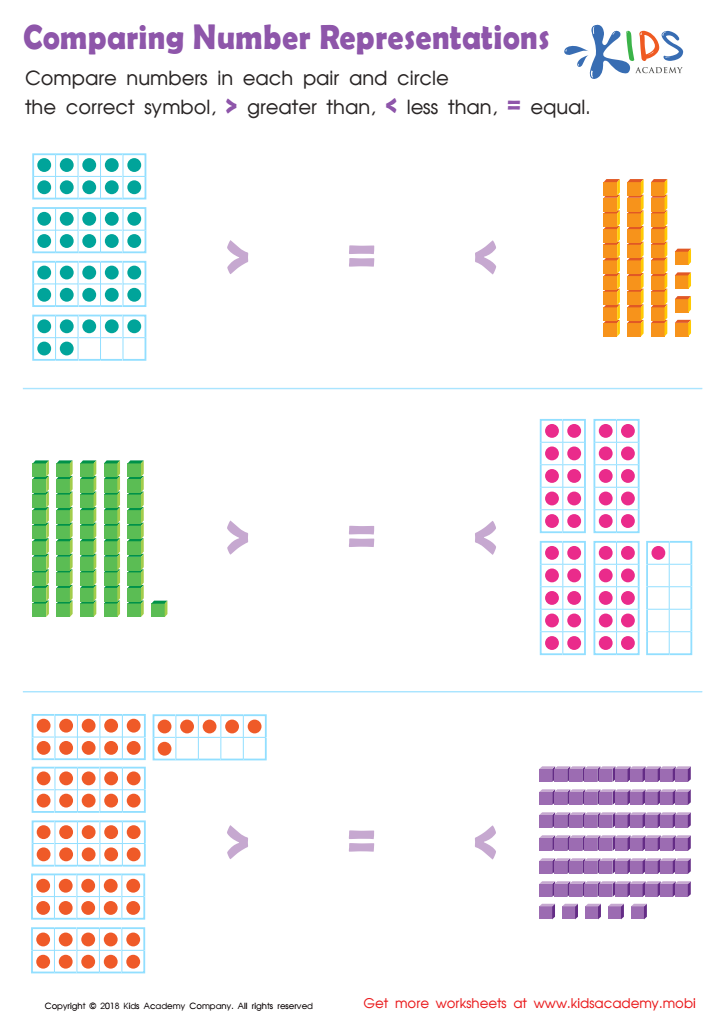
Comparing Number Representations Worksheet
Children need number representation skills to develop efficient computation and number sense. This free worksheet gives them practice with ten frames and place value blocks. They compare numbers and select the right comparative symbol: <, > or =. This helps them build a solid foundation for math.
Comparing Number Representations Worksheet
Worksheet
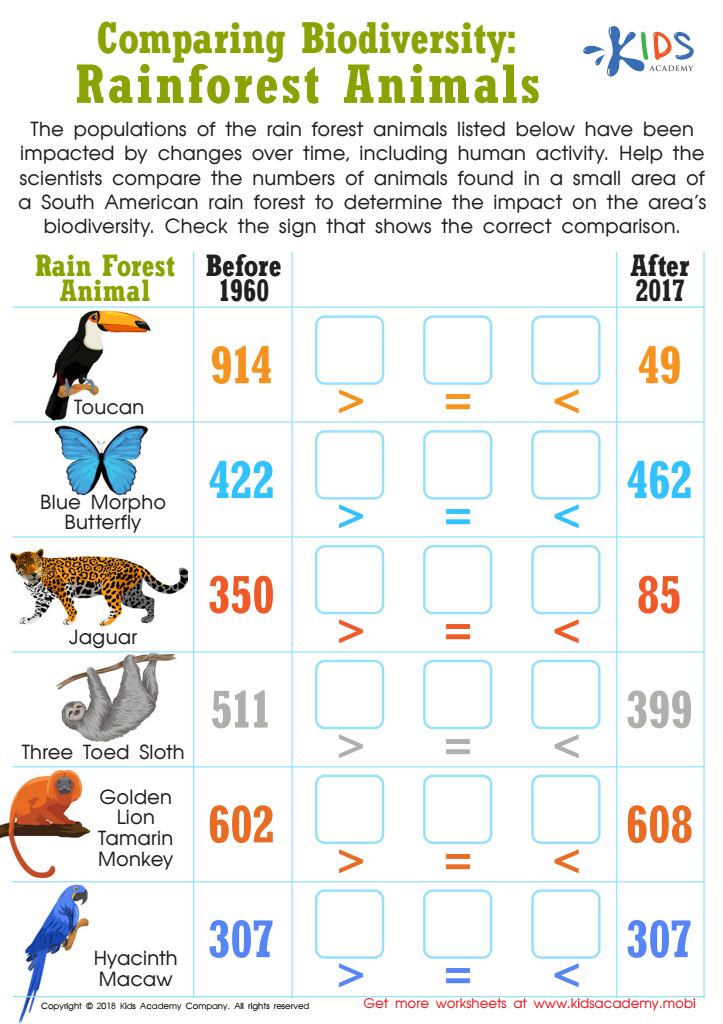
Comparing Biodiversity: Rainforest Animals Worksheet
This dynamic PDF worksheet combines fun and education. Kids will explore rainforest animals and biodiversity, comparing numbers from 1960 to 2017. They'll strengthen number sense and reasoning skills while learning about area biodiversity and its effects. A perfect mix of math and social science!
Comparing Biodiversity: Rainforest Animals Worksheet
Worksheet
Join Kids Academy for Free
Who is primarily going to use this learning content?








Developing analytical thinking in young children, particularly in the context of numbers, is crucial for their overall cognitive development. At ages 5-8, children are in a formative stage where their foundational mathematical skills are being established. Encouraging analytical thinking helps children to not only understand basic arithmetic but also to develop problem-solving skills, logical reasoning, and critical thinking.
At this young age, children begin to explore patterns, relationships, and quantities, which are central to more complex mathematical concepts. By focusing on analytical thinking, parents and teachers can help cultivate a mindset where children learn to ask questions, explore multiple solutions, and understand how numbers relate to the world around them. This ability will set the groundwork for higher-level math in later years and enhance skills that are applicable beyond the classroom.
Moreover, a strong foundation in analytical thinking fosters confidence in children, making them more willing to tackle challenges. In a rapidly changing world, where skills like reasoned judgment and adaptability are vital, nurturing analytical thinkers ensures that children are not only prepared for academic success but also develop a lifelong love for learning. Thus, prioritizing analytical thinking is an investment in their future resilience and competence.








