
Fine motor skills development Numbers Worksheets for Ages 5-8
3 filtered results
Difficulty Level
Grade
Age
-
From - To
Subject
Activity
Standards
Boost your child's fine motor skills with our engaging numbers worksheets designed specifically for ages 5-8! These worksheets combine essential number learning with fun activities that promote dexterity and coordination. Your child will enjoy tracing, coloring, and connecting numbers while developing vital skills needed for writing and everyday tasks. Each worksheet is carefully crafted to balance educational value and play, ensuring a delightful learning experience. Ideal for at-home practice or classroom use, our fine motor skills development worksheets make learning numbers exciting and beneficial. Start nurturing your child’s confidence and proficiency in math today!
Favorites
With answer key
Interactive
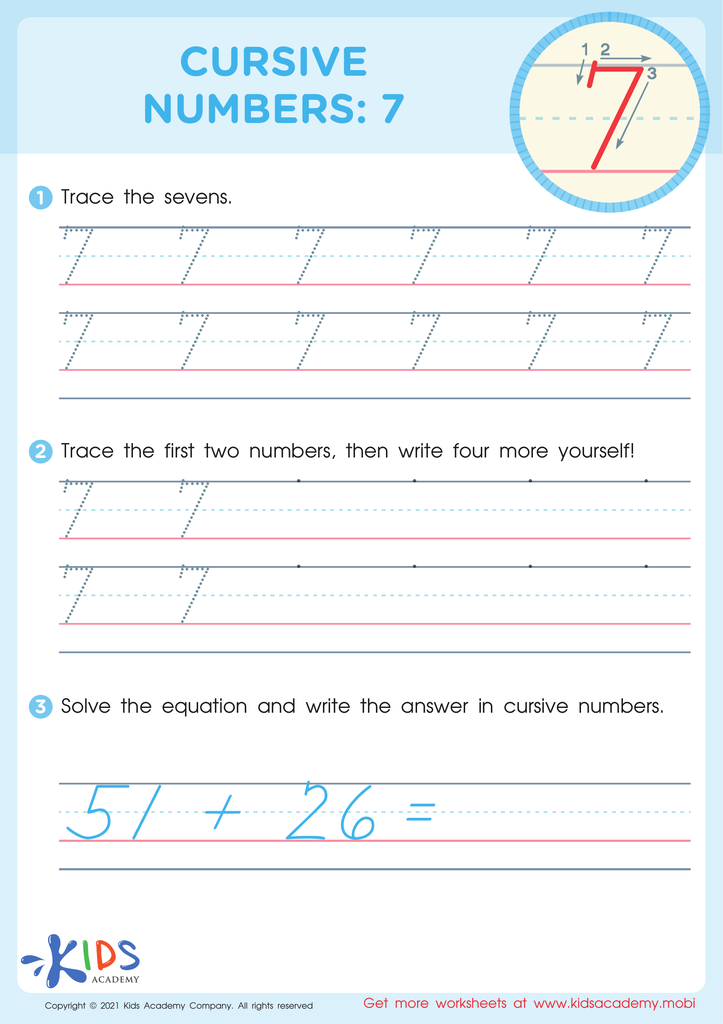
Cursive Numbers: 7 Worksheet
Kids learn best with engaging and easy-to-understand materials. This tracing worksheet is ideal for developing kids' writing skills, with two exercises to help them write the number 7. The first involves tracing the 6s provided and the second asking them to write four cursive 7s independently.
Cursive Numbers: 7 Worksheet
Worksheet
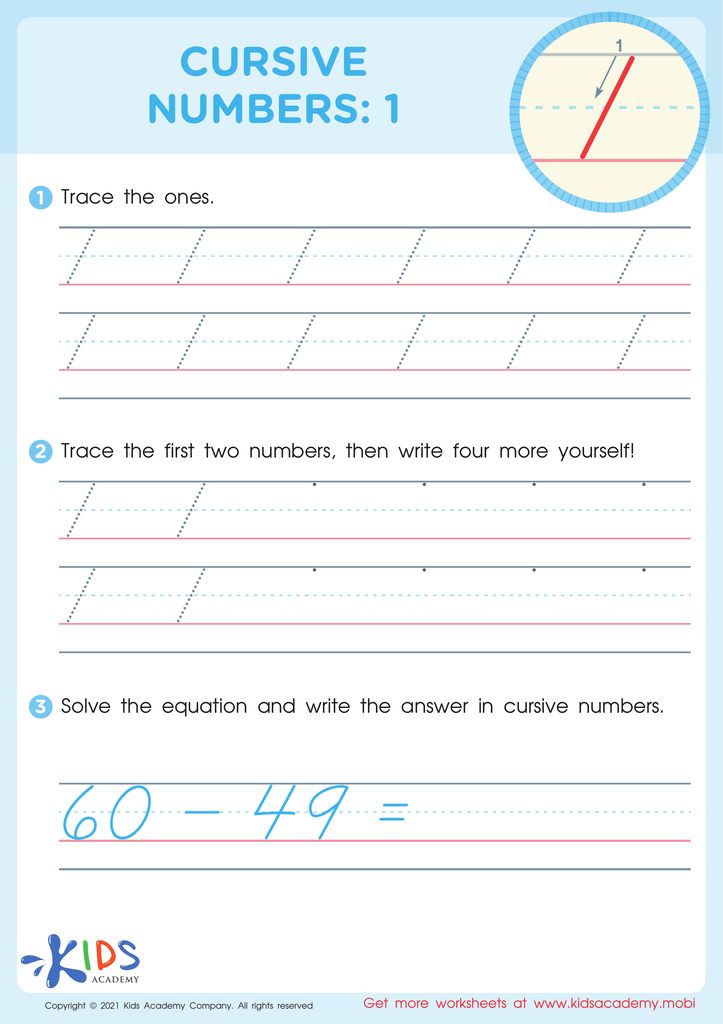
Cursive Numbers: 1 Worksheet
Math and handwriting are connected! Try these traceable worksheets to help your children learn cursive numbers. The tracing lines make it easy to follow, plus there's a simple subtraction exercise at the bottom for them to try. This is perfect for kids who struggle with handwriting and gives them a fun way to practice.
Cursive Numbers: 1 Worksheet
Worksheet
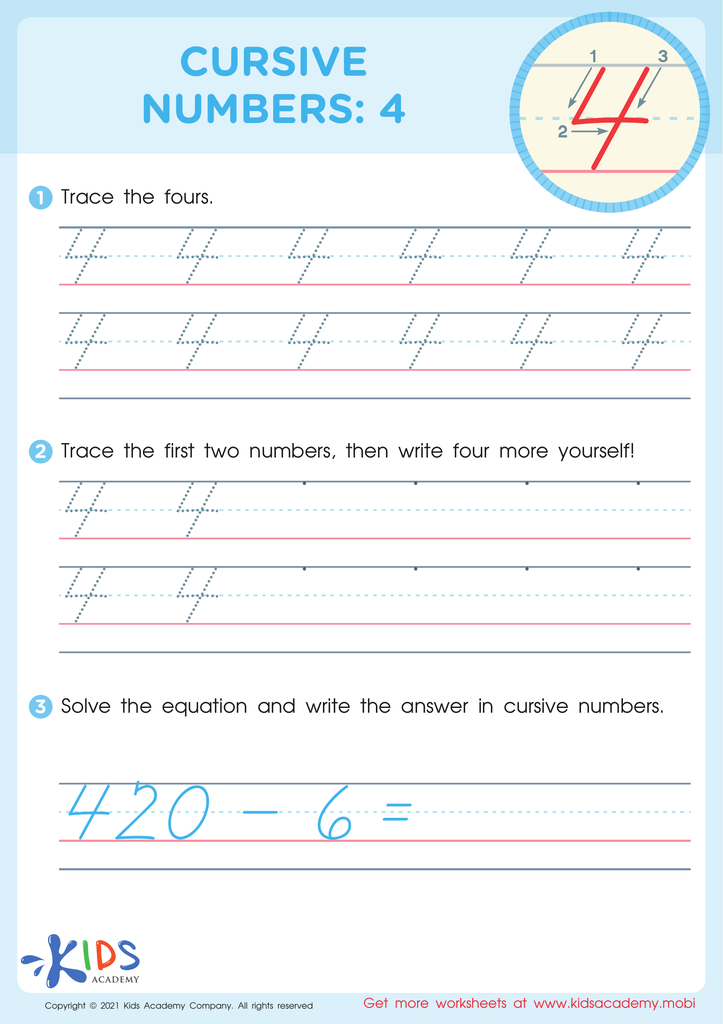
Cursive Numbers: 4 Worksheet
Math is challenging, and teaching cursive alongside it can be overwhelming. Make lessons enjoyable and your child will be more likely to stay engaged. Utilize worksheets to practice tracing the number 4 in cursive. With regular practice, your child can learn to write the number on their own.
Cursive Numbers: 4 Worksheet
Worksheet
Join Kids Academy for Free
Who is primarily going to use this learning content?








Fine motor skills development in children aged 5 to 8 is crucial for a variety of reasons, making it a significant focus for both parents and teachers. First, fine motor skills involve the coordinated movement of small muscles, primarily in the hands and fingers, which are essential for tasks like writing, drawing, and using tools. Mastery of these skills directly impacts academic success, particularly in literacy and mathematics, where precision and control are integral.
Additionally, developing fine motor skills enhances a child's ability to engage in self-care tasks such as buttoning clothes, tying shoelaces, and using utensils, fostering a sense of independence and confidence. It also encourages problem-solving skills and creativity through activities like arts and crafts, where children learn to manipulate materials in innovative ways.
Furthermore, fine motor development is linked to cognitive development. The brain's pathways mature as children practice these skills, contributing to their overall learning capabilities. Parents and teachers can support this development through engaging activities, such as puzzles, building blocks, and drawing. By prioritizing fine motor skills at this critical stage, caregivers provide children with a solid foundation for academic achievement and everyday functioning, nurturing both their physical and intellectual growth.








