
Sequencing Skills Numbers Worksheets for Ages 5-8
5 filtered results
Difficulty Level
Grade
Age
-
From - To
Subject
Activity
Standards
Enhance your child's mathematical foundation with our sequencing skills numbers worksheets designed for ages 5-8. These engaging and educational worksheets are perfect for helping young learners grasp the concept of number sequences and patterns. Each activity fosters critical thinking, logical reasoning, and problem-solving abilities. Ideal for kindergarten through second grade, our printable resources are crafted to hold children's interest while developing essential sequencing skills. Boost your child's confidence and proficiency in math with these fun, interactive learning tools from Kids Academy—where foundational math skills lead to lifelong academic success.
Favorites
With answer key
Interactive
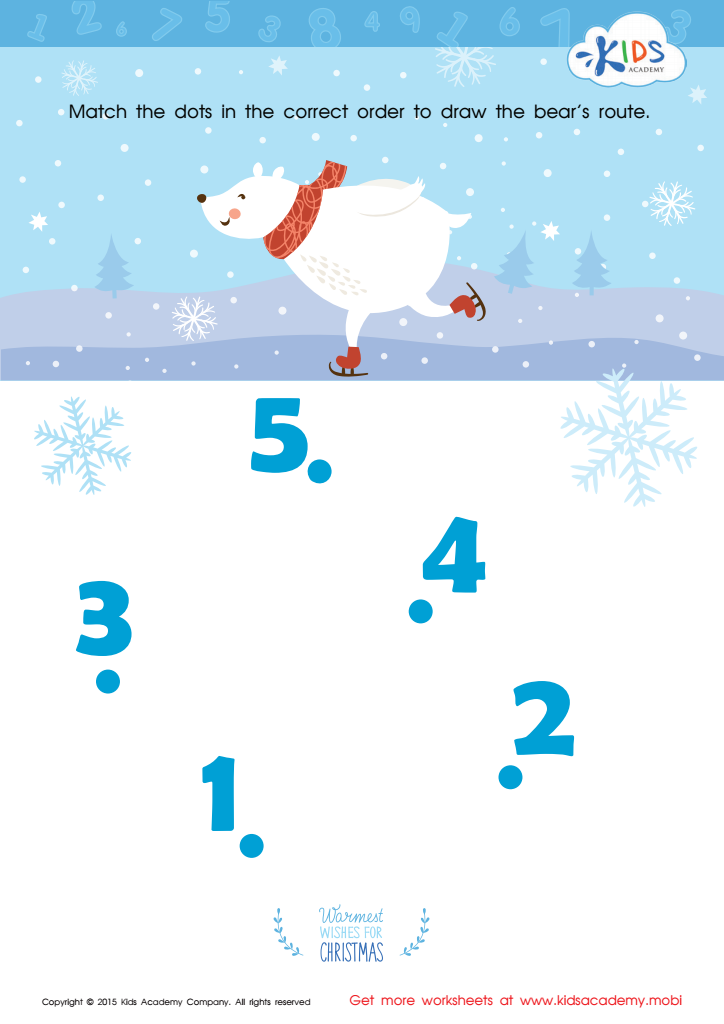
Drawing the Bear's Route by Number Worksheet
This winter-themed math worksheet is perfect for counting practice. Have fun learning and celebrating the season with your kindergartener as they trace and recognize numbers. It also helps develop fine motor muscles. For more fun, check out the math worksheets on Kids Academy.
 Assign to My Students
Drawing the Bear's Route by Number Worksheet
Worksheet
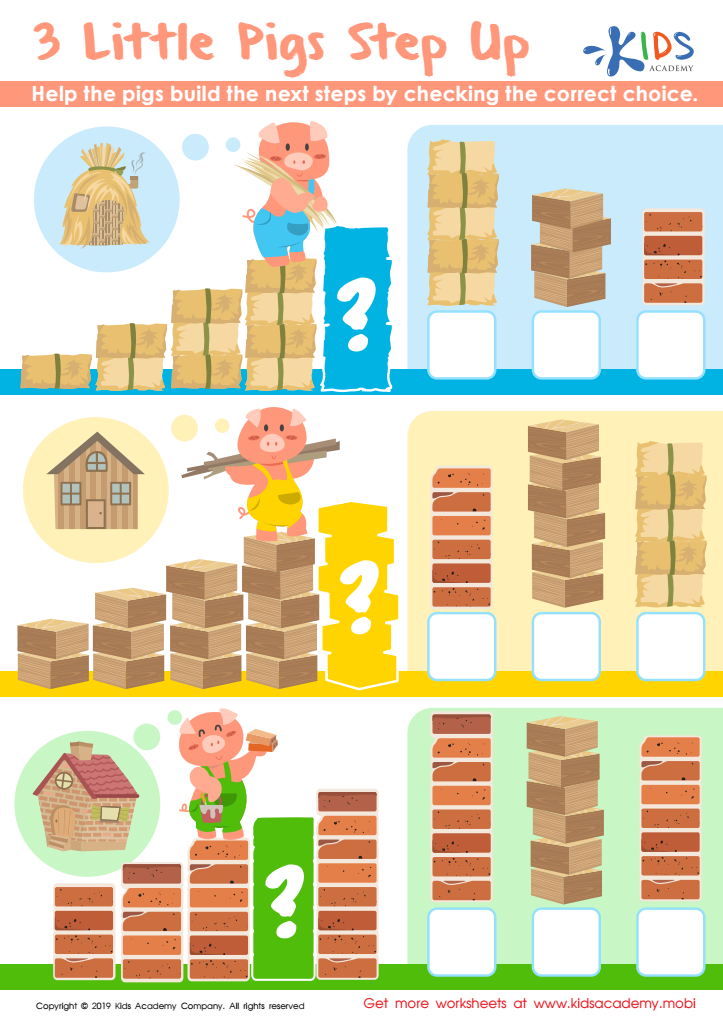
3 Little Pigs Step Up Worksheet
Test your kids' knowledge of the three little pigs' story. Ask them to tell you the important parts and then look at the pictures in this worksheet. Can they identify what's going on? They'll need to count the materials and help build the next steps by choosing the right option.
3 Little Pigs Step Up Worksheet
Worksheet
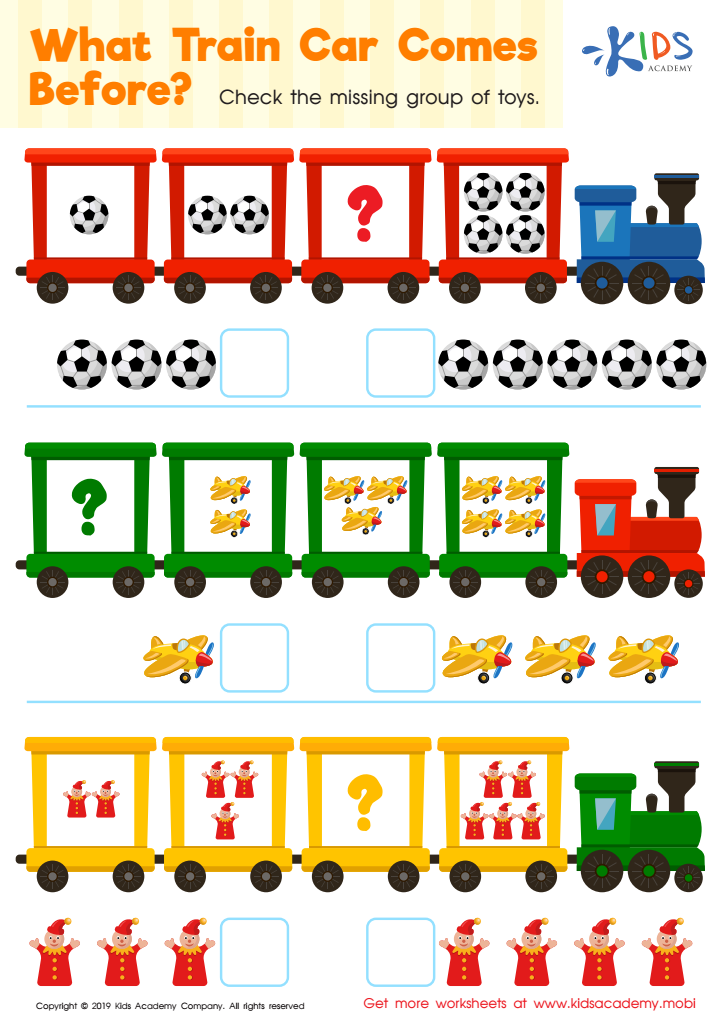
What Train Car Comes Before? Worksheet
Download this worksheet with your kids and have them identify the colorful objects pictured. Count the toys in the three trains together, then check the missing group of toys from the options provided. Have fun! (80 words)
What Train Car Comes Before? Worksheet
Worksheet
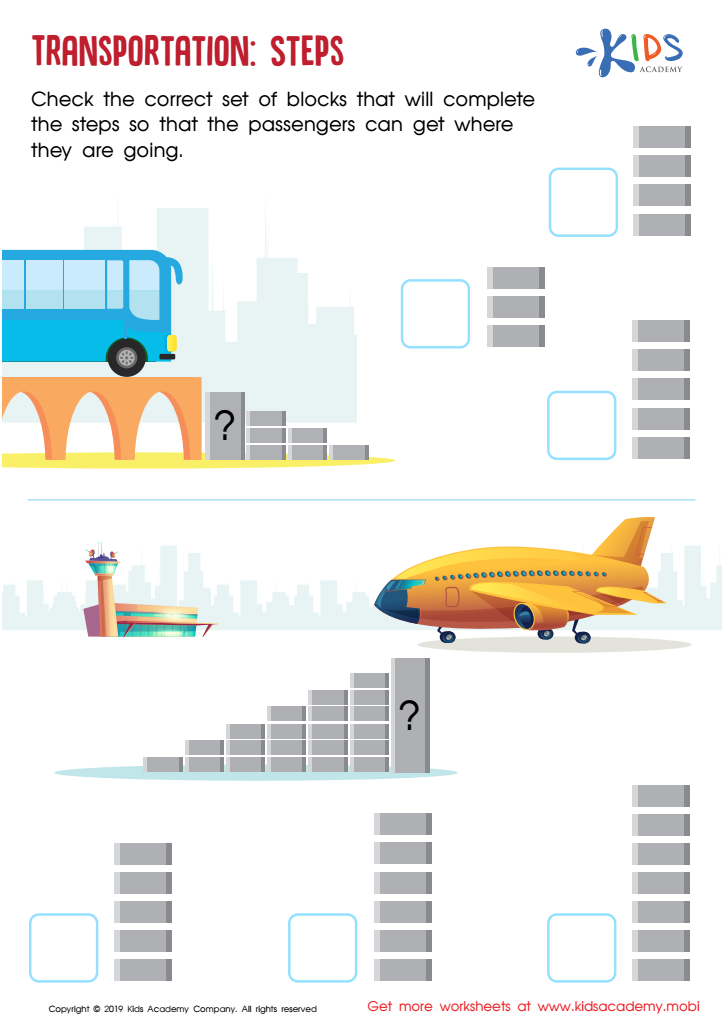
Transportation: Steps Worksheet
Trips are important to all - transportation and its modes have made travelling easier and quicker. Ask your kids to identify the transport in the picture then help them check the right blocks so passengers can reach their destination.
Transportation: Steps Worksheet
Worksheet
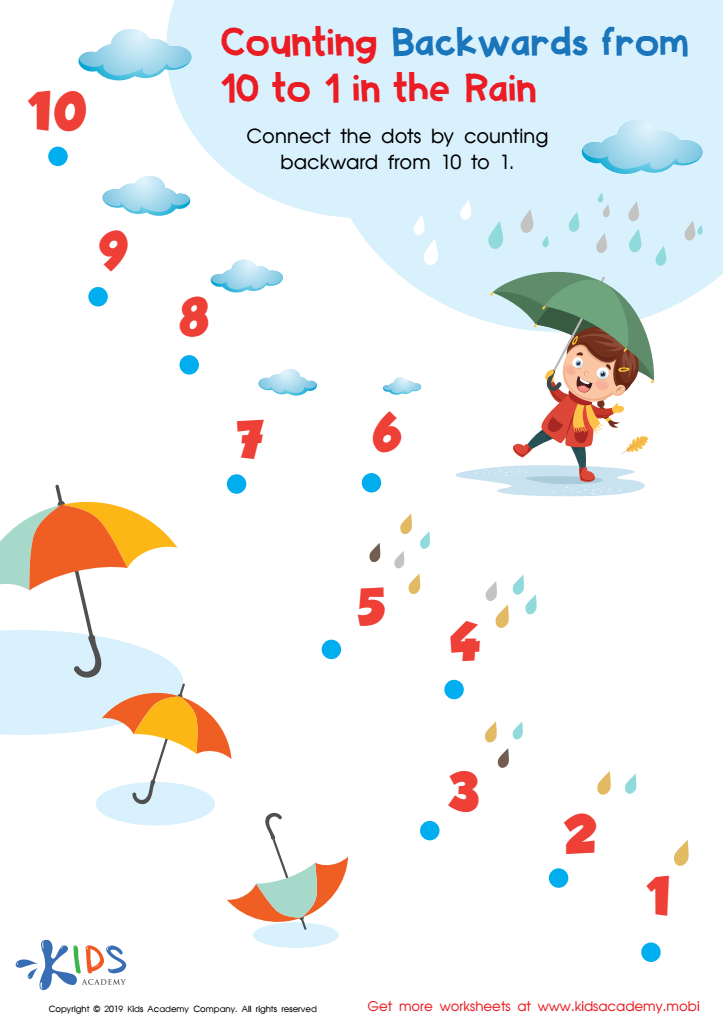
Counting Backwards from 10 to 1 in the Rain Worksheet
A rainy day can be fun - have your kids tell you their favorite activities! Then, look at the worksheet and ask them to identify the items. Count the numbers together, then help connect the dots from 10 to 1. It's an easy and fun way to spend time on a rainy day!
Counting Backwards from 10 to 1 in the Rain Worksheet
Worksheet
Join Kids Academy for Free
Who is primarily going to use this learning content?








Sequencing skills in numbers are critically important for children aged 5-8 as they lay the foundation for early math learning. These skills encompass understanding the order of numbers, recognizing patterns, and predicting subsequent elements in a series, which are essential for fluency in arithmetic operations such as addition, subtraction, multiplication, and division.
For parents and teachers, fostering these skills is vital because they underpin mathematical logic and problem-solving abilities. Strong sequencing skills help children comprehend more complex concepts, such as place value and number relationships, which are crucial for future academic success in math and other STEM subjects. Moreover, sequencing is not limited to mathematics; it also enhances reading comprehension and writing by helping kids understand the progression of events and the importance of order in narratives.
Children with well-developed sequencing skills are more likely to succeed in school, as these skills contribute to critical thinking and cognitive development. Providing opportunities for practice through activities like counting games, number puzzles, and pattern exercises not only makes learning fun but also reinforces the importance of order and structure in everyday tasks. Encouraging these skills at a young age equips children with the tools they need for lifelong learning and problem-solving. By investing in the development of sequencing skills, parents and teachers not only boost mathematical proficiency but also nurture overall intelligence and confidence.








