
Compare fractions Math Worksheets for Ages 5-8
6 filtered results
Difficulty Level
Grade
Age
-
From - To
Subject
Activity
Standards
Discover our engaging Compare Fractions Math Worksheets designed for ages 5-8. These fun, educational worksheets help young learners grasp the concept of fractions with ease. Featuring vibrant illustrations and simple tasks, they provide a solid foundation in understanding and comparing fractions. Perfect for both classrooms and at-home practice, each worksheet aims to boost confidence and encourage a love for math. From halves and quarters to playful pie charts, our resources make learning fractions enjoyable and accessible. Download now and watch your child's math skills soar! Explore the world of fractions with our expertly crafted printables.
Favorites
With answer key
Interactive
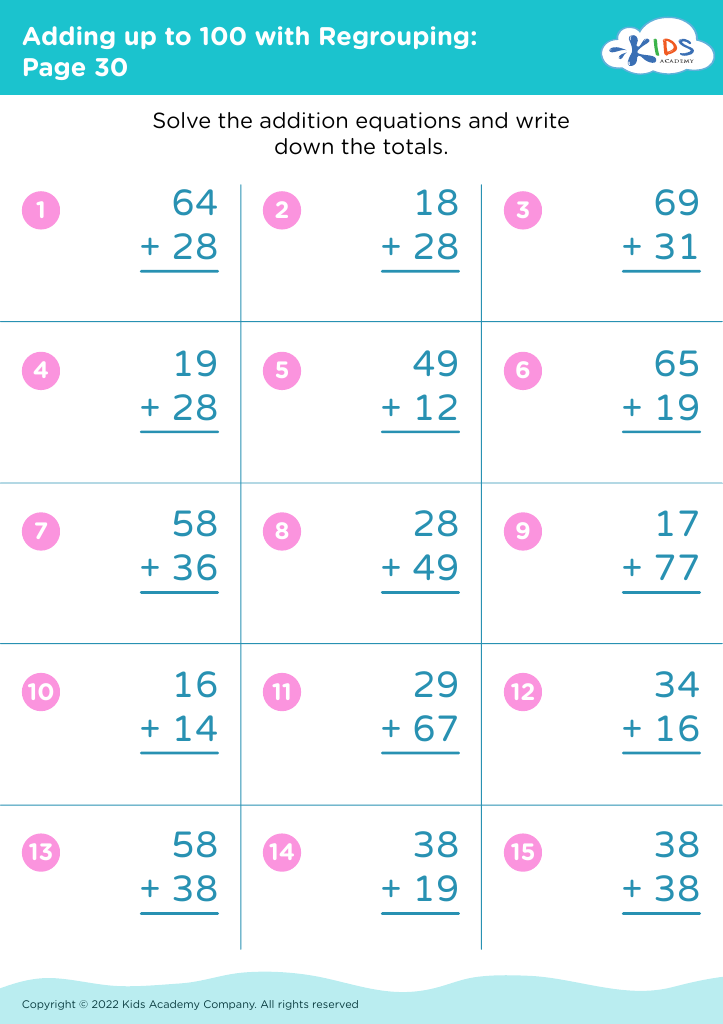
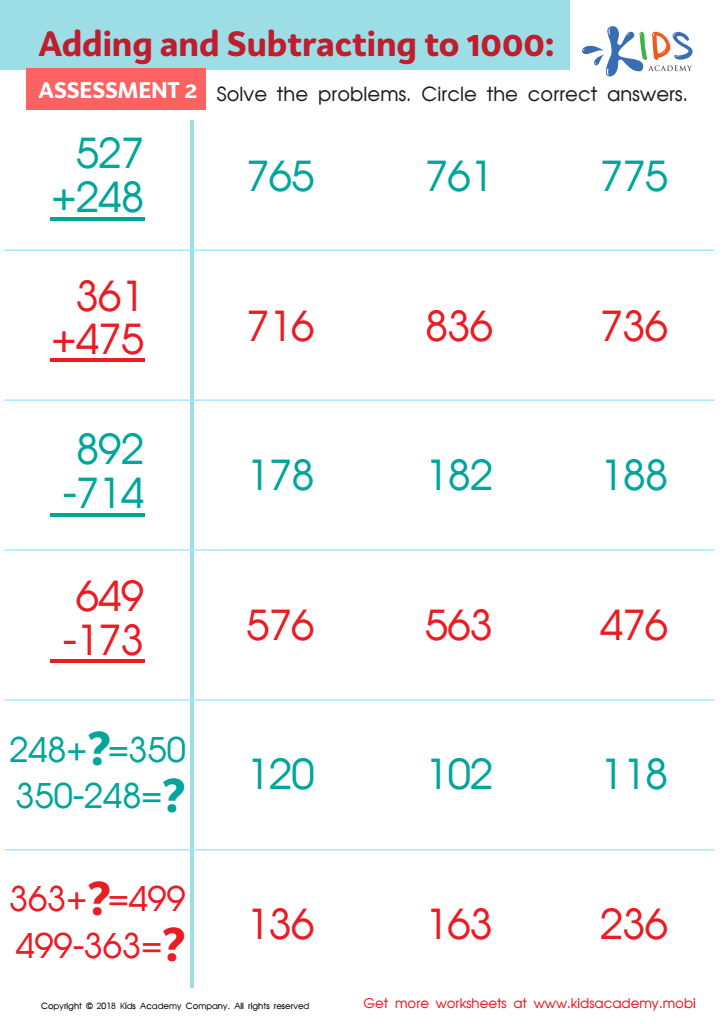
Adding and Subtracting to 1 Worksheet: Assessment 2
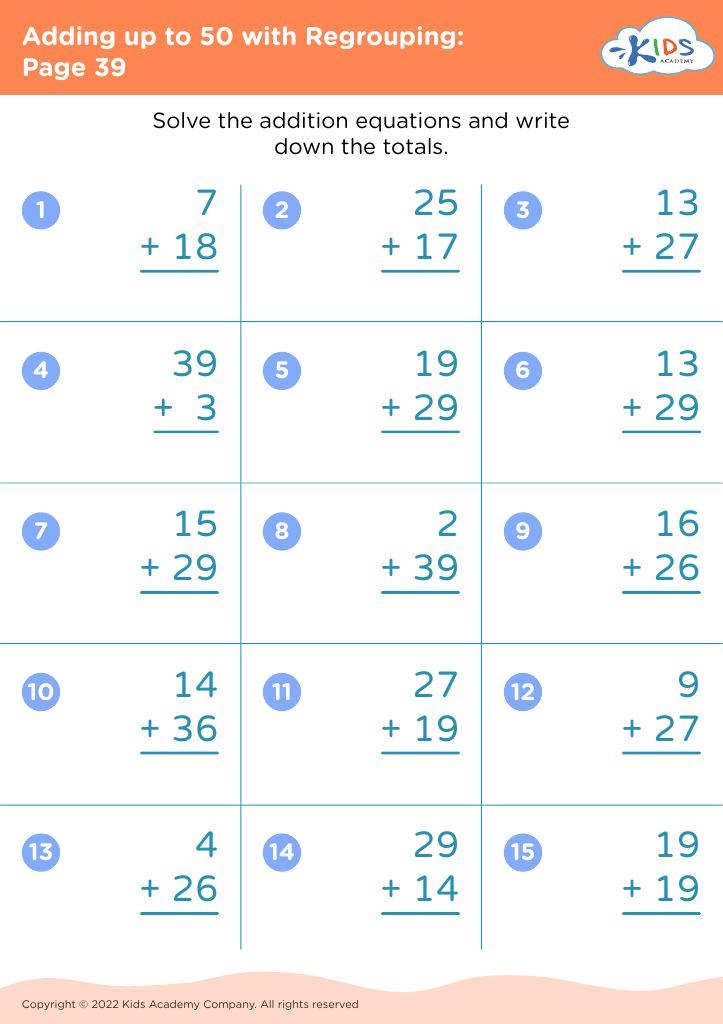
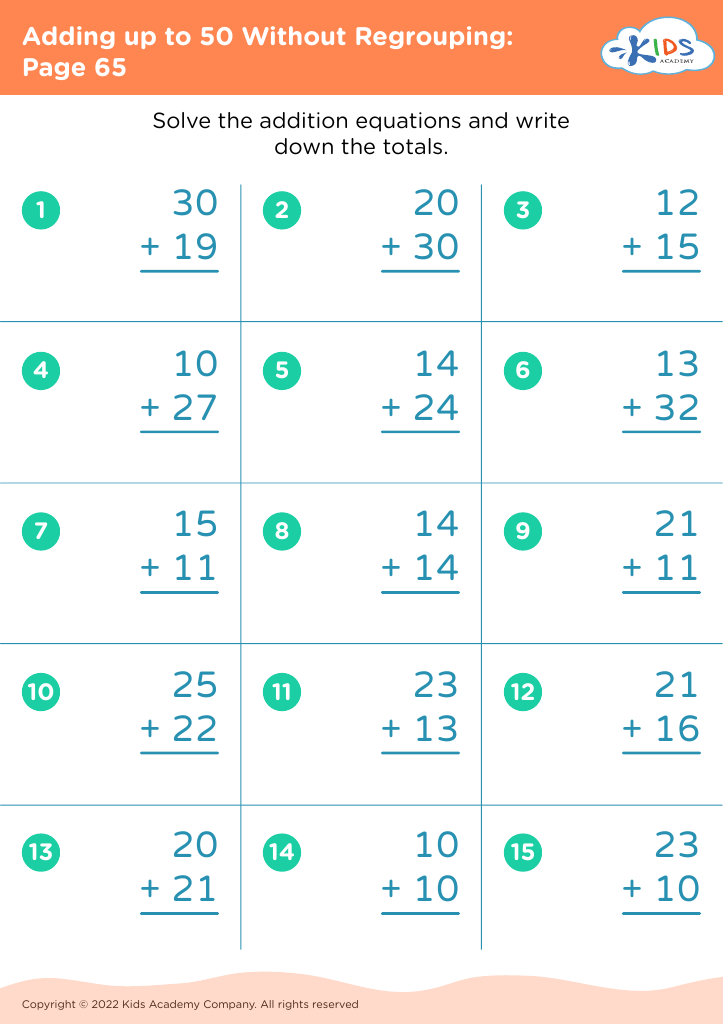
Test your child's addition and subtraction of 3-digit numbers with this assessment worksheet! They'll practice regrouping and pre-algebra skills to show their expertise. Have them work through the page and circle their answers, then see how many they got right to check their understanding and progress.
 Assign to My Students
Adding and Subtracting to 1 Worksheet: Assessment 2
Worksheet
Join Kids Academy for Free
Who is primarily going to use this learning content?








Understanding how to compare fractions is crucial for children aged 5-8, as it lays the foundation for essential math skills and broader cognitive development. At this developmental stage, grasping the concept of fractions helps children develop a more nuanced understanding of numbers, proportions, and ratios. It encourages logical thinking and problem-solving, both critical skills needed in everyday life.
Parents and teachers should recognize that introducing fractions at an early age prepares children for more complex mathematical concepts they'll encounter in later grades, like division, algebra, and geometry. Early familiarity with comparing fractions also enhances a child's ability to estimate and make informed decisions, such as determining which portions of objects or statistical data are larger or smaller.
Additionally, learning fractions ties into other subjects, like reading, through exercises in story problems and hands-on activities such as measuring ingredients in cooking. Engaging with fractions through various senses and practical applications helps enforce abstract concepts in a tangible way, making learning more effective and enjoyable.
Finally, early mastery of fractions supports children’s confidence in their math abilities, discouraging math anxiety and promoting a positive attitude towards learning. For these reasons, parents and teachers should prioritize teaching and reinforcing the concept of fractions in early education.








