
Math skills development Math Worksheets for Ages 5-8
6 filtered results
Difficulty Level
Grade
Age
-
From - To
Subject
Activity
Standards
Enhance your child's math skills with our engaging Math Worksheets specifically designed for ages 5-8! Our resources focus on foundational concepts such as addition, subtraction, patterns, and basic problem-solving, helping young learners build confidence and competence in math. Each worksheet is crafted to cater to diverse learning styles, ensuring a fun and interactive experience. With clear instructions and colorful designs, kids will enjoy practicing essential math skills while developing critical thinking abilities. Start their journey to math mastery today with our comprehensive collection of downloadable worksheets, perfect for classroom use or home learning. Discover the joy of math learning now!
Favorites
With answer key
Interactive
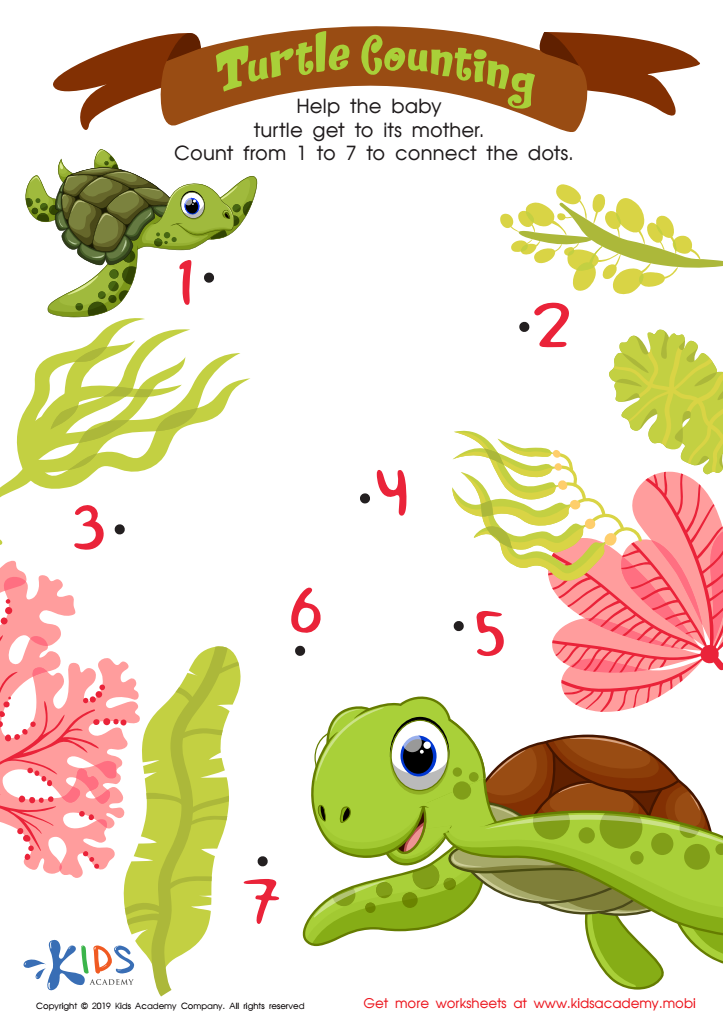
Turtle Counting Worksheet
Help your child identify the turtle in the picture and teach them about turtles. From their diet to the life cycle, they'll learn a lot. Now, help the baby turtle return to its mother. Count from 1 to 7, then connect the dots on the printout.
 Assign to My Students
Turtle Counting Worksheet
Worksheet
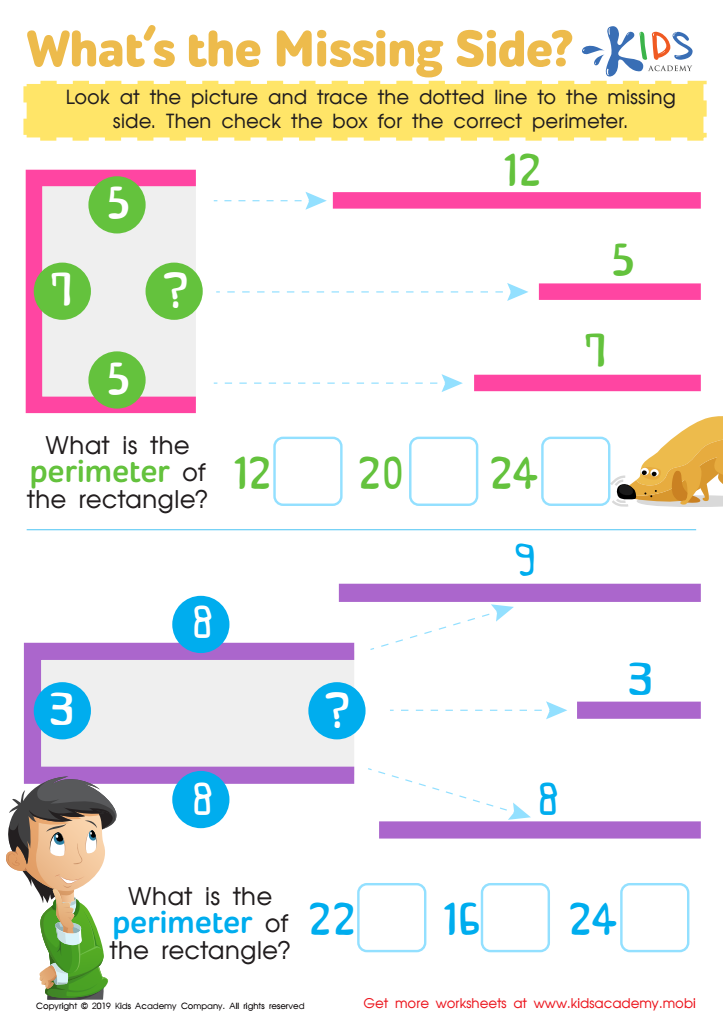
What's the Missing Side Worksheet
Assist your pupils in improving math skills with fun exercises like the tracing sheet. Show them the picture and guide them to trace the missing side. Ask them to check the box of the right perimeter afterwards. Doing this regularly can help them to enjoy and appreciate the subject more.
What's the Missing Side Worksheet
Worksheet
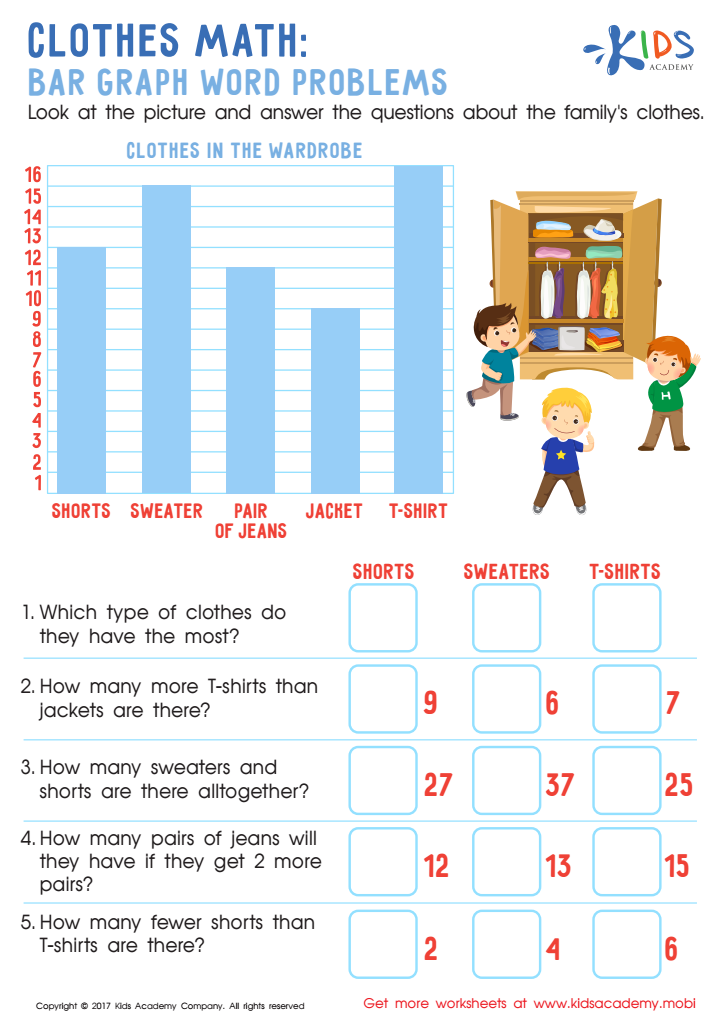
Clothes Math: Bar Graph Word Problems Worksheet
Introduce your kids to a family like theirs with this worksheet. They'll look at the picture of three children in front of a wardrobe and the graph of clothes inside. Ask them questions about the number of items like jeans, sweaters, shorts, jackets, and t-shirts. Let them explore their understanding of counting and family similarity.
Clothes Math: Bar Graph Word Problems Worksheet
Worksheet
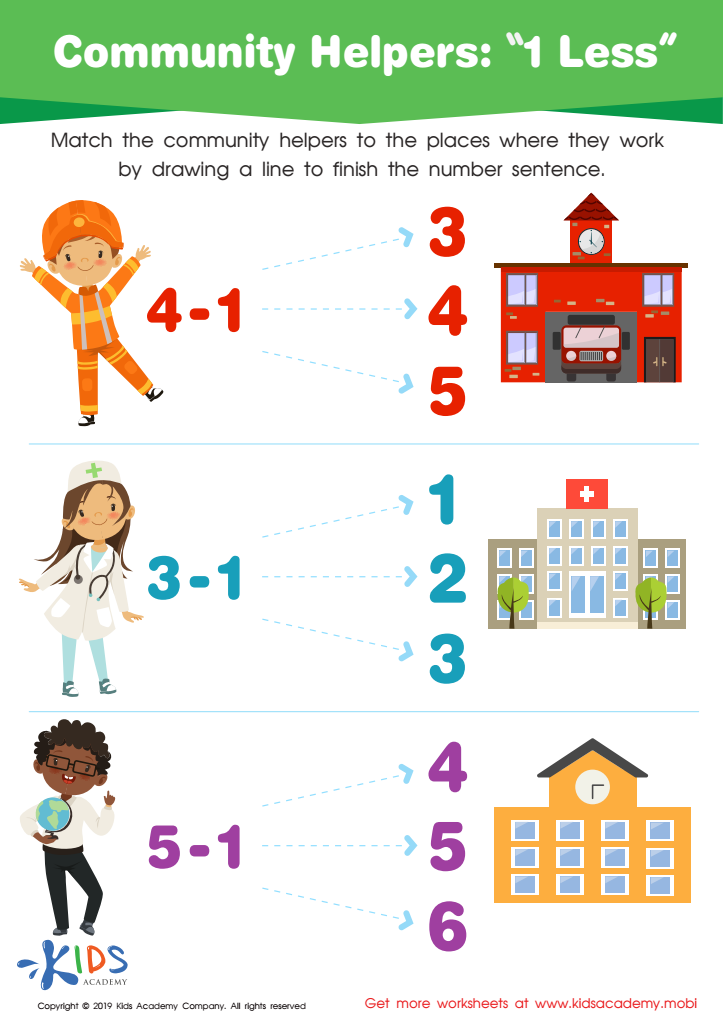
Community Helpers: 1 less Worksheet
Look at this worksheet with your child and ask them to identify the different community helpers. Match them to the places where they work by drawing a line to finish the number sentence. This helps them identify the people that help keep the community organized and running smoothly. Examples of community helpers include doctors, police officers, firefighters, teachers, etc.
Community Helpers: 1 less Worksheet
Worksheet
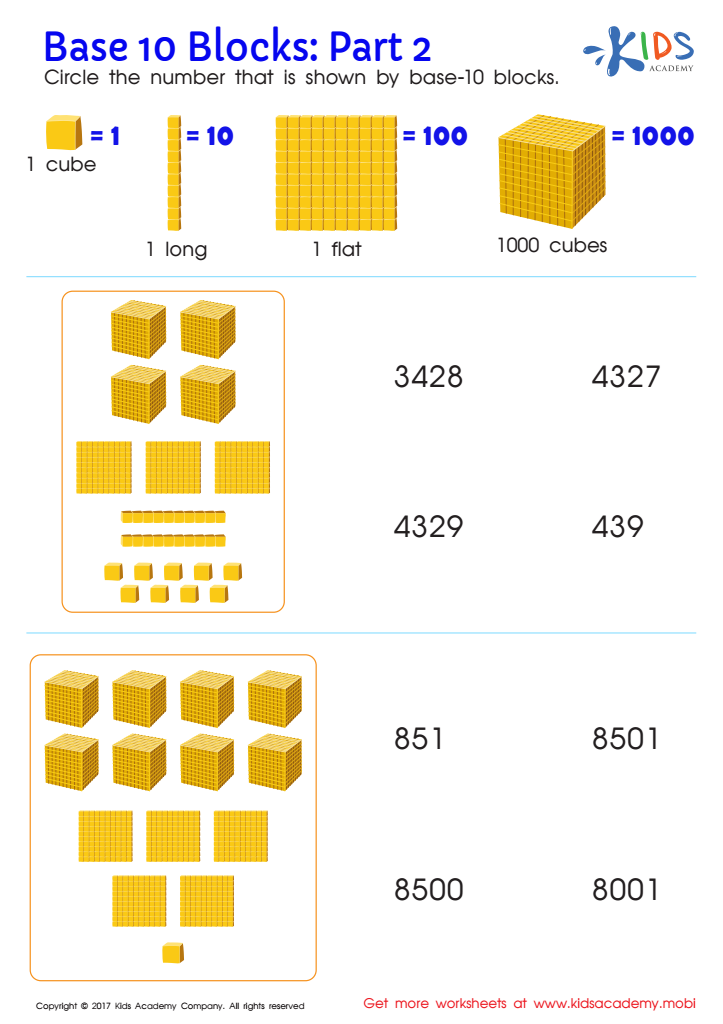
Place Value Worksheet: Thousands
Help your third grader master place value with this free thousands worksheet! Numbers up to ten thousand become easier to understand with Base Blocks. Increase your child's number sense while having fun!
Place Value Worksheet: Thousands
Worksheet
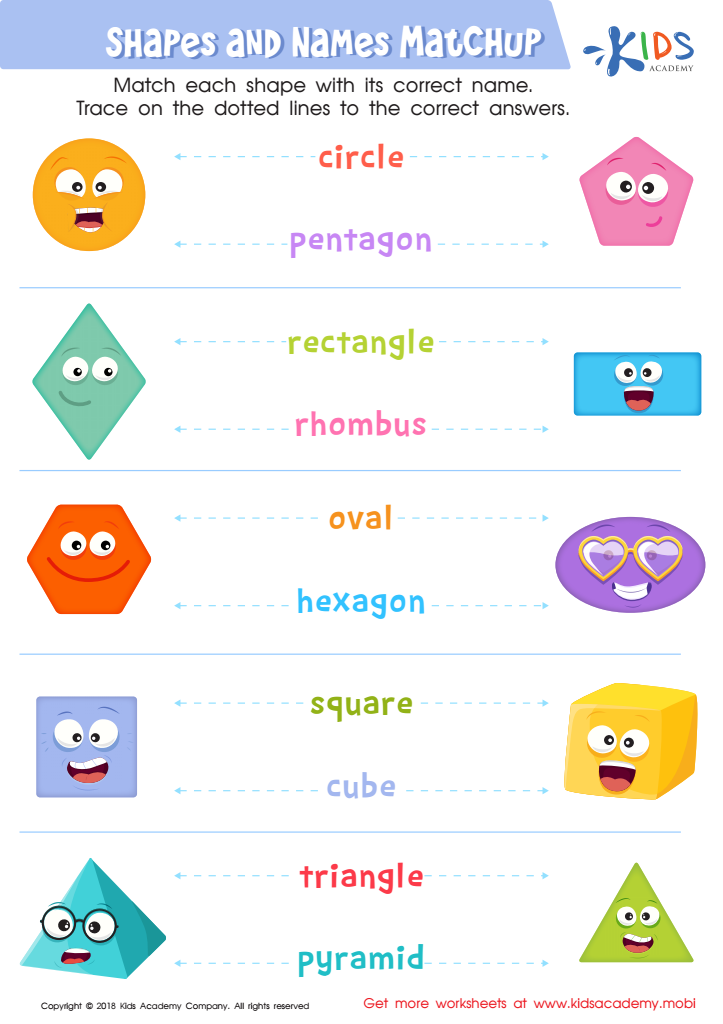
Shapes and Names Matchup Worksheet
Introduce your students to shapes if they aren't familiar. Look at the sheet with them and ask them to identify shapes. Help them match each shape to its name, then trace the dotted lines to the answers. Even if they haven't seen shapes before, this exercise will be easy - with your help!
Shapes and Names Matchup Worksheet
Worksheet
Join Kids Academy for Free
Who is primarily going to use this learning content?







Developing math skills in children aged 5-8 is essential for several reasons. At this stage, children's brains are highly malleable, making it an optimal time for introducing fundamental math concepts such as counting, addition, subtraction, and basic problem-solving. Mastering these skills sets the groundwork for future mathematical understanding and academic success.
Math skills go beyond numbers; they enhance critical thinking, logical reasoning, and analytical abilities, preparing children for more complex concepts they will encounter in later grades. Furthermore, a strong foundation in math can boost a child's self-confidence, fostering a positive attitude toward learning.
Additionally, everyday activities—like cooking, shopping, and playing games—provide practical opportunities for math application, reinforcing classroom concepts in relatable ways. Engaging parents and teachers in this process encourages a collaborative effort, ensuring that mathematical learning continues at home and in school.
Finally, a solid grasp of math is increasingly important in today’s technology-driven world, impacting various fields such as science, engineering, and finance. By prioritizing math skill development in young children, we equip them with essential tools for future success, encouraging lifelong learning and adaptability in an ever-evolving landscape.








