Time-telling skills Math Worksheets for Ages 5-8
5 filtered results
-
From - To
Enhance your child's math skills with our engaging Time-Telling Skills Math Worksheets for ages 5-8. Designed to make learning fun, these worksheets help young learners grasp the concept of time through interactive exercises, playful illustrations, and clear instructions. Children will explore how to read both digital and analog clocks, understand time concepts such as hours and minutes, and relate time to daily activities. Perfect for strengthening foundational skills, our worksheets cater to various learning styles, ensuring every child can master time-telling at their own pace. Download now to inspire your child's confidence and excitement in learning the essential skill of telling time!
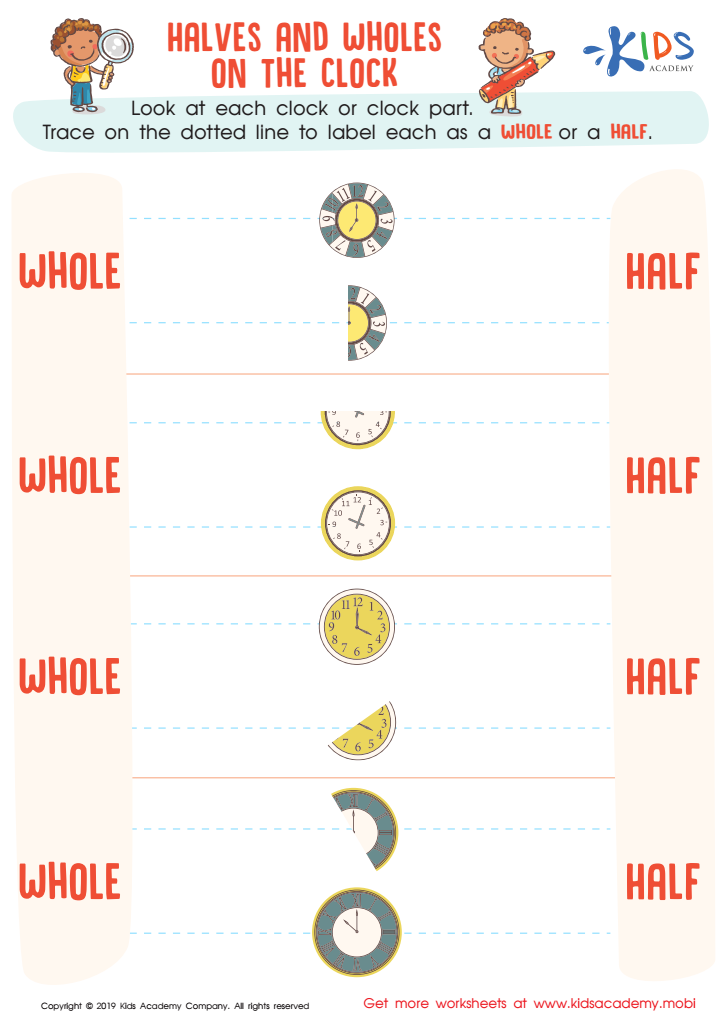
Halves and Wholes on the Clock Worksheet
 Assign to My Students
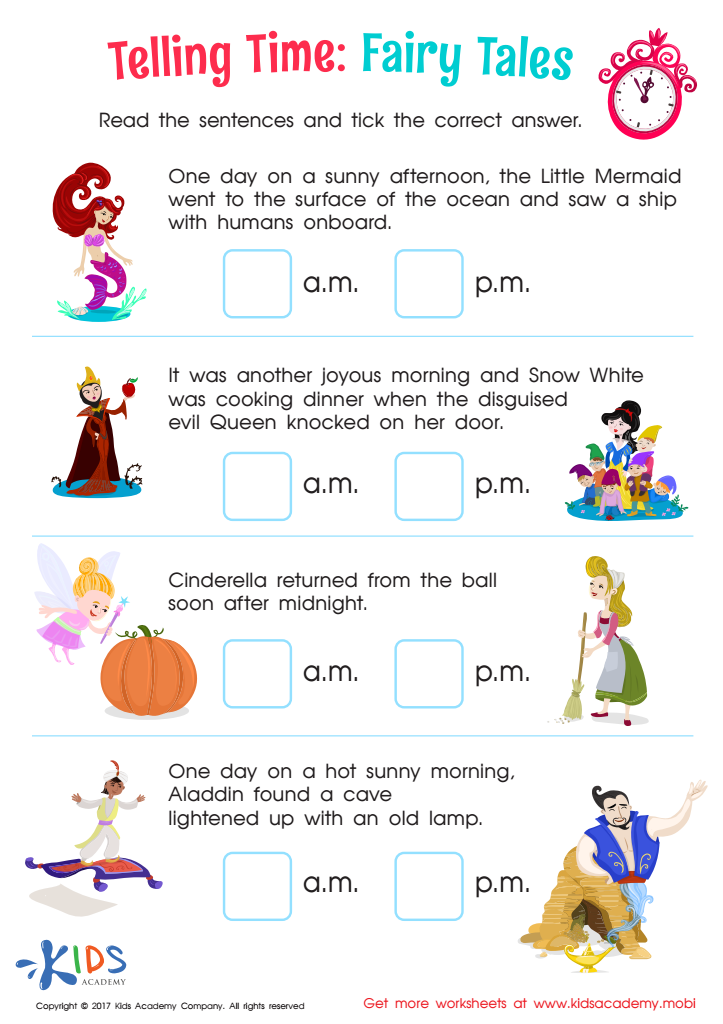
Telling Time: Fairy Tales Worksheet
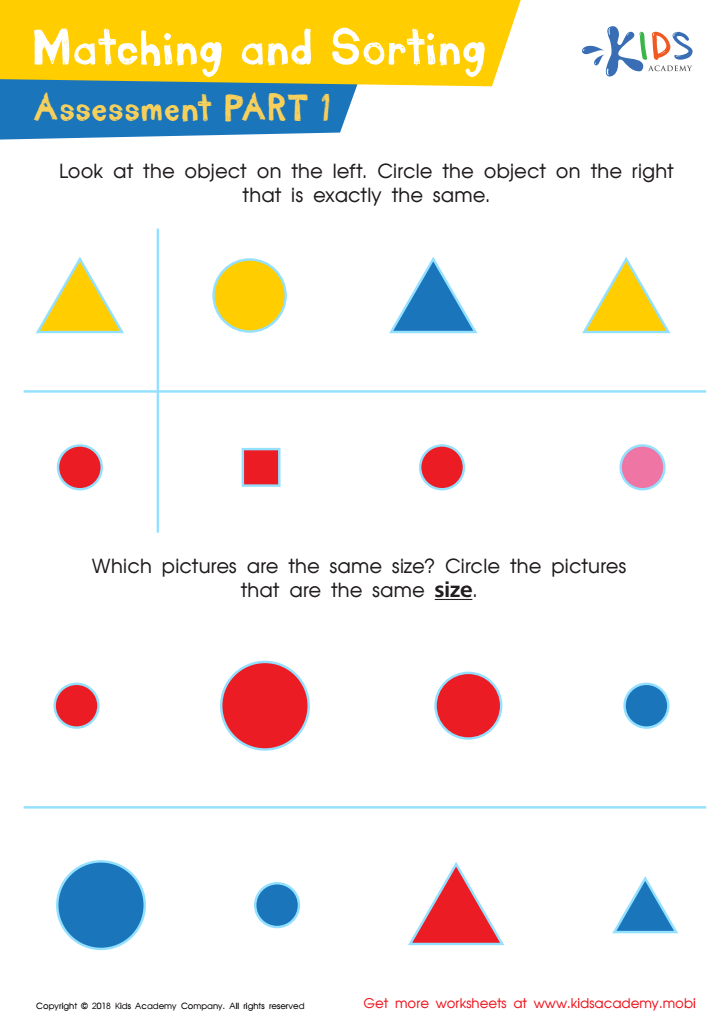
Matching and Sorting for Kindergarten: Assessment 1 Worksheet
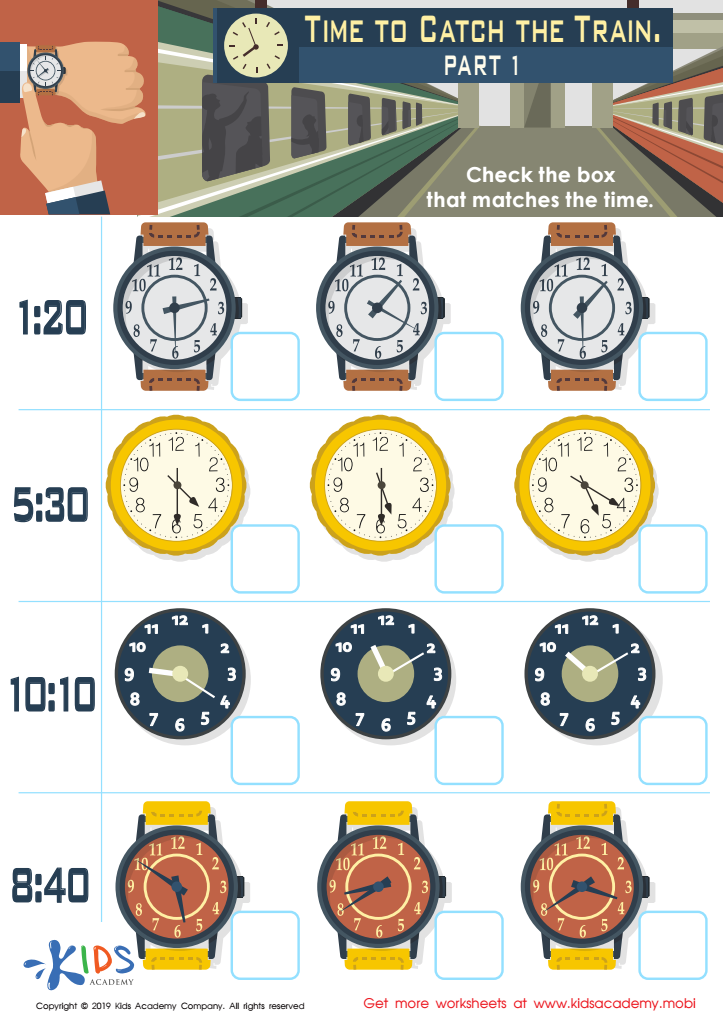
Time to Catch the Train Part 1 Worksheet








Time-telling skills are crucial for children aged 5-8, as they lay the foundation for understanding concepts of time management, responsibility, and daily routines. Mastering time-telling helps children develop numeracy skills and enhances their mathematical understanding. Learning to read analog and digital clocks also aids in reinforcing their knowledge about numbers, counting, and sequencing, which are essential components of early math education.
Why should parents and teachers care? Proficiency in time-telling fosters independence, allowing children to manage their schedules and understand the concept of intervals. This independence is vital for planning activities, such as getting ready for school or engaging in extracurricular pursuits. Moreover, being able to tell time provides children with a sense of control over their environment and daily activities.
In a world that revolves around time, children who struggle with these skills may face challenges in social and academic settings. Thus, enhancing time-telling skills can help bridge gaps in learning, promote confidence, and bolster self-sufficiency. By prioritizing these skills, parents and teachers can create a supportive learning environment that encourages responsibility and prepares children for future challenges in both their education and daily lives.








