Understanding biodiversity Math Worksheets for Ages 5-8
3 filtered results
-
From - To
Unlock the wonders of nature and math with our "Understanding Biodiversity Math Worksheets for Ages 5-8". Designed to engage young minds, these worksheets combine crucial math skills with fascinating insights into biodiversity. Your child will practice counting, sorting, and basic operations while exploring the rich variety of life on our planet. Each activity enhances numerical proficiency and introduces kids to different species and ecosystems, fostering a deeper appreciation for the environment. Perfect for both classroom and home learning, these worksheets provide a fun, educational experience that bridges science and math, making learning a true adventure.
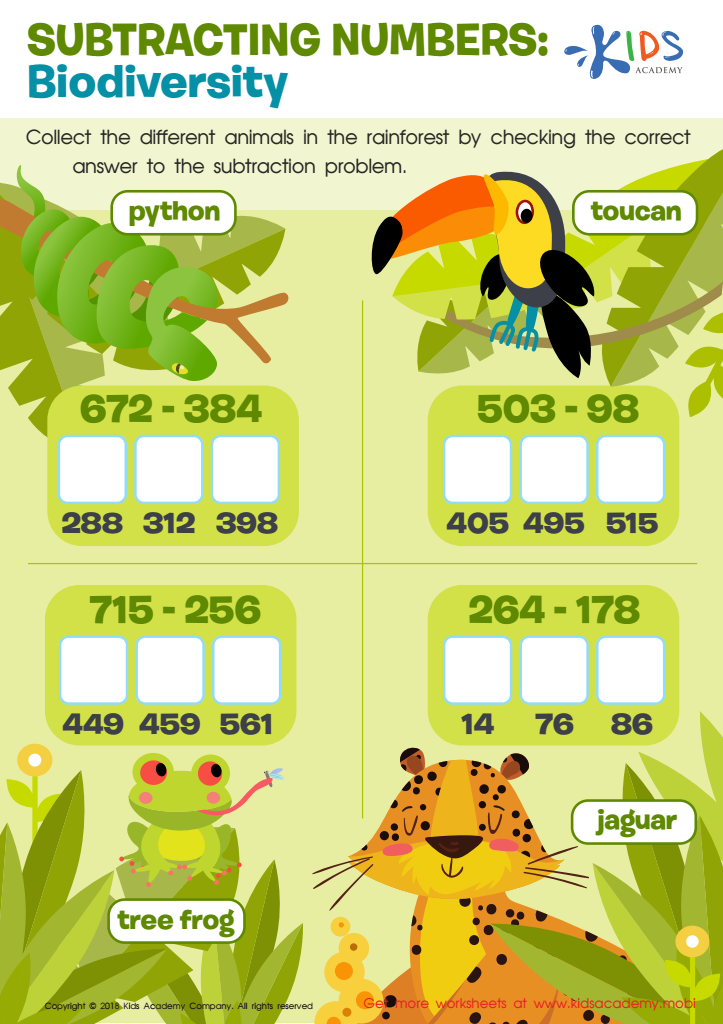
Subtracting Numbers: Biodiversity Worksheet
 Assign to My Students
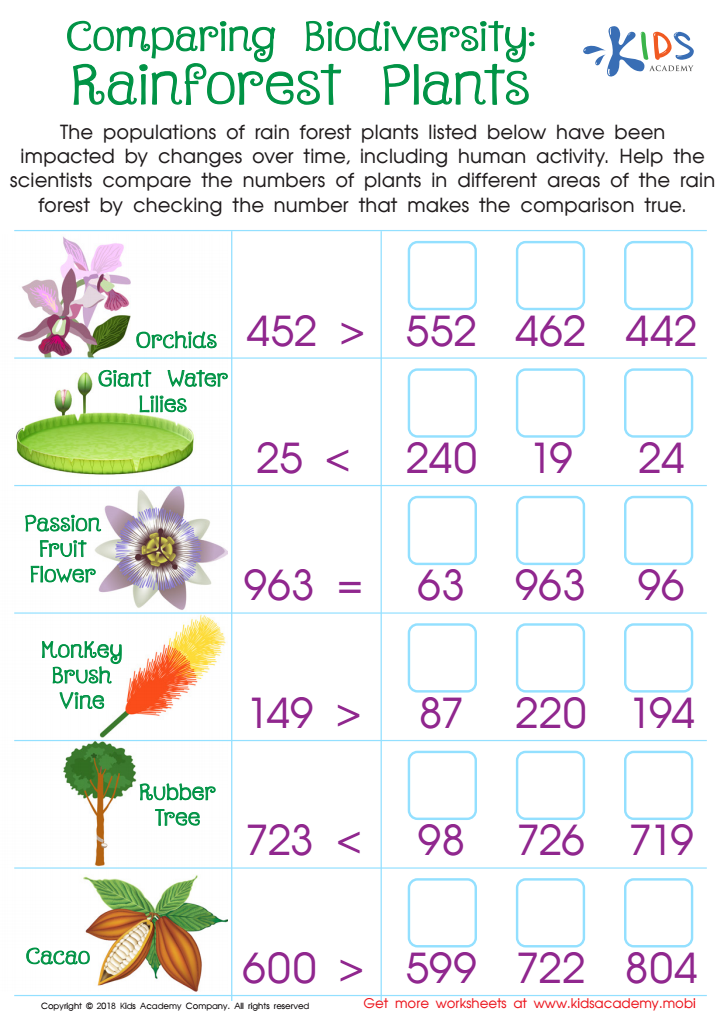
Comparing Biodiversity: Rainforest Plants Worksheet
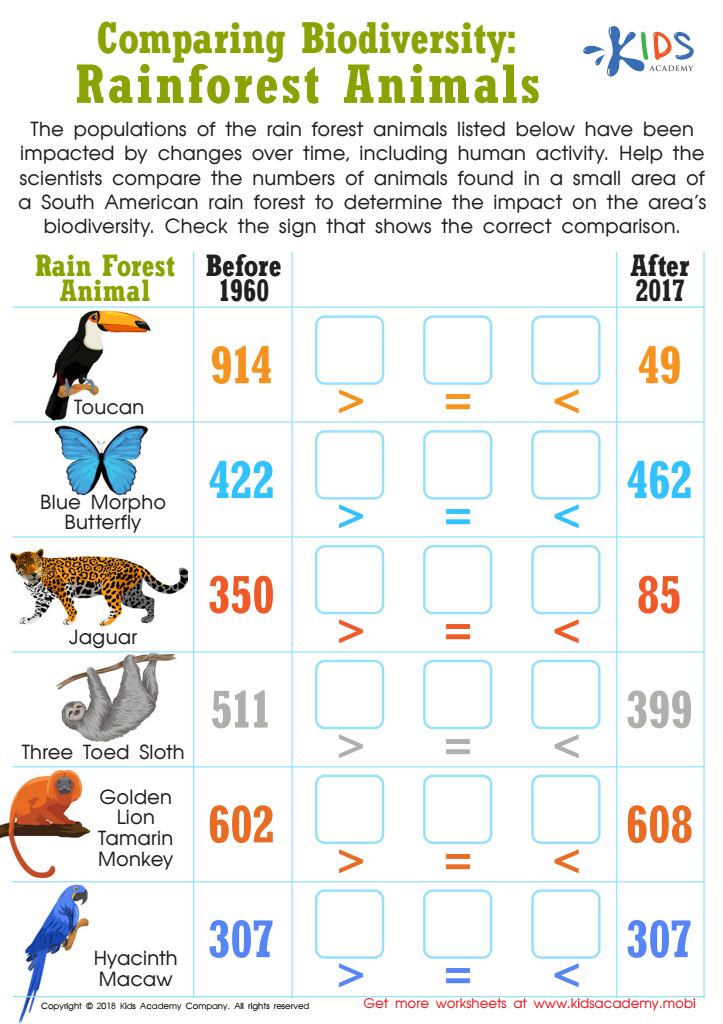
Comparing Biodiversity: Rainforest Animals Worksheet






Understanding biodiversity and incorporating math to explain it is crucial for young children, as it lays a foundation for both environmental awareness and mathematical skills crucial in early education. For children aged 5-8, integrating biodiversity into math lessons offers a context-rich, engaging way to develop problem-solving skills, basic arithmetic, categorization, and pattern recognition.
Parents and teachers should care about this interdisciplinary approach because it fosters a deeper appreciation for nature, sparking curiosity and a sense of responsibility towards our environment. For instance, counting the number of different trees, flowers, or birds in a local park not only strengthens a child's counting and sorting skills but also helps them recognize ecological diversity. It encourages critical thinking when comparing quantities and similarities among species, enhancing their analytical abilities.
Furthermore, early exposure to such themes promotes cognitive and emotional development. It can cultivate empathy towards living creatures and an understanding of ecosystems, potentially influencing sustainable behaviors. Incorporating biodiversity into math lessons can help children make real-world connections and understand the impact of their actions on the environment.
In essence, an integrated approach benefits both areas of learning and instills lifelong values of curiosity, respect, and stewardship for the natural world—a win-win for developing holistic and responsible future citizens.








