Understanding tens Math Worksheets for Ages 5-8
4 filtered results
-
From - To
Unlock the world of numbers with our "Understanding Tens" math worksheets designed for children ages 5-8! These engaging, interactive activities help young learners grasp the essential concept of tens, fostering a solid foundation in arithmetic. Each worksheet features colorful illustrations and relatable themes to maintain children's interest while they practice counting, recognizing, and comparing tens. Perfect for both in-class learning and at-home practice, our resources promote essential skills like number recognition and basic multiplication. Dive into a fun math adventure that ensures your child not only learns how to count but also appreciates the significance of tens along the way!
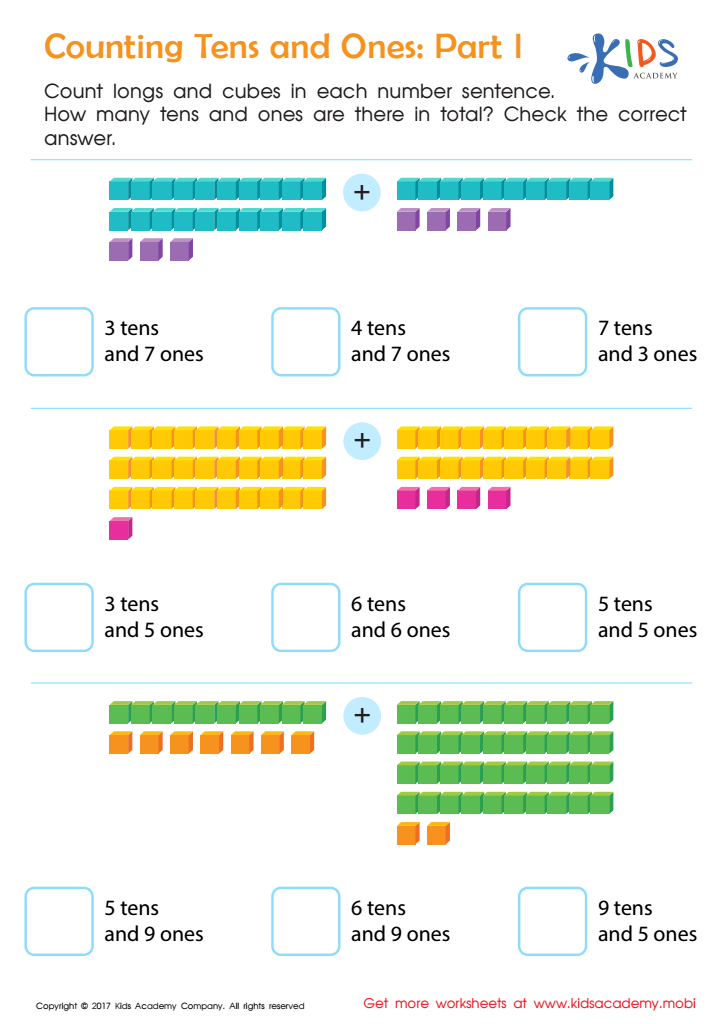
Counting Tens and Ones: Part 1 Worksheet
 Assign to My Students
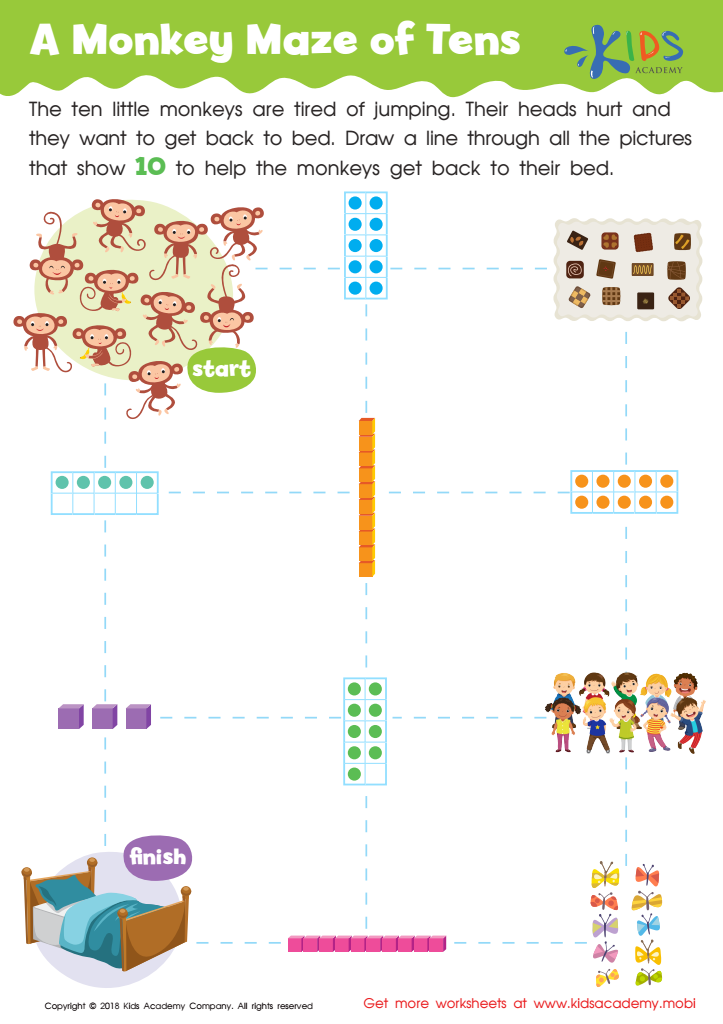
A Monkey Maze of Tens Worksheet
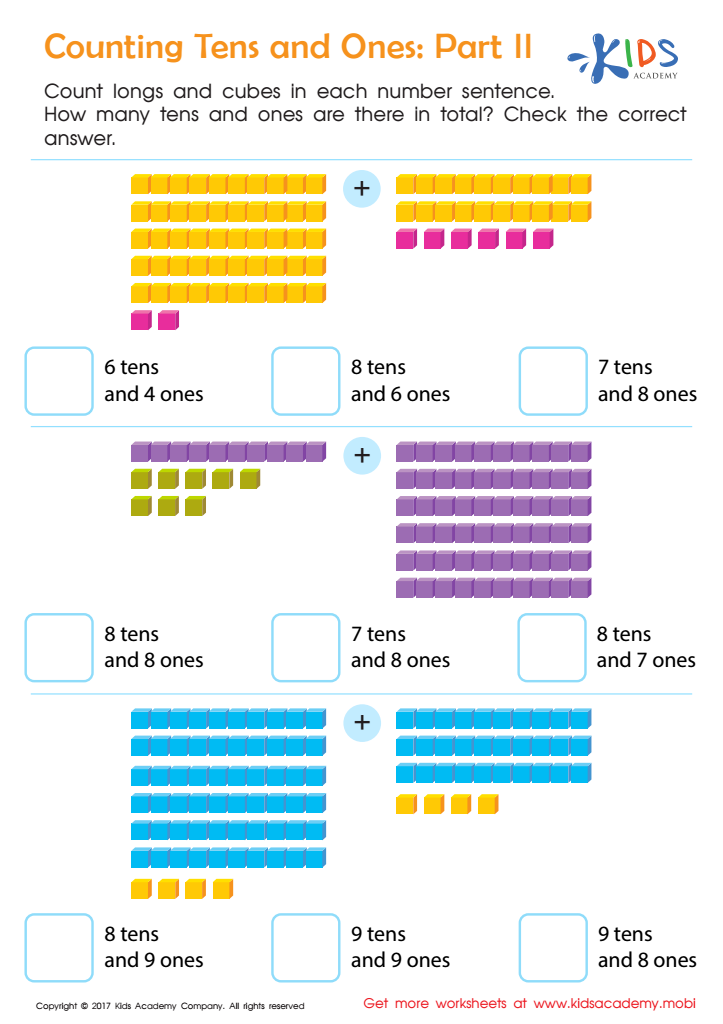
Counting Tens and Ones: Part 2 Worksheet
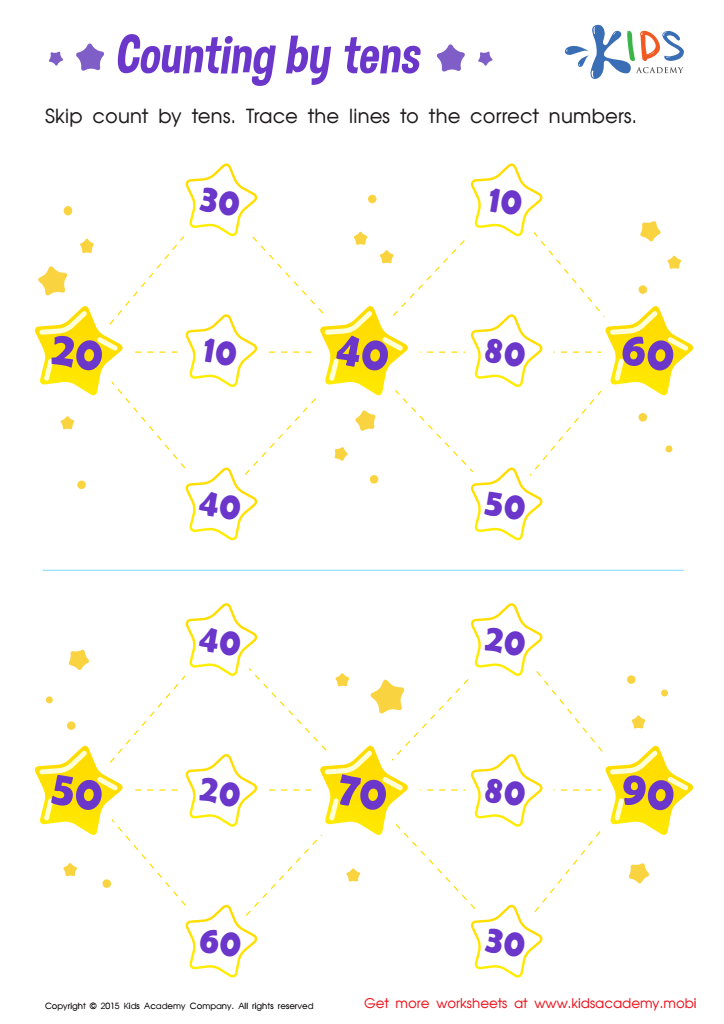
Learn Dozens: Counting by Tens Printable








Understanding tens is a crucial building block for young children aged 5-8, as it lays the foundation for their future math skills. Fostering a strong grasp of the concept of tens helps children develop number sense, leading to better problem-solving abilities and arithmetic fluency. For example, recognizing tens allows students to efficiently handle addition and subtraction problems by grouping numbers, making calculations easier and more intuitive.
Parents and teachers should care about teaching this concept because it not only aids in comprehension of larger numerical values but also promotes a positive attitude towards math. Early encounters with math concepts, when properly scaffolded, can boost a child's confidence and foster curiosity about numbers, encouraging a growth mindset.
In addition, early familiarity with the concept of tens helps children perform better in later grades, where more complex math operations build off these foundational skills. By emphasizing understanding tens, parents and teachers contribute to developing critical thinking and analytical skills in children, preparing them for success in academic environments and everyday problem solving. Ultimately, investing in this understanding cultivates a generation that approaches math with a sense of mastery, rather than anxiety, paving the way for lifelong learning.








