
Visual learning reinforcement Math Worksheets for Ages 5-8
12 filtered results
Difficulty Level
Grade
Age
-
From - To
Subject
Activity
Standards
Discover our engaging Visual Learning Reinforcement Math Worksheets designed specifically for children ages 5-8. These colorful and interactive worksheets support young learners in grasping essential math concepts through visual aids, making challenging topics more accessible and enjoyable. With various activities, including counting, addition, and subtractions, students can enhance their problem-solving skills while building confidence in their abilities. Perfect for classroom use or at-home learning, these worksheets cater to diverse learning styles, ensuring every child can thrive in their mathematical journey. Empower your child’s learning experience with our fun and effective visual resources—perfect for young mathematicians eager to explore the world of numbers!
Favorites
With answer key
Interactive
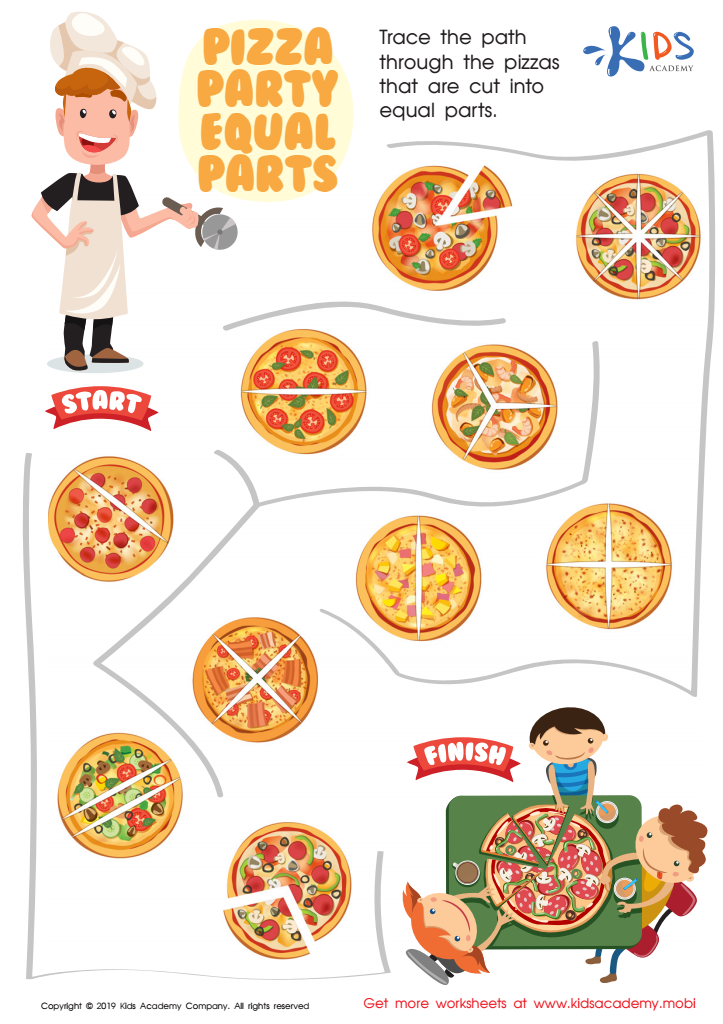
Pizza Party Equal Parts Worksheet
Love pizza? This printout is a great way to help kids learn about equal parts! Kids must identify pizzas cut into equal parts, then trace the path through the pizzas. It's an exciting maze - and a great way to help kids learn! Get the traceable pdf today and let the fun begin!
 Assign to My Students
Pizza Party Equal Parts Worksheet
Worksheet
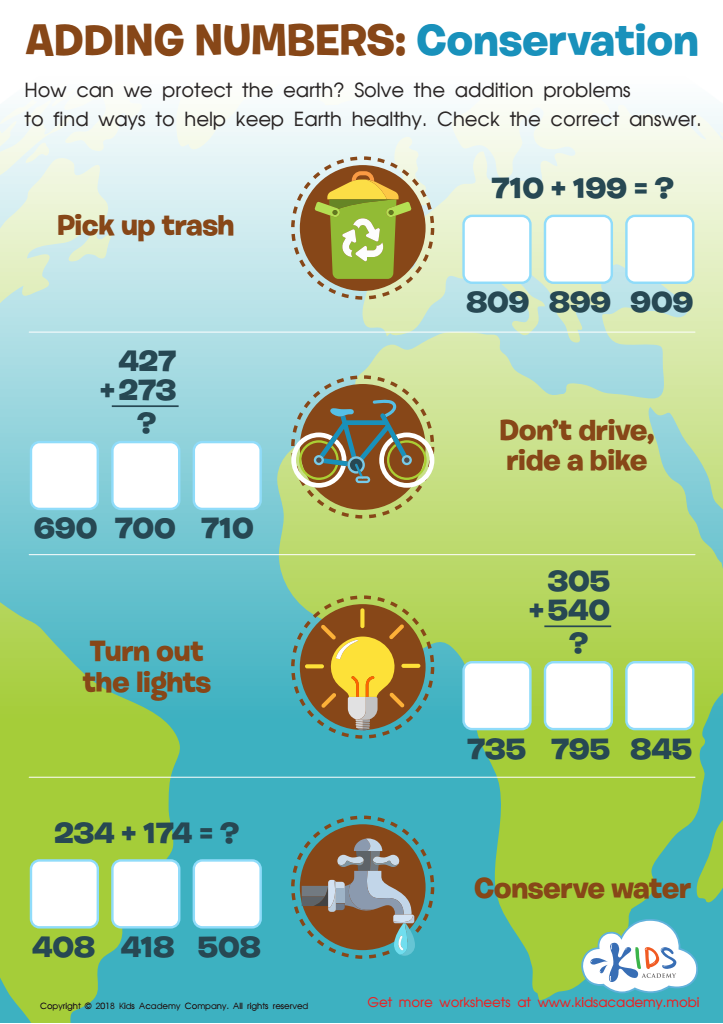
Adding Numbers: Conservation Worksheet
We all live on the Earth, which provides us with the vital necessities for survival. Unfortunately, we too often take advantage of this, causing pollution, water wastage and global warming. Help teach your kids how we can protect our planet - ask them to come up with good ideas and work together to find solutions. Challenge them to solve the subtraction problems to see what they can do to help keep the Earth healthy.
Adding Numbers: Conservation Worksheet
Worksheet
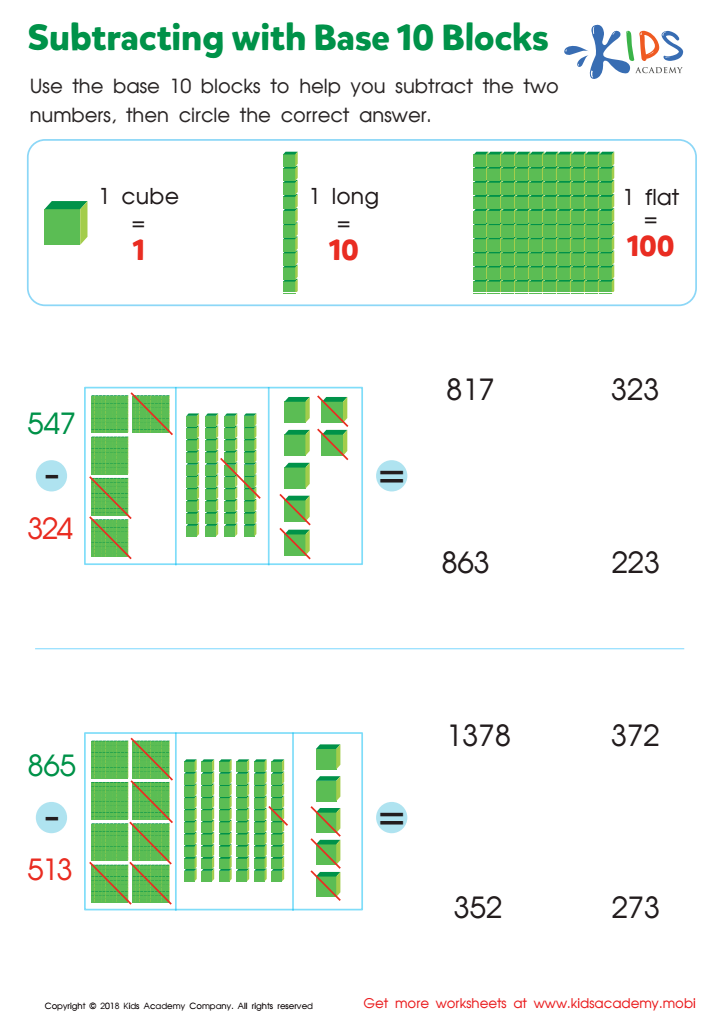
Subtracting with Base 10 Blocks Worksheet
Is your child having difficulty with 3-digit subtraction? They're not alone! Show your kid the idea behind subtracting with the help of Kids Academy's PDF worksheet. Colorful green base blocks are used to visualize the concept. Starting from the tens column, subtract each number and use the images for guidance. Allow your child to circle the correct answer for a comprehensive math lesson.
Subtracting with Base 10 Blocks Worksheet
Worksheet
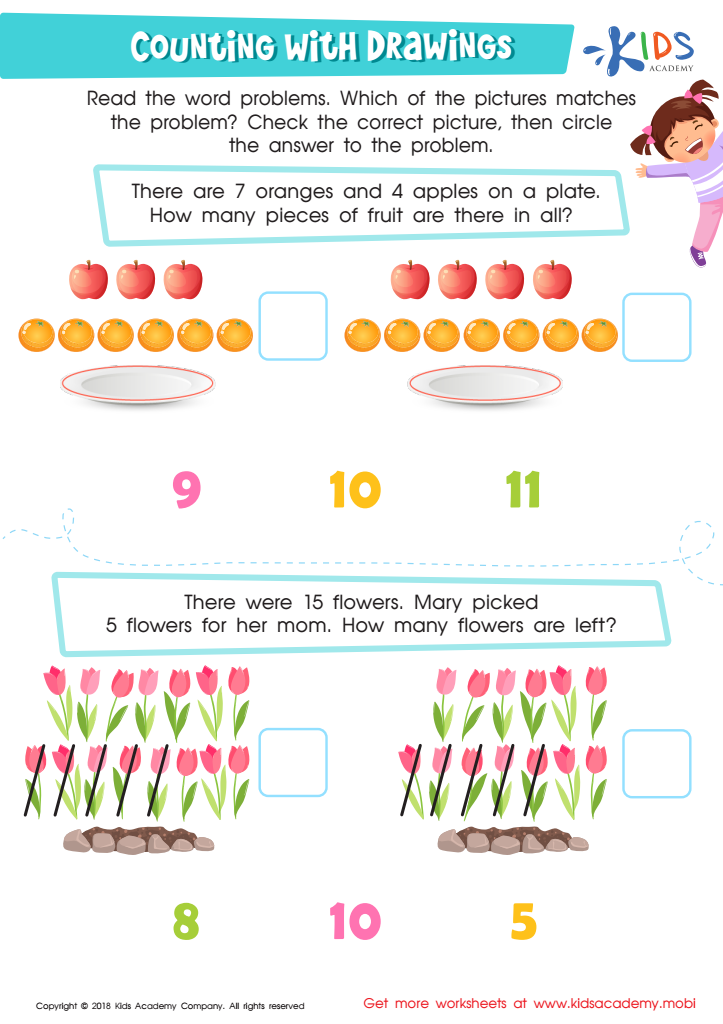
Counting with Drawings: Fruits & Chocolates Worksheet
Learning basic addition and subtraction has never been easier with this free worksheet! Young mathematicians can sort & count to get the right sum or difference for each problem. Plus, they'll practice fine motor skills by circling the correct answer. An ideal way to help kids build important visual recognition and discernment skills.
Counting with Drawings: Fruits & Chocolates Worksheet
Worksheet
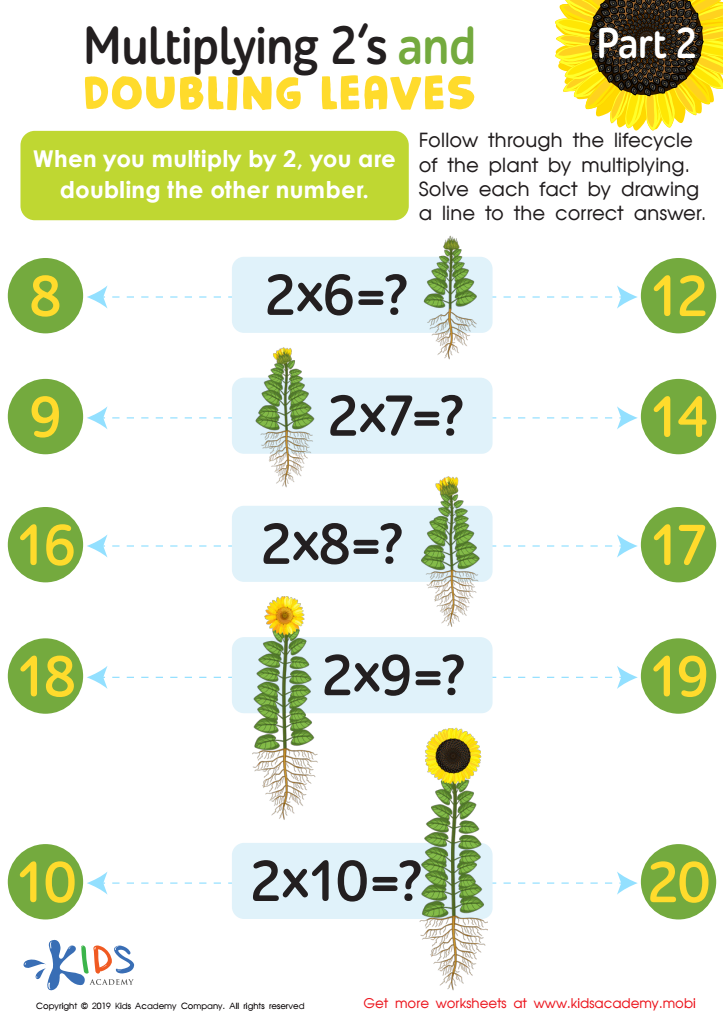
Multiplying 2’s and Doubling Leaves Part 2 Worksheet
Help your students master multiplication with these simple tips. Double the number for multiplying by 2 and use this interactive tracing sheet for solving each fact. Plus, it's colorful making it fun for your students to learn.
Multiplying 2’s and Doubling Leaves Part 2 Worksheet
Worksheet
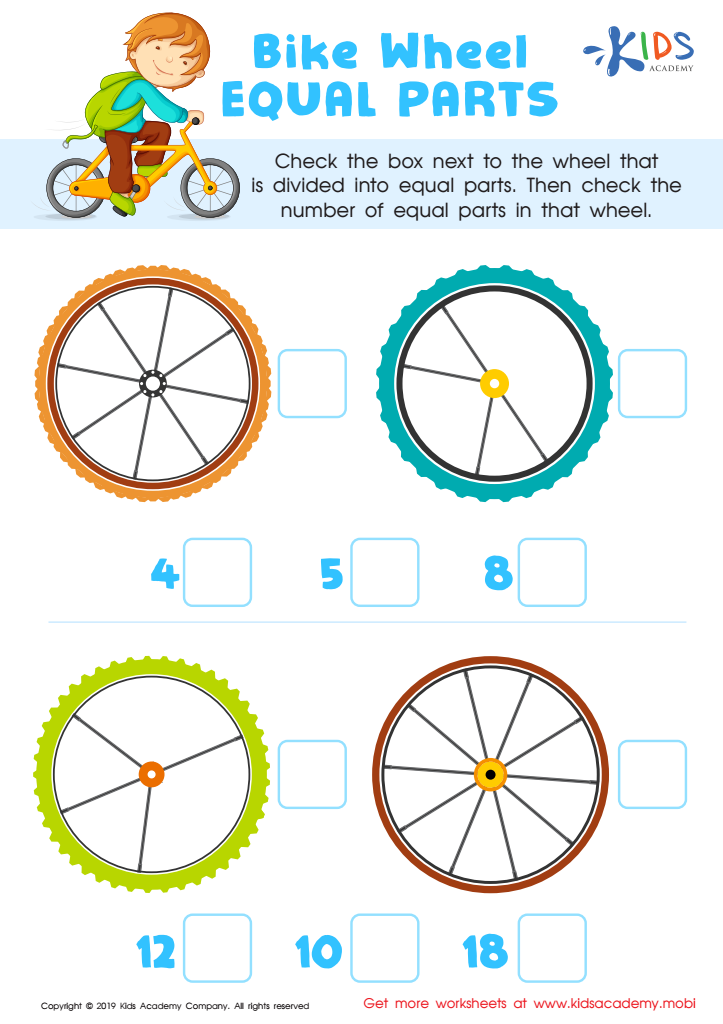
Bike Wheel Equal Parts Worksheet
Help your kids have fun while they learn! Ask them to identify the object in the picture with four wheels. Guide them to count the spokes, then check the box on the wheel with equal parts. Lastly, check how many equal parts the wheel is divided into.
Bike Wheel Equal Parts Worksheet
Worksheet
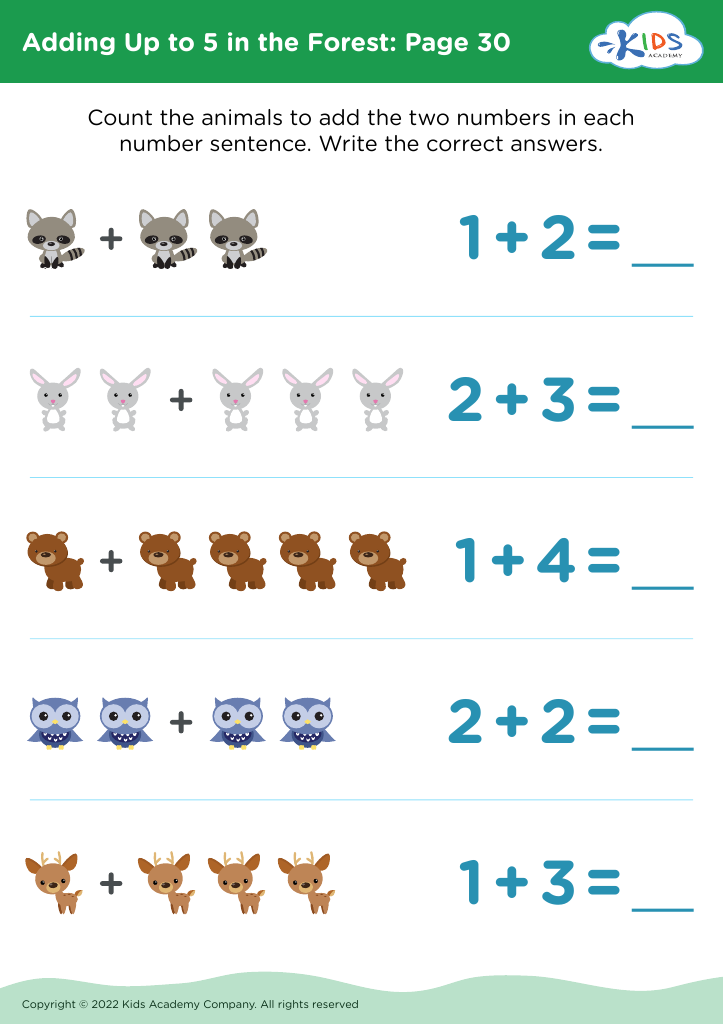
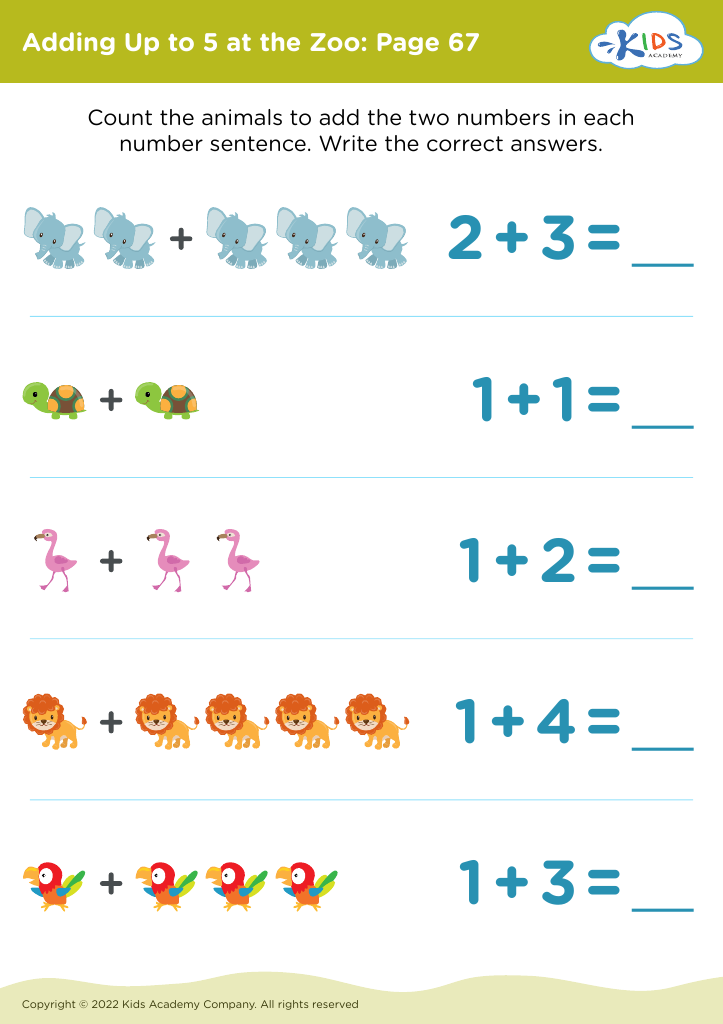
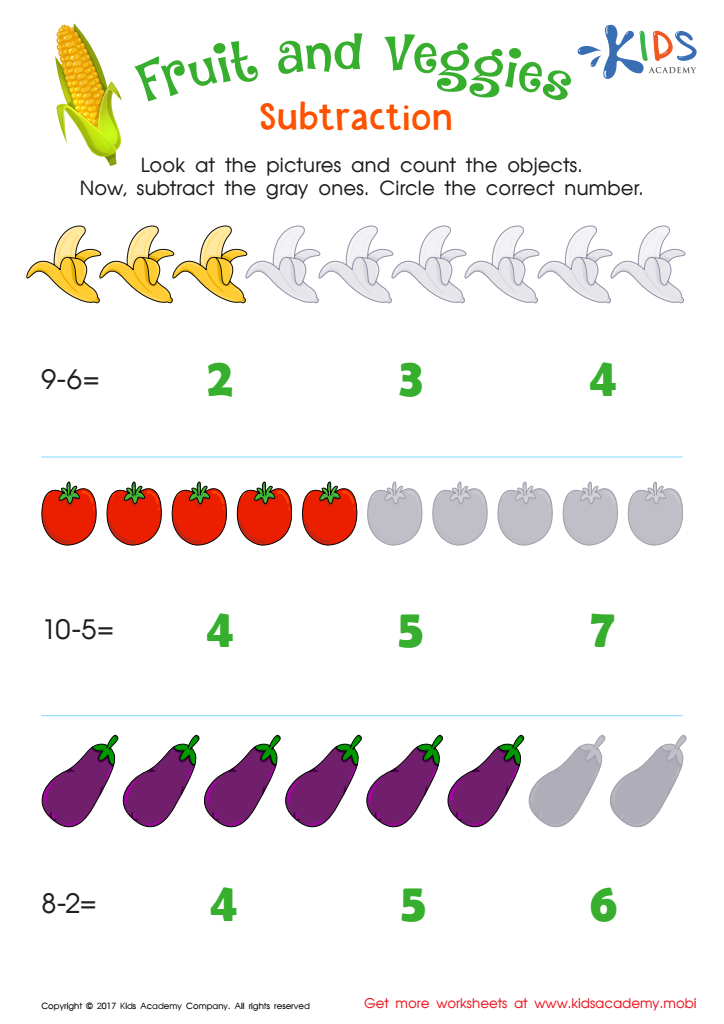
Fruit and Veggies Subtraction Worksheet
Kids learn subtraction with this fun worksheet: fruits and veggies! Kids use pictures to count or take away to get the right answer, aiding in understanding subtraction better.
Fruit and Veggies Subtraction Worksheet
Worksheet
Join Kids Academy for Free
Who is primarily going to use this learning content?


%20(1).jpg)




Visual learning reinforcement in math for children aged 5-8 is crucial for several reasons. At this developmental stage, children are naturally curious and learn best through engaging, hands-on experiences. Visual aids, such as manipulatives, diagrams, and pictorial representations, play a pivotal role in helping young learners grasp abstract mathematical concepts.
For example, using blocks or counters can transform counting exercises into interactive sessions, making learning enjoyable and tangible. Visuals not only simplify complex ideas, like addition and subtraction, but also strengthen memory retention. When children can see numerical relationships, patterns, and problem-solving steps laid out visually, they connect deeply with the material.
Moreover, these techniques cater to diverse learning styles. Some kids are visual learners, while others may benefit more from auditory or kinesthetic methods. By incorporating visual reinforcement, teachers and parents provide differentiated instruction that meets individual needs, ensuring every child can succeed.
Ultimately, fostering a positive attitude toward math at this early age is essential. When children feel confident through visual learning, it boosts their overall self-esteem and builds a strong foundation for future math concepts. Parents and educators should prioritize visual learning to nurture young mathematicians and inspire a lifelong love for the subject.








