Comparing sizes Measurement Worksheets for Ages 5-8
9 filtered results
-
From - To
Introduce your children to the fascinating world of measurements with our "Comparing Sizes Measurement Worksheets for Ages 5-8." These engaging and educational worksheets are designed to develop essential skills in comparing, contrasting, and visualizing different sizes. Perfect for young learners, each workbook fosters critical thinking and visual observation through fun activities like identifying larger or smaller objects, matching sizes, and ordering by length and height. Crafted to build confidence and mastery, our worksheets ensure a comprehensive understanding of measurement concepts. Help your child excel in math and make learning enjoyable with our high-quality, age-appropriate resources today!
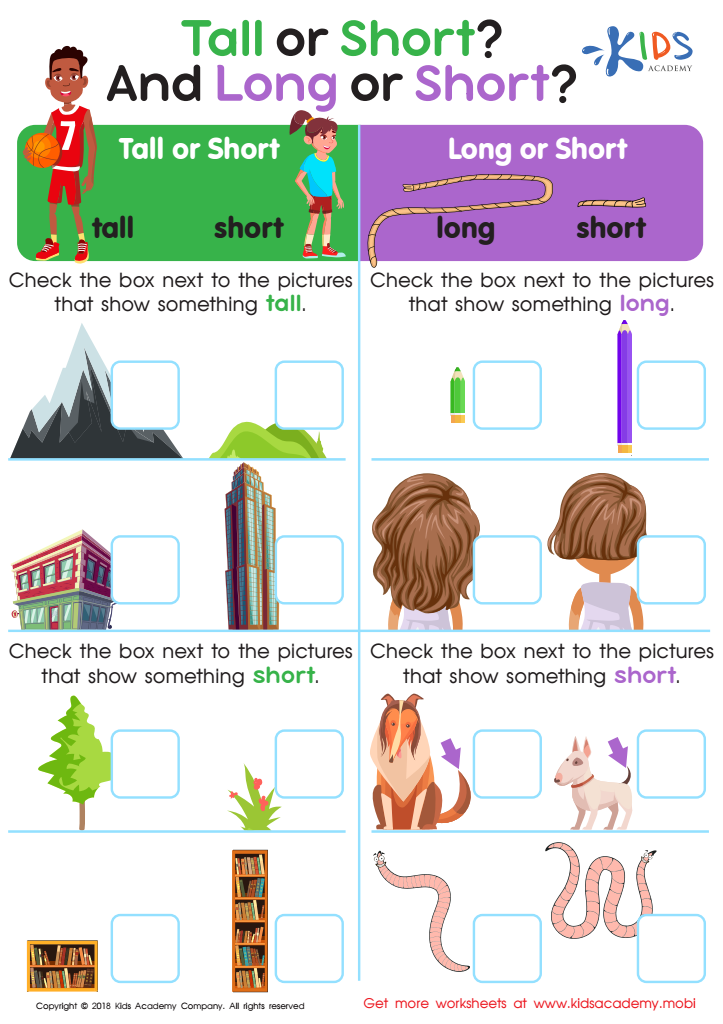
Tall or Short and Long or Short? Worksheet
 Assign to My Students
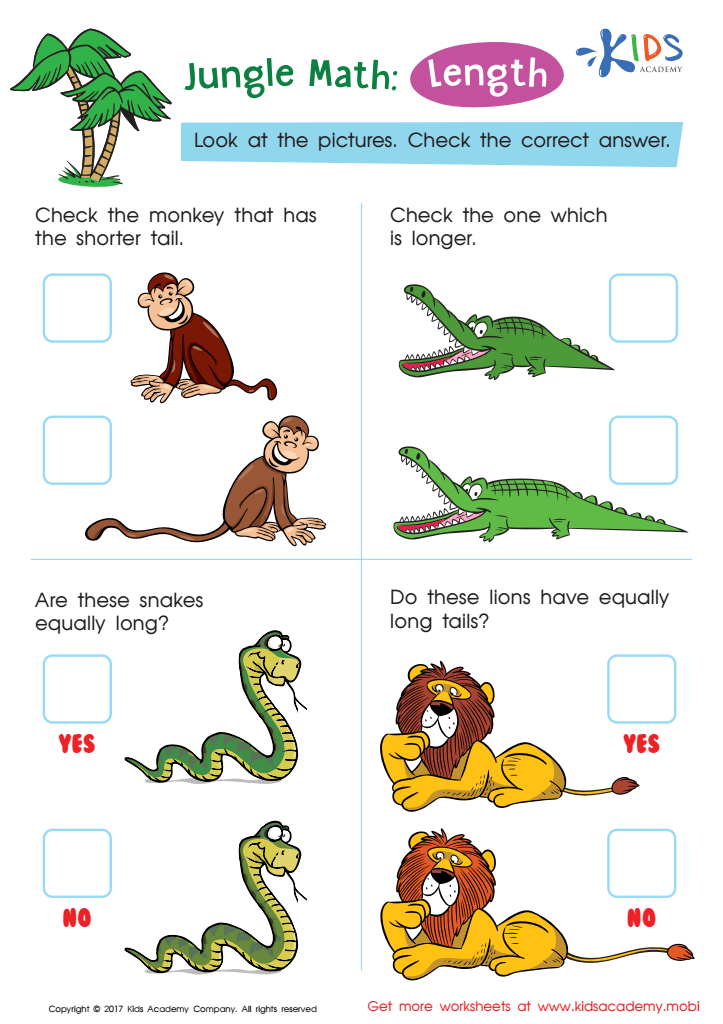
Which One Is Longer - Length Worksheet
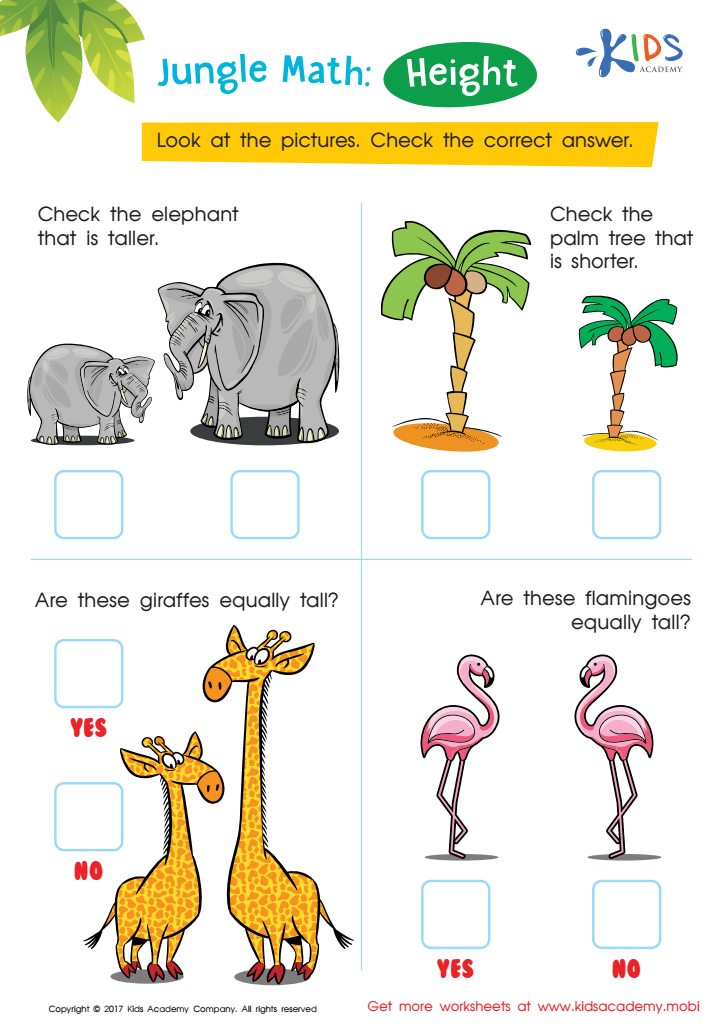
Which Is Taller Worksheet
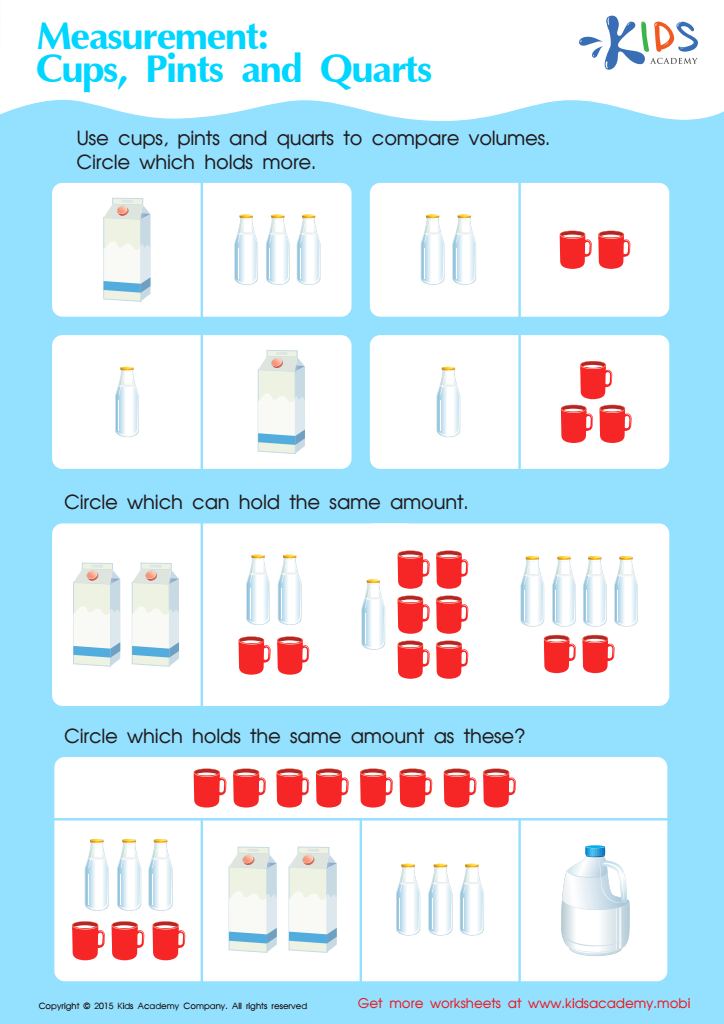
Measurement: Compare Volumes Worksheet
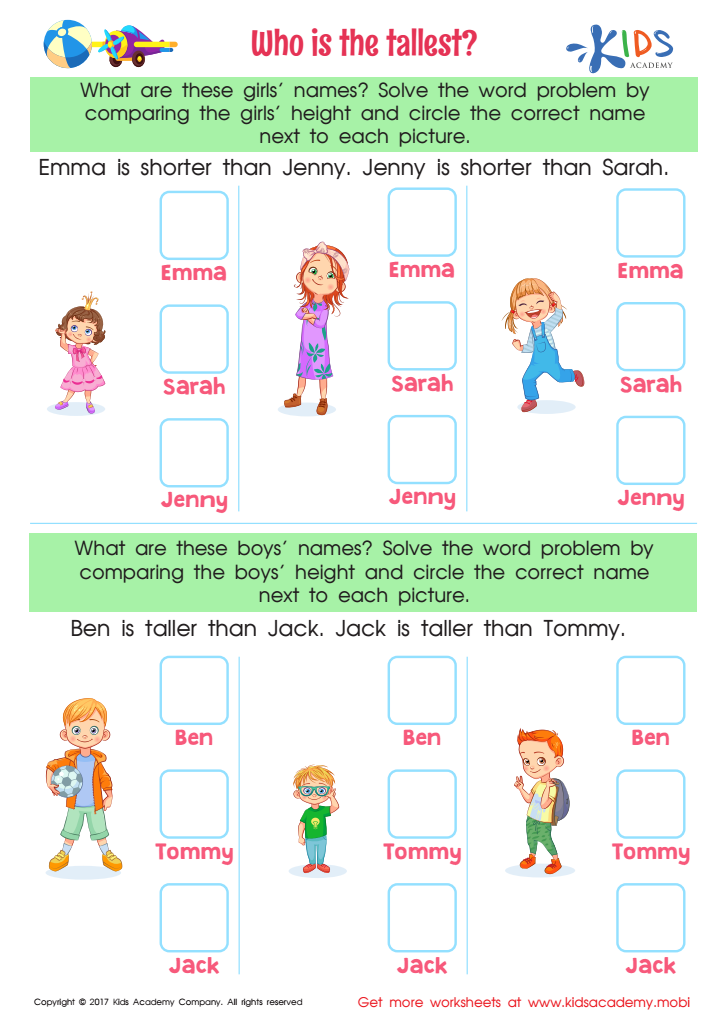
Who Tallest Printable
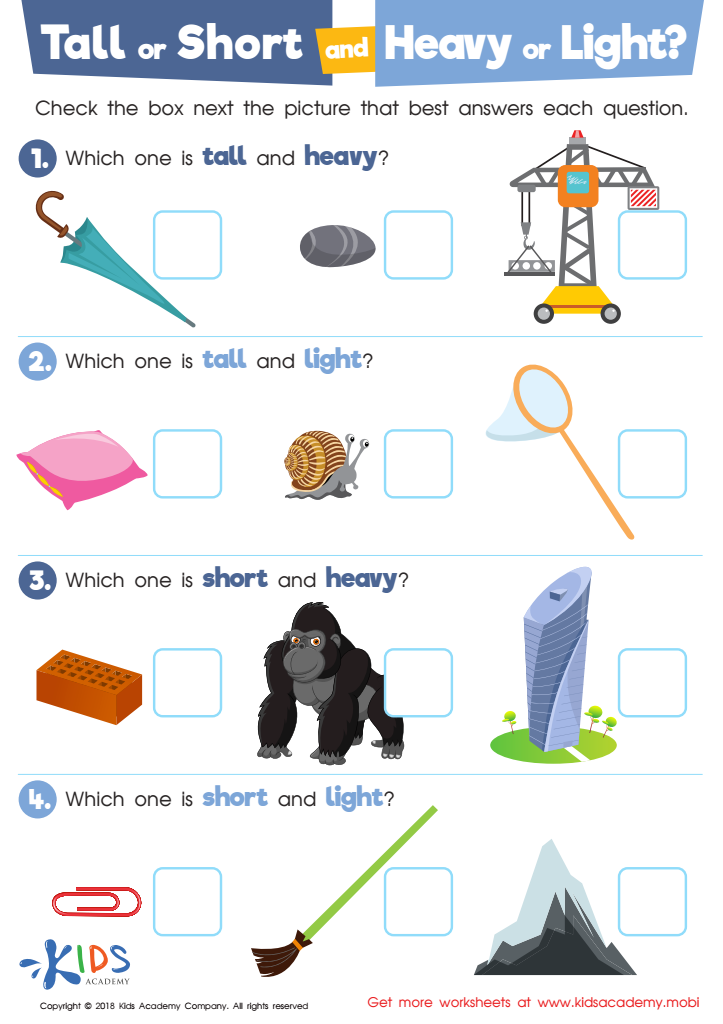
Tall or Short and Heavy or Light? Worksheet
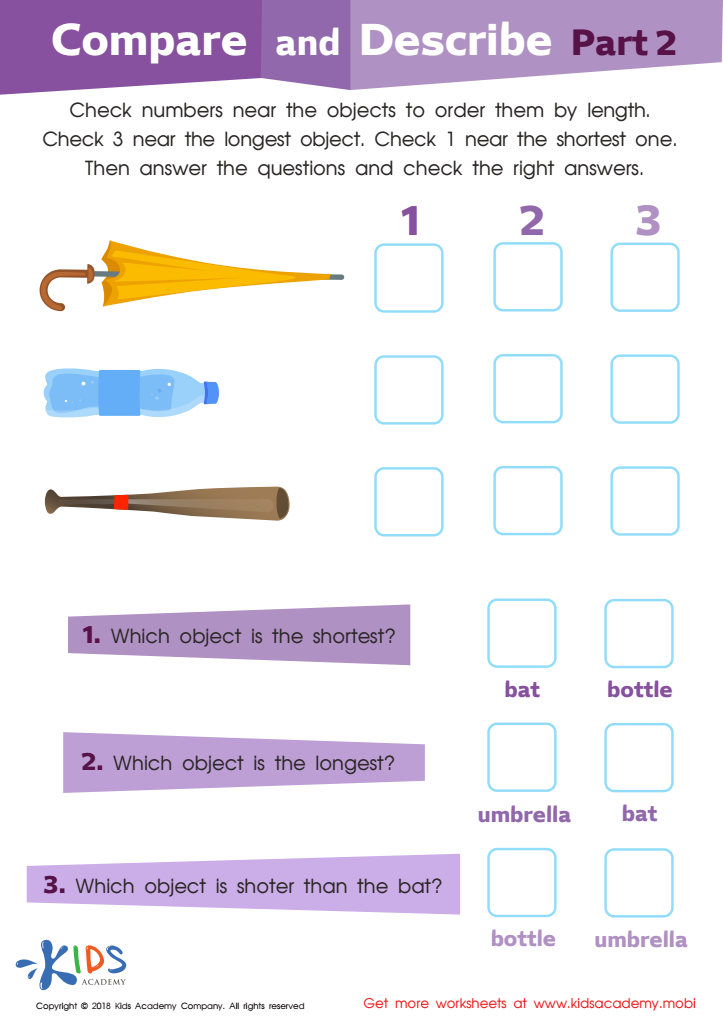
Compare and Describe: Part 2 Worksheet
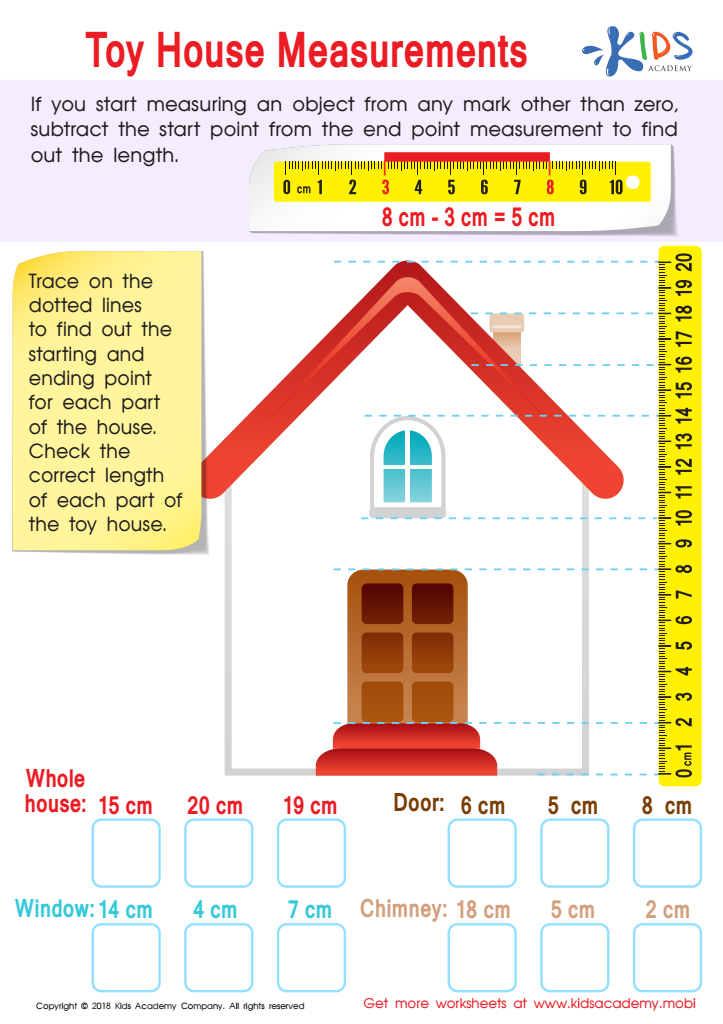
Toy House Measurements Worksheet
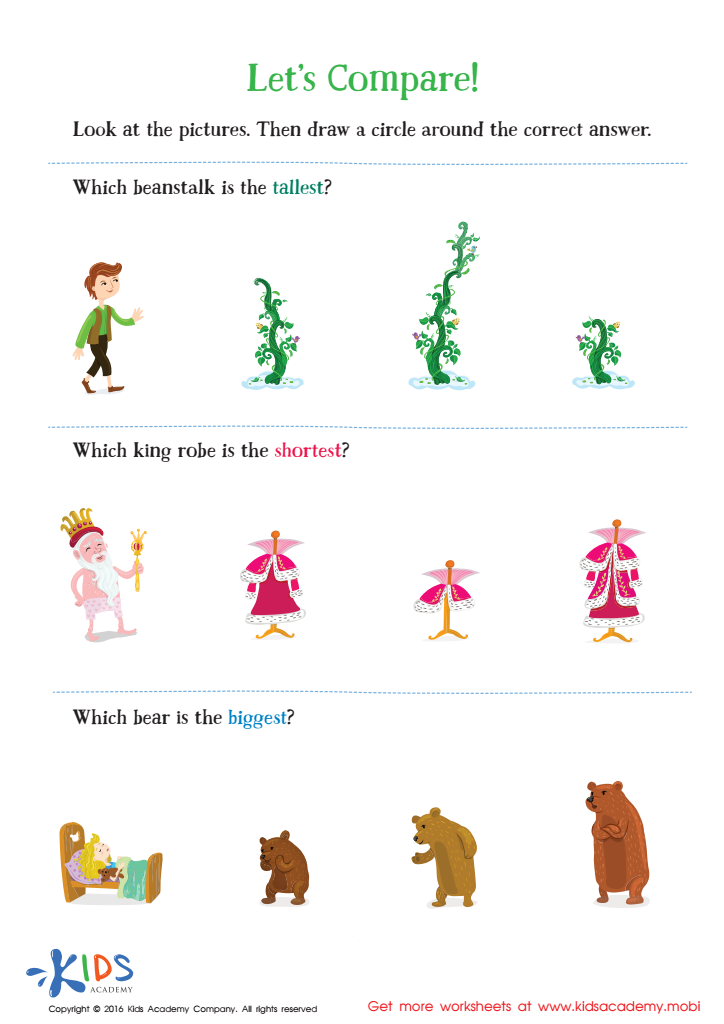
Fairy Tale Worksheet: Let's Compare








Comparing sizes and understanding measurement are crucial for children aged 5-8, serving as fundamental building blocks for mathematical comprehension and real-world problem-solving. At this developmental stage, kids are naturally curious and eager to explore their environments, making it the perfect time to introduce these concepts.
For parents and teachers, focusing on these skills offers significant benefits. Firstly, learning to compare sizes—such as big vs. small or tall vs. short—helps children develop critical thinking and observational skills. These basics form the foundation for more complex math topics they will encounter later, such as geometry, algebra, and data analysis.
Measurements also foster a practical understanding of the world. For example, grasping the concept of length, weight, and volume equips children with the ability to follow recipes, compare distances, or manage time effectively. Additionally, children who master these skills early often exhibit greater confidence and competence in science, technology, engineering, and mathematics (STEM) subjects.
Finally, engaging in activities like measuring objects or comparing dimensions supports fine motor skills and hand-eye coordination, important for overall cognitive and physical development. Thus, investing time and resources into teaching these foundational concepts pays substantial dividends for a child’s future academic and personal growth.








