Vocabulary enhancement Measurement Worksheets for Ages 5-8
4 filtered results
-
From - To
Enhance your child's vocabulary with our engaging Vocabulary Enhancement Measurement Worksheets designed for ages 5-8. These worksheets offer a fun and interactive way for young learners to expand their word knowledge while exploring measurement concepts. Each worksheet features colorful illustrations and relatable scenarios to keep kids motivated and intrigued. Ideal for classroom or home use, these resources not only build language skills but also introduce foundational measurement terminology. Seamlessly blend education with enjoyment, helping your child to succeed academically through enhanced vocabulary. Visit our website to download these valuable worksheets and support your child’s learning journey today!
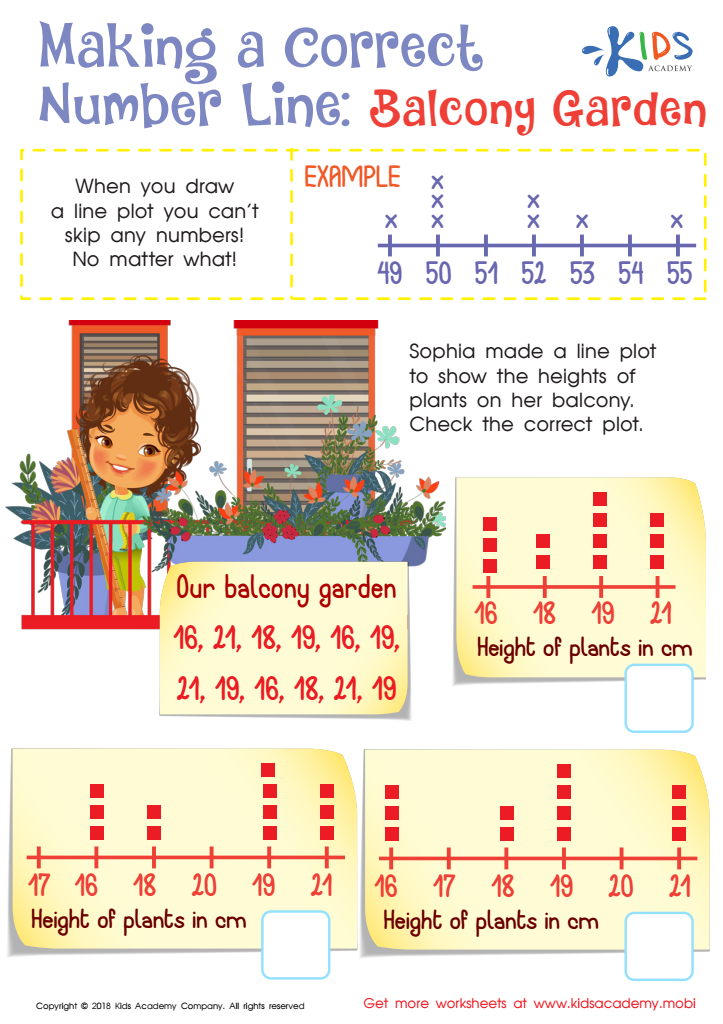
Making a Correct Number Line: Balcony Garden Worksheet
 Assign to My Students
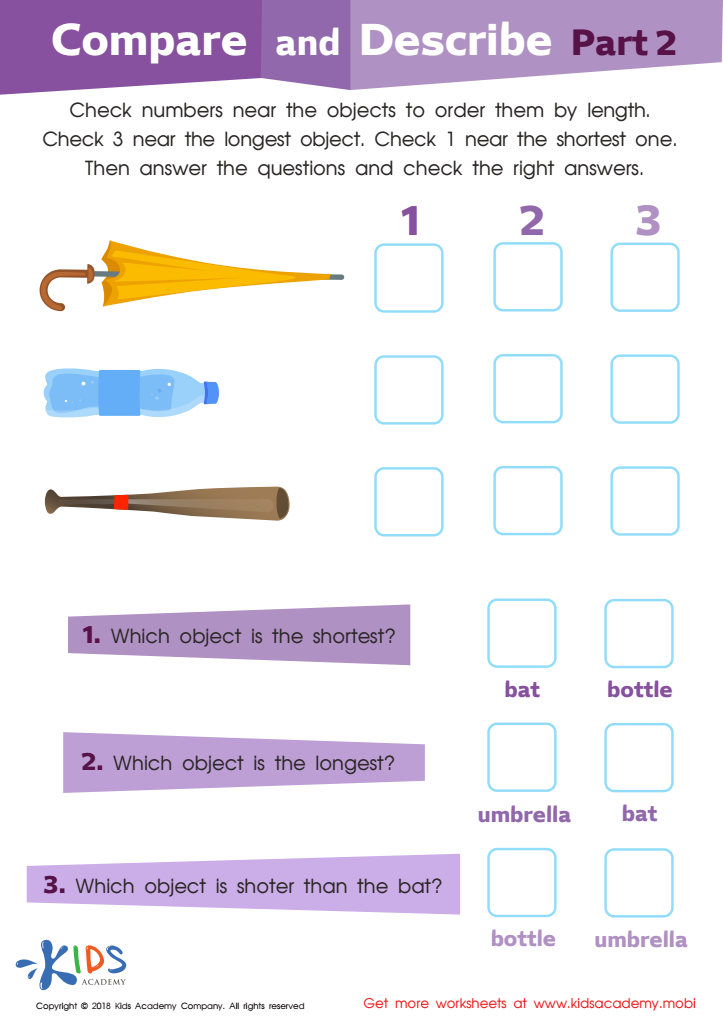
Compare and Describe: Part 2 Worksheet
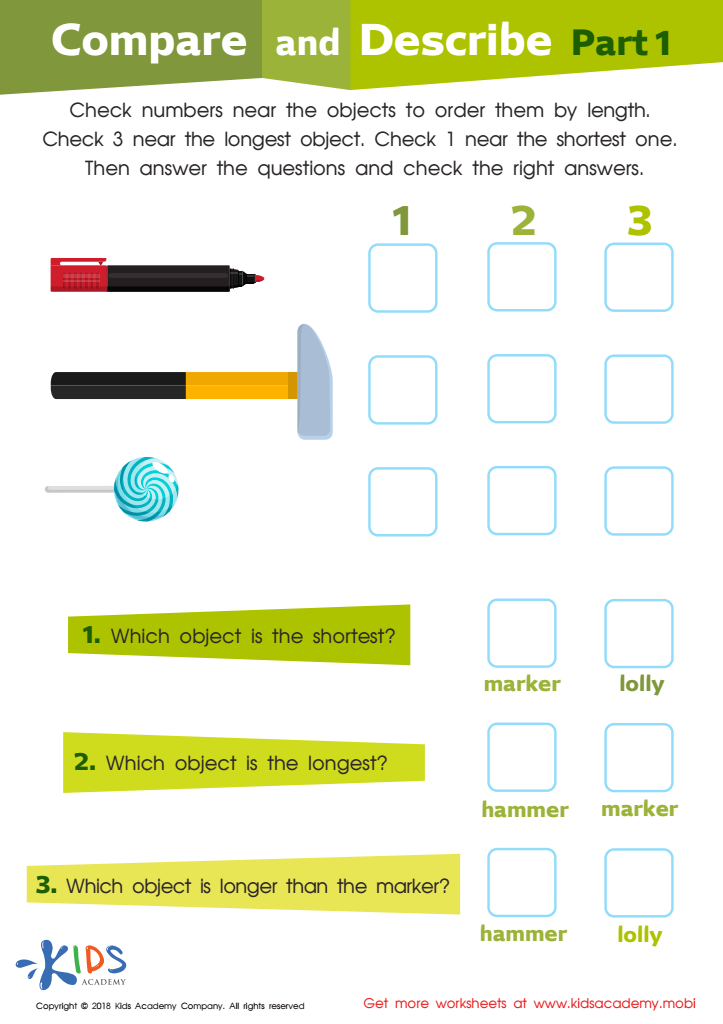
Compare and Describe: Part 1 Worksheet
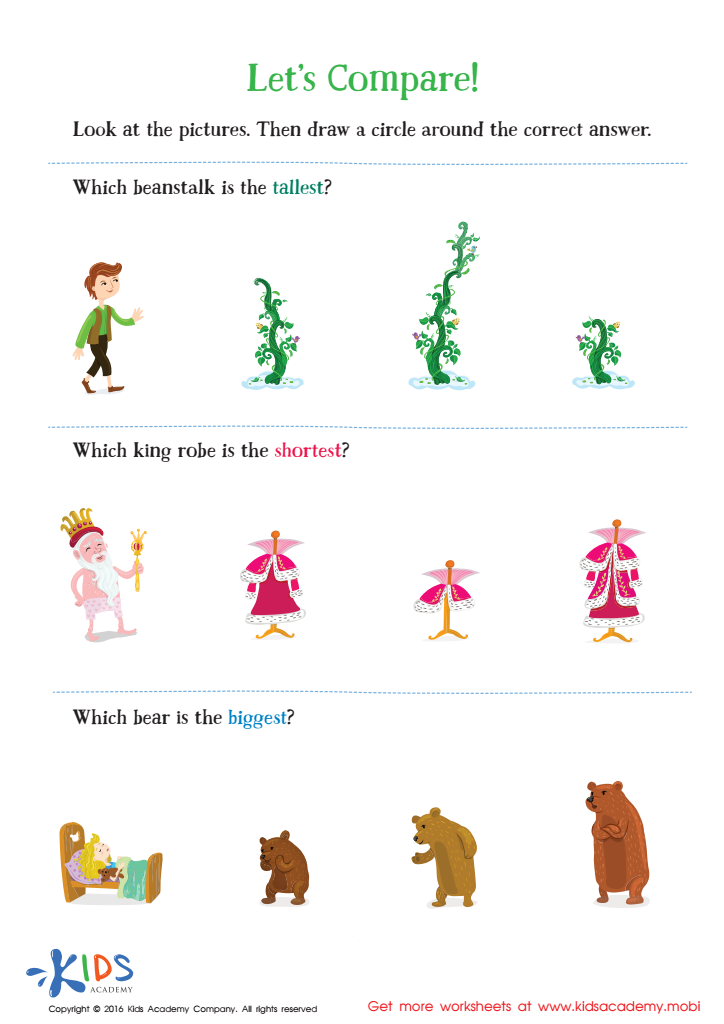
Fairy Tale Worksheet: Let's Compare








Vocabulary enhancement measurement for ages 5-8 is crucial for various reasons. Firstly, early vocabulary development lays the foundation for reading comprehension, critical thinking, and overall academic success. At this stage, children are rapidly acquiring language skills; thus, monitoring their vocabulary growth helps in identifying any potential learning gaps early on.
Parents and teachers should prioritize vocabulary assessments to understand each child's unique learning needs. This measurement allows for tailored interventions that can support children struggling with language, promoting a more inclusive learning environment. Furthermore, vocabulary assessments can inform educators about the effectiveness of their teaching strategies, guiding them to incorporate richer language experiences into lessons.
Additionally, robust vocabulary skills are linked to improved expression and communication, crucial for social interactions. As children learn to articulate their thoughts, they gain confidence and are better prepared for collaborative settings, equipped with the language necessary to share ideas effectively.
Investing in vocabulary measurement leads to targeted support, ensuring that children possess the linguistic tools they need not only for academic success but also for lifelong learning and personal development. Ultimately, fostering a rich vocabulary during these formative years paves the way for a more engaged and capable generation.








