Cognitive Development Tracing Shapes Worksheets for Ages 5-8
4 filtered results
-
From - To
Enhance your child's cognitive development with our engaging Tracing Shapes Worksheets designed for ages 5-8. These interactive resources encourage young learners to trace a variety of shapes, boosting their fine motor skills and hand-eye coordination. Children will explore geometric forms while fostering foundational math skills, critical thinking, and pattern recognition. Our worksheets feature vibrant illustrations and fun activities that captivate young minds, making learning enjoyable and effective. Whether at home or in the classroom, these worksheets provide a valuable complement to early education, preparing children for future mathematical concepts. Discover the joy of learning through play with our brand-new tracing shapes worksheets today!
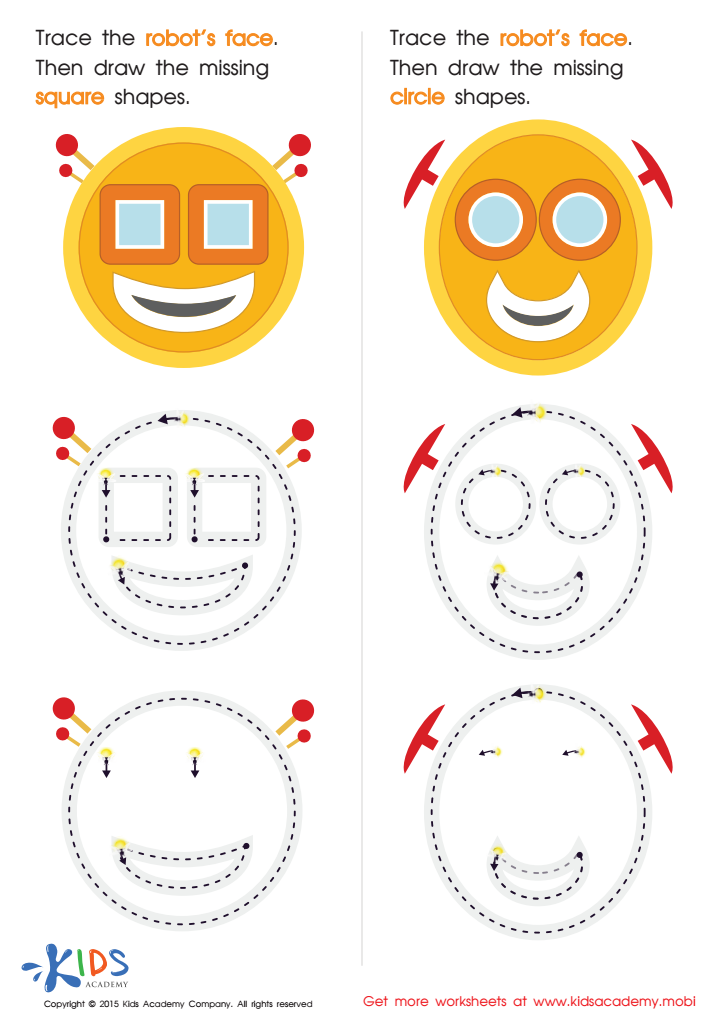
Practicing to Draw Circles And Squares Printable
 Assign to My Students
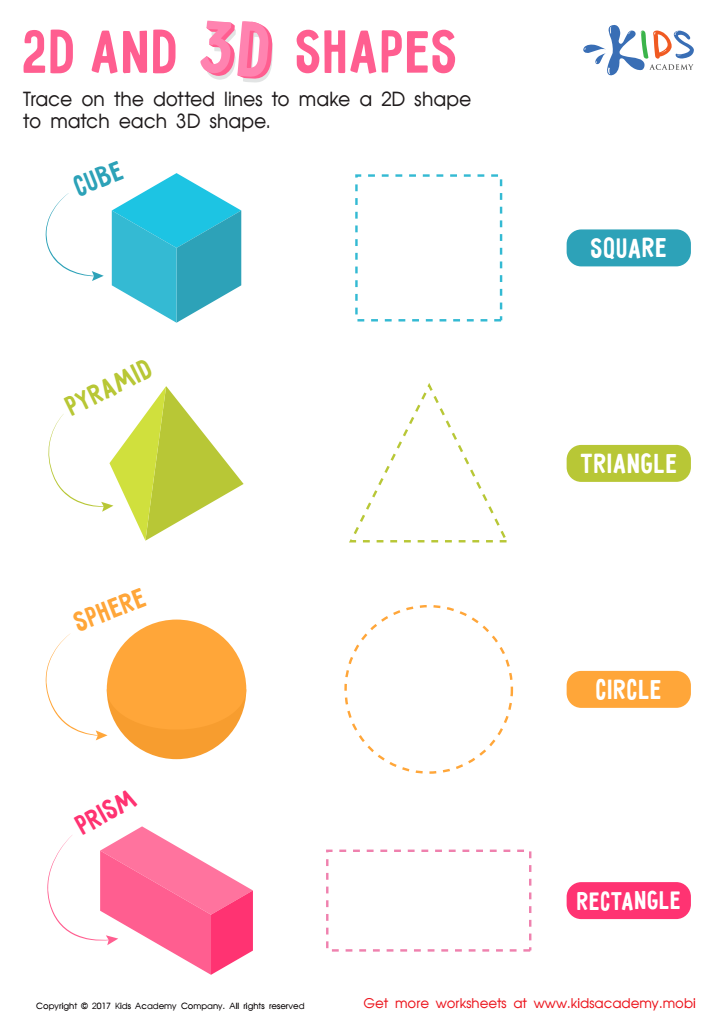
2D and 3D Shapes Worksheet
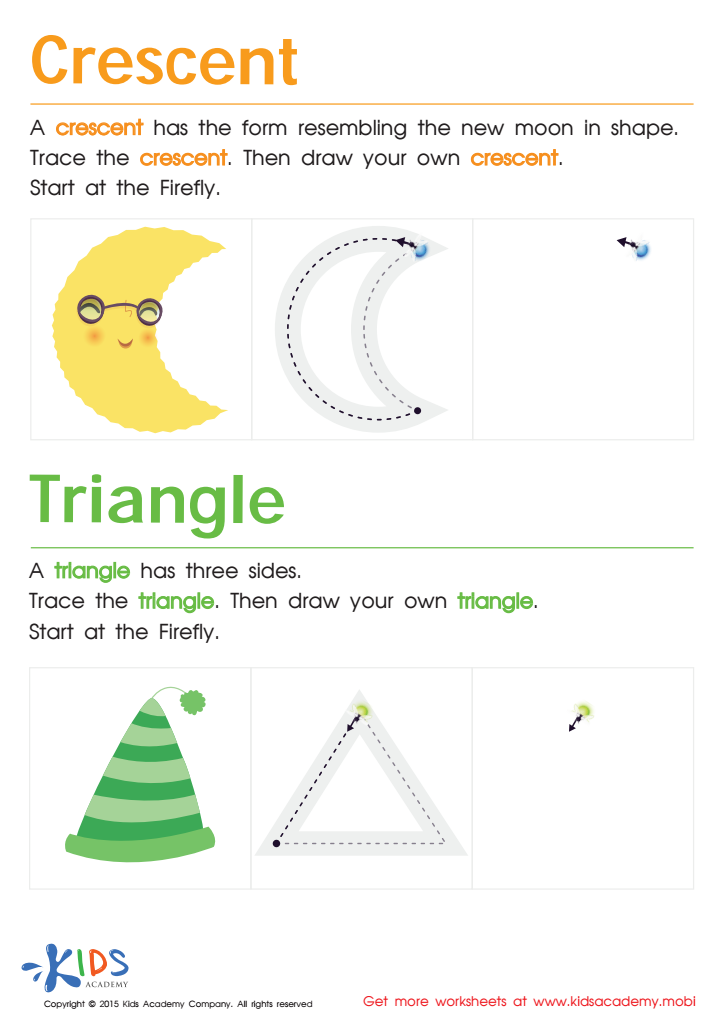
Learning to Draw Crescents And Triangles Worksheet
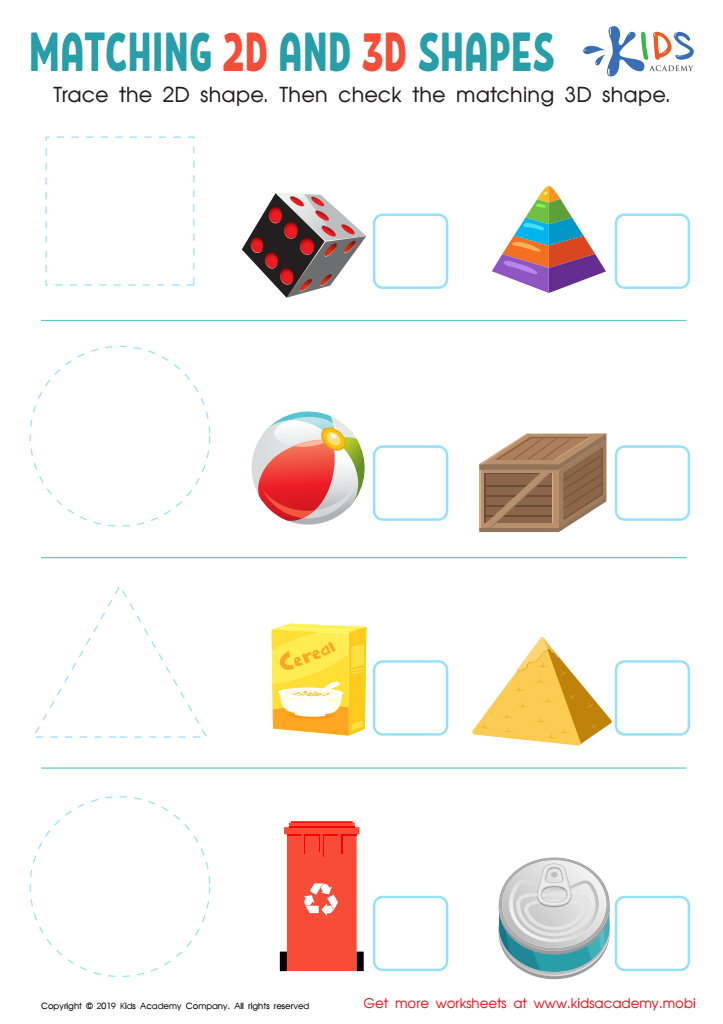
Matching 2D and 3D Shapes Worksheet








Cognitive development in early childhood, particularly through activities like tracing shapes, is vital for several reasons. For children aged 5-8, engaging in tracing shapes enhances fine motor skills, hand-eye coordination, and spatial awareness. These foundational skills are crucial as they serve as a precursor for writing, drawing, and later academic tasks.
Tracing shapes also promotes cognitive processing. Children learn to recognize and differentiate various shapes, bolstering their logic and reasoning skills. This activity encourages critical thinking as they assess how shapes can fit together or interact with one another. Additionally, tracing offers opportunities for creativity, enabling children to explore design and pattern-making.
Moreover, tracing shape exercises can nurture a sense of accomplishment and confidence. As children successfully complete tracing tasks, they gain a positive attitude towards learning and exploration.
In a broader educational context, emphasizing cognitive development through shape tracing aligns with early childhood education standards and enhances cooperative learning. Parents and teachers guide ongoing development by incorporating such activities into home and classroom settings. Ultimately, encouraging cognitive development through tracing shapes not only supports academic success but also enhances essential life skills, equipping children for future challenges.