Shape identification Tracing Shapes Worksheets for Ages 5-8
3 filtered results
-
From - To
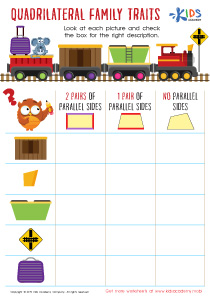
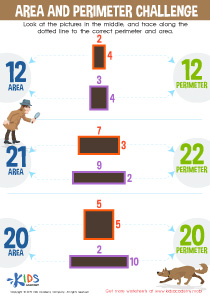
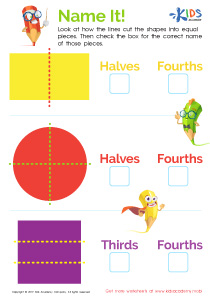
Boost your child's shape recognition and motor skills with our Shape Identification Tracing Shapes Worksheets for Ages 5-8. Designed to make learning fun and effective, these engaging worksheets feature a variety of shapes to trace, identify, and color. Perfect for early learners, these activities enhance shape identification, hand-eye coordination, and fine motor skills, setting a strong foundation in math. Our expertly crafted sheets cater specifically to young minds eager to explore geometric concepts through interactive and hands-on practice. Ideal for both classroom and home use, these printable worksheets are your child's gateway to mastering shapes with confidence and joy.
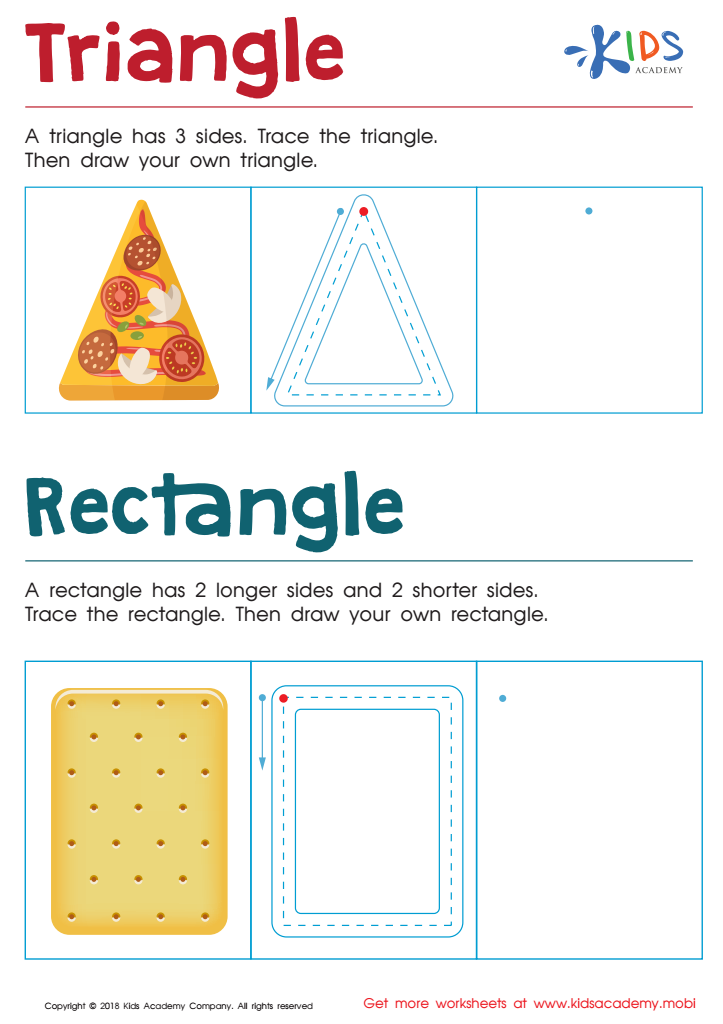
Triangle Rectangle Worksheet
 Assign to My Students
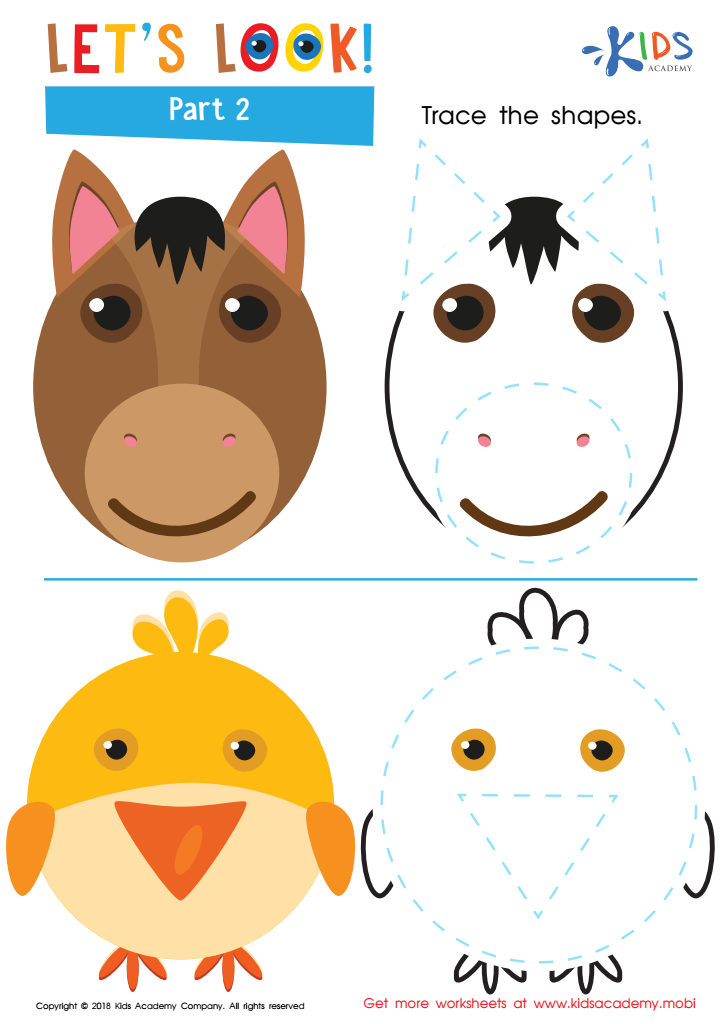
Let's Look! Part 2 Worksheet
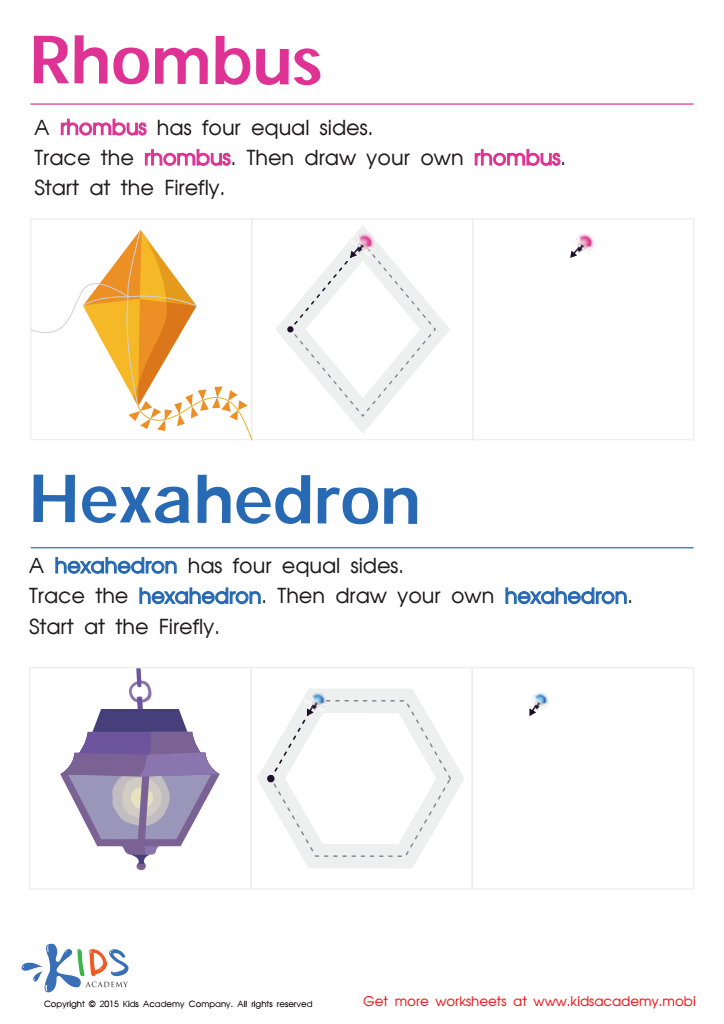
Draw a Rhombus And a Hexahedron Printable








Shape identification and tracing shapes for children aged 5-8 are fundamental developmental activities that hold substantial educational value. First, engaging children in these activities helps build their fine motor skills. Tracing shapes requires precise hand movements and control, which strengthens the muscles in a child's hands and wrists, preparing them for writing tasks.
Additionally, shape identification lays the groundwork for advanced math concepts. Recognizing and naming shapes like circles, triangles, and squares help children understand the basic geometry that is essential for more complex mathematical learning. It also introduces them to spatial awareness, aiding in their ability to comprehend how shapes fit together within a given space, an essential skill for problem-solving.
These activities further promote cognitive development by enhancing attention to detail and visual discrimination, skills critical for reading and writing. For example, noticing the differences between a rectangle and a square or how certain letters may look similar but contain different components.
Moreover, such activities often incorporate fun and creativity, motivating children to participate enthusiastically. Through the playful exploration of shapes, children improve their observational skills and develop a love for learning.
Thus, parents and teachers should care about shape identification and tracing shapes not just for academic reasons but also for nurturing overall childhood development and fostering a lifelong passion for exploration and discovery.