Cognitive Development Word Problems Worksheets for Ages 5-8
4 filtered results
-
From - To
Enhance your child's cognitive skills with our engaging Cognitive Development Word Problems Worksheets designed specifically for ages 5-8! These worksheets aim to foster critical thinking, problem-solving, and reasoning abilities through fun and interactive word problems. Each worksheet encourages children to apply their math knowledge to real-life situations, making learning more relatable and enjoyable. Perfect for at-home learning or classroom activities, our worksheets are suited for varying skill levels, ensuring every child can progress confidently. Download our Cognitive Development Word Problems Worksheets today, and watch your child's math skills and cognitive abilities soar as they tackle challenges in an exciting way!
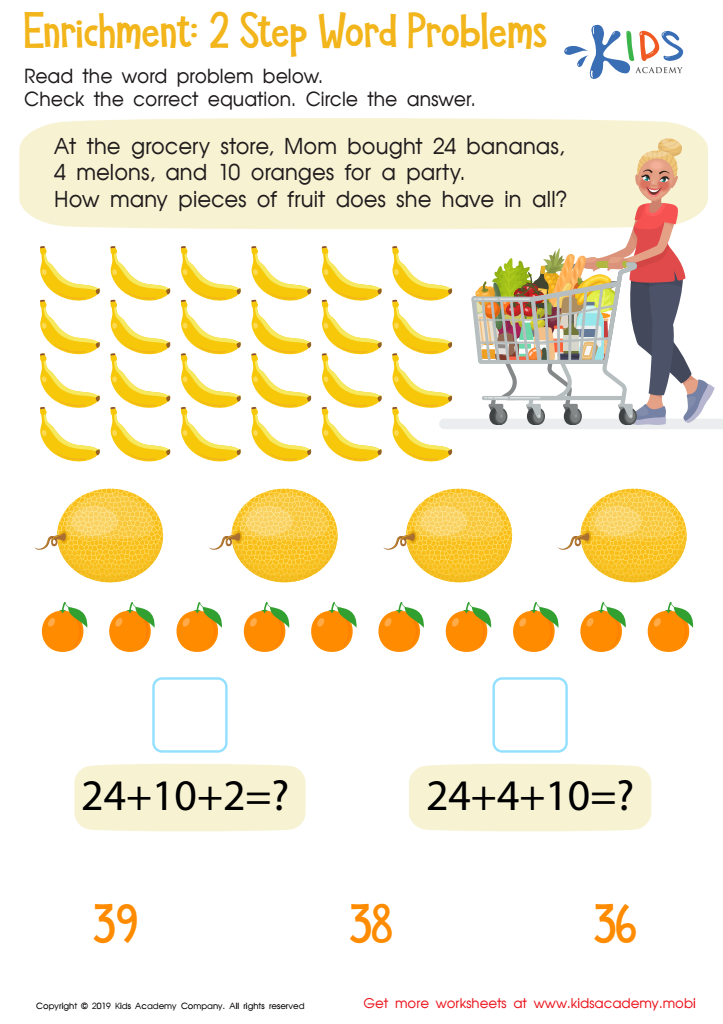
Enrichment -2 Step Word Problems Worksheet
 Assign to My Students
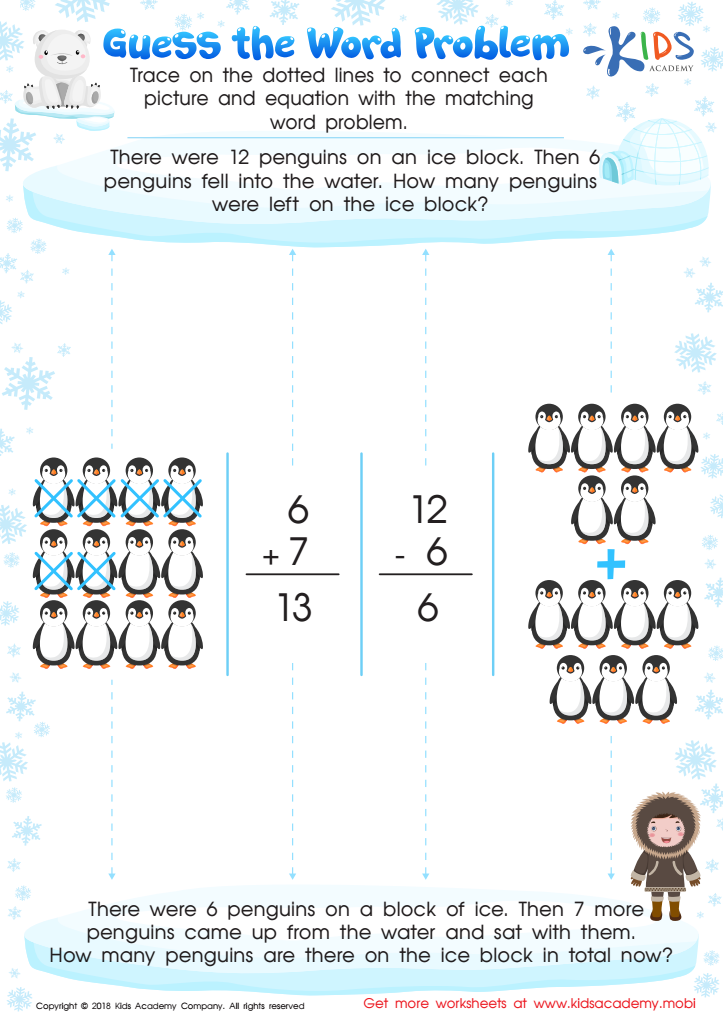
Guess the Word Problem Worksheet
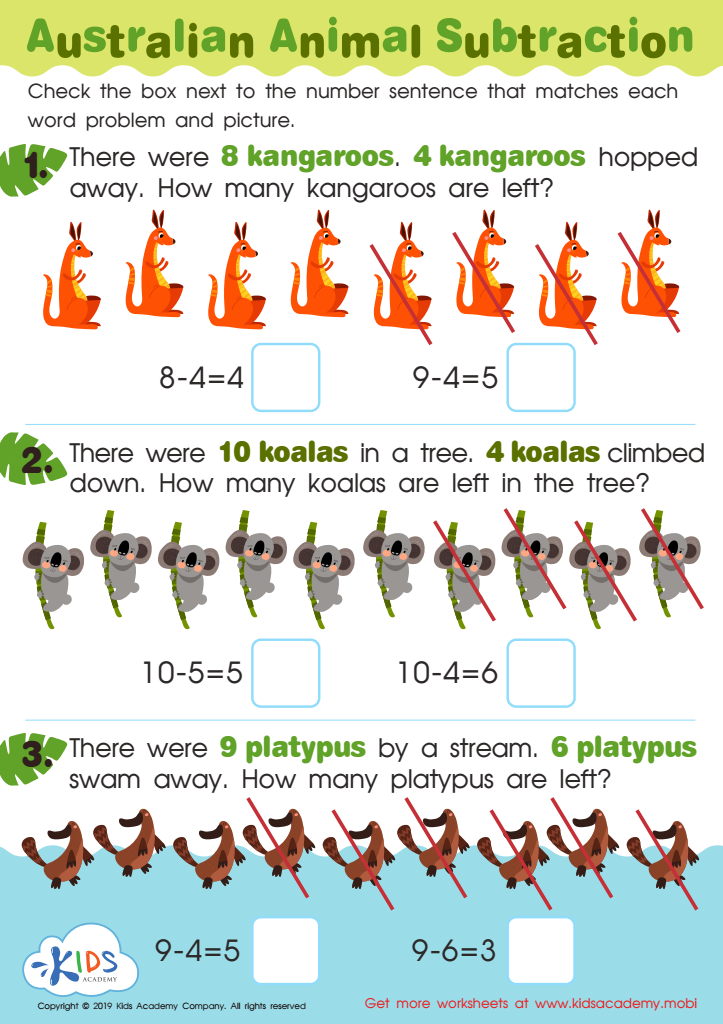
Australian Animal Subtraction Worksheet
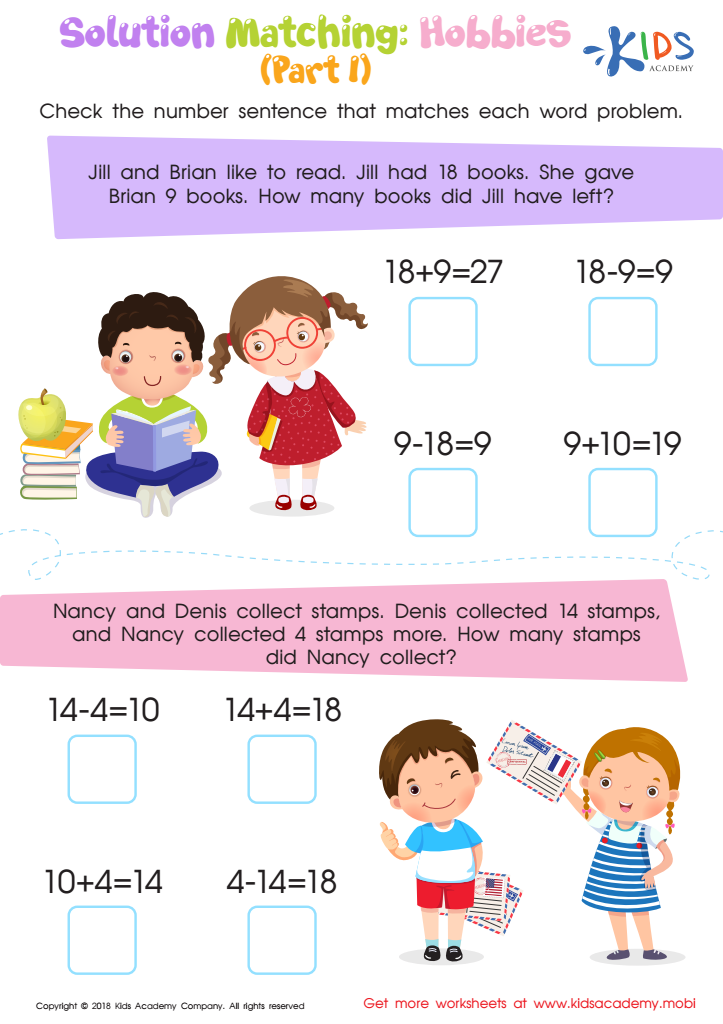
Solution Matching: Hobbies. Part 1 Worksheet








Cognitive development word problems play a crucial role in the learning process for children ages 5-8, making it imperative for parents and teachers to pay attention to their importance. At this stage, children are transitioning from concrete thinking to more abstract reasoning. Engaging with word problems fosters critical thinking skills, encourages problem-solving, and enhances reading comprehension. These tasks require students to decipher language and understand mathematical concepts, thereby linking literacy with numeracy.
Moreover, regularly practicing word problems helps children learn how to approach challenges methodically, breaking down complex situations into manageable parts. This skill not only aids in mathematics but benefits their overall cognitive development, supporting skills like logical reasoning and decision-making that are essential for academic success.
By emphasizing word problems, parents and teachers can create a stimulating learning environment that nurtures curiosity and perseverance in students. Furthermore, they can facilitate emotional intelligence as children experience the process of solving problems and dealing with frustration. Ultimately, investing in cognitive development through structured problems at this age lays a foundational framework for lifelong learning skills, preparing children for more advanced academic tasks in the future.








