Fine Motor Skills Building Vocabulary Worksheets for Ages 5-8 - Page 2
25 filtered results
-
From - To
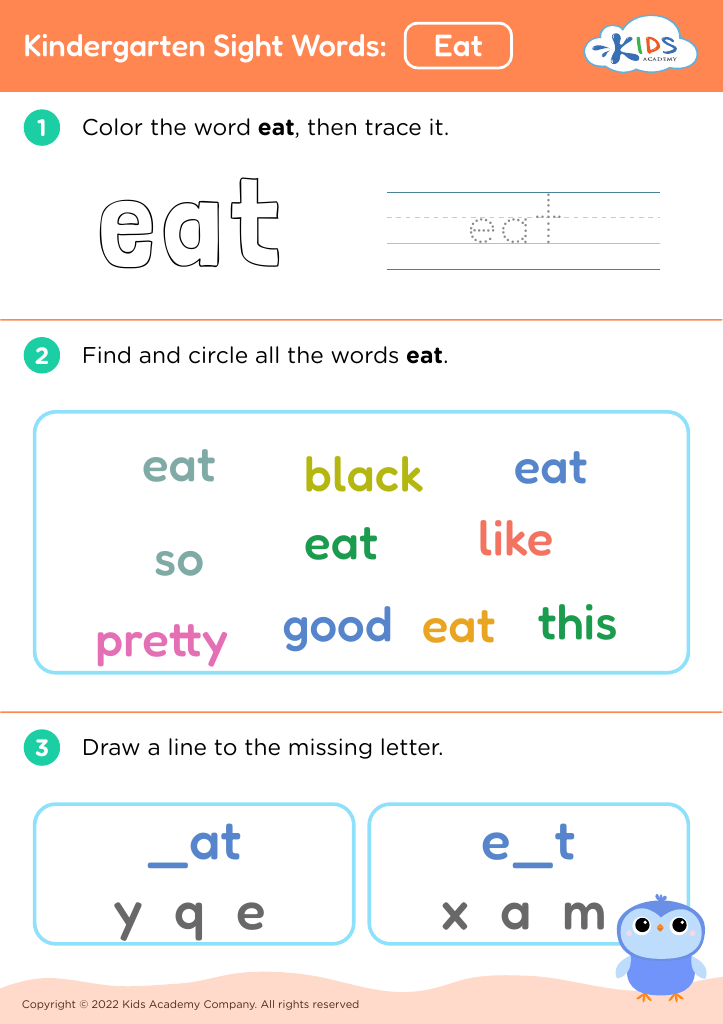



















Fine motor skills are essential for children aged 5-8 as they directly impact academic and everyday activities. Teachers and parents should prioritize building these skills, as they form the foundation for various tasks, such as writing, cutting, and playing instruments. As children refine their fine motor abilities, they simultaneously enhance their vocabulary, which contributes to cognitive development and communication skills.
Engaging in activities that promote fine motor skills—like crafting, playdough manipulation, or puzzle completion—encourages children to learn new words while also practicing these essential skills. For instance, labeling tools or materials used in art projects expands their vocabulary while they develop hand-eye coordination.
Additionally, mastering fine motor skills helps promote independence, self-esteem, and confidence in school situations. Strong proficiency in these areas fosters a positive learning experience, leading to better engagement and performance academically.
Moreover, parents and teachers play a crucial role in creating environments that encourage exploration and vocabulary growth through fine motor activities. By emphasizing the connection between these skills and language development, they can guide children towards becoming adept communicators and confident learners, paving the way for future success in their educational journeys.








