Sound Association Reading Worksheets for Ages 5-8
4 filtered results
-
From - To
Unlock the joy of reading for ages 5-8 with our Sound Association Reading Worksheets! Tailored to spark excitement in young learners, these worksheets seamlessly blend fun with education. Children will discover the relationship between sounds and letters, boosting their phonemic awareness and fostering early reading skills. Our engaging activities aid in recognizing and matching sounds, paving the way for fluent reading. Watch as your child confidently decodes words and builds a strong foundation for future literacy success. Perfect for both classroom use and homeschooling, these worksheets are a fantastic resource to support your child's reading journey!
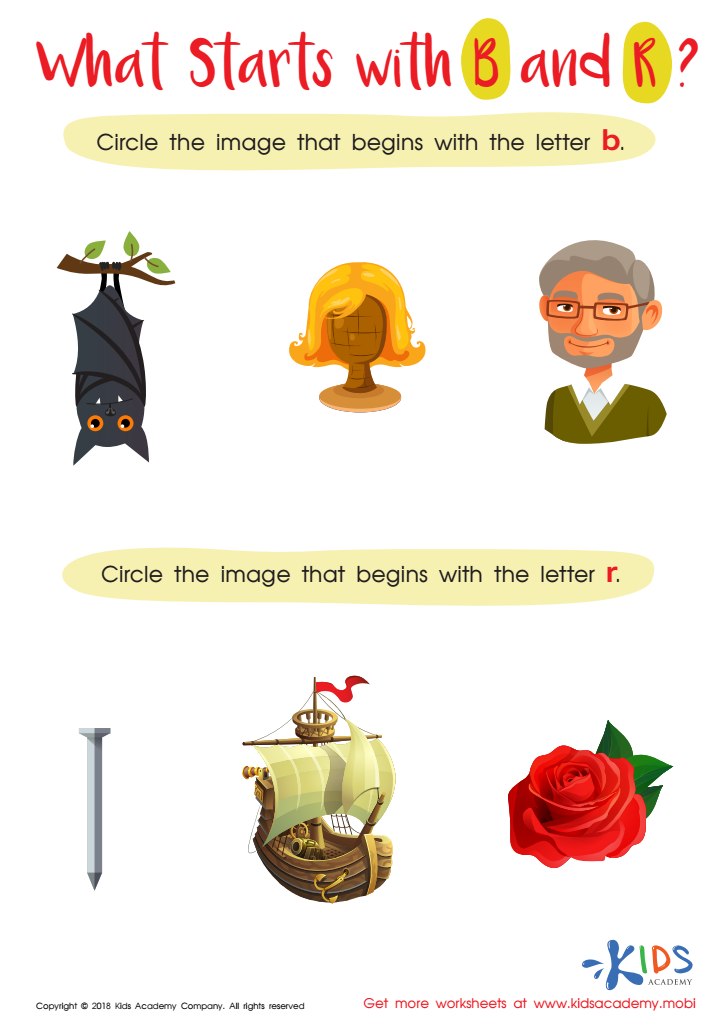
What Starts with B and R? Worksheet
 Assign to My Students
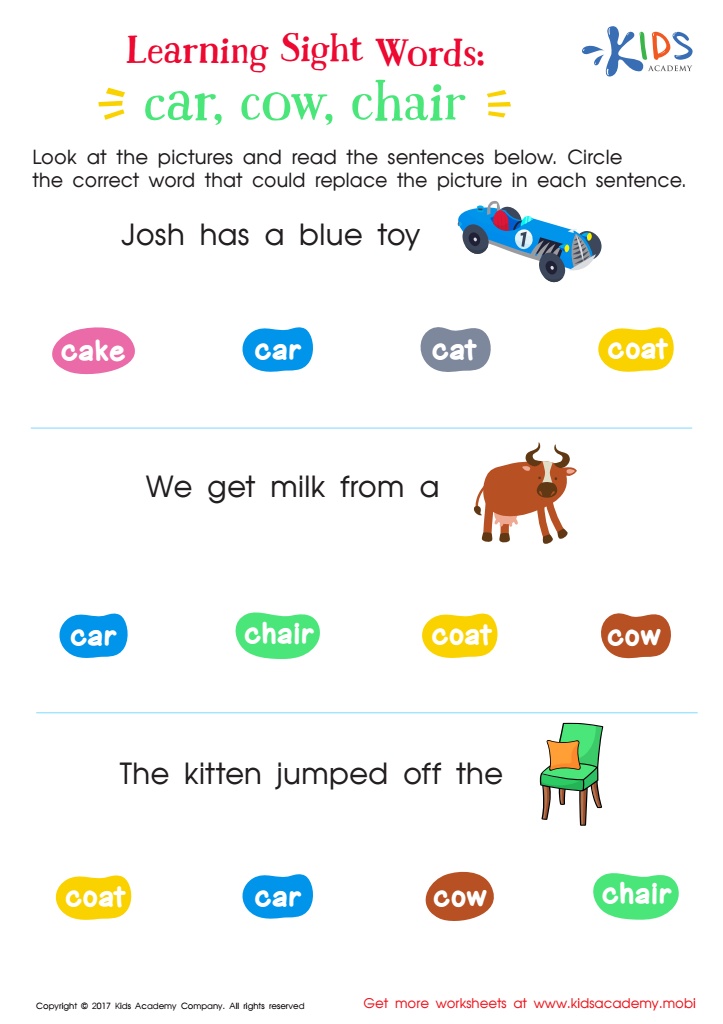
Car, Cow, Chair Worksheet Sight Words Worksheet
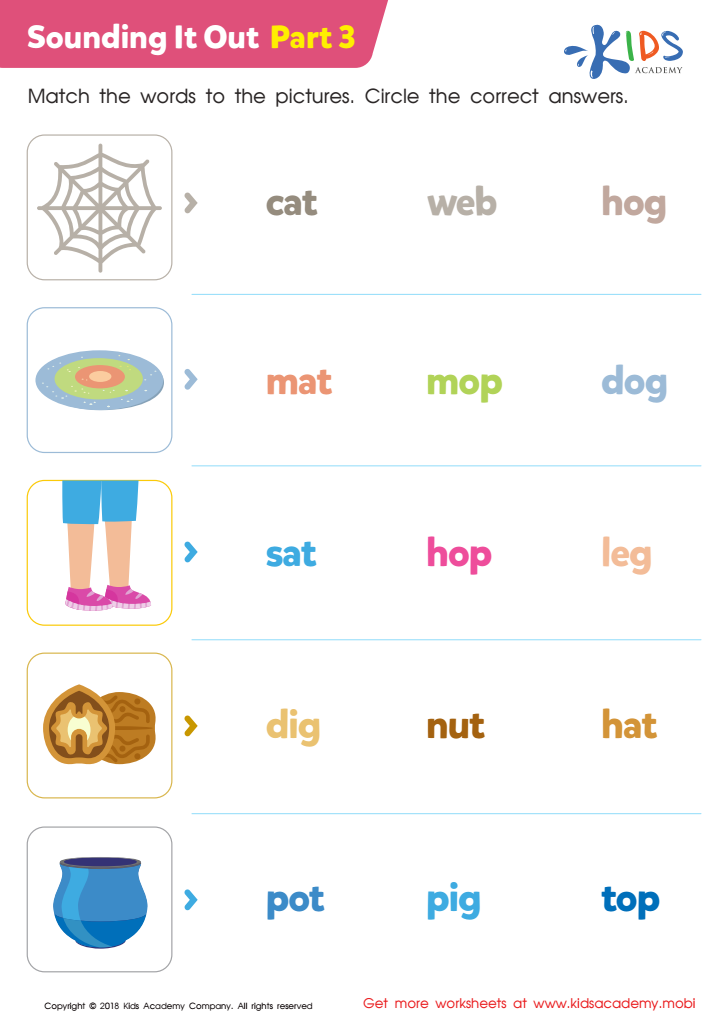
Sounding it Out: Part 3 Worksheet
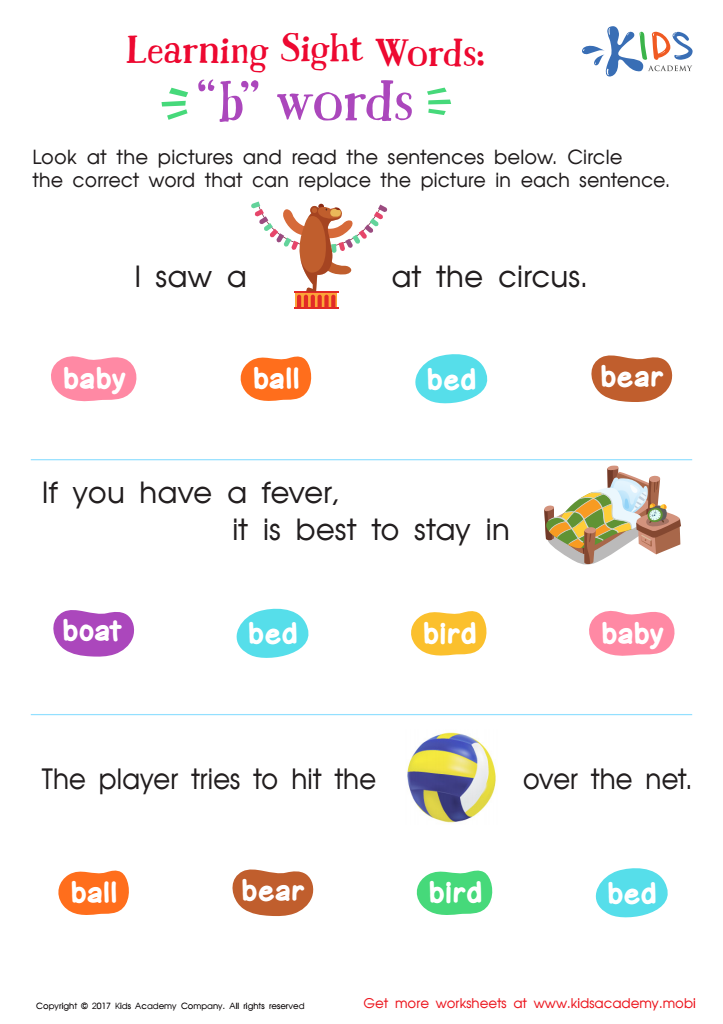
"B" Words Printable Sight Words Worksheet







Sound Association Reading, particularly for ages 5-8, is crucial in children’s literacy development. During this period, kids are at a prime stage for acquiring foundational skills in reading and writing. Sound association, also known as phonemic awareness, involves understanding that words are made up of individual sounds, which are called phonemes. This understanding is essential because it forms the basis for decoding words, a skill that is critical for proficient reading.
Parents and teachers play an instrumental role in fostering this awareness. When children grasp sound associations, they learn to connect spoken language with written symbols, which facilitates smoother and more confident reading. This early skill prevents future reading difficulties and instills a love for reading, contributing to academic success across subjects.
Furthermore, engaging in phonemic awareness activities, such as rhyming games and interactive story sessions, can enhance a child's vocabulary, comprehension, and spelling abilities. Consistent practice at home and in the classroom can solidify these skills, ensuring that each child progresses at their own pace without experiencing frustration.
In summary, emphasizing sound association can create a strong literacy foundation, pave the way for higher academic achievement, and nurture a positive attitude towards lifelong learning in young children.








