Understanding sequencing Reading Worksheets for Ages 5-8
3 filtered results
-
From - To
Explore our engaging "Understanding Sequencing Reading Worksheets" designed for children ages 5-8. These worksheets help young learners develop critical sequencing skills by guiding them to arrange events in a logical order. With colorful illustrations and relatable stories, students will enjoy improving their comprehension and narrative skills through fun activities. Each worksheet offers a variety of exercises that reinforce understanding, from simple picture sequencing to more complex text-based tasks. Perfect for classroom or at-home learning, these resources aim to enhance reading fluency while fostering a love for storytelling. Unlock your child's potential with our creative and educational sequencing worksheets today!
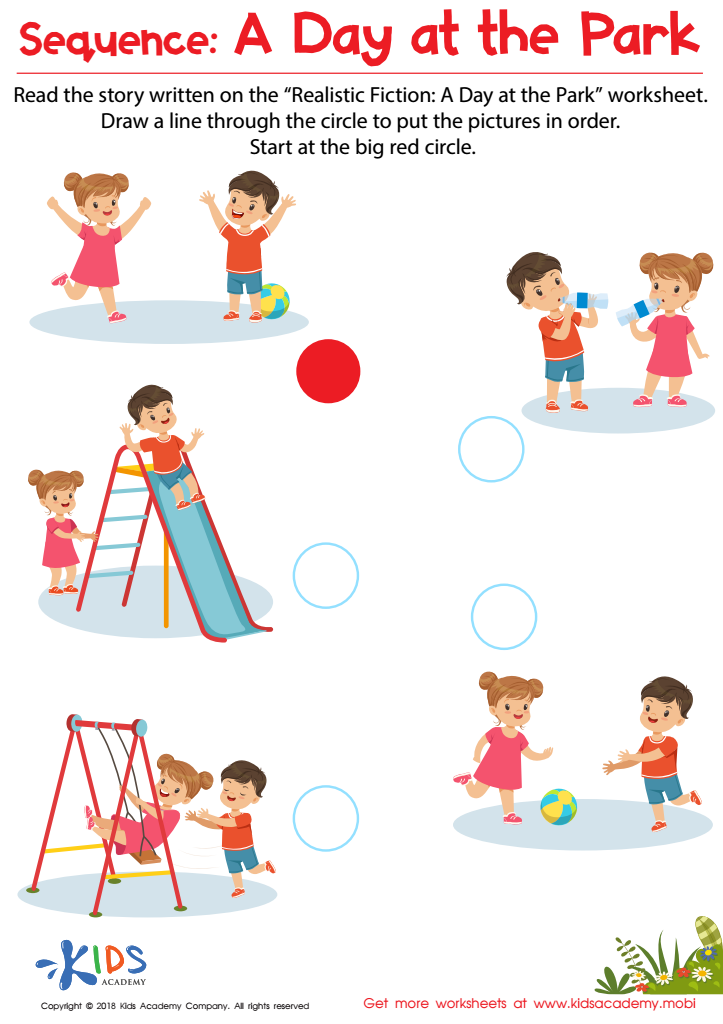
Sequence: A Day at the Park Worksheet
 Assign to My Students
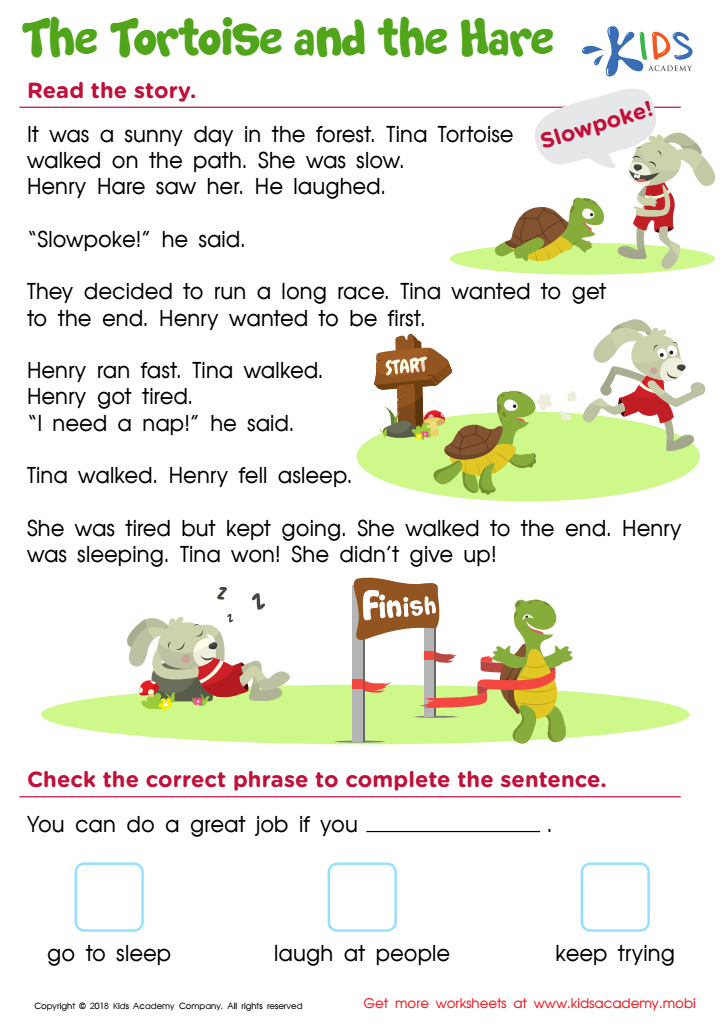
The Tortoise and the Hare Worksheet








Understanding sequencing in reading is essential for children aged 5-8 because it lays the foundation for critical literacy skills. Sequencing involves recognizing the order of events in a story, which helps children comprehend narratives and enhances their overall reading fluency. By grasping how a story unfolds—beginning, middle, and end—young readers harness the ability to predict outcomes, infer meanings, and connect with content on a deeper level.
For parents and teachers, emphasizing sequencing is vital as it promotes cognitive development, improves comprehension, and boosts vocabulary. Children who master sequencing are better equipped to retell stories, summarize information, and create their narratives, fostering creativity and communication skills.
Moreover, sequencing is not just vital in literary contexts; it’s also applicable in real-life situations, aiding in problem-solving and logical reasoning. By teaching children to attend to the sequence of events, parents and teachers help cultivate organized thinking and greater retention of information.
Engaging in sequencing activities, like discussing plot sequences or arranging story cards, reinforces these skills. Ultimately, building a strong foundation in sequencing fosters confident, competent readers, setting the stage for lifelong learning and success in school and beyond.








