Filters

29 filtered results

Clear all filters
Favorites
With answer key
Interactive

29 filtered results

Difficulty Level

Grade


Check out this FREE Trial Lesson on Reading for age 5-8!

Sight words: You, Like

Favorites
With answer key
Interactive
  • 5-8
  • Word Recognition
  • Reading
Animal Word Search Worksheet

Animal Word Search Worksheet

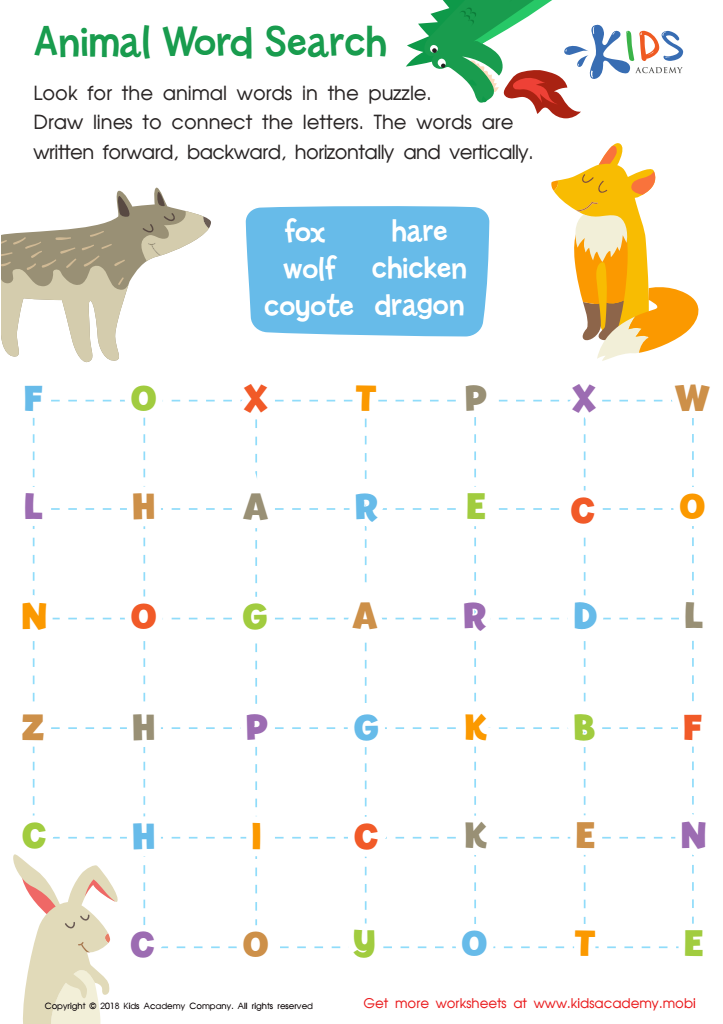
Students can have fun and strengthen spelling and vocabulary skills with this word search worksheet. Search for animal words and circle the letters in the puzzle. Words can be found forwards, backwards, horizontally or vertically, providing a great challenge to foster critical thinking skills. An enriching activity for all ages!
Animal Word Search Worksheet
Worksheet
Find and Read: Like Worksheet

Find and Read: Like Worksheet

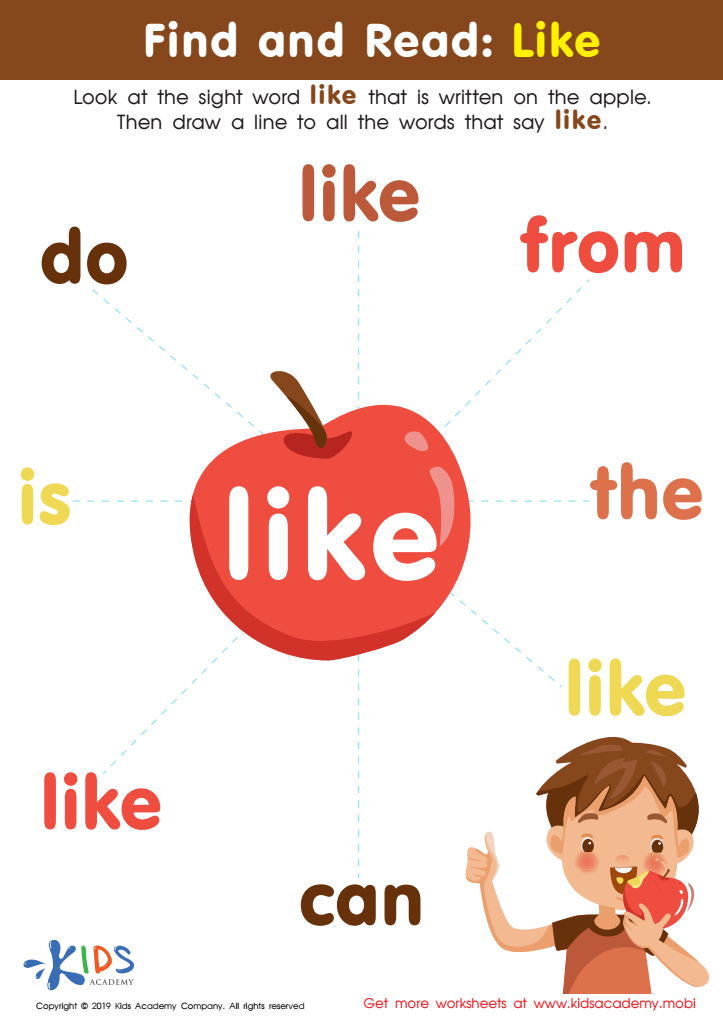
Reading starts with learning sight words. This free PDF worksheet helps kids learn the word "like" in various ways. It encourages their visual discrimination skills with its colorful design and traceable lines. It's a great way to help them recognize and differentiate this common sight word from other words that look similar.
Find and Read: Like Worksheet
Worksheet
Trace Read You Like Worksheet
Trace Read You Like Worksheet

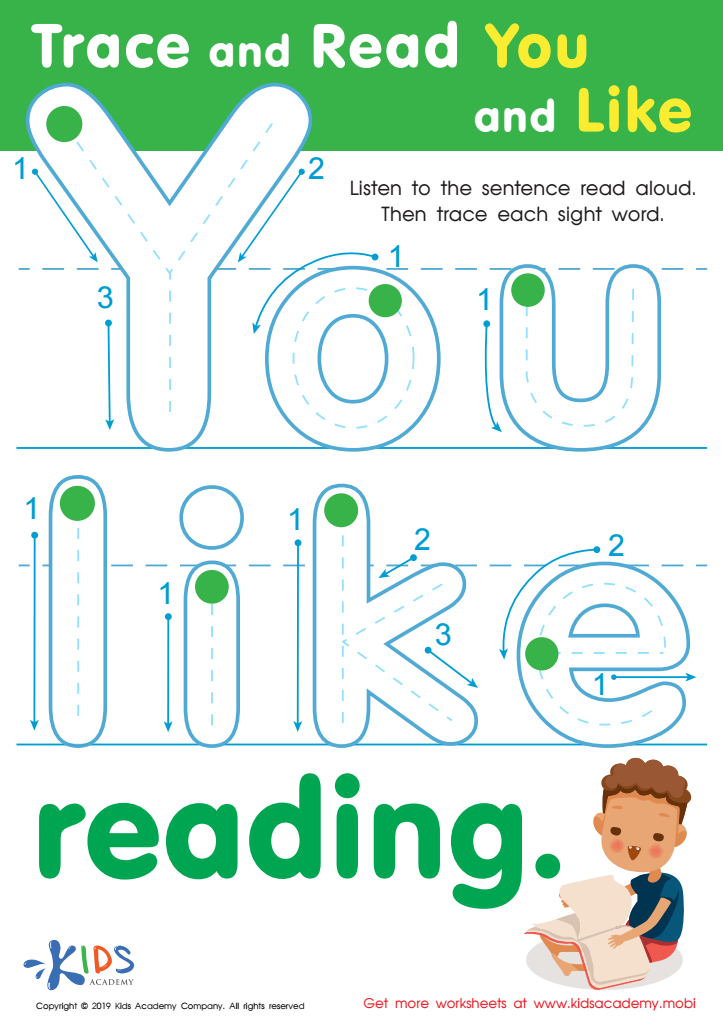
Sight words help children become confident and fluent readers. This free worksheet encourages success with basic 'you' and 'like' words. Writing them with traceable lines and green dots shows motion and builds sight word vocabulary. Help your child master the basics and boost their reading progress!
Trace Read You Like Worksheet
Worksheet
Grade 3 Sight Words: Myself

Grade 3 Sight Words: Myself

Grade 3 Sight Words: Myself
Worksheet
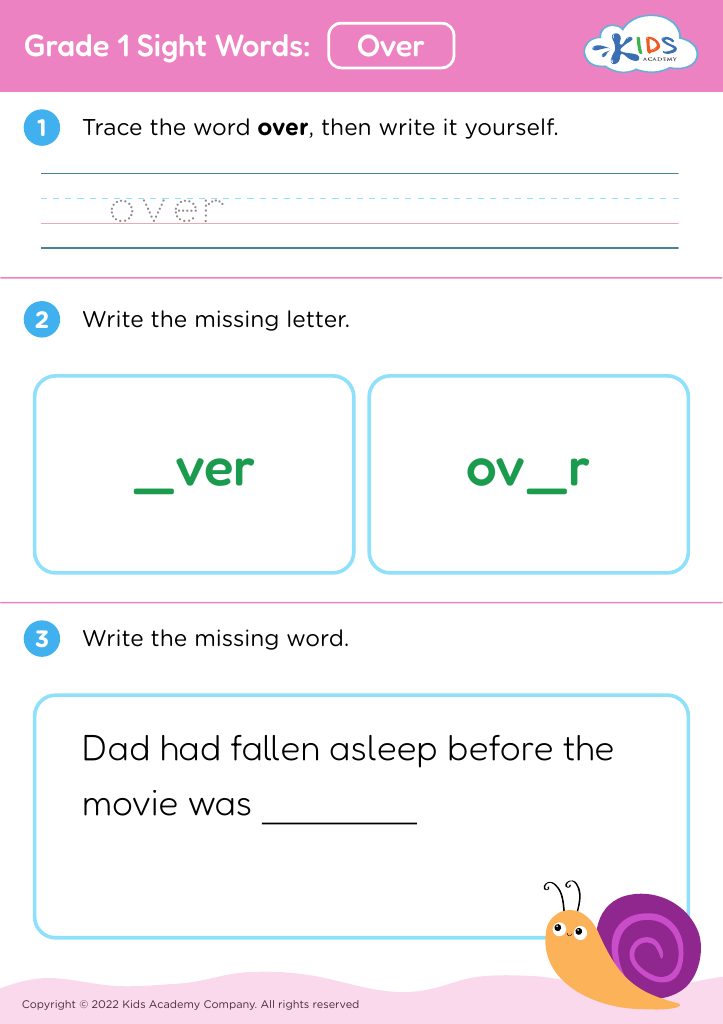
Grade 1 Sight Words: Over

Grade 1 Sight Words: Over

Grade 1 Sight Words: Over
Worksheet


Word recognition reading is vital for children aged 5-8 as it lays the foundation for their literacy development. During these formative years, children transition from understanding phonics—how letters create sounds—to recognizing whole words instantly. This skill is crucial as it directly impacts their reading fluency, comprehension, and overall academic success.

When students can quickly identify words, their cognitive load is reduced, allowing them to focus on understanding the content rather than decoding each word. This fluency enhances their ability to enjoy reading, fostering a lifelong love for literature and learning. Moreover, solid word recognition supports vocabulary growth; children encounter a greater variety of words and contexts, enriching their language skills.

Parents and teachers play a key role in developing word recognition. Engaging children with diverse reading materials and interactive activities, such as word games and flashcards, can significantly boost their recognition skills. Monitoring progress helps identify any challenges early, ensuring no child falls behind. By prioritizing word recognition, caregivers can empower children not only to read but to comprehend and critically think about what they are reading, laying a strong groundwork for future academic achievement.