
Understanding Sequences Reading Comprehension Worksheets for Ages 5-8
4 filtered results
Difficulty Level
Grade
Age
-
From - To
Subject
Activity
Standards
Unlock your child’s reading potential with our "Understanding Sequences Reading Comprehension Worksheets for Ages 5-8" from Kids Academy! These meticulously crafted worksheets help children grasp the concept of sequences by identifying the order of events in stories. Ideal for young readers, they enhance comprehension skills, boost critical thinking, and foster a love for reading. Through engaging activities and colorful illustrations, children can practice organizing narrative events, making predictions, and understanding logical progressions. Perfect for both classroom and home use, these worksheets are essential tools in your child's reading journey. Empower your child’s seamless transition from reading to understanding!
Favorites
With answer key
Interactive
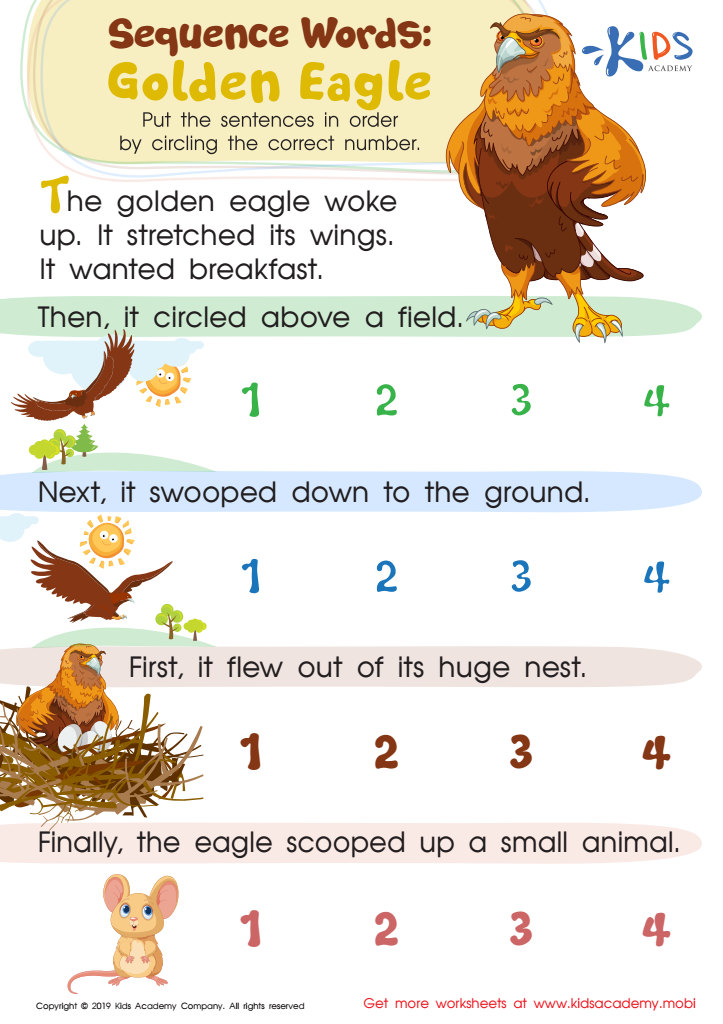
Sequence Word Eagle Worksheet
Help your child brush up on reading and writing with this fun worksheet. Read the story of the golden eagle's day, then have the child circle the numbers in the right order. Point out the sequence words that tell the order of events. This helps learners understand how to make their writing clear and understandable to others.
 Assign to My Students
Sequence Word Eagle Worksheet
Worksheet
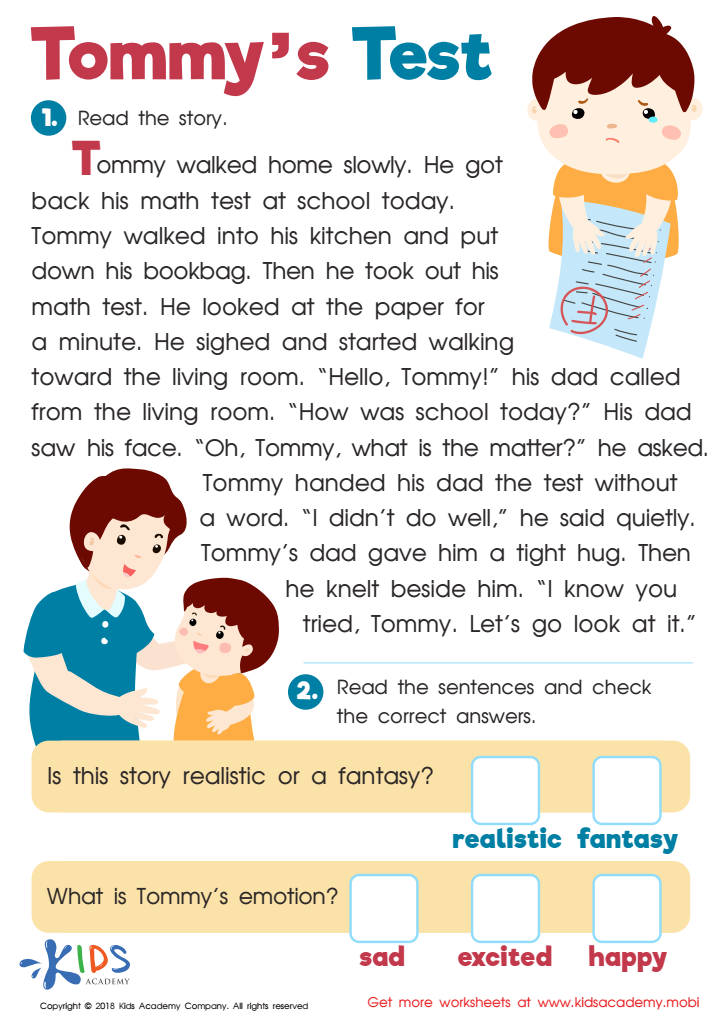
Tommys Test Worksheet
Reading short stories to your students builds a bond, teaches new words and lessons. Read the story aloud and then have them listen for details. Ask them the questions at the bottom and help them check the answers.
Tommys Test Worksheet
Worksheet
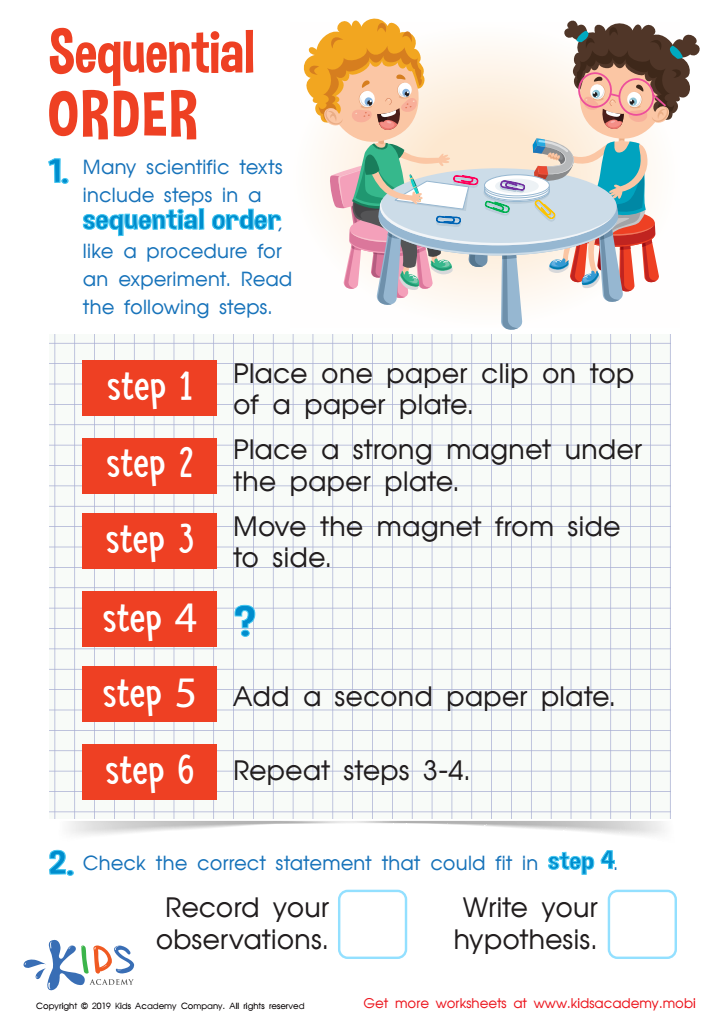
Sequencential Order Worksheet
This worksheet is perfect for science-lovers: it'll test how good your child is at following instructions by asking them to complete the steps in the right order. Have them read the steps and then choose the statements that correctly fill in the blanks. It's more than just fun experiments and results - science also requires careful procedure.
Sequencential Order Worksheet
Worksheet
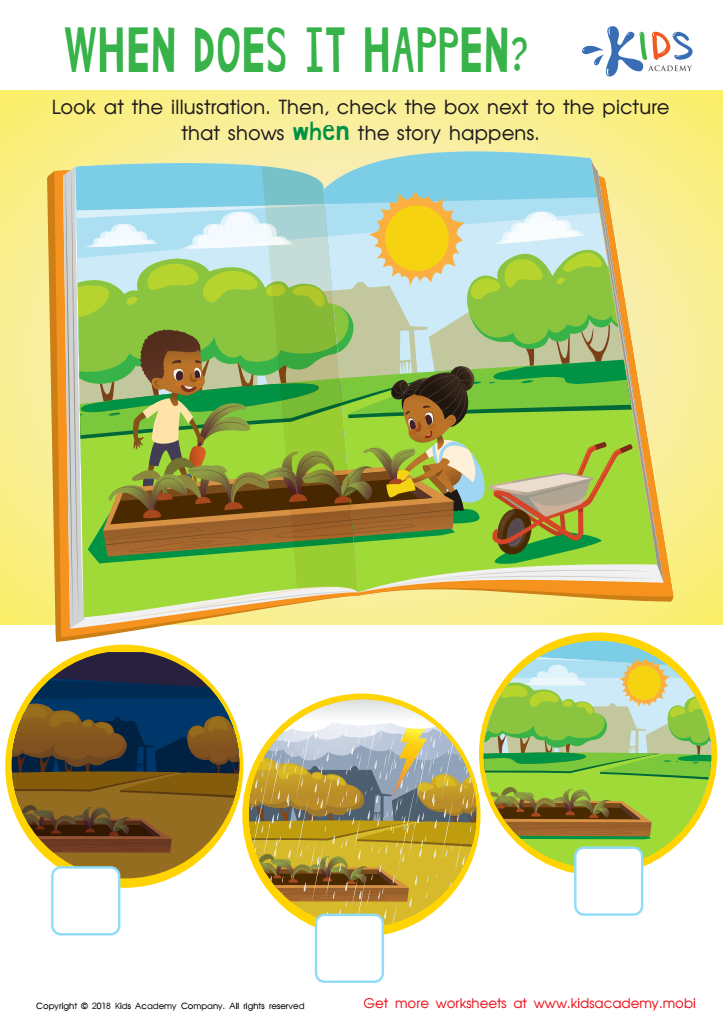
When Does It Happen? Worksheet
Help your kids learn about the different times of day and when events occur using this worksheet. Ask them to look at the pictures and determine which box shows when the story happened. Then, discuss how they can use this knowledge to better describe events that occur.
When Does It Happen? Worksheet
Worksheet
Join Kids Academy for Free
Who is primarily going to use this learning content?







Understanding sequences in reading comprehension is crucial for young children ages 5-8 as it forms a critical foundation for their cognitive and academic development. Sequencing skills allow children to recognize the order of events, which is essential for understanding stories, following instructions, and developing logical thinking.
When children grasp sequencing, they improve their ability to predict what happens next in a story, thus enhancing their overall comprehension and retention. For instance, understanding the beginning, middle, and end of a story helps children synthesize information and draw meaningful conclusions.
Furthermore, sequencing is interconnected with other vital literacy skills such as recognizing cause-and-effect relationships and distinguishing between main ideas and supporting details. This aids not only in reading but also in math and science, where logical sequencing for problem-solving is key. It also promotes critical thinking, as students learn to classify, categorize, and infer information.
For teachers and parents, focusing on sequencing activities – through storytelling, picture books, and daily routines – helps children organize their thoughts and narratives clearly. This foundational skill encourages independent reading, boosts confidence, and cultivates an early love for learning. Therefore, prioritizing sequencing in literacy education sets young learners on a path to academic success and intellectual curiosity.








