Rhyming skills development Rhyming Words Worksheets for Ages 5-8
3 filtered results
-
From - To
Discover our engaging Rhyming Words Worksheets designed specifically for children aged 5-8! Our resources promote rhyming skills development through fun, interactive activities that make learning enjoyable. These worksheets encourage students to identify, create, and manipulate rhyming words, enhancing their phonemic awareness and vocabulary. Ideal for classroom use or home learning, the worksheets provide a variety of exercises, including matching rhymes, completing sentences, and crafting poems. Foster a love for language and poetry in your young learners while building essential literacy skills. Explore our diverse selection and watch your child's confidence in reading and writing soar! Perfect for early grade teachers and parents alike.
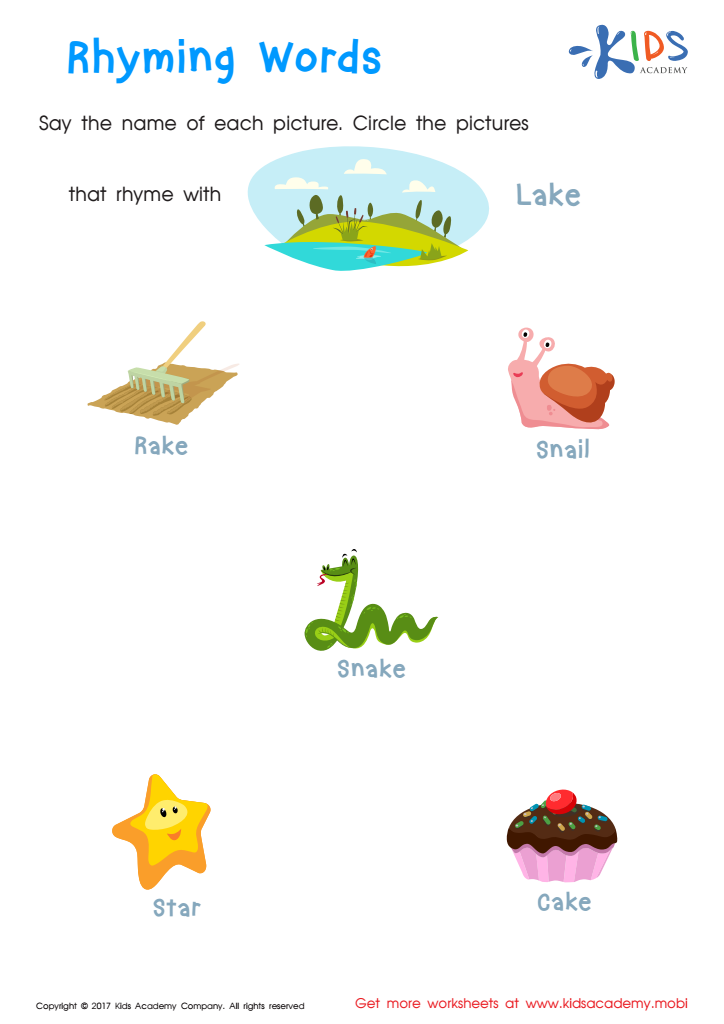
Rhyming Words Rhyming Worksheet
 Assign to My Students
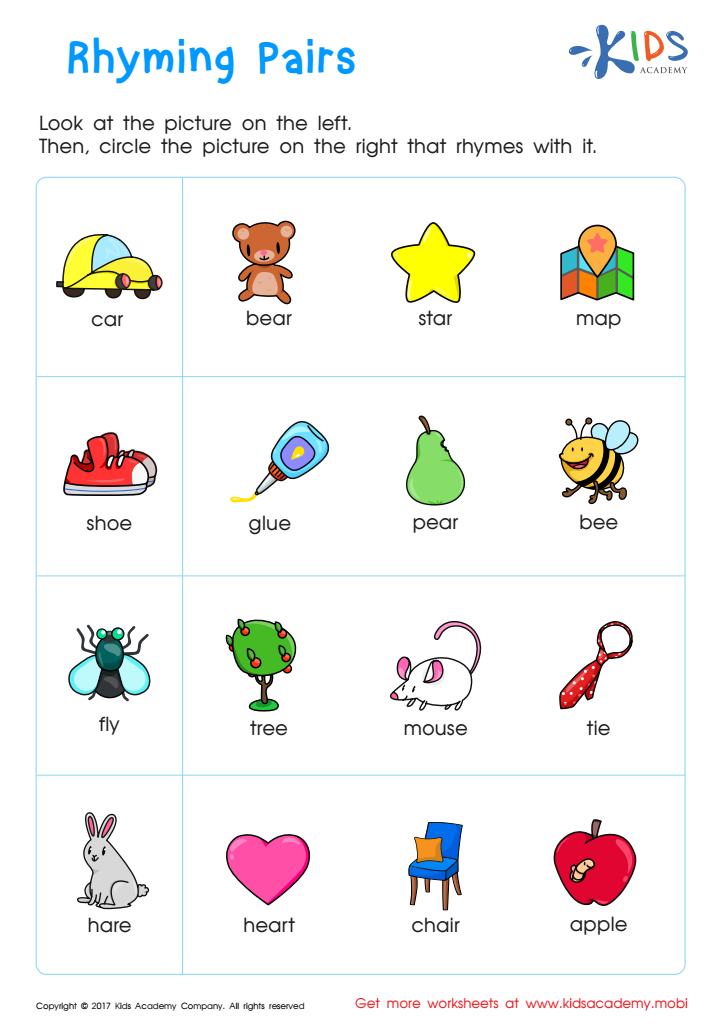
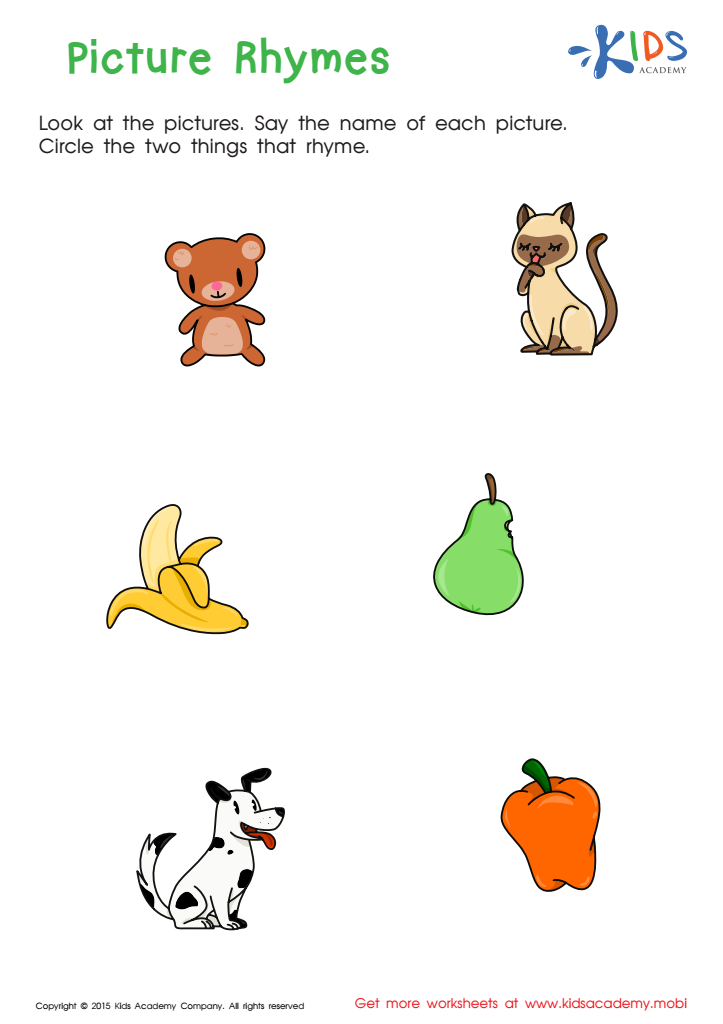
First Words: Picture Rhymes Worksheet








Rhyming skills are crucial for children aged 5-8 as they form the foundation for phonemic awareness, an essential component of reading. When children engage with rhyming words, they learn to identify similar sounds, which enhances their ability to segment and blend words. This process is vital for decoding new words as they begin to read independently.
Moreover, rhyming contributes to vocabulary expansion. Children are often exposed to new words through nursery rhymes and songs, enriching their language and comprehension skills. These rhythmic patterns also make learning fun and engage learners more effectively.
Furthermore, rhyming activities support cognitive development. They foster creativity, critical thinking, and memory skills, as children decode patterns and anticipate words within rhymes. These skills not only aid literacy but also enhance overall communication abilities.
Lastly, fostering a love for language through rhyming can promote a lifelong interest in reading. Parents and teachers who emphasize rhyming can turn learning into an enjoyable journey, instilling confidence and a passion for books as children experience the joyful rhythm of language. In summary, rhyming skills are foundational for literacy, vocabulary, cognitive development, and a child’s love for reading, making them a key focus for parents and educators alike.








