Basic Addition Science Worksheets for Ages 5-8
4 filtered results
-
From - To
Introduce your child to the exciting world of math with our Basic Addition Science Worksheets for Ages 5-8. These fun, engaging worksheets are designed to reinforce foundational addition skills while incorporating fascinating science themes. Each activity presents a unique blend of numbers and nature, allowing young learners to build critical thinking and problem-solving skills in an enjoyable and stimulating way. Perfect for both classroom and home use, our worksheets will make addition an adventure your child will look forward to. Help your child develop a love for learning and a solid math foundation with our printable addition worksheets today!
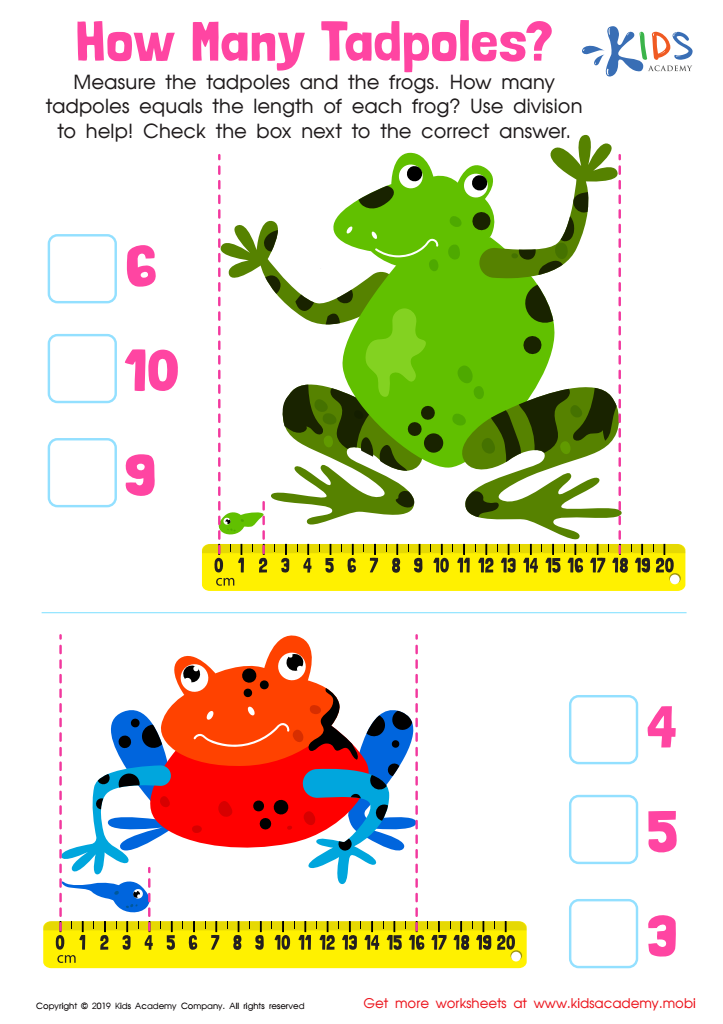
How Many Tadpoles Worksheet
 Assign to My Students

African Wildlife: Giraffe Worksheet
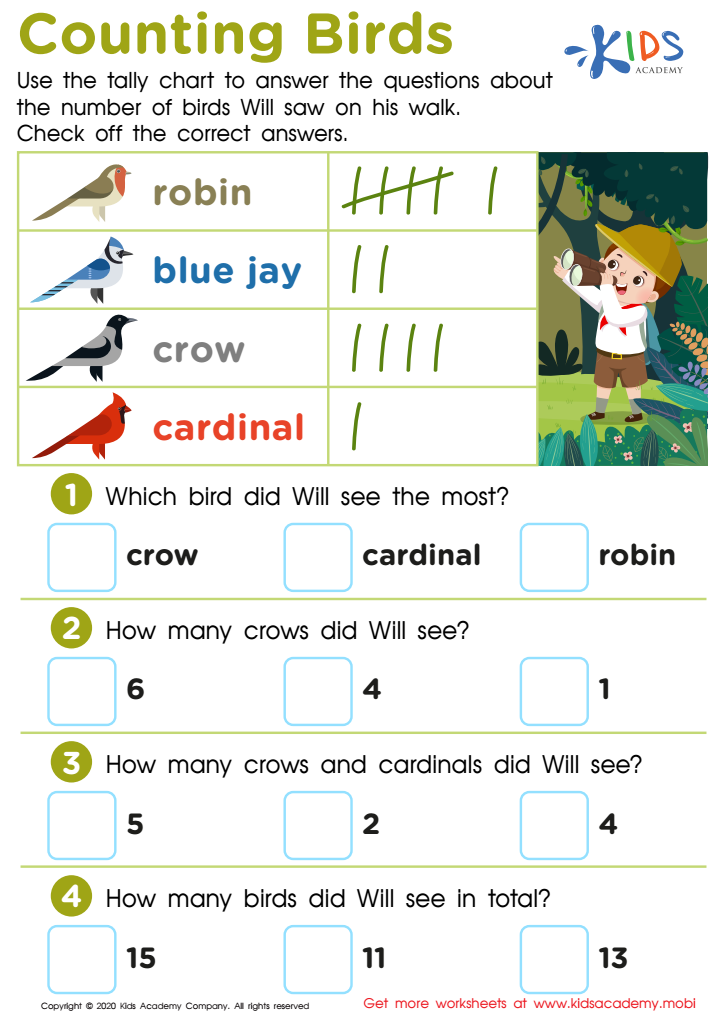
Counting Birds Worksheet
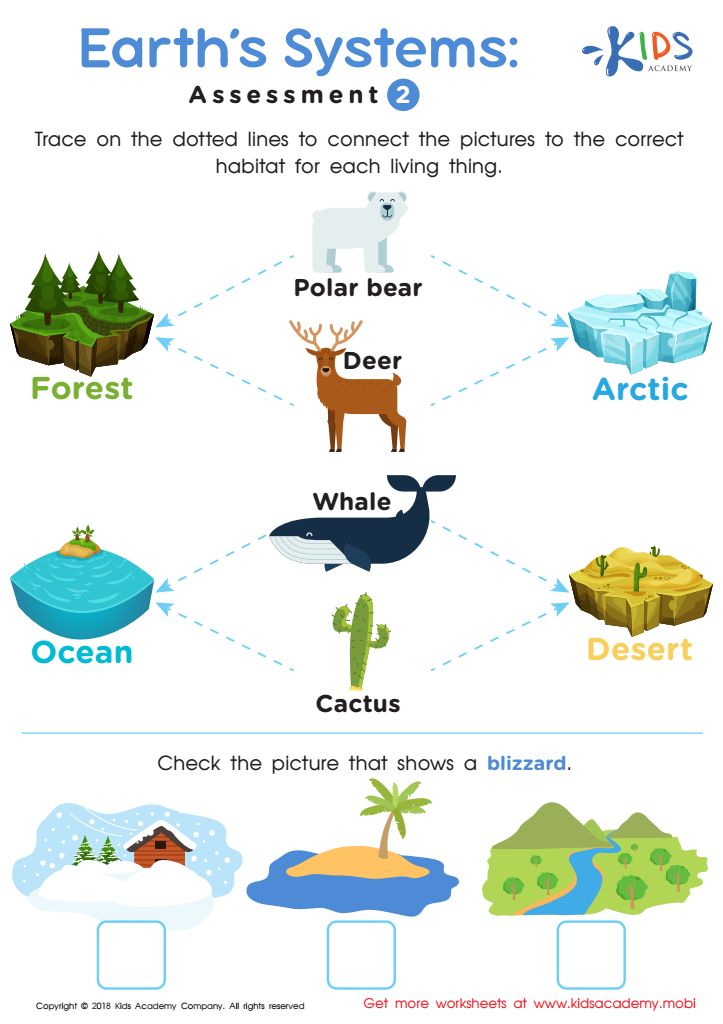
Earth's Systems: Assessment 2







Basic addition is a fundamental building block for young learners, typically ages 5-8. It forms the cornerstone for all future math concepts. At this age, children's brains are highly receptive and it is crucial to introduce them to addition as it encourages logical thinking and problem-solving skills.
For parents and teachers, instilling a solid understanding of basic addition is critical because it boosts children's confidence in their mathematical abilities. Competence in addition allows children to engage more fully with class activities, aiding their overall academic development.
Moreover, early familiarity with numbers and basic math crafts a foundation for more complex topics, such as subtraction, multiplication, and division. This incremental learning approach makes future lessons less daunting and more approachable for young minds.
Engaging children with fun, insightful, and interactive addition activities can turn learning into an enjoyable experience, fostering a positive attitude toward mathematics. When supported both at home and in school, children feel more reassured and motivated in their learning journey.
Overall, by investing time and effort in teaching basic addition, parents and teachers are not only supporting children's academic success but also setting the stage for lifelong critical thinking and problem-solving capabilities.







