Information retention Science Worksheets for Ages 5-8
3 filtered results
-
From - To
Unlock your child's learning potential with our "Information Retention Science Worksheets" designed specifically for ages 5-8! These engaging worksheets help young learners enhance their memory and comprehension skills through fun, interactive activities. Each worksheet focuses on key science concepts suitable for early education, ensuring a delightful learning experience. Children will explore essential topics while practicing vital retention strategies that boost academic success. Ideal for both classroom and home use, our resources encourage curiosity and a love for science. Start nurturing your child's ability to absorb and recall information effectively today! Explore our collection and watch their confidence grow!
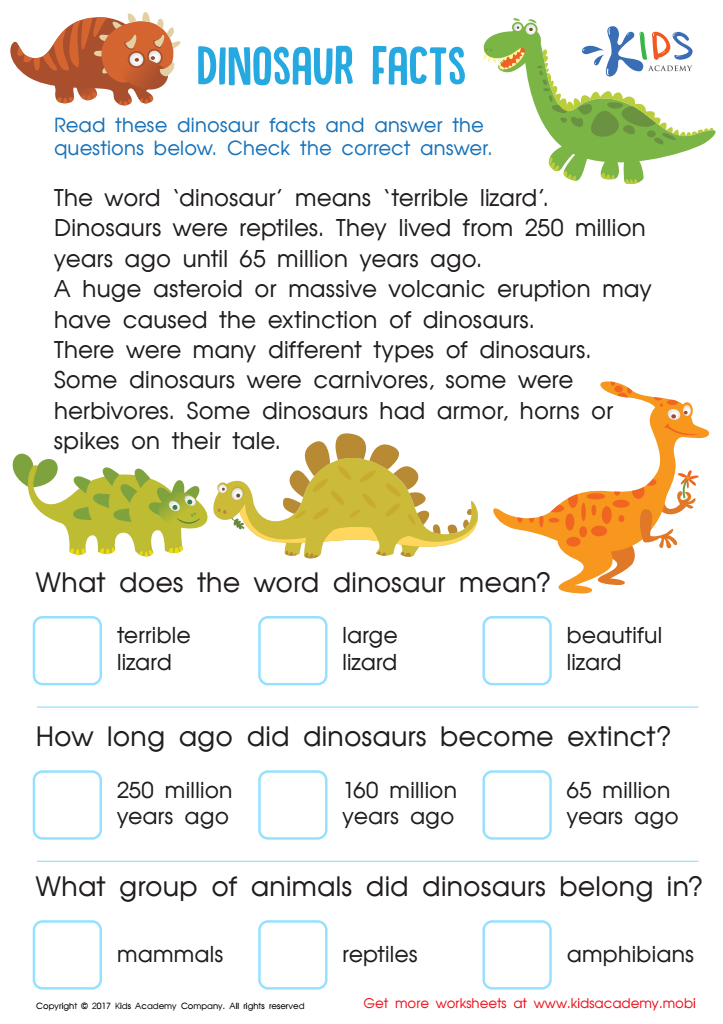
Dinosaur Facts Worksheet
 Assign to My Students
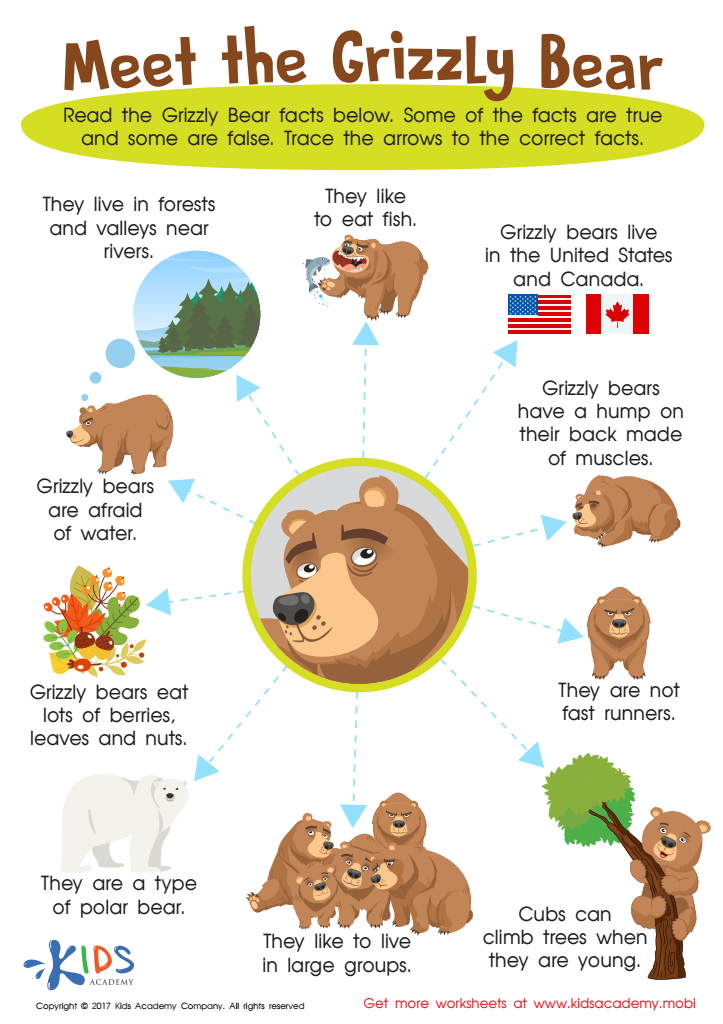
Grizzly Bear Facts Worksheet
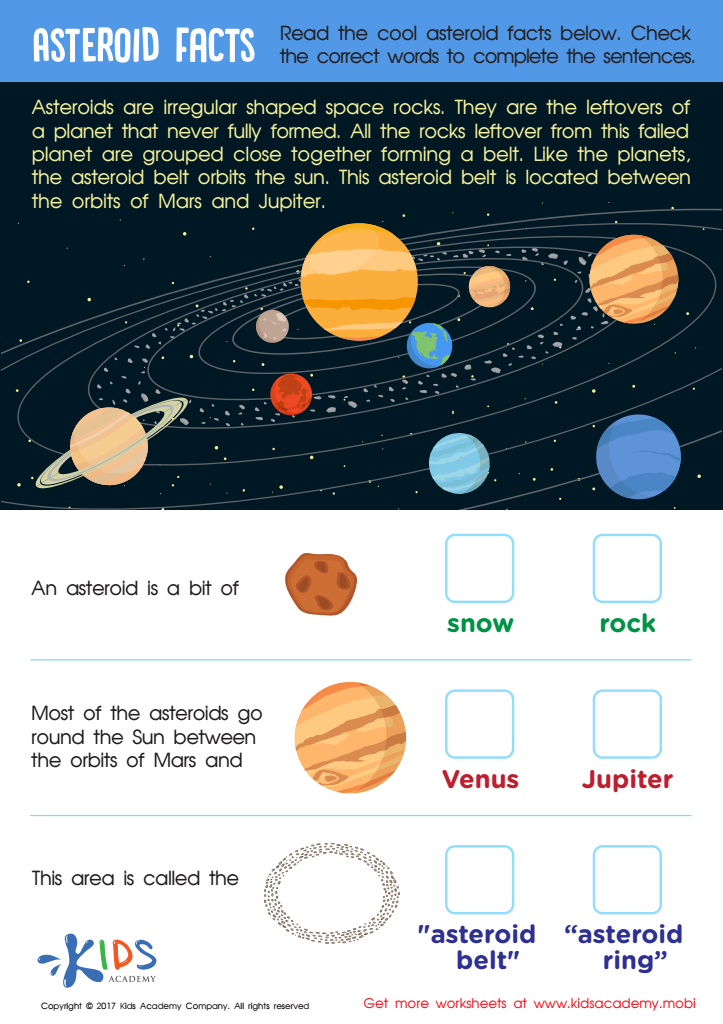
Asteroid Facts Worksheet








Information retention science, particularly for children ages 5-8, is crucial for parents and teachers as it directly impacts how young learners absorb, retain, and recall information. At this stage, children are developing foundational cognitive skills, and understanding how they retain information can significantly enhance their learning experiences.
Young children are naturally curious, and strategies informed by information retention science can help nurture this curiosity. Techniques such as spaced repetition, multisensory learning, and active engagement can make learning more effective and enjoyable. These methods support memory consolidation and long-term retention, enabling children to build a robust knowledge base that they can draw upon in the future.
Additionally, awareness of how children learn best allows parents and teachers to create tailored educational environments that address individual learning styles. As such, promoting optimal information retention not only boosts academic performance but also fosters a love for learning, which is vital during these formative years. Encouraging strong assimilation of information now sets the stage for lifelong learning, critical thinking, and problem-solving skills, ultimately benefiting the child's academic journey and personal growth. Therefore, emphasizing information retention science is essential for supporting young learners during these pivotal developmental stages.







