
Reading thermometers Science Worksheets for Ages 5-8
3 filtered results
Difficulty Level
Grade
Age
-
From - To
Subject
Activity
Standards
Discover engaging Reading Thermometers Science Worksheets for kids aged 5-8! These interactive worksheets help young learners master the essential skill of reading both Fahrenheit and Celsius thermometers. With colorful visuals, fun activities, and simple explanations, kids will learn to accurately measure temperatures. Perfect for classroom or home use, these science resources foster a love for learning while boosting math and science proficiency. Encourage your child's curiosity and confidence in interpreting temperatures, making them well-equipped for future science explorations. Explore our range of printable worksheets and watch your child's understanding soar!
Favorites
With answer key
Interactive
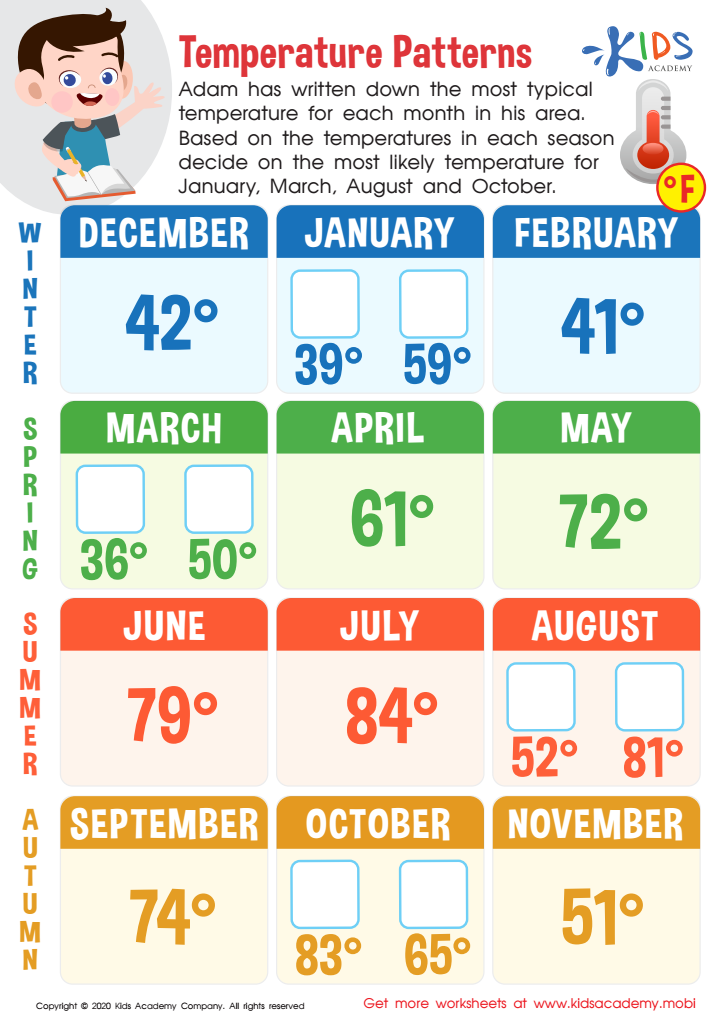
Temperature Patterns Worksheet
Adam has recorded temperatures in his area. Help your child use the data to predict temperatures for one month in each season. Check the box next to the correct temperature for each row in this worksheet. In America, temperatures vary by climate and season - colder in winter, hotter in summer.
 Assign to My Students
Temperature Patterns Worksheet
Worksheet
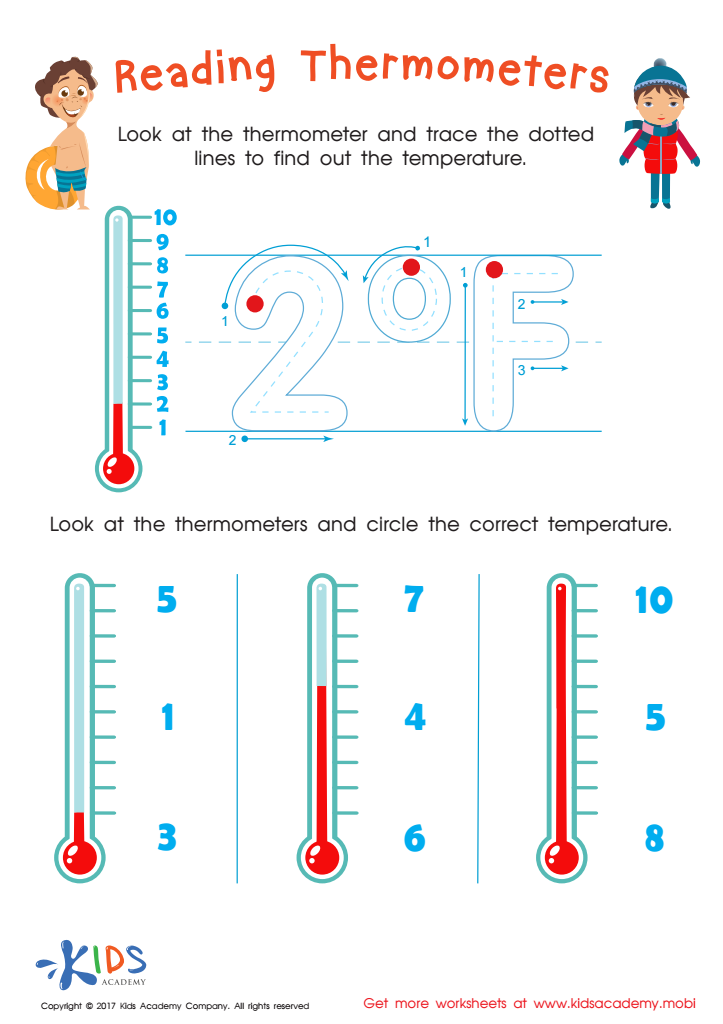
Reading Thermometers Printable
For kids to grasp temperature, they need to learn how to read a thermometer. Use this worksheet to teach them early on - whether they're sick or in the cold. It's an important life skill!
Reading Thermometers Printable
Worksheet
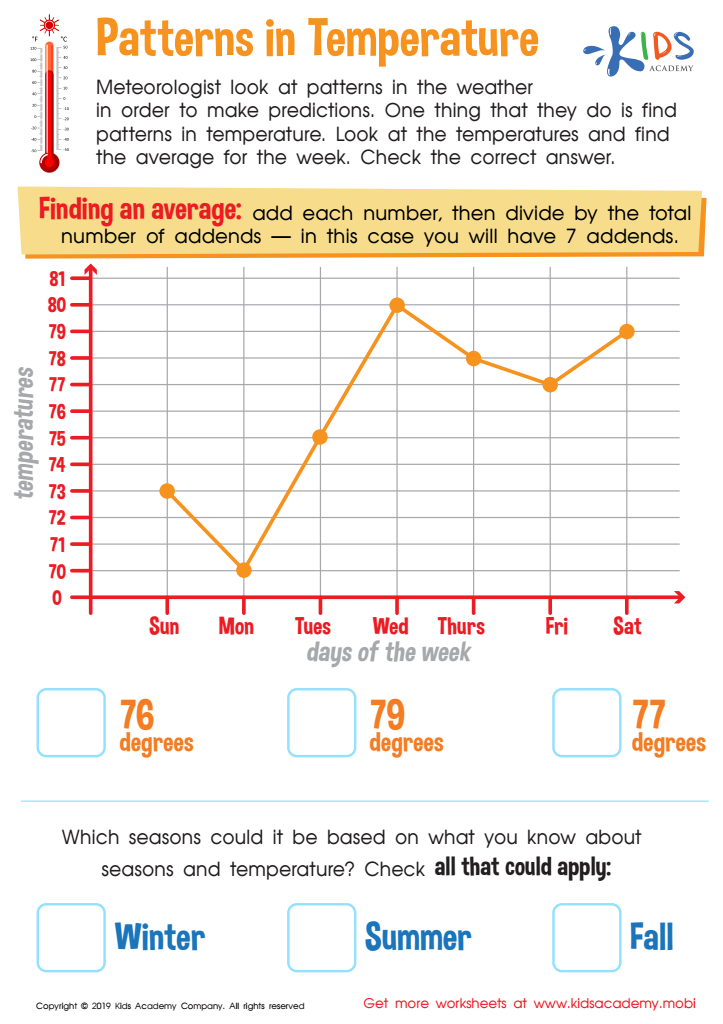
Patterns in Temperature Worksheet
Kids need to learn how to read and interpret data from graphs and charts. This free worksheet on temperature patterns helps them to do just that. They'll practice finding averages and answer questions in multiple-choice format. Plus, it provides a great learning experience!
Patterns in Temperature Worksheet
Worksheet
Join Kids Academy for Free
Who is primarily going to use this learning content?







Parents and teachers should care about teaching children ages 5-8 to read thermometers for several important reasons. Firstly, understanding how to read a thermometer helps children grasp basic scientific concepts such as temperature, weather, and climate. This foundational knowledge sets the stage for more complex science learning in later grades. A thermometer is a tangible, real-world tool that kids can interact with, making abstract science concepts concrete and easier to understand.
Secondly, reading thermometers fosters critical thinking and observational skills. Children learn to make predictions about temperature changes throughout the day, correlate temperature with weather conditions, and even discuss how temperature affects daily life, like clothing choices and outdoor activities. This helps in developing their analytical thinking from a young age.
Additionally, understanding temperature is crucial for safety. Knowing what temperatures are too hot or too cold can help children understand the importance of dressing appropriately, staying hydrated, or knowing when it's too cold to play outside. These are essential life skills for personal safety and comfort.
Lastly, engaging with thermometers can be fun and boosts children’s interest in science. Interactive and hands-on learning experiences like these are more likely to inspire a lasting curiosity about the natural world, promoting lifelong learning and a positive attitude towards science.







