Understanding life cycles Life Science Worksheets for Ages 5-8
3 filtered results
-
From - To
Explore the fascinating world of life cycles with our engaging life science worksheets designed specifically for children ages 5-8. These resources aim to introduce young learners to the concept of life cycles in a fun and interactive way. With vibrant illustrations and easy-to-understand activities, children can discover how plants grow, animals develop, and the stages of life evolve. Our worksheets encourage critical thinking and creativity, supporting early science education while reinforcing essential skills. Perfect for home or classroom use, these printable materials will captivate young minds and inspire a lifelong love of learning in the natural world.
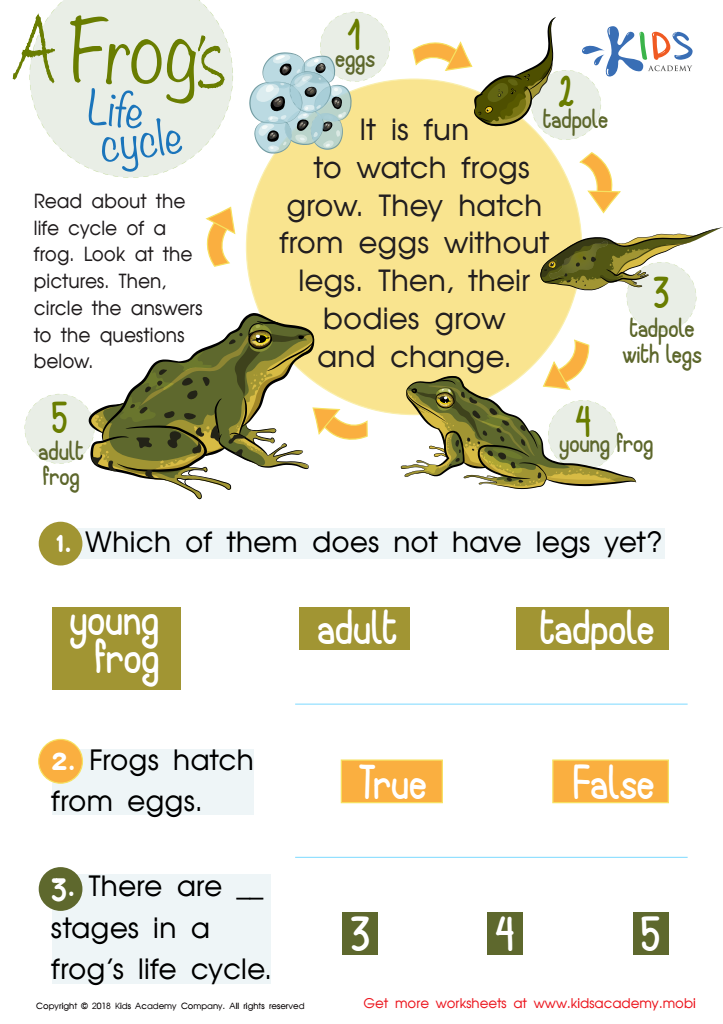
A Frog’s Life Cycle Worksheet
 Assign to My Students
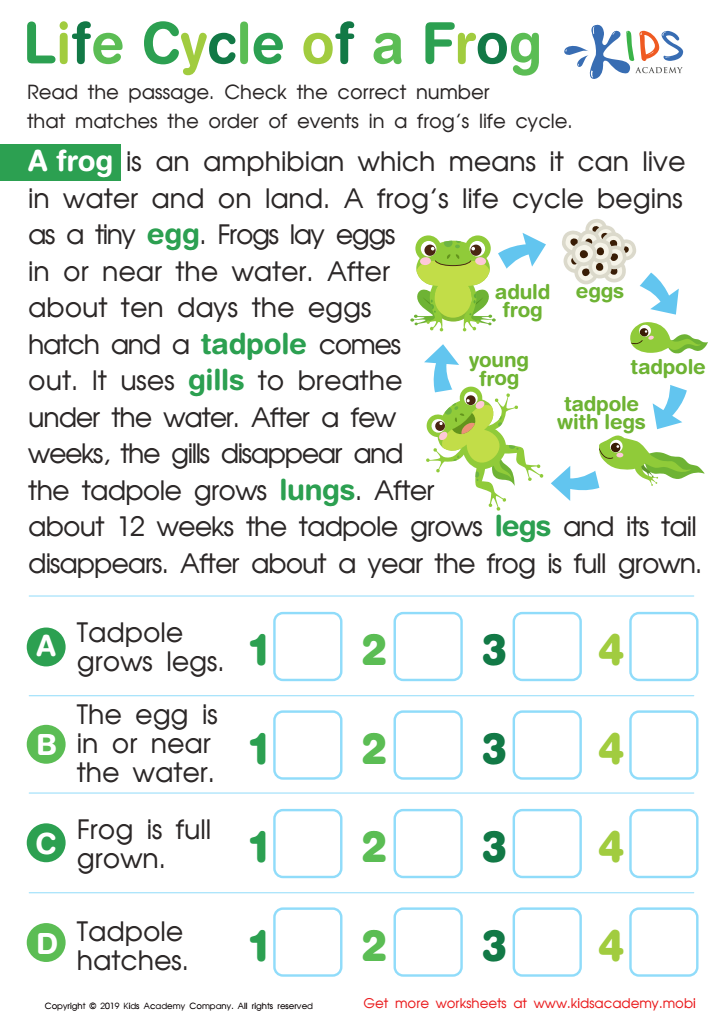
Life Cycle of a Frog Worksheet
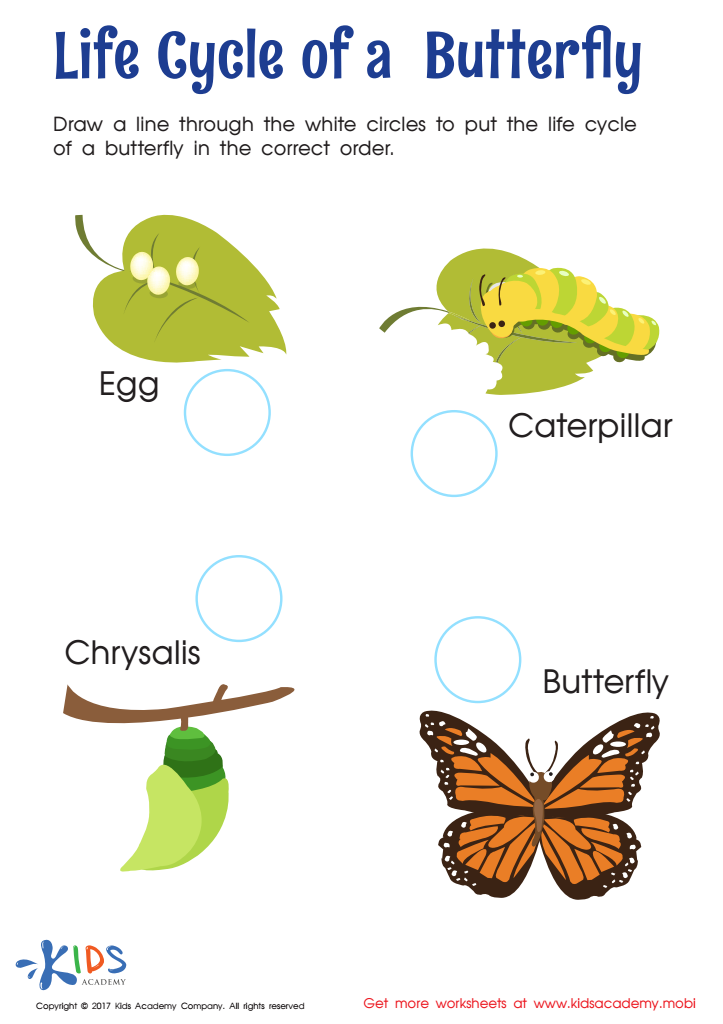
Life Cycle of Butterfly Worksheet








Understanding life cycles is crucial for children aged 5-8, as it lays a foundational framework for their comprehension of biology and the natural world. At this age, kids are naturally curious and eager to learn about living things around them. By exploring life cycles, they not only discover the stages of growth and development in plants, animals, and humans, but they also begin to understand concepts of transformation and change. This can foster a sense of wonder and respect for nature, encouraging children to develop environmentally responsible behaviors early on.
Furthermore, teaching life cycles can enhance observational skills and critical thinking. Children learn to observe changes over time, fostering patience and a profound appreciation of life’s rhythms. Such activities can seamlessly interweave various subjects, such as science, art, and literacy, through engaging storytelling, hands-on projects, and discussions, promoting holistic learning.
Moreover, understanding life cycles promotes emotional intelligence, as children come to grips with themes of birth, growth, decline, and renewal. This knowledge nurtures empathy and an understanding of the interconnectedness of life. Ultimately, educators and parents should prioritize life cycle studies to cultivate inquisitive, empathetic, and informed future scientists and caretakers of our planet.








